


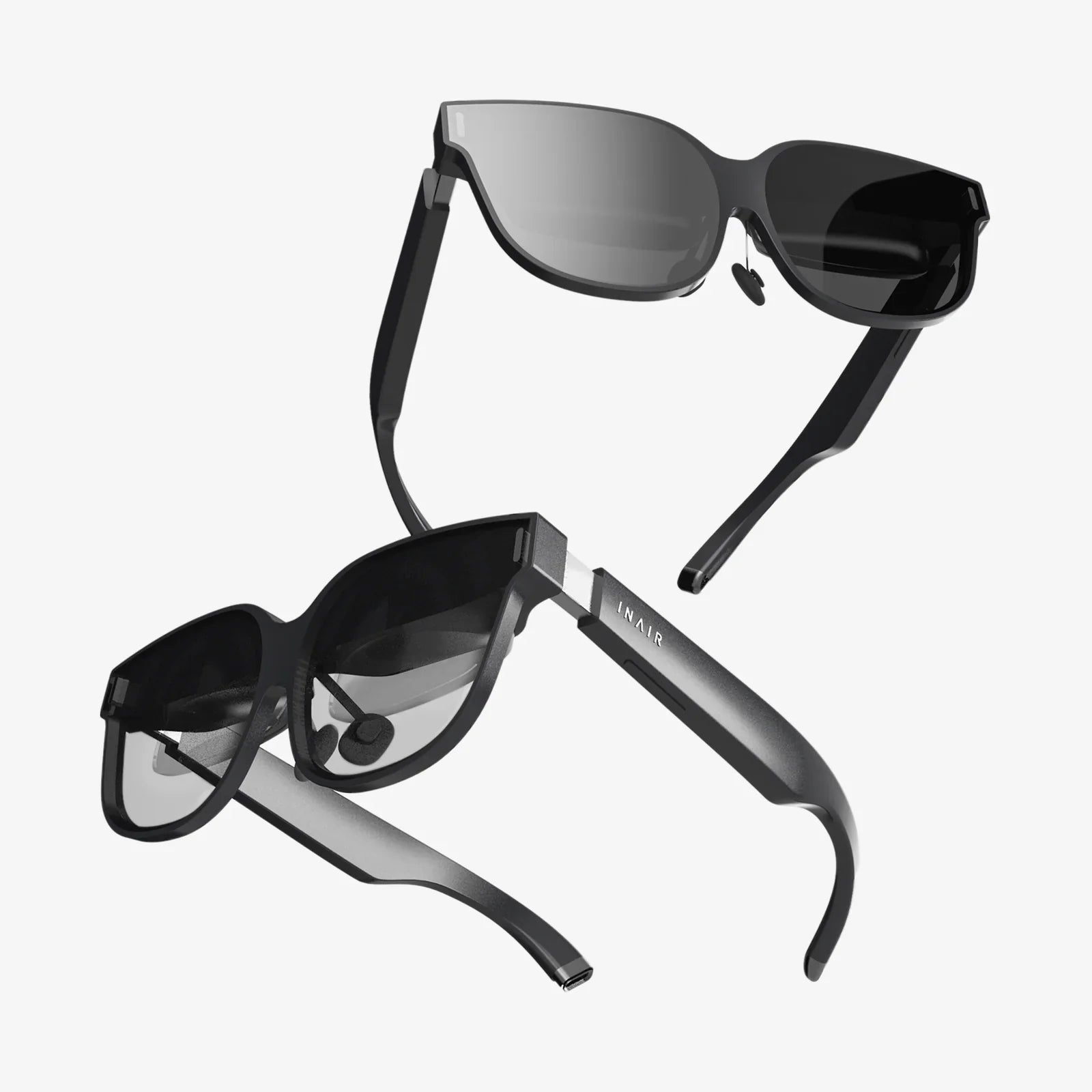
Imagine reaching out and turning a virtual page with your fingertips, sculpting a digital model from thin air, or pulling up a schematic from a real-world engine simply by pinching the air. This is the promise and rapidly evolving reality of augmented reality hand gestures, a technology fusion that is moving us beyond the confines of screens, mice, and keyboards into a world of intuitive, immersive, and profoundly human-centric interaction. This isn't just a new way to click a button; it's a fundamental rewiring of our relationship with digital information, transforming our hands from simple physical tools into conduits for manipulating the fabric of a blended reality.
The Inevitable Convergence: Why Our Hands Hold the Key
For decades, human-computer interaction has been mediated by a series of increasingly sophisticated, yet inherently limiting, peripherals. The command line gave way to the mouse, which was complemented by the touchscreen. Each was a revolution in its own right, but each also created a layer of abstraction between the user's intent and the digital outcome. We learned to translate the natural movement of our hand into the two-dimensional movement of a cursor, or to tap and swipe on a smooth piece of glass to achieve a result. Augmented reality demands a more direct and natural paradigm. If AR is about overlaying digital content onto our physical environment, then the interface must feel just as native to that environment. Enter the human hand—the most dexterous, expressive, and familiar tool we possess.
Our brains are already hardwired for precise hand-eye coordination. We understand the world by touching it, grabbing it, and moving it. Augmented reality hand gestures leverage this innate understanding, creating an interaction model with a phenomenally low barrier to entry. There is no learning curve for a pinch; no manual required to understand a grab. This intrinsic intuitiveness is the driving force behind the technology's development, promising to make powerful digital tools accessible to everyone, regardless of technical proficiency.
How the Magic is Woven: Sensing the Subtle Language of Hands
Translating the complex ballet of human hand movements into precise digital commands is a staggering technological feat. It relies on a sophisticated stack of hardware and software working in concert to see, interpret, and respond in real-time. The primary methods for capturing these gestures fall into a few key categories, each with its own strengths.
Inside-Out Tracking: The Self-Contained Vision
Many modern AR headsets employ a technique known as inside-out tracking. Using a constellation of tiny cameras, infrared projectors, and sensors mounted on the device itself, the system continuously maps the surrounding environment—including the user's hands. These cameras capture depth data and stereoscopic imagery, allowing algorithms to reconstruct the hand's position, orientation, and the precise configuration of each finger. This method is highly effective for tracking gestures performed within the field of view of the headset's cameras, enabling interactions like selecting virtual menus with a tap or resizing objects with a two-handed pinch-and-pull.
Wrist-Worn Biomarkers: Reading the Intent Beneath the Skin
An alternative, and often complementary, approach bypasses visual tracking altogether. Instead of watching the hand from the outside, some systems use wearable wristbands equipped with electromyography (EMG) sensors. These sensors detect the faint electrical signals sent from your brain to your muscles and tendons when you intend to move your fingers. The remarkable part is that they can detect this intent before the finger has even moved a millimeter. This technology can discern subtle, sub-millimeter motions and even distinguish between different levels of force, enabling a incredibly nuanced and private form of gesture control that works even if your hand is in your pocket or behind your back.
The Software Brain: From Pixels to Commands
Regardless of the hardware, the raw data is useless without intelligent software. This is where machine learning and computer vision take center stage. Vast neural networks, trained on millions of images and data points of human hands, act as the brain of the operation. They filter out noise, predict occluded finger positions, and classify the observed data into discrete, recognizable gestures—a thumbs-up, a peace sign, a pinch, a grab. This software must operate with extreme low latency; any perceptible delay between the user's action and the digital reaction shatters the illusion of immersion and creates a frustrating experience.
A Lexicon of Interaction: Defining the Gestures of Tomorrow
As this field matures, a common lexicon of augmented reality hand gestures is beginning to emerge, much like the universal adoption of the pinch-to-zoom gesture on smartphones. These gestures can be broadly categorized by their function and complexity.
- Manipulation Gestures: These are the direct translations of physical actions. They include Translate (grabbing an object and moving it through space), Rotate (holding an object with one hand and twisting with the other), and Scale (the classic two-finger pinch and spread).
- System Control Gestures: These are the meta-commands for the AR interface itself. A quick tap might select an item, while a swipe in the air could dismiss a notification or scroll through a list. A thumbs-up might confirm an action, while a thumbs-down could cancel it.
- Symbolic and Dynamic Gestures: This more advanced category includes gestures that are not necessarily mimetic but are assigned meaning, like drawing a circle in the air to open a menu. It also covers continuous, complex motions, such as those used for virtual sculpting or painting in 3D space.
The challenge for designers is to create a gesture vocabulary that feels natural, is easy to remember, and, crucially, avoids fatigue. The infamous "gorilla arm" effect from early touchscreens is a cautionary tale; gestures must be designed for comfort and sustained use.
Transforming Industries: The Practical Power of a Natural Interface
The applications for augmented reality hand gestures extend far beyond futuristic gaming and entertainment. They are poised to revolutionize workflows and enhance capabilities across a vast spectrum of professional fields.
Revolutionizing Design and Engineering
In CAD and 3D modeling, designers can step inside their creations. An architect can walk through a full-scale holographic model of a building, moving walls and adjusting fixtures with a wave of their hand. A mechanical engineer can assemble a complex virtual engine, grabbing parts from a palette and snapping them into place with intuitive gestures, gaining a kinesthetic understanding of the design that a mouse and screen could never provide.
Supercharging Surgery and Medical Training
Surgeons already use AR for overlaying MRI data onto a patient's body during operations. With gesture control, a surgeon can manipulate 3D scans, rotate them, zoom in on critical areas, or take notes without ever breaking sterility by touching a physical screen. Medical students can practice procedures on holographic patients, using their hands to make incisions and manipulate virtual organs, creating a deeply immersive and risk-free training environment.
Enhancing Field and Maintenance Work
A technician repairing a complex piece of machinery can use AR glasses to see animated repair instructions overlaid on the actual equipment. With hand gestures, they can flip through digital manuals, call up a schematic of a specific component, or even video-call a remote expert who can annotate their real-world view—all while keeping their tools in hand and their focus on the task.
Navigating the Hurdles: The Path to Ubiquity
Despite its immense potential, the widespread adoption of augmented reality hand gestures faces significant technical and social challenges that must be overcome.
Precision and reliability remain paramount. A gesture system must have near-perfect accuracy to be trusted in critical applications like surgery or engineering. It must also be robust enough to function in varied lighting conditions and not be fooled by complex backgrounds or the presence of multiple people.
Social acceptance is another major hurdle. While gesturing in your living room might be fine, performing elaborate hand movements in a public space or a busy office can feel awkward and draw unwanted attention. Developing a gesture vocabulary that is both effective and socially discreet is a key design challenge. Furthermore, the industry must grapple with issues of privacy, as the constant visual monitoring required for camera-based systems raises valid concerns about data collection and user surveillance.
Finally, standardization is critical. If every AR platform develops its own unique and incompatible gesture language, it will create confusion and stifle development. The industry will need to coalesce around a common set of principles, much like the early web, to ensure a seamless user experience across devices and applications.
The Future is in Your Hands: A World Remade
As the technology matures—becoming more precise, less obtrusive, and more energy-efficient—it will gradually fade into the background. The goal is not to be aware of the interface, but to be aware only of the task at hand. We are moving towards a future where digital information will be as malleable as clay, and our primary tool for shaping it will be the one we were born with.
The fusion of augmented reality and hand gesture control represents more than an incremental step in interface design; it is a paradigm shift. It promises to dissolve the final barrier between our physical intuition and our digital aspirations, empowering us to interact with the synthetic world as effortlessly as we do the natural one. This isn't just about convenience; it's about expanding human potential, giving us new eyes to see and new hands to build, repair, and create in a world where the digital and physical are forever intertwined. The next great interface won't be something you hold; it will be something you are.
Share:
AI Based Glasses: The Invisible Revolution Reshaping Our Reality
Implementation of Augmented Reality: A Comprehensive Guide to Bridging the Digital and Physical Worlds