Imagine pointing your smartphone at a seemingly ordinary street mural and watching it burst into life, not just with animation, but with a swirling galaxy of shared stories, videos, and conversations from thousands of people who stood exactly where you are. This isn't a distant sci-fi fantasy; it's the immediate, clickable future being unlocked by a revolutionary fusion of technology and social syntax: augmented reality hashtags. This powerful combination is poised to fundamentally reshape our digital landscapes, turning every physical object, location, and moment into a potential portal for shared experience and community building.
Beyond the Filter: Defining the Augmented Reality Hashtag
To understand the augmented reality hashtag, we must first dissect its components. The hashtag, a simple metadata tag pioneered on social platforms, evolved from a mere organizational tool into a cultural symbol, capable of uniting global movements (#MeToo), curating moments (#Olympics), and fueling trends. It's a digital rallying cry.
Augmented reality (AR), on the other hand, is the technology that superimposes digital information—images, text, 3D models—onto our view of the real world through a device's screen or AR glasses. It layers the virtual onto the physical.
An augmented reality hashtag is the symbiotic fusion of these two concepts. It is a hashtag that acts as a trigger or an anchor point for an AR experience. Instead of just typing a hashtag into a search bar to find related text and images, you can now scan a physical hashtag (or a object associated with it) to unlock a rich, immersive, and contextual digital layer. It transforms the hashtag from a passive text-based link into an active, spatial gateway.
The Technical Magic: How AR Hashtags Work
The seamless experience for the user belies a sophisticated technical process happening in milliseconds. The journey typically follows these steps:
-
Trigger Recognition: A user opens a compatible AR application and points their device's camera at a trigger. This trigger can be a physical printout of a specific hashtag, a QR code linked to one, or even an object or location that the AR software has been trained to recognize via visual markerless tracking.
-
Cloud-Based Retrieval: The application identifies the unique signature of the trigger and queries a cloud-based database. This is where the "hashtag" component comes in; the trigger is essentially a key that calls up a specific set of digital assets and content associated with that unique identifier.
-
Content Overlay: The requested digital content—which could be a 3D model, an interactive animation, a live social media feed filtered by that hashtag, or a video—is downloaded and rendered in real-time.
-
Spatial Anchoring: Sophisticated algorithms using SLAM (Simultaneous Localization and Mapping) anchor the digital content precisely to the physical world, making it appear stable and integrated with the user's environment as they move their device.
-
Interaction and Participation: The user can now view, interact with, and often contribute to the AR experience. They might leave a virtual comment, take a picture with the AR element, or see their own social post appear within the experience.
Transforming Industries: The Practical Applications
The potential use cases for augmented reality hashtags span virtually every sector, offering new ways to engage, educate, and entertain.
Revolutionizing Retail and Commerce
Imagine walking past a storefront and seeing a floating hashtag above a display. You scan it, and instantly, product reviews, styling tutorial videos, and available size and color options materialize around the clothing. For furniture, an AR hashtag could let you project a true-to-scale 3D model of a sofa into your living room to see how it fits and looks. This bridges the critical gap between online discovery and in-person confidence, drastically reducing purchase hesitation.
Reimagining Tourism and Cultural Heritage
Historical sites and museums are perfect canvases for AR hashtags. Pointing a device at a monument could trigger a historical reenactment playing out around it, with the #BattleOf1812 hashtag summoning soldiers and cannon fire. A hashtag on a museum plaque could bring a dinosaur skeleton to life or allow visitors to see the artist's process layered over the finished painting. It transforms passive observation into active, immersive education.
Supercharging Events and Marketing
At a music festival, a central AR hashtag could create a shared augmented space where attendees' social media posts become part of a dazzling light show above the stage. For a product launch, a hashtag in an advertisement could unlock an interactive 3D model of the product, allowing users to explore its features from every angle before it's even available in stores. This creates unforgettable, shareable moments that generate organic buzz and deep engagement.
Enhancing Education and Collaboration
Textbooks become interactive portals; a hashtag next to a diagram of the human heart could trigger a beating, interactive 3D model. In a corporate setting, an AR hashtag on a conference room whiteboard could save and project the notes into a collaborative digital space for remote team members to view and annotate in real-time, making hybrid work more seamless and effective.
The Strategy Behind the Scan: Creating Effective AR Hashtag Campaigns
Simply creating an AR experience and slapping a hashtag on it is a recipe for obscurity. Success requires strategic forethought.
-
Value First: The experience must offer genuine value—entertainment, useful information, a exclusive discount, or a unique perspective. It must be worth the user's effort.
-
Seamless Call-to-Action: The trigger must be obvious and the process intuitive. Users should know what to scan and what app to use without lengthy explanations.
-
Context is King: The AR content must be deeply relevant to the physical context. An AR experience triggered at a bus stop should be different from one in a luxury boutique.
-
Foster Community and UGC: The most powerful campaigns invite user participation. Encouraging users to contribute their own content to the AR layer via a hashtag creates a dynamic, ever-growing experience and powerful social proof.
-
Measure and Iterate: Use analytics to track scans, interaction time, and social shares. Understand what works and refine the approach for future campaigns.
Navigating the New Frontier: Challenges and Considerations
As with any emerging technology, the path forward is not without its obstacles and ethical questions.
Privacy Concerns: AR experiences that are location-based and visually driven require camera access and precise user data. Transparent data policies and robust security measures are non-negotiable to build user trust. The concept of AR spam—where public spaces become cluttered with unwanted commercial or malicious digital overlays—is a genuine concern that platforms will need to address with curation and filtering tools.
Accessibility and the Digital Divide: High-quality AR requires relatively modern smartphones and fast data connections, potentially excluding segments of the population. Furthermore, creating a universally accessible experience for people with different abilities is a complex but necessary challenge.
Platform Fragmentation: Unlike the standard text hashtag, which works universally across social platforms, AR hashtags often require a specific app or browser to function. The lack of a universal standard can create friction for users. The industry is moving towards web-based AR, which reduces this barrier, but full interoperability remains a goal for the future.
The Future is Layered: What's Next for AR Hashtags?
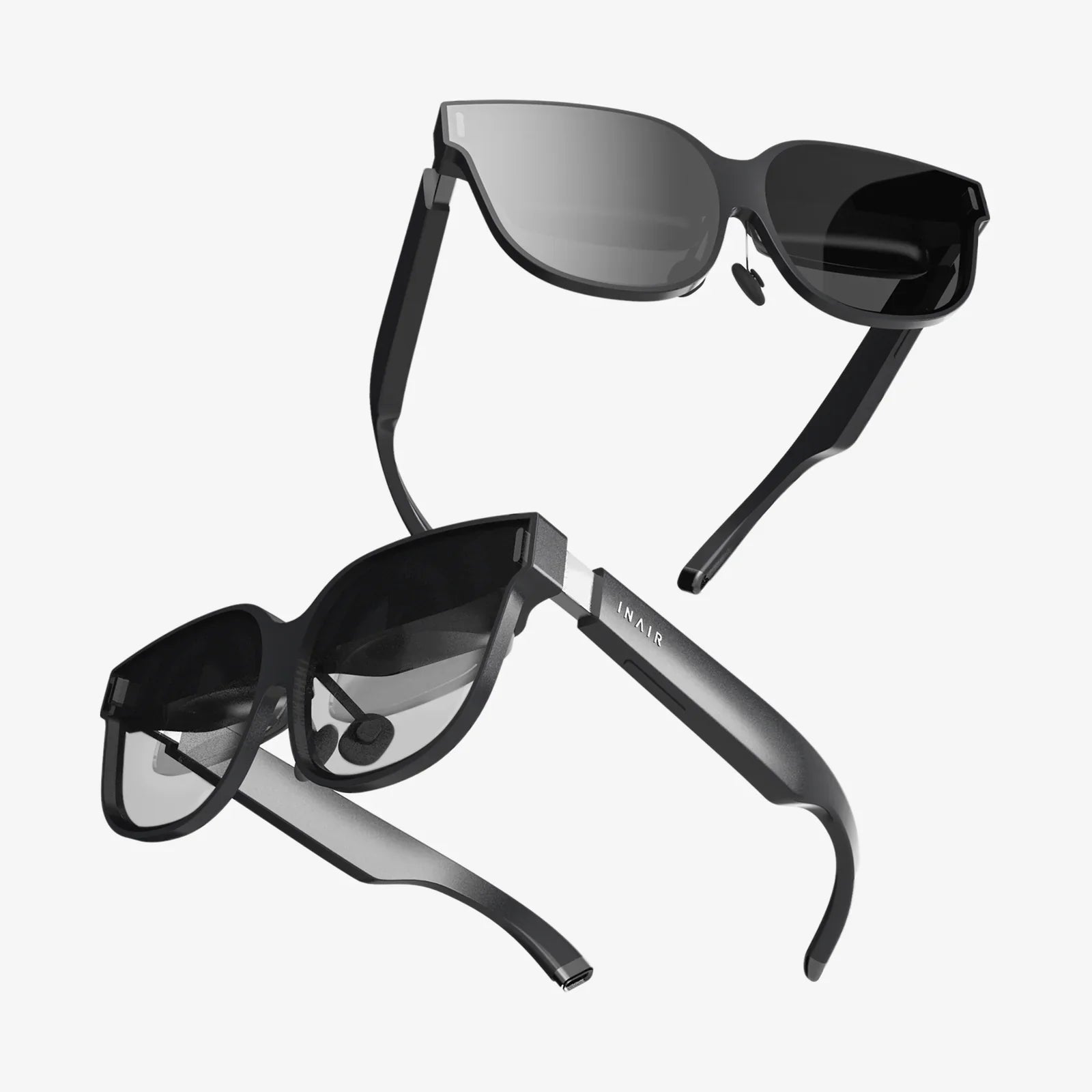
The current state of AR hashtags, primarily experienced through smartphone screens, is merely the prelude. The true revolution will arrive with the widespread adoption of AR smart glasses. When digital layers are seamlessly integrated into our field of vision, AR hashtags will become an ambient part of our reality. We'll be able to glance at a restaurant and see its #Menu and #Reviews floating beside it, or look at a colleague and see their #LinkedIn profile as a subtle digital halo.
This will give rise to a spatial web, where information is not just linked by text, but by physical coordinates and visual cues. The hashtag will evolve from a social tool into the fundamental hyperlink of the physical world, a foundational element of how we navigate and understand our environment. The line between searching the web and exploring the world will blur into irrelevance.
The humble hashtag has already changed the way we communicate. Now, by giving it a dimension of space and sight, augmented reality is transforming it into something far more powerful: a key to unlocking the hidden layers of our world, a tool for building context-rich communities, and a bridge to a future where our digital and physical lives are not separate, but beautifully, intelligently, and interactively intertwined.
You've used hashtags to find content online; soon, you'll use them to reveal the secret digital life of the world right in front of you. The next time you see a hashtag in the wild, don't just type it—scan it, and step through the portal.


Share:
Windows VR Headset: The Ultimate Portal to Immersive Computing and Gaming
How to Focus VR Headset: A Complete Guide to Crystal Clear Immersion