


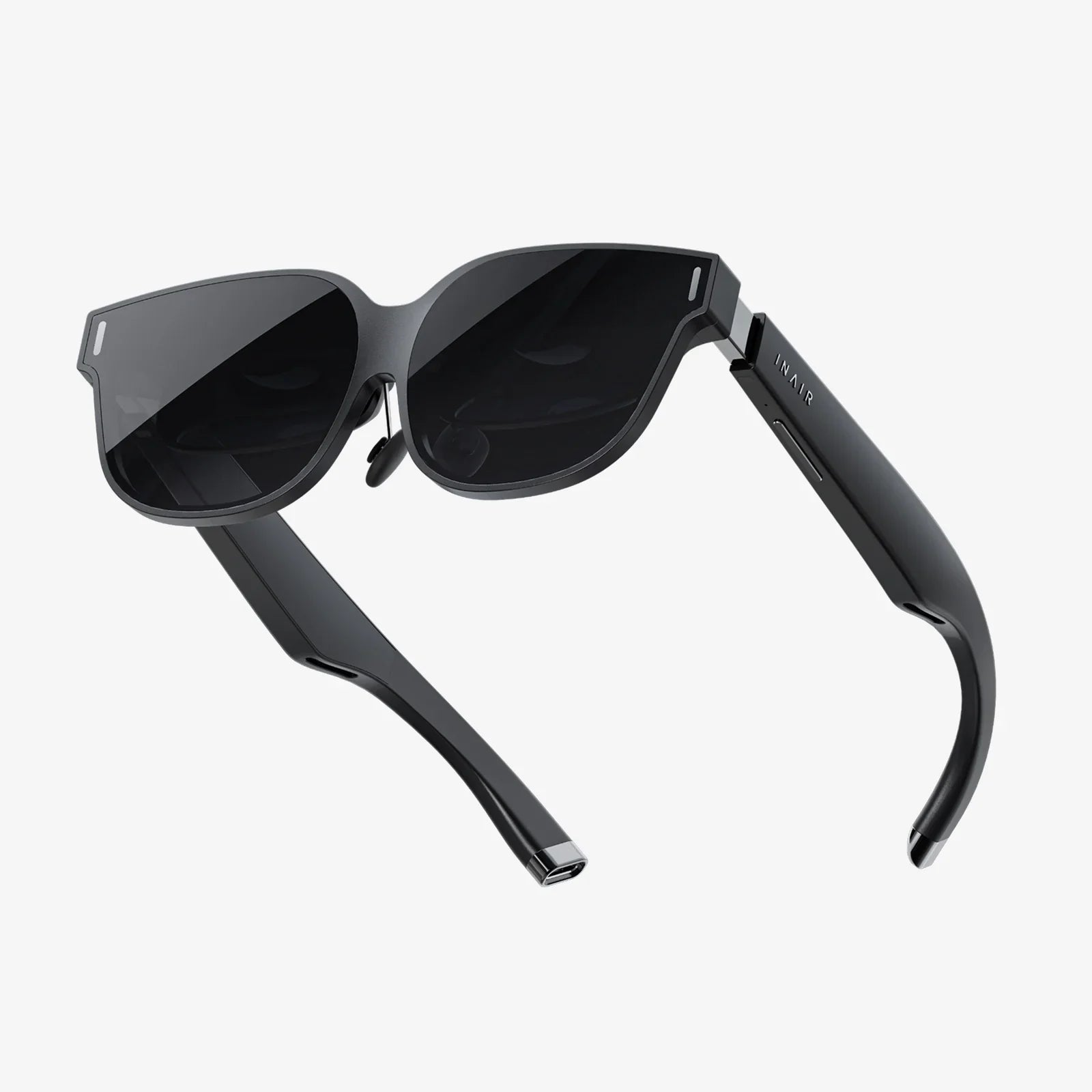
Imagine slipping on a sleek visor and stepping directly into your computer. Your desktop isn't confined to a flat, rectangular screen anymore; it's a vast, panoramic landscape floating in a serene void. A massive, IMAX-sized browser window sits to your left, a sprawling social media feed hovers to your right, and your favorite game world awaits with a single click. This isn't a scene from a distant sci-fi future; it's the tangible, accessible reality offered by a Windows VR headset today. This technology promises to shatter the boundaries of our digital experiences, transforming how we work, play, and connect. Ready to step through the looking glass?
The Foundation: What Exactly is a Windows VR Headset?
At its core, a Windows VR headset is a virtual reality device designed from the ground up to integrate seamlessly with the Windows operating system. Unlike other platforms that often function as closed ecosystems or require complex third-party software bridges, these headsets are built with the PC as their native environment. They leverage the immense processing power of a modern computer to deliver high-fidelity, immersive experiences that standalone devices struggle to match.
The defining characteristic of this category is its deep integration with the Windows Mixed Reality platform. This isn't just a branding exercise; it's a fundamental architectural approach. The platform provides the software backbone, including the core interface—the Cliff House, a customizable virtual home space—and the necessary drivers for the hardware to communicate effortlessly with the computer. This native support means that from the moment you plug in the headset, Windows recognizes it as another display, another input device, ready to extend your digital world into three dimensions.
Under the Hood: The Technology That Powers the Dream
The magic of immersion relies on a sophisticated suite of technologies working in perfect harmony. Understanding these components reveals why the experience feels so compelling.
Inside-Out Tracking: Cutting the Cord to the External World
One of the most significant innovations is the use of inside-out tracking. Traditional VR systems often require external sensors or base stations placed around a room to track the headset and controllers' position. A Windows VR headset eliminates this clutter entirely. It uses a series of cameras embedded on the front of the headset itself. These cameras constantly scan your physical environment, using visual cues to map the room and track your movement within it. This not only simplifies setup dramatically—you're literally plug-and-play—but also enhances portability. Your entire VR world can travel with you, as long as you have a compatible computer.
Visual Fidelity: A Window to Another Reality
The viewport to these digital realms is the pair of high-resolution LCD or OLED displays housed within the headset. With resolutions often exceeding 1440x1440 pixels per eye and refresh rates of 90Hz, the goal is to create a clear, smooth, and visually rich experience that minimizes the screen-door effect (the visible grid between pixels) and reduces motion sickness. The lenses are meticulously engineered to provide a wide field of view, typically around 100-110 degrees, pulling your peripheral vision into the experience and selling the illusion of presence.
Spatial Audio and Intuitive Control
Immersion is a multi-sensory affair. Built-in spatial audio headphones project sound that seems to come from specific points in the virtual space, making a creaking door behind you feel genuinely unsettling. The motion controllers are equally crucial. Equipped with their own tracking lights and haptic feedback motors, they become your virtual hands. You can point, grab, throw, and interact with a naturalism that a traditional gamepad could never achieve. The thumbstick, trigger, and menu buttons provide familiar input methods within an entirely new paradigm of interaction.
Beyond the Game: The Productivity Revolution
While gaming is the most famous application, the true potential of a Windows VR headset might lie in revolutionizing productivity. The concept of an infinite virtual workspace is a paradigm shift for professionals and power users.
The Infinite Desktop
Windows Mixed Reality allows you to pin application windows anywhere around you in a 360-degree sphere. Imagine writing a report on a virtual monitor the size of your wall while having a reference browser, a video conference call, and a music player all open simultaneously in your periphery, without the constraints of physical monitor bezels. You can resize, reposition, and layer these windows at will, creating a truly bespoke working environment that maximizes focus and efficiency.
3D Modeling and Design
For architects, engineers, and artists, the implications are profound. Instead of painstakingly manipulating a 3D model on a 2D screen, you can step inside your creation. You can walk around a architectural blueprint at human scale to check sightlines, hold a mechanical assembly in your hand to inspect tolerances, or sculpt a digital statue from every angle intuitively. This spatial context unlocks a deeper understanding of design that is impossible to achieve on a traditional monitor.
Virtual Collaboration
The future of remote work may be virtual. Platforms are emerging that allow teams to meet in a shared virtual boardroom, regardless of their physical location. You are represented by an avatar, and you can collaboratively interact with 3D models, presentations, and whiteboards as if you were all in the same room. This adds a layer of human presence and collaborative potential that flat video calls simply cannot replicate.
A Universe of Experiences: Gaming and Entertainment
Of course, we must talk about the games. The library of VR content accessible to a Windows VR headset is vast and diverse, spanning major storefronts.
Full Motion Gaming
From rhythm games that have you ducking and weaving to physical puzzles that require you to manually manipulate objects, VR gaming is inherently active. You are not just pressing a button to swing a sword; you are physically performing the motion. This creates a unparalleled level of engagement and physical investment in the action, making victories more thrilling and challenges more visceral.
Experiential and Narrative Journeys
Beyond action, VR is a powerful medium for storytelling. You are no longer watching a character explore a haunted house; you are the one slowly pushing open the creaking door, your own breath catching in your chest. Narrative experiences and exploratory games use the medium's strength in immersion to evoke powerful emotions and create lasting memories, placing you squarely at the center of the story.
The Ultimate Media Player
Entertainment extends beyond interactive experiences. With a virtual theater screen that can mimic a cinema or a private home theater, watching movies and videos becomes an event. You can enjoy 360-degree videos that transport you to the top of Mount Everest, the depths of the ocean, or the front row of a concert, all from your living room.
Setting Up Your Portal: A Straightforward Journey
The beauty of the platform is its accessibility. The setup process is remarkably simple:
- Check Compatibility: Ensure your PC meets the minimum requirements, which include a capable processor, a sufficient amount of RAM, and, most importantly, a powerful graphics card.
- Plug In: Connect the headset to your PC via its designated cable. Most use a single HDMI and USB connection.
- Windows Takes Over: The Windows Mixed Reality Portal will automatically launch and guide you through the setup, including defining your play area by tracing its boundaries with your headset.
- Pair Controllers: Sync your motion controllers via Bluetooth, and you're ready to dive in.
The Horizon Ahead: The Future of Immersive Computing
The technology is still evolving at a breathtaking pace. We are already seeing the seeds of the next generation with varifocal displays that adjust focus to reduce eye strain, eye-tracking that enables foveated rendering for massive performance gains, and even facial tracking to bring more expressive avatars to life. The line between our physical and digital realities will continue to blur, with augmented reality (AR) elements becoming more integrated, allowing virtual objects to interact convincingly with the real world. The Windows VR headset is not a destination but a stepping stone on the path to a future where virtual spaces are as commonplace and essential as the web browser is today.
The door to these expansive digital worlds is now open, and it requires only a single piece of hardware to cross its threshold. The potential is limitless, bounded only by the creativity of developers and the curiosity of users. Whether your goal is to achieve unparalleled productivity, lose yourself in breathtaking game worlds, or simply experience the next evolution of computing, the question is no longer about what is possible, but when you will choose to begin. Your new reality is waiting.
Share:
Best Resolution VR Headset 2025: A Deep Dive into the Pinnacle of Visual Fidelity
Augmented Reality Hashtags: The New Frontier in Social Discovery and Digital Interaction