


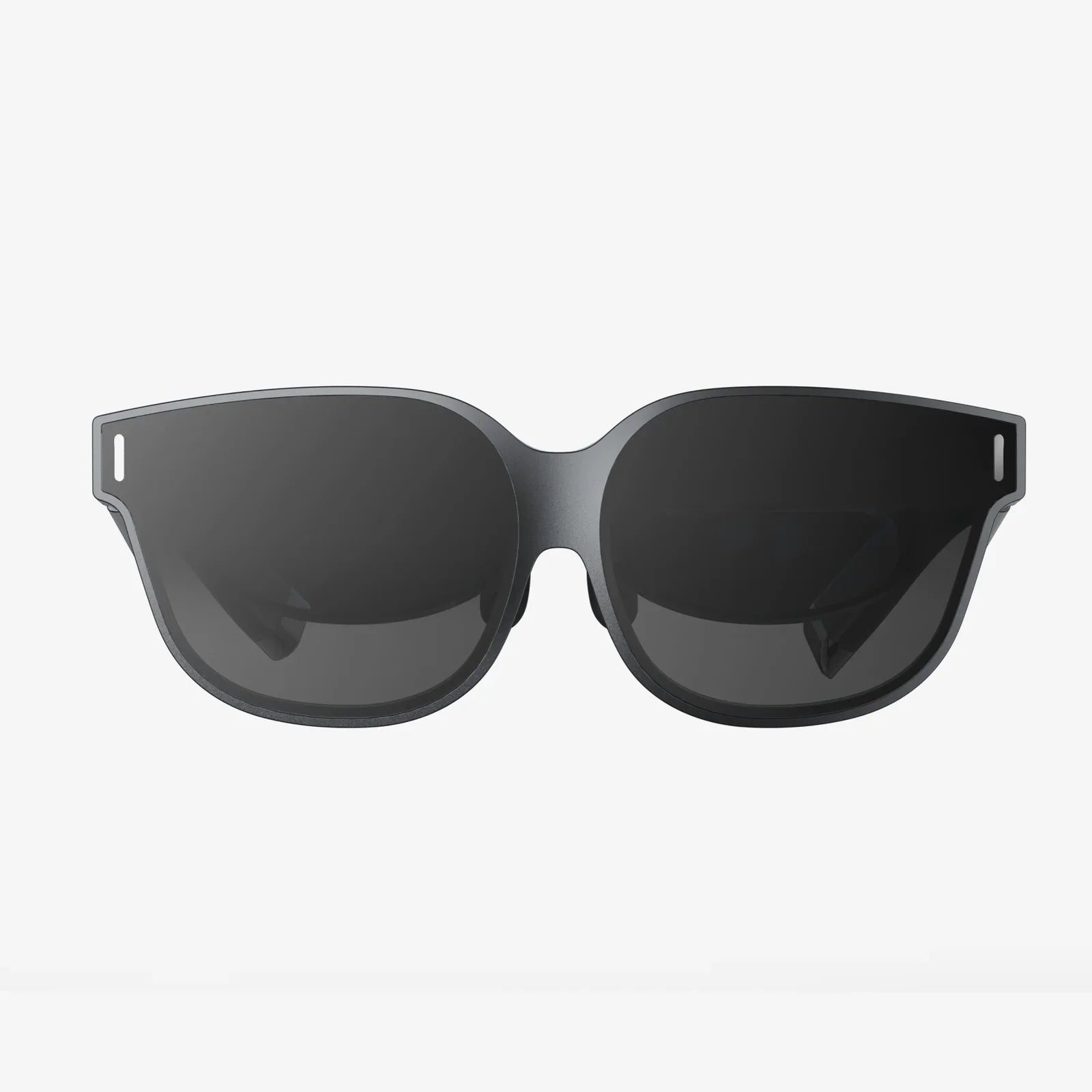
Imagine driving down a winding road at night, a sudden fog bank rolling in, and instead of squinting through the gloom, your entire windshield transforms into a crystal-clear portal of information. The road edges are highlighted in a soft, guiding glow, the speed and navigation are projected directly onto the tarmac ahead, and a virtual warning flags a deer obscured by the mist long before your eyes could ever see it. This is not a scene from a distant science fiction movie; this is the imminent future promised by the Augmented Reality Head Up Display (AR HUD), a technology that is fundamentally reshaping the interface between humans, machines, and the world around them.
From Humble Beginnings: The Evolution of a Vision
The concept of projecting information into a user's line of sight is older than many realize. The genesis of the Head Up Display can be traced back to the gun sights of World War II aircraft, but its true birth came with the supersonic jet age. Early fighter pilots faced a critical problem: glancing down at analog gauges in the cockpit to check airspeed, altitude, or targeting information could take precious seconds—seconds that often meant the difference between life and death in a dogfight. The solution was to project a minimal set of critical flight data onto a small, transparent screen between the pilot and the windshield. This allowed them to keep their "head up" and focused on the enemy, giving the technology its iconic name.
For decades, HUDs remained confined to the realm of military and commercial aviation, a costly and specialized tool for highly trained professionals. The first foray into the consumer automotive space saw a simplified version of this technology: a small, monochrome display that projected basic data like speed and turn-by-turn directions onto a tiny combiner glass, often creating a distracting and limited experience. It was a start, but it was a far cry from the immersive vision of true augmented reality.
The paradigm shift began with the convergence of several key technologies. The explosive advancement in miniaturized computing power, the development of ultra-bright, efficient micro-displays like DLP and LCoS, and breakthroughs in optical waveguide and free-form mirror design finally made it possible to create larger, brighter, and more complex projections. More importantly, the proliferation of sophisticated sensor suites—including high-resolution cameras, LiDAR, radar, and precise GPS—provided the rich, real-time data necessary to move from simple symbol projection to contextual, environmental augmentation. This fusion birthed the modern Augmented Reality Head Up Display.
Deconstructing the Magic: How an AR HUD Works
At its core, an AR HUD is a sophisticated optical projector system, but its true intelligence lies in its software and data integration. The system can be broken down into several key components working in perfect harmony.
The Optical Heart: Projection and Imaging
The process begins with a micro-display panel, a chip that generates the intended image. This image is then illuminated by a high-luminance light source, necessary to create a picture bright enough to be visible against the dazzling backdrop of a sunny day. This light is directed through a series of meticulously designed lenses and mirrors. This optical pathway is not just for magnification; it is engineered to create a virtual image that appears to be floating far ahead of the vehicle, typically at a distance of 10 meters or more. This is the critical difference from older HUDs. By projecting the image at a distance that aligns with the user's natural focal point for the road, it eliminates the need for the eyes to constantly refocus between the dashboard and the horizon, drastically reducing cognitive load and fatigue.
The Digital Brain: Data Synthesis and Registration
The hardware is merely the canvas; the real genius is in the software. An AR HUD is fed a constant stream of data from the vehicle's network and its sensor array. This includes:
- Vehicle data: Speed, RPM, fuel level, gear status.
- Navigation data: Upcoming turns, points of interest, destination information.
- Sensor fusion: A synthesized understanding of the real world created by blending camera footage (to identify lane markings, vehicles, pedestrians, and traffic signs), radar (for distance and relative speed), and LiDAR (for precise 3D mapping).
The most complex task is called registration. This is the process of anchoring digital content to a specific point in the real world. It is not enough to simply display a arrow pointing left; the system must understand the exact curvature of the road ahead and project a guiding line that appears to seamlessly overlay the left lane, disappearing naturally behind a hill or a building as the driver's perspective changes. This requires incredibly precise GPS, inertial measurement units (IMUs) to track the car's precise movements, and real-time processing to adjust the imagery dozens of times per second. When executed perfectly, the digital and physical worlds become one coherent experience.
Beyond the Dashboard: A Universe of Applications
While the automotive industry is the most visible pioneer, the potential of AR HUD technology stretches far beyond the driver's seat, poised to augment reality across numerous fields.
The Transformative Cockpit
In the automotive context, AR HUDs elevate safety and convenience to unprecedented levels. They can highlight potential hazards—like a pedestrian stepping out from between parked cars—with a vivid outline before the driver has even registered the movement. Navigation becomes intuitive, with virtual signs and directional cues painted directly onto the road. Advanced driver-assistance system (ADAS) features like adaptive cruise control and lane-keeping can be visualized, building trust by showing the driver exactly what the vehicle "sees" and intends to do. In low-visibility conditions, the system can effectively create a synthetic view of the environment, revealing hidden obstacles and clarifying road boundaries.
Revolutionizing the Factory Floor
In industrial and manufacturing settings, AR HUDs worn as glasses can provide hands-free information to technicians. A worker performing maintenance on a complex machine can see torque specifications, wiring diagrams, and step-by-step instructions overlaid directly on the components they are handling. This reduces errors, slashes training time, and improves efficiency. Warehouse pickers can see optimal routes and item locations highlighted in their visual field, streamlining logistics.
The Operating Room of Tomorrow
Surgeons are beginning to utilize AR HUDs to visualize critical data without turning away from the patient. Vital signs, ultrasound images, or 3D anatomical models reconstructed from CT scans can be projected into their line of sight, aligned with the patient's body. This allows for more precise, less invasive procedures and provides a constant, unobtrusive stream of patient data during critical operations.
Everyday Augmentation
Looking further ahead, the technology could become integrated into eyewear, transforming how we interact with cities and each other. Imagine walking through a foreign city where street signs automatically translate, historical facts about a building pop up as you look at it, or a network-connected display guides you to your meeting with a path visible on the sidewalk. The potential for tourism, education, and social connection is boundless.
Navigating the Roadblocks: Challenges and Considerations
Despite its promise, the path to ubiquitous AR HUD adoption is not without significant obstacles that engineers and designers must overcome.
The Optical Conundrum
Packaging remains a primary challenge. Creating a large, far-projected virtual image requires a long optical path, which traditionally demands a significant amount of space behind the dashboard—a premium area fiercely contested by other components. Innovations in waveguide technology, which pipe light through thin glass or plastic substrates, and more compact, powerful laser-based projection systems are key to shrinking the hardware. Furthermore, managing astigmatism and ensuring image clarity across the entire wide field of view for drivers of different heights is a persistent optical engineering hurdle.
The Human Factor: Avoiding Cognitive Overload
The greatest danger of any augmented system is the risk of information overload. A windshield cluttered with distracting animations, irrelevant notifications, or poorly prioritized data could become more dangerous than no display at all. The design philosophy must be one of minimalism and context. Information should only appear when it is critically relevant and should be presented in an intuitive, glanceable format that aids understanding rather than demanding interpretation. Striking the perfect balance between informative and intrusive is the paramount design challenge.
Safety, Security, and Standardization
As with any connected vehicle technology, cybersecurity is a major concern. A malicious actor gaining control of an AR HUD could create dangerous false projections, leading to catastrophic outcomes. Robust security protocols are non-negotiable. Furthermore, the industry lacks universal standards for how and when to display certain information. Establishing clear guidelines to ensure that AR displays are universally intuitive and safe, regardless of the vehicle manufacturer, will be crucial for widespread consumer trust and adoption.
The Augmented Horizon: What the Future Holds
The current generation of AR HUDs is impressive, but it is merely the first step. The next decade will see this technology evolve in breathtaking ways. We are moving towards full-windshield displays that can create immersive environments for autonomous driving modes, transforming the cabin into a mobile living or workspace while the car handles the journey. The integration of eye-tracking will allow the system to understand user intent, presenting information only when and where the user is looking. Eventually, the combination of AR HUDs with adaptive driving beam (ADB) headlights could allow the vehicle to project warnings directly onto the road for other drivers or pedestrians, such as painting a crosswalk in front of a person waiting to cross.
The ultimate goal is a seamless, bidirectional interface with our environment. The line between the digital and the physical will continue to blur, not on a screen we hold in our hands, but within the very world we inhabit. The Augmented Reality Head Up Display is the key that unlocks this future, transforming our windshields, glasses, and visors into windows to a richer, safer, and more informed reality.
This is more than just a new feature for your next vehicle; it's the dawn of a new sensory layer for humanity, a digital consciousness overlaying our physical journey, and it's arriving faster than anyone anticipated. The world is about to get a major upgrade, and it will be visible right before your eyes.
Share:
What Is an Example of Augmented Reality? Exploring the Digital Overlay on Our Physical World
Can You Use VR with Glasses? A Complete Guide to Virtual Reality and Eyewear