


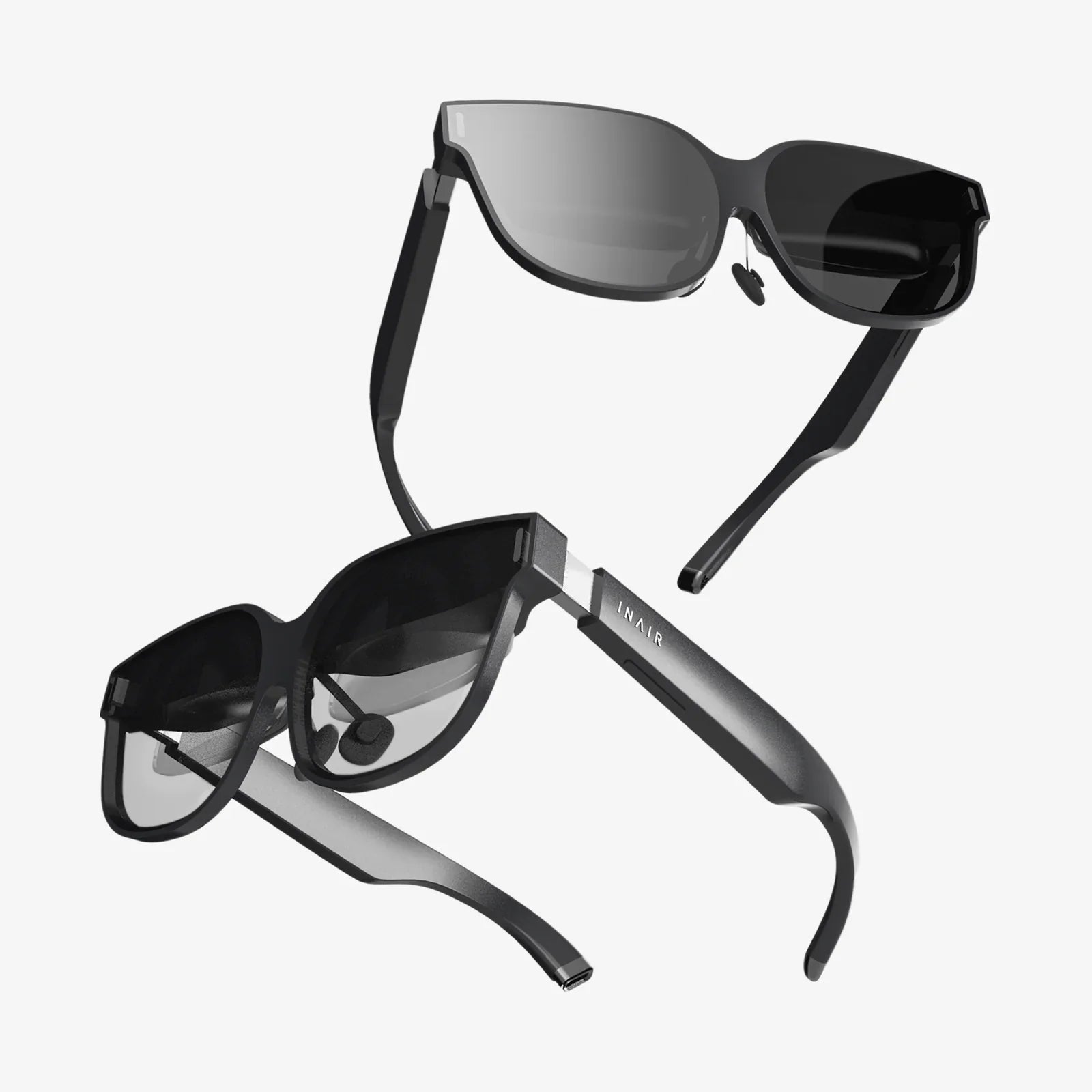
Imagine pointing your device at a dusty, ancient ruin and watching it rebuild itself in real-time before your eyes, or trying on a new piece of furniture in your living room before you even click 'buy.' This isn't science fiction; it's the tangible, transformative power of augmented reality, and it's already reshaping how we interact with the world. The question isn't just 'what is an example of augmented reality?' but rather, how is this technology quietly revolutionizing our daily lives, professions, and play?
Beyond the Buzzword: Defining the Augmented World
Before we can explore specific examples, it's crucial to understand what Augmented Reality (AR) truly is. At its core, AR is a technology that superimposes a computer-generated image, video, or 3D model onto a user's view of the real world. Unlike Virtual Reality (VR), which creates a completely artificial digital environment, AR enhances the real world by adding digital elements to it, creating a composite view that bridges the physical and digital realms.
The magic of AR lies in its three fundamental components:
- Sensors and Cameras: These act as the eyes of the AR system, gathering real-world data. A camera feed is the primary input, while other sensors like GPS, accelerometers, and gyroscopes determine the device's location, angle, and orientation.
- Processing: The AR software processes the sensory input in real-time. It identifies surfaces, planes, and objects (a table, a floor, a specific product) to accurately place and anchor the digital content.
- Projection/Display: This is where the digital overlay is rendered for the user to see. This can be through the screen of a smartphone or tablet, through specialized smart glasses, or even through advanced retinal projection systems.
This seamless integration is what makes AR so compelling and effective. It provides contextually relevant information exactly when and where it's needed.
A Spectrum of Augmentation: Marker-Based vs. Markerless AR
Not all AR experiences are created equal. They primarily fall into two categories, each with its own mechanism and use cases.
Marker-Based AR (Recognition-Based)
This is one of the earliest and most straightforward forms of AR. It relies on a specific visual object—a 'marker'—to trigger the digital display. This marker is often a distinct image, like a QR code or a custom-designed symbol. The device's camera scans this marker, recognizes it, and overlays the pre-programmed digital content precisely on top of it. A classic example of augmented reality in this category is a children's coloring book app where holding a device over a colored page might make the character pop out and animate in 3D on the screen.
Markerless AR (Location-Based or Projection-Based)
This is the more advanced and increasingly common form of AR. It uses technologies like GPS, digital compasses, and accelerometers (in smartphones) or depth-sensing cameras (in more advanced headsets) to understand the environment and place digital objects without a predefined marker. This allows for far more dynamic and practical applications. For instance, using a navigation app that overlays directional arrows onto the live view of the street in front of you is a perfect example of markerless, location-based AR.
Illuminating Examples: Augmented Reality in Action Today
The theoretical is fascinating, but the practical applications are where AR truly shines. Here are powerful, real-world examples of augmented reality across various sectors.
Transforming the Retail and E-Commerce Experience
The retail industry has been one of the earliest and most enthusiastic adopters of AR, solving a fundamental problem: the inability to try before you buy online.
- Virtual Try-On: A prominent example of augmented reality is virtual fitting rooms. Apps now allow users to use their smartphone's camera to 'try on' glasses, makeup, hats, and even see how a new shade of paint would look on their walls. For furniture, apps enable you to place true-to-scale 3D models of sofas, tables, and decor directly into your living space, allowing you to visualize how it will fit with your existing layout and style.
- Enhanced In-Store Navigation: Large retail stores are implementing AR through apps that help customers navigate the aisles. By holding up their phone, users can see digital arrows on the floor guiding them to the exact shelf where their desired product is located, alongside flash promotions and product information popping up as they pass certain items.
Revolutionizing Education and Training
AR has the power to turn abstract concepts into tangible, interactive experiences, making it a revolutionary educational tool.
- Interactive Textbooks: Instead of static images of a human heart or a dinosaur, students can scan the page with a tablet to see a beating 3D heart model they can rotate and explore, or a Tyrannosaurus Rex stomping right on their desk. This immersive learning boosts engagement and retention.
- Complex Skill Training: In fields like medicine and mechanics, AR provides a risk-free training environment. Medical students can practice procedures on virtual patients overlayed onto mannequins. Mechanics can look at an engine and see digital arrows and instructions highlighting the specific parts that need servicing, overlaid directly onto the physical components.
Powering Industrial and Manufacturing Innovation
On factory floors and construction sites, AR is moving from a novelty to a necessity, boosting efficiency and safety.
- Assembly and Maintenance Guidance: Technicians working on complex machinery, such as aircraft engines or industrial printers, can wear AR glasses that project step-by-step assembly instructions, wiring diagrams, and safety warnings directly onto the equipment they are working on. This hands-free access to information drastically reduces errors and training time.
- Architecture and Construction: Architects and engineers can walk through a physical construction site while viewing their digital Building Information Modeling (BIM) data overlaid onto the unfinished structure. They can see where pipes, conduits, and supports should go behind the walls, identifying potential clashes between systems before they become costly on-site errors.
Enhancing Navigation and Tourism
AR is turning our world into an interactive guidebook, making exploration more informative and intuitive.
- Windshield Navigation: Modern vehicle heads-up displays (HUDs) are a basic form of AR, projecting speed, directions, and alerts onto the windshield so drivers don't have to look away from the road. The next evolution involves full-color, complex navigation cues integrated directly with the road view.
- Historical and Cultural Exploration: When visiting a historical landmark, tourists can point their device at a ruin or monument. The app can then reconstruct how the site looked centuries ago, overlaying the digital recreation onto the current remains. It can also display informational plaques, historical figures, and events related to the location, creating a deeply enriched touring experience.
Gaming and Entertainment: The Mainstream Gateway
For many people, a wildly popular mobile game was their first, unforgettable example of augmented reality. This game used a smartphone's camera and GPS to map the real world, placing digital creatures ('Pokémon') in parks, streets, and landmarks. Players had to physically move around their environment to find and catch them, demonstrating the unique potential of AR to combine physical activity with digital gameplay. Beyond gaming, AR filters on social media platforms, which add digital hats, masks, and effects to selfies, are another ubiquitous and engaging form of entertainment-based AR.
The Future is Augmented: What Lies Ahead?
The current examples, while impressive, are just the beginning. The future of AR points towards even more seamless integration. The eventual shift from smartphone-based AR to lightweight, stylish smart glasses will be a game-changer, freeing our hands and making the digital overlay a constant, context-aware companion. Imagine your glasses subtly highlighting the name of a colleague you just met, translating street signs in real-time as you walk through a foreign city, or providing a chef with recipe steps and timers floating beside their cooking pan. This shift will further blur the line between the digital and physical, creating a world where information is ambient, interactive, and instantly accessible.
Challenges and Considerations
Despite its potential, the path forward for AR is not without obstacles. Concerns around user privacy, data security, and digital addiction are paramount. The constant recording and analysis of our surroundings raise significant questions. Furthermore, the 'digital divide' could be exacerbated if AR technology becomes essential for work and social interaction but remains inaccessible to all. For AR to reach its full positive potential, these ethical and societal challenges must be addressed with careful thought and robust frameworks.
The journey from a simple marker-based app to a world-augmenting interface has been rapid and extraordinary. From trying on a pair of sneakers to training for complex surgery, the examples of augmented reality are no longer futuristic concepts but present-day tools driving innovation, enhancing understanding, and creating magical experiences. This is not just a technological evolution; it's a fundamental shift in the human-computer interface, layering a rich, digital skin over our reality and forever changing how we see, learn, and connect with everything around us.
Share:
AR(VR) Immersive Experiences Are Redefining Reality: A Deep Dive into the Digital Frontier
Augmented Reality Head Up Display The Future of Visual Information is Here