


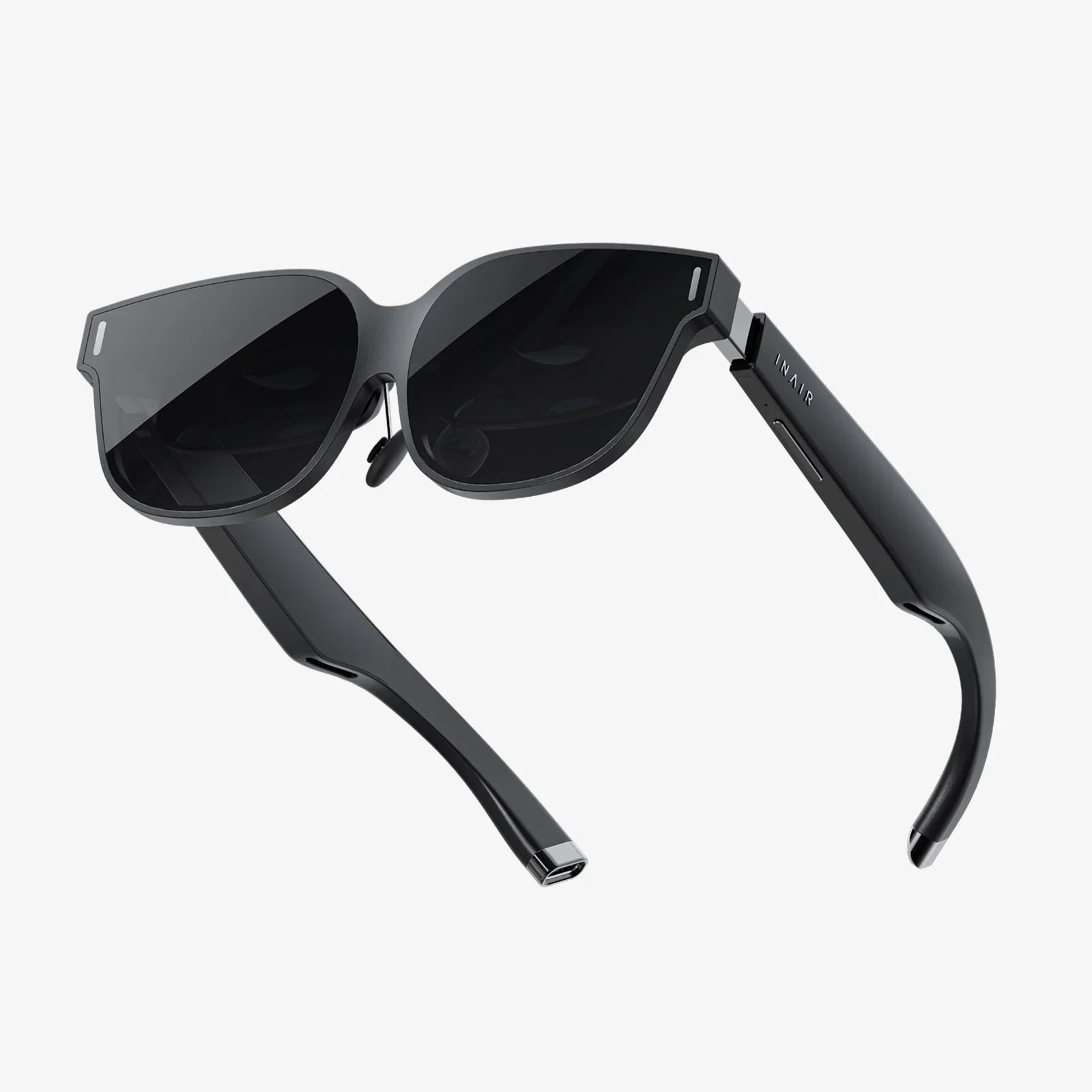
Imagine a world where your digital life doesn’t end at the screen of your phone or computer. Instead, it spills out into your living room, your workspace, and the city streets around you. Information is no longer confined to a 2D pane of glass; it becomes a dynamic, three-dimensional tapestry woven directly into the fabric of your reality. This isn't a scene from a science fiction film; it is the imminent future being built today through the powerful and synergistic convergence of two transformative technologies: augmented reality holographic projection. This fusion promises to fundamentally redefine our relationship with the digital world, creating a seamless, intuitive, and profoundly immersive interface that will change everything from how we work and learn to how we connect and play.
Deconstructing the Dream: Understanding the Core Technologies
To appreciate the revolution of augmented reality holographic projection, one must first understand its constituent parts. While often used interchangeably in popular culture, augmented reality (AR) and holography are distinct concepts that, when combined, create something far greater than the sum of their parts.
What is Augmented Reality?
At its core, Augmented Reality is a technology that superimposes computer-generated perceptual information—be it images, video, sound, or GPS data—onto a user's view of the real world. The key principle is contextual enhancement. Unlike Virtual Reality (VR), which seeks to replace the real world with a simulated one, AR aims to supplement it. This is typically achieved through a device, such as a smartphone, tablet, or, more effectively, a pair of smart glasses. These devices use cameras to capture the real world, processors to analyze it and determine where to place digital assets, and displays to present the composite image to the user.
The Science and Magic of Holography
Holography, on the other hand, is a technique for recording and displaying a light field to reproduce a three-dimensional image of an object. A true hologram is not a flat image with a 3D effect; it is a light-based reconstruction of the original object, possessing depth, parallax, and other properties of a real physical object. You can walk around it and see it from different angles, just as you would a sculpture. Traditional holography, like the security images on credit cards, is static and requires specific lighting conditions to view. The dream of holographic projection, as seen in movies, is to create dynamic, free-floating, volumetric images visible in mid-air without a dedicated screen.
The Powerful Convergence
Augmented reality holographic projection is the marriage of these two ideas. It’s not just about overlaying a 3D model onto a table via a headset's display. It's about creating the perception that photorealistic, volumetric digital objects truly exist in your physical space, often without the need for a mediating screen. This is achieved through advanced display technologies that can project light fields to create realistic depth cues and through sophisticated spatial computing that understands the geometry of an environment to anchor these holograms with rock-solid stability.
The Technological Engine Room: How It All Works
Bringing digital holograms into our physical reality is a monumental technical challenge, solved through a combination of hardware and software innovations.
Spatial Mapping and Computer Vision
The first and most critical step is for the system to understand the environment. Using a combination of cameras, depth sensors (like LiDAR), and inertial measurement units (IMUs), the device scans the room, creating a precise 3D mesh or point cloud. This process, known as spatial mapping, allows the system to identify floors, walls, tables, and other surfaces. This digital twin of the real world enables the precise placement and persistence of holograms. A virtual character can sit on your real couch, and a digital schematic can be pinned to your actual wall, because the system knows exactly where that couch and wall are located in 3D space.
Display Technologies: From Waveguides to Retinal Projection
How the image is delivered to the user's eye is the subject of intense research and development. Several competing approaches are vying for dominance:
- Optical See-Through (OST): Used in many smart glasses, these displays use semi-transparent "waveguides" or combiners that reflect projected light into the user's eye while allowing them to see the real world directly. The digital image is optically overlaid onto reality.
- Video See-Through (VST): Used in some headsets, this method uses outward-facing cameras to capture the real world and then displays a composite video feed of the real world and digital elements on an internal screen. This allows for more control and richer effects but can create a slight latency.
- Volumetric Displays: These are experimental displays that actually create light points in a 3D volume, such as inside a glass case or using rapidly moving mirrors or lasers to excite particles in the air, creating a true "screenless" hologram visible from multiple angles.
- Retinal Projection: An emerging technique that scans lasers directly onto the retina, drawing the image directly onto the eye. This can create incredibly bright and high-contrast images even in well-lit environments.
Tracking and Interaction
For the illusion to hold, the holograms must remain locked in place as the user moves. This requires incredibly precise inside-out tracking, using cameras and sensors to track the user's head and hand movements in real-time. Interaction is then handled through a combination of hand-tracking (using cameras to see your fingers and gestures), voice commands, and sometimes dedicated controllers. The goal is to enable natural, intuitive manipulation of holograms—reaching out to "grab" a virtual object, using a pinch gesture to select a menu, or speaking to command a virtual assistant.
Transforming Industries: The Practical Applications
The potential applications for augmented reality holographic projection extend far beyond novelty and entertainment. It is poised to become a fundamental tool across a vast spectrum of professional fields.
Revolutionizing Medicine and Healthcare
In medicine, this technology is already saving lives and improving outcomes. Surgeons can use AR holograms to overlay a patient's CT or MRI scans directly onto their body during surgery, providing an X-ray vision-like view of anatomy, tumors, or blood vessels without ever looking away from the operating field. Medical students can practice procedures on incredibly detailed, interactive holographic human bodies, dissecting virtual cadavers and exploring systems in 3D. It also holds promise for remote guidance, where an expert surgeon in another location can see the operating theater through the local surgeon's glasses and draw holographic annotations directly into their field of view.
The Future of Manufacturing and Design
In industrial settings, complex machinery can have holographic repair manuals overlaid directly onto them, showing technicians exactly which part to remove and how to do it, reducing errors and training time. Designers and engineers can collaborate around a full-scale, 1:1 holographic prototype of a new car engine or building architecture, walking around it, peering inside, and making changes in real-time before a single physical part is ever manufactured. This accelerates the design process and saves immense costs.
Reimagining Education and Training
Education will be transformed from passive learning to active exploration. Instead of reading about ancient Rome, students can walk through a holographic reconstruction of the Forum. Instead of watching a video of a chemical reaction, they can mix volatile virtual elements with their hands, seeing the results explode in 3D without any danger. This kinaesthetic, visual learning caters to different learning styles and makes complex subjects tangible and unforgettable.
Redefining Retail and Commerce
Imagine "trying on" clothes without ever entering a changing room. With augmented reality holographic projection, a realistic hologram of you could model any garment from an online store. You could see how a new sofa would look and fit in your living room at full scale, or examine every detail of a holographic product model before you buy. This bridges the gap between the convenience of online shopping and the confidence of physical inspection.
The New Frontiers of Entertainment and Social Connection
This is where the technology captures the public's imagination. Live concerts could feature holographic performers interacting with the audience in breathtaking ways. Board games could come to life on your table, with holographic pieces and dynamic environments. The ultimate promise is for truly immersive telepresence—feeling as if a remote person is actually sitting in the room with you as a photorealistic, volumetric hologram, complete with eye contact and body language, making digital communication feel human again.
Navigating the Challenges: Obstacles on the Path to Adoption
Despite the incredible promise, the widespread adoption of true augmented reality holographic projection faces significant hurdles that must be overcome.
- Hardware Limitations: For all-day wear, devices need to be lightweight, comfortable, socially acceptable (looking like regular glasses), and have all-day battery life. Current technology often forces a trade-off between power, size, and cost.
- Visual Fidelity and Latency: The "holograms" must be high-resolution, bright enough to be seen in daylight, and exhibit realistic occlusion (where real objects can block digital ones and vice-versa). Most critically, there must be zero perceptible latency between a user's head movement and the image updating; any lag can cause disorientation and nausea.
- The Social and Ethical Dilemma: The ability to seamlessly alter perceived reality raises profound questions. How do we prevent the creation of convincing, malicious deepfakes in AR? How do we protect privacy when devices are constantly scanning and recording our environments? Who owns the digital space overlaid on our physical world? Establishing norms, regulations, and digital ethics for this new medium is a societal challenge as much as a technical one.
The Invisible Interface: A Glimpse into the Future
The end goal of this technological evolution is not to create a world cluttered with floating screens and distracting animations. The goal is to create an invisible interface. The technology itself will fade into the background, becoming as unnoticeable as a pair of prescription glasses. The information and digital objects it provides will feel like a natural extension of our cognition and our environment—available precisely when and where we need them, and disappearing when we don't. It will augment our human capabilities, helping us remember, learn, create, and connect in ways previously unimaginable.
We are standing at the precipice of a new era of computing, one that moves beyond the confines of the screen and into the boundless canvas of our reality. The journey to perfect, ubiquitous augmented reality holographic projection is still underway, but the path is clear. It’s a future where the line between atoms and bits finally blurs, where our digital and physical selves merge, and where our imagination becomes the only limit to what we can create and experience. The world is about to gain a new dimension, and it will change everything.
Share:
What Is Needed for Augmented Reality: The Essential Components Unveiled
What Is Needed for Augmented Reality: The Essential Components Unveiled