


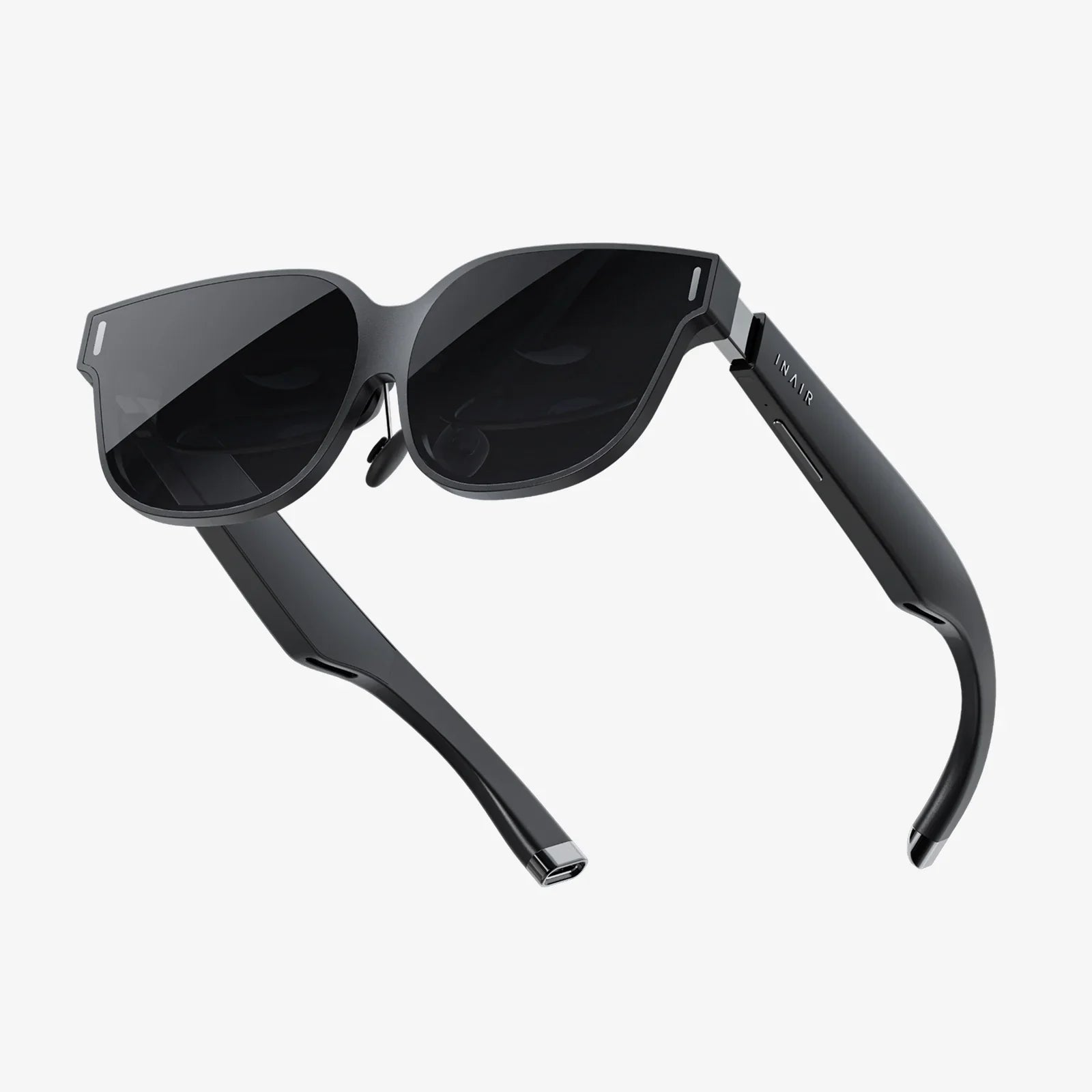
Imagine a world where digital information seamlessly blends with your physical surroundings, where your glasses can translate a street sign instantly, a mechanic can see repair instructions overlaid on an engine, and a surgeon can visualize a patient's anatomy in real-time during a procedure. This is the promise of augmented reality (AR), a technology poised to revolutionize how we work, learn, and interact. But this magic doesn't happen by itself; it's the result of a sophisticated and intricate dance between advanced hardware, powerful software, and visionary design. Unlocking this potential requires understanding the fundamental building blocks—the essential ingredients needed to transform this sci-fi dream into an everyday tool.
The Hardware Foundation: Seeing and Processing the World
At its core, AR is a bridge between the digital and the physical. To build this bridge, the system first needs to perceive and understand the world around it. This is the primary role of AR hardware, a collection of sensors and components that act as the eyes and brain of the operation.
Sensors: The Eyes of AR
The magic of AR begins with data acquisition. A suite of sensors works in concert to gather real-time information about the user's environment.
- Cameras: The most obvious sensor, one or more cameras capture the live video feed of the user's surroundings. This 2D visual data is the canvas upon which digital content is painted. Higher resolution cameras allow for more precise environmental understanding and sharper overlays.
- Depth Sensors: A standard camera sees the world in two dimensions. To understand the world in three dimensions, many AR systems employ specialized depth sensors. Technologies like time-of-flight (ToF) sensors or structured light projectors measure the distance to every object in the field of view, creating a detailed 3D map, or "point cloud," of the environment. This is crucial for understanding where virtual objects can be placed and how they should interact with physical geometry.
- Inertial Measurement Units (IMUs): Comprising accelerometers, gyroscopes, and magnetometers, the IMU is the unsung hero of AR tracking. It measures the device's precise orientation, rotation, and acceleration at incredibly high speeds. This provides the low-latency, high-frequency data needed to keep digital content locked in place even as the user's head or device moves rapidly. Without a robust IMU, virtual objects would jitter, drift, and feel completely disconnected from reality.
- LiDAR (Light Detection and Ranging): Particularly prominent in modern mobile devices, LiDAR scanners fire out thousands of invisible laser points to measure how long they take to bounce back. This creates an incredibly fast and accurate 3D map of the environment, enabling instant placement of objects and superior occlusion (where real-world objects can pass in front of virtual ones).
- Microphones and Speakers: For a truly immersive experience, audio is paramount. Spatial audio, which makes sounds seem like they are coming from a specific point in the room, is a powerful tool for directing user attention and enhancing realism. Microphones also enable voice commands, a natural and hands-free method of interaction.
Processors: The Brain of the Operation
All the raw data from the sensors is useless without a powerful brain to process it. This is where the central processing unit (CPU), graphics processing unit (GPU), and increasingly, specialized AI chips come into play.
- CPU/GPU: The CPU handles the general operating system and application logic, while the GPU is critical for rendering high-fidelity 3D graphics at high frame rates (typically 60fps or higher) to ensure a smooth and believable experience. A laggy or poorly rendered overlay instantly shatters the illusion of immersion.
- AI & Neural Engines: Modern AR is deeply intertwined with artificial intelligence and machine learning. Dedicated neural processing units (NPUs) are essential for tasks like object recognition (e.g., identifying a chair or a specific machine part), plane detection (finding horizontal and vertical surfaces), and simultaneous localization and mapping (SLAM). SLAM algorithms are the cornerstone of spatial awareness, allowing the device to both map an unknown environment and track its own position within that map in real-time.
Displays: The Window to a Augmented World
This is how the user views the merged reality. Display technology varies widely depending on the form factor.
- Optical See-Through: Used in smart glasses and helmets, these displays use waveguides, holographic mirrors, or other optical combiners to project digital images directly into the user's eyes while allowing them to see the real world through the lens. This requires incredibly miniaturized projectors and complex optics.
- Video See-Through: Used in smartphones and some headsets, these displays show the user a live video feed from the front-facing cameras, with the digital content composited on top. While this can sometimes introduce a slight latency, it allows for powerful effects like dimming or modifying the real world.
Form Factors: From Handheld to Head-Worn
The combination of these components defines the AR device category.
- Smartphones and Tablets: The most accessible entry point. They pack cameras, IMUs, and powerful processors into a familiar form factor, using their screen for video see-through AR.
- Standalone Headsets: All-in-one devices that offer a more immersive, hands-free experience. They integrate all necessary sensors, processors, and displays into a single wearable unit.
- Tethered Headsets: These headsets rely on a connection to a powerful external computer or console to handle the heavy processing and graphics rendering, offering the highest possible fidelity but sacrificing mobility.
- Smart Glasses: The holy grail of consumer AR. These aim to be as lightweight and socially acceptable as regular glasses while providing contextual information. They represent the pinnacle of hardware miniaturization challenges.
The Software Ecosystem: The Invisible Architect
Hardware provides the raw capability, but software is the intelligence that brings it all together. The software stack is what developers use to create AR experiences and what enables the hardware to function cohesively.
Operating Systems and Platforms
Modern mobile operating systems have built-in AR capabilities. These platforms provide the foundational software layers that abstract the complex hardware interactions, offering developers standardized tools through APIs (Application Programming Interfaces). This allows developers to create AR apps without needing to write low-level code for every different sensor.
Software Development Kits (SDKs) and APIs
SDKs are the essential toolkits for AR creation. They provide a suite of software tools, libraries, documentation, and sample code that empower developers to build applications efficiently. Key features provided by these SDKs include:
- Motion Tracking: Using the IMU and camera data to precisely track the device's movement in 3D space.
- Environmental Understanding: APIs for detecting horizontal planes (floors, tables) and vertical planes (walls), estimating lighting conditions, and creating mesh geometry of the environment.
- Object and Image Recognition: The ability to identify specific 2D images (like a poster) or 3D objects (like a toy) and anchor content to them.
- User Interaction: Tools for handling touch inputs, voice commands, and even hand-tracking gestures to allow users to manipulate virtual objects.
3D Engines
Most AR experiences are built on top of powerful 3D game engines. These engines provide the rendering power, physics simulation, and asset management systems needed to create compelling and interactive 3D content. They have become the de facto standard for professional AR development, offering plugins that tightly integrate with AR SDKs.
The AR Cloud: A Persistent Shared Layer
Perhaps the most futuristic and critical software component needed for the next generation of AR is the concept of the "AR Cloud." Think of it as a persistent, digital twin of the real world stored in the cloud. This would allow for experiences that are shared across users and persistent over time. For example, one user could leave a virtual note on a restaurant table, and another user with an AR device could see it days later. The AR Cloud is the infrastructure needed for a truly collaborative and context-aware AR world, solving the problem of digital content being locked to a single device.
Beyond Technology: The Human and Conceptual Framework
Technology alone is not enough. For AR to be truly effective and adopted widely, it must be built on a foundation of thoughtful design and clear purpose.
Compelling Content and Use Cases
The hardware and software are merely a vessel. What fills that vessel is content. The most critical ingredient is a clear and valuable use case. AR for the sake of AR is a gimmick. Successful applications solve real problems or provide unique value:
- Enterprise: Remote assistance, complex assembly guidance, and interior design visualization.
- Education: Interactive learning models that bring textbooks to life.
- Retail: Trying on clothes virtually or seeing how furniture looks in your home before buying.
- Navigation: Arrow overlays on the street for walking directions.
Intuitive User Interface (UI) and User Experience (UX)
Interacting in a 3D space is fundamentally different from tapping a 2D screen. Traditional UI paradigms break down. Designers must invent new intuitive ways for users to interact with digital content using gaze, gesture, and voice. The UX must be designed to minimize fatigue, avoid obscuring critical real-world vision, and feel like a natural extension of the user's capabilities. Poor UX can render powerful technology frustrating and unusable.
Connectivity: The Data Lifeline
While some AR experiences are self-contained, the most powerful ones are connected. High-speed, low-latency connectivity, particularly with the rollout of advanced cellular networks, is crucial for streaming complex 3D models, accessing the AR Cloud, and enabling multi-user experiences in real-time. Lag or dropped connections can severely disrupt the immersive illusion.
Power Management: The Unsung Challenge
Processing high-resolution camera feeds, running complex SLAM algorithms, and rendering 3D graphics is incredibly power-intensive. This is a major constraint, especially for wearable devices. Advancements in battery technology and extreme optimization for power efficiency are non-negotiable requirements for creating all-day wearable AR devices that people will actually use.
The journey to a seamlessly augmented world is not dependent on a single breakthrough but on the harmonious convergence of countless technologies. From the microscopic lasers in a depth sensor to the vast computational power of the cloud, and from the lines of code in an SDK to the visionary mind of a designer, each component is an indispensable thread in the tapestry of AR. It is this intricate interplay—this symphony of hardware, software, and human creativity—that will ultimately allow us to not just view our world, but to enhance it, interact with it, and redefine its very possibilities.
Share:
Augmented Reality Holographic Projection: The Future of Digital Interaction is Here
Augmented Reality Holographic Projection: The Future of Digital Interaction is Here