


Imagine a world where digital information doesn't just live on a screen but is seamlessly woven into the fabric of your everyday life, where the boundaries between the physical and the virtual blur into an extraordinary new reality. This is the promise of augmented reality (AR), a technology poised not for a distant future, but for a transformative present. The potential is limitless, constrained only by the imagination, and the search for the next great augmented reality idea is driving one of the most significant technological revolutions of our time. The question is no longer if AR will change everything, but how you will harness its power to innovate, educate, and inspire.
The Foundation: Understanding the AR Landscape
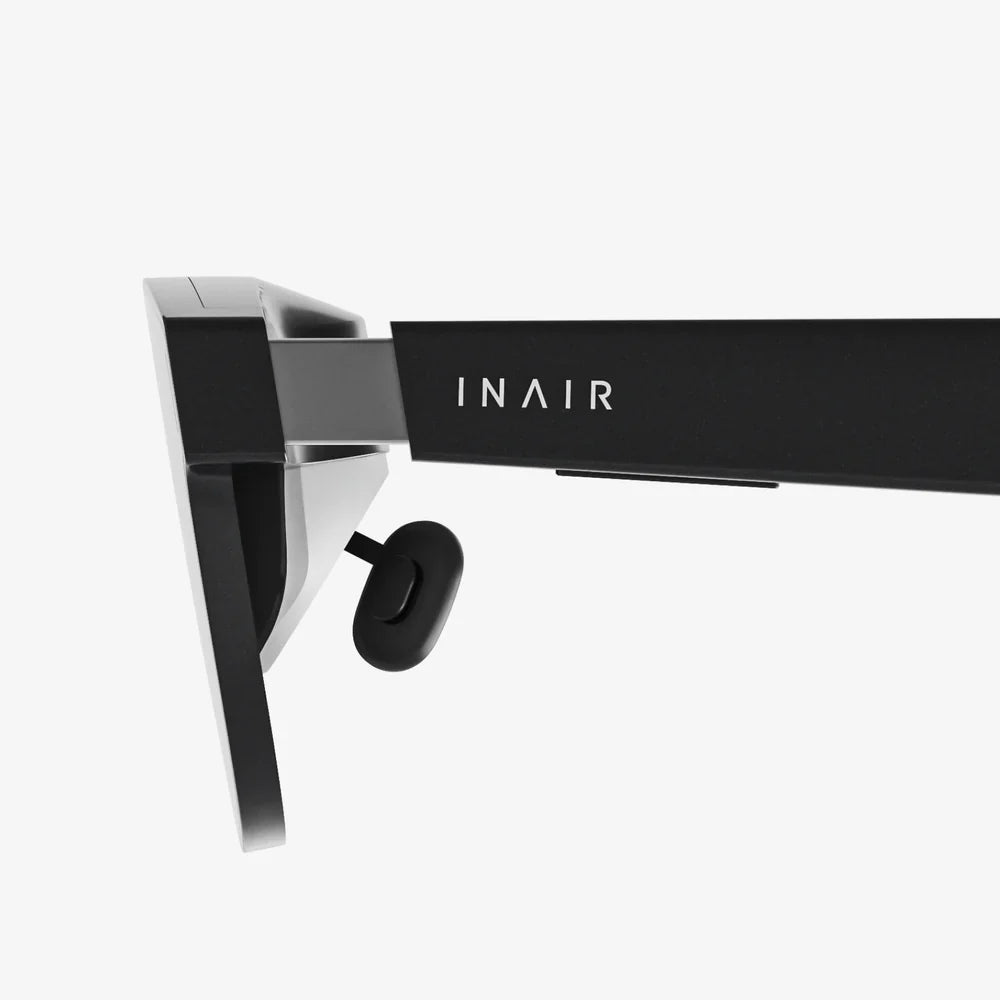
Before diving into specific applications, it's crucial to grasp what augmented reality truly is. Unlike virtual reality, which creates a completely digital environment, AR overlays computer-generated content—images, video, sound, and haptic feedback—onto our real-world view. This is achieved through devices like smartphones, tablets, smart glasses, and emerging head-mounted displays. The magic lies in its ability to contextualize information, making it immediately relevant to what the user is seeing and doing at that very moment. This core principle of context-aware enhancement is the bedrock upon which all powerful augmented reality ideas are built.
Revolutionizing Retail and E-Commerce
The retail sector has been one of the earliest and most enthusiastic adopters of AR, and the ideas here continue to evolve in sophistication and utility.
Virtual Try-On and Preview
One of the most immediate applications is allowing customers to visualize products in their space or on their person before purchasing. Imagine pointing your device at your living room wall to see how a new piece of art would look, or "trying on" glasses, makeup, or even clothing from the comfort of your home. This idea drastically reduces purchase hesitation and minimizes return rates, creating a more confident and satisfying consumer journey.
Interactive In-Store Navigation and Information
Inside physical stores, AR can transform the shopping experience. Customers could use an app to navigate large stores, receiving visual arrows on their screen guiding them to the items on their list. By pointing their device at a product, they could instantly access detailed specifications, customer reviews, comparable items, and even inventory levels for different sizes or colors, all without needing to find a store associate.
Transforming Education and Training
Perhaps one of the most profound areas for augmented reality ideas is in learning, where it can move education from abstract to tangible.
Bringing Textbooks and History to Life
Static images in textbooks can become interactive 3D models. A chapter on the human heart could allow students to explore a beating, scalable organ from every angle. History lessons can be transformed by overlaying historical figures, events, or reconstructions of ancient ruins onto modern-day locations, creating an immersive and unforgettable connection to the past.
Complex Skill Acquisition and Simulation
From medical students practicing complex surgical procedures on digital overlays to mechanics learning to repair a new engine model with step-by-step instructions superimposed onto the actual machinery, AR provides a safe, repeatable, and cost-effective training environment. This hands-on, learn-by-doing approach accelerates proficiency and reduces the risk associated with training on expensive equipment.
Innovating in Healthcare and Medicine
The stakes are high in healthcare, and the augmented reality ideas in this field are nothing short of life-changing.
Enhanced Surgical Precision and Visualization
Surgeons can use AR headsets to see critical patient data, such as heart rate or blood pressure, without looking away from the operating field. More advanced applications can project 3D reconstructions from CT or MRI scans directly onto the patient's body, effectively giving clinicians "X-ray vision" to guide incisions and navigate complex anatomy with unprecedented precision.
Patient Education and Rehabilitation
Doctors can use AR to visually explain a diagnosis or surgical procedure to a patient, making complex medical information easier to understand. In physical therapy, AR games and visual cues can guide patients through rehabilitation exercises, ensuring correct form and providing motivating feedback to improve outcomes.
Enhancing Industrial Design and Manufacturing
On factory floors and in design studios, AR is becoming an indispensable tool for prototyping, maintenance, and assembly.
Digital Prototyping and Design
Designers and engineers can project full-scale 3D models of new products into a physical space, allowing them to assess form, function, and ergonomics without the cost and time of building physical prototypes. Multiple stakeholders can collaborate around a virtual model, making real-time changes and annotations.
Remote Expert Assistance and Maintenance
A field technician facing a complex repair can wear AR glasses that allow an expert located anywhere in the world to see their field of view. The remote expert can then annotate the technician's reality with arrows, diagrams, and instructions, guiding them through the process hands-free. This idea dramatically reduces downtime, travel costs, and errors.
Reshaping Tourism and Navigation
Exploring new cities and navigating complex environments is being redefined through AR.
Contextual Historical and Cultural Tours
Tourists can point their devices at a monument, building, or street and see it overlaid with historical images, informational text, or even recreations of historical events. This creates a deeply personalized and rich touring experience, moving beyond audio guides to a truly visual and interactive history lesson.
Intuitive Indoor and Outdoor Navigation
AR can solve the final few feet of navigation that GPS cannot. Instead of looking at a blue dot on a 2D map, users can see directional arrows and markers superimposed onto the real world through their camera, guiding them to the correct gate in an airport, the right shelf in a supermarket, or a specific product in a department store.
The Future Frontier: The AR Cloud and Social Interaction
The most ambitious augmented reality ideas revolve around the development of a persistent, shared digital layer over the world—often called the AR Cloud.
Persistent World Anchors
This concept involves creating a digital twin of the real world where digital content can be permanently anchored to a specific location. This allows for shared experiences; for example, anyone passing a particular spot could see the same virtual art installation or access the same informational landmark, creating a collective layer of intelligence and culture over our physical spaces.
The Evolution of Social Connection
Social media will evolve from feeds on a screen to shared experiences in AR. Friends could leave virtual notes for each other in specific locations, watch a virtual concert together from their own homes while seeing each other's avatars react, or collaborate on a virtual project placed on a real table. This idea promises to create a new paradigm for human interaction that is both physically distant and experientially close.
Getting Started: From Idea to Implementation
For those inspired to create their own augmented reality ideas, the path is more accessible than ever. A multitude of development platforms and software development kits (SDKs) exist that abstract away the complex computer vision and tracking algorithms, allowing creators to focus on the user experience and content. The key to a successful idea is to start with a genuine human need or a clear problem that can be solved by enhancing reality, rather than simply adding a digital layer for its own sake. The most powerful applications are those that feel intuitive, provide real utility, and seamlessly integrate into the user's workflow or daily life.
The world is on the cusp of an augmented age, a shift as significant as the dawn of the mobile internet. The physical world is becoming a new canvas, a dynamic interface waiting to be unlocked. The most transformative augmented reality ideas are likely still in their infancy, germinating in the minds of developers, designers, and dreamers who look at the world not just for what it is, but for the incredible potential of what it could become. The tools are here, the technology is ripe, and the opportunity to shape this new layer of reality is open to anyone with the vision to see it.
Share:
What Is The Difference Between AR And VR Technology - A Comprehensive Guide To The Digital Frontier
AR(VR) Immersive Experiences Are Redefining Reality: A Deep Dive into the Digital Frontier