


Imagine a world where digital dinosaurs roam your living room or you can attend a business meeting on the surface of Mars without leaving your desk. This is no longer the stuff of science fiction but the tangible reality being built today through two revolutionary technologies: Augmented Reality (AR) and Virtual Reality (VR). While often mentioned in the same breath, they represent two fundamentally different approaches to blending the digital and physical realms. Understanding the difference between AR and VR technology is not just a matter of tech semantics; it's the key to unlocking the future of computing, communication, and human experience itself.
The Core Philosophical Divide: Enhancement vs. Immersion
At its heart, the difference between AR and VR is a philosophical one. It’s a question of relationship with our existing reality.
Augmented Reality (AR) is best understood as a layering technology. Its primary goal is to enhance and augment our real-world environment by superimposing computer-generated perceptual information onto it. This can include visual elements, sounds, haptic feedback, and even olfactory data. AR does not seek to replace the world around you but to add a digital dimension to it, making it more informative, interactive, and engaging. You remain present in your actual environment, but that environment is now enriched with data and digital objects.
In contrast, Virtual Reality (VR) is a technology of replacement. Its objective is to fully immerse the user in a completely synthetic, digital environment, effectively shutting out the physical world. By donning a headset, you are transported to a computer-generated reality, whether it’s a simulated training ground, a fantastical game world, or a virtual meeting space. VR technology tricks your senses into believing you are somewhere you are not, creating a powerful sense of presence within a world that does not physically exist.
Hardware and User Experience: The Gear That Shapes the Journey
The philosophical divide between AR and VR is most visibly manifested in the hardware required to experience them. The devices are designed for entirely different purposes and thus offer vastly different user experiences.
Virtual Reality Hardware: The Immersion Pod
VR requires dedicated hardware to create its isolating, immersive effect. The primary apparatus is a head-mounted display (HMD), often referred to simply as a VR headset. These devices are typically bulky, as they contain:
- High-Resolution Displays: One for each eye, providing a stereoscopic 3D view.
- Precise Head-Tracking Sensors: Gyroscopes, accelerometers, and magnetometers that track the rotation and orientation of your head in real-time, updating the virtual view accordingly.
- External Sensors or Cameras (for some systems): To track the position of the headset and controllers within a physical space, known as room-scale VR.
- Integrated Headphones: For spatial 3D audio that enhances the sense of immersion.
- Opaque Enclosure: The headset completely blocks your field of view, ensuring no light from the real world breaks the illusion.
Beyond the headset, VR often employs motion-tracked controllers that allow users to interact with the virtual world using their hands. For the deepest level of immersion, some setups include omnidirectional treadmills for natural locomotion and haptic feedback suits that simulate touch and impact. The experience is all-encompassing but also inherently isolating from one's immediate physical surroundings.
Augmented Reality Hardware: The Subtle Enhancement
AR hardware is far more varied and, in many cases, more accessible. It ranges from specialized equipment to devices billions already own.
- Smartphones and Tablets: The most common gateway to AR. Using the device's camera, screen, and sensors, apps can overlay digital content onto a live view of the world. This makes AR instantly accessible to a massive audience.
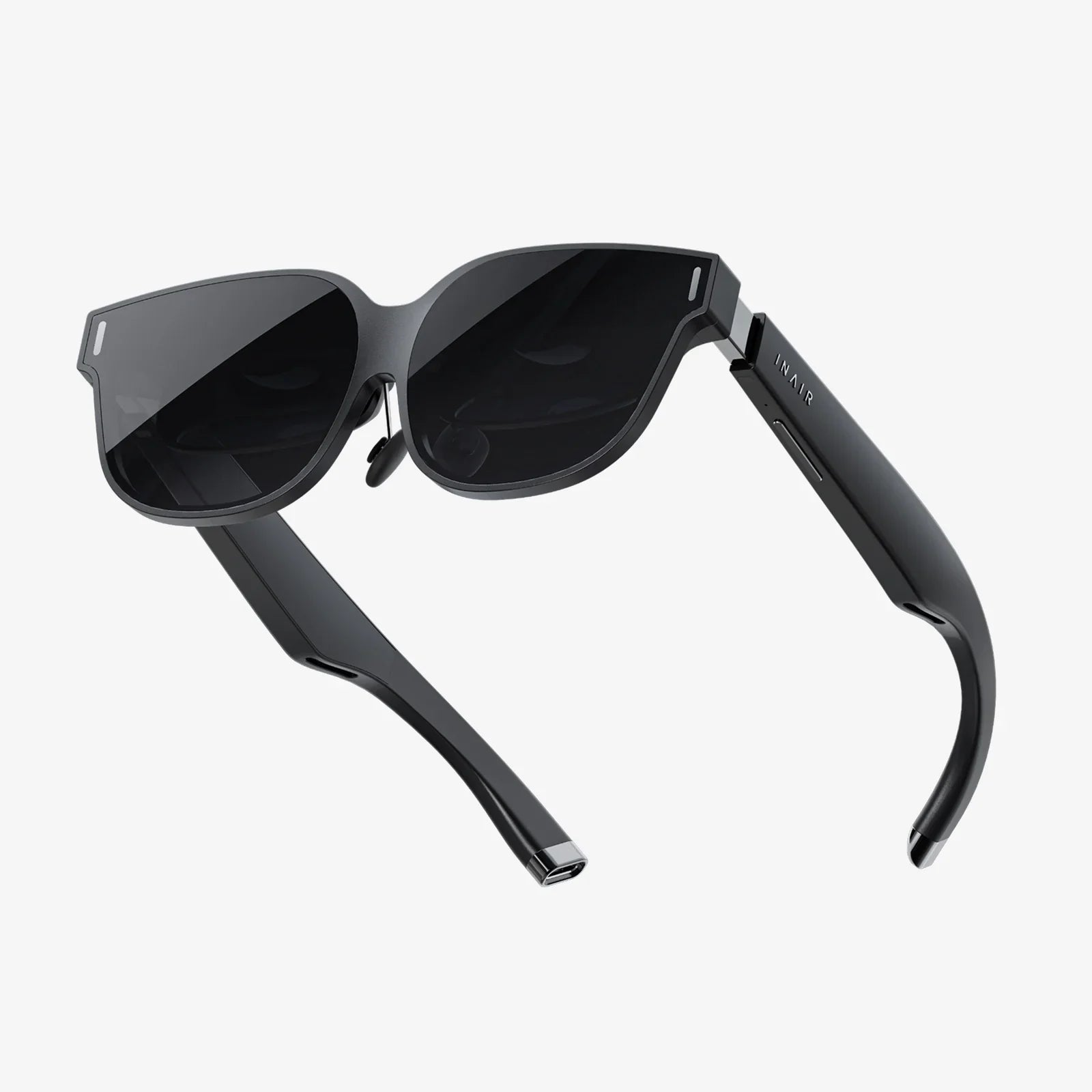
- Smart Glasses and Lenses: These represent the ideal form factor for AR. They are wearable glasses that project digital images onto their lenses or into the user's eyes, allowing them to see the blended reality hands-free. They range from consumer-focused models to enterprise-grade versions used in logistics and manufacturing.
- Heads-Up Displays (HUDs): Long used in fighter jet cockpits and now increasingly in automotive windshields, HUDs project critical information like speed and navigation into the user's line of sight, allowing them to stay focused on their primary task.
The key differentiator is that AR hardware is designed to be transparent or to use pass-through cameras, always keeping the user connected to their real environment. The experience is about contextual information, not total escape.
Under the Hood: The Technological Engine Room
While both AR and VR rely on overlapping fields like computer graphics and sensor fusion, their technical challenges and focuses differ significantly.
VR's Technical Hurdles: Building a Believable World
The paramount challenge for VR is achieving and maintaining immersion. Any technical flaw can break the fragile sense of "presence." Key focus areas include:
- Latency: The delay between a user's movement and the corresponding update in the display must be imperceptibly low (under 20 milliseconds). High latency is the primary cause of motion sickness in VR.
- Display Resolution and Refresh Rate: To avoid the "screen door effect" and create smooth, realistic visuals, VR demands very high-resolution displays and high refresh rates (90Hz or higher).
- Precise Tracking: Both head and controller tracking must be millimeter-accurate to make the virtual world feel solid and responsive.
- Rendering Power: Generating two high-frame-rate, high-resolution views simultaneously requires immense graphical processing power.
VR technology is largely focused inward, on perfecting the user's perception of the virtual world.
AR's Technical Hurdles: Understanding the Real World
AR's greatest challenge is not building a new world but understanding and integrating with the existing one. Its core technologies are centered on perception:
- Computer Vision: This is the bedrock of AR. Algorithms must be able to identify surfaces, planes (floors, tables), objects, and spatial geometry through a camera feed to know where to place digital content convincingly.
- Simultaneous Localization and Mapping (SLAM): This complex technology allows an AR device to simultaneously map an unknown environment and track its own position within that map in real-time. This is essential for digital objects to stay locked in place.
- Environmental Understanding: Advanced AR systems need to understand lighting conditions, occlusions (having a digital character walk behind a real chair), and physics to make the blend between real and digital seamless.
- Registration and Tracking: Keeping a digital object perfectly aligned with a real-world point, even as the user moves, is a constant computational challenge.
AR technology is focused outward, using sensors to comprehend the environment and then deciding how to augment it.
A World of Applications: From the Operating Room to the Living Room
The distinct nature of AR and VR naturally leads them to solve different types of problems across various industries.
Virtual Reality's Realm: Training, Simulation, and Deep Engagement
VR excels in situations where the physical world is a distraction, a danger, or simply impossible.
- Training and Simulation: Surgeons practice complex procedures without risk to patients. Pilots train for emergency scenarios in a perfectly simulated cockpit. Soldiers prepare for combat missions in virtual recreations of hostile territories. The cost savings and risk mitigation are enormous.
- Gaming and Entertainment: This is VR's most famous application. It offers unparalleled immersion, allowing gamers to step inside their favorite worlds and experience stories as a protagonist, not just an observer.
- Architecture and Design: Architects and clients can take full-scale walkthroughs of unbuilt buildings. Car designers can sit inside a virtual model of a vehicle and examine every detail long before a physical prototype is made.
- Therapy and Rehabilitation: VR is used to treat phobias (like fear of heights or flying) through controlled exposure in a safe environment. It's also used for physical rehabilitation, turning exercises into engaging games.
Augmented Reality's Realm: Information, Assistance, and Context
AR shines when information needs to be delivered contextually and immediately within a user's workflow.
- Industrial Maintenance and Repair: A technician wearing AR glasses can see schematics overlaid on a malfunctioning machine, receive step-by-step instructions, or even get remote expert guidance with annotations drawn directly into their field of view.
- Healthcare: Nurses can use AR to find veins more easily for injections. Surgeons can have vital signs and 3D scans projected onto their patient during an operation.
- Retail and E-commerce: Customers can use their phones to see how a new sofa would look in their living room or how a pair of glasses would look on their face before making a purchase.
- Navigation: AR can project arrows and directions onto the real world through a phone or windshield, making urban navigation intuitive.
- Education: Textbooks come alive with 3D models of the human heart or historical artifacts. Students can interact with digital content layered over their physical classroom.
The Blurring Lines and The Hybrid Future
While the differences are clear, the line between AR and VR is beginning to blur with the advent of Mixed Reality (MR) and passthrough VR. MR is often seen as a more advanced subset of AR, where digital objects not only coexist with the real world but can interact with it intelligently (e.g., a virtual ball bouncing off a real table).
Furthermore, many modern VR headsets now feature high-resolution color passthrough cameras. This allows them to function in a passthrough AR mode, using their powerful sensors and processors to understand the environment and overlay digital content with high fidelity. This convergence suggests that future devices may not be strictly AR or VR but adaptable "XR" (Extended Reality) devices capable of spanning the entire spectrum from full immersion to subtle augmentation based on the user's needs.
Choosing Your Reality: A Matter of Purpose
So, which technology is superior? The question is misguided. The choice between AR and VR is not about which is better, but about which is the right tool for the job.
Ask yourself: Is the goal to escape the real world or to enhance it? Do you need complete immersion or contextual information? Must the user be isolated or remain connected to their physical surroundings?
For deep training, immersive storytelling, and experiencing the impossible, VR is the unparalleled choice. For on-the-job assistance, visualizing products in your home, and overlaying data onto your immediate tasks, AR is the clear winner. Together, they are not competing technologies but complementary forces, both pushing the boundaries of how we perceive, interact with, and ultimately shape our reality.
The digital layer is settling over our physical world, and the boundaries between what is real and what is rendered are dissolving. Whether you choose to step entirely into a new dimension or simply paint it over your own, one thing is certain: the way we work, learn, play, and connect is on the verge of a transformation more profound than the advent of the smartphone. The era of spatial computing is here, and understanding the distinct magic of AR and VR is your first step into this new frontier.
Share:
Augmented Reality How To: A Comprehensive Guide for Beginners and Developers
Augmented Reality Ideas: Transforming Industries and Redefining Human Experience