


- by wangfred
Augmented Reality Impact on Business: Reshaping Operations and Customer Experiences
- by wangfred
Imagine a world where digital information doesn't just live on a screen but is seamlessly woven into the fabric of our physical reality, a world where a factory technician can see the inner workings of a malfunctioning machine simply by looking at it, where a shopper can visualize a new sofa in their living room before clicking 'buy,' and where a surgeon can see a patient's vital statistics floating in their peripheral vision during a complex procedure. This is not a distant science fiction fantasy; it is the present and rapidly evolving reality of augmented reality (AR) and its monumental impact on the global business landscape. The convergence of the physical and digital worlds is unlocking unprecedented value, creating new revenue streams, and fundamentally altering how companies operate, compete, and connect with their customers.
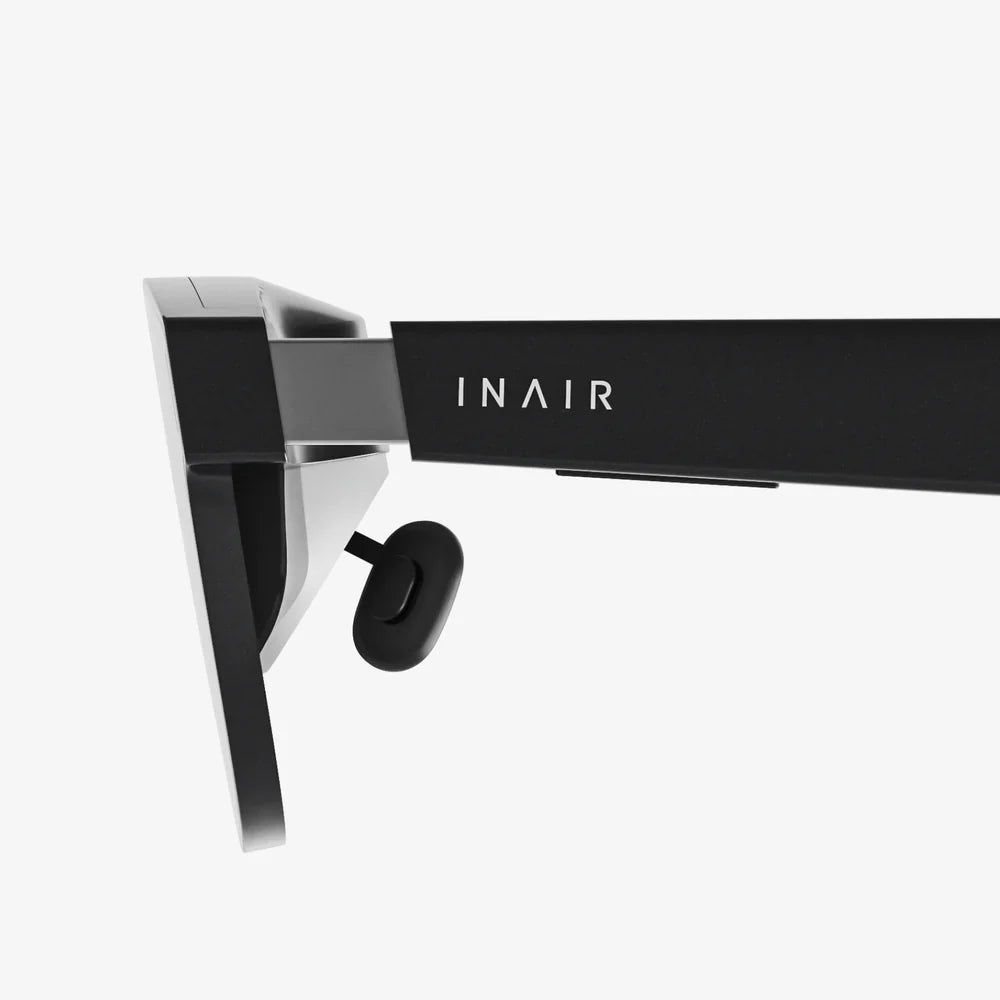
Before delving into its transformative effects, it is crucial to distinguish augmented reality from its technological cousins. Unlike Virtual Reality (VR), which creates a completely immersive, computer-generated environment that replaces the user's real world, AR overlays digital content—such as images, video, 3D models, and data annotations—onto the user's view of their immediate physical surroundings. This is typically achieved through devices like smartphones, tablets, smart glasses, and heads-up displays. The core value proposition of AR lies in its ability to provide contextually relevant information at the precise moment and location it is needed, enhancing the user's perception of and interaction with reality rather than replacing it.
The technology operates through a sophisticated interplay of hardware and software. Cameras and sensors on a device scan the environment to understand its geometry and surfaces. Simultaneously, computer vision algorithms identify objects and track their position and orientation in real-time. This allows the software to accurately anchor digital assets to the physical world, making it appear as though a virtual character is truly standing on your desk or a new piece of machinery is integrated into your factory floor. This technological ballet enables a new paradigm of human-computer interaction, one that is intuitive, spatial, and immensely powerful for business applications.
One of the most significant areas where the augmented reality impact on business is being felt is within internal enterprise operations. Companies are leveraging AR to enhance efficiency, reduce errors, and empower their workforce with superhuman capabilities.
Traditional training methods, often reliant on bulky manuals, videos, or shadowing experienced colleagues, can be time-consuming, costly, and inconsistent. AR is revolutionizing this process by creating interactive, hands-on training simulations. New employees can wear AR glasses to receive step-by-step visual instructions overlaid directly onto the equipment they are learning to operate. For instance, a trainee mechanic can see digital arrows pointing to specific components, warnings highlighting potential hazards, and animated guides demonstrating complex assembly procedures. This form of experiential learning dramatically accelerates the onboarding process, improves knowledge retention, and ensures that every trainee receives the same high-quality instruction, regardless of location.
The concept of 'see what I see' has become a powerful tool for solving problems and facilitating collaboration across vast distances. With AR-powered remote assistance, a field service technician encountering a complex issue can don smart glasses and stream a live video feed of their viewpoint to an expert colleague located thousands of miles away. The remote expert can then annotate the technician's live field of view with arrows, circles, and notes, literally drawing the solution onto the real world. This allows for precise guidance, reduces the need for expensive expert travel, and minimizes equipment downtime. This application has proven invaluable in industries from aerospace and energy to healthcare and telecommunications, enabling a decentralized yet highly skilled workforce.
In manufacturing and warehouse settings, AR is driving unprecedented gains in accuracy and speed. In complex assembly lines, workers using AR displays can see digital work instructions superimposed on the product they are building, highlighting the exact location for each part and verifying the correct installation. This reduces cognitive load, minimizes errors, and shortens production cycles. In logistics and warehousing, 'pick-by-vision' systems guide warehouse operatives through fulfillment centers using AR glasses that display the most efficient route and visually indicate the exact shelf and item to pick. This eliminates guesswork, drastically reduces picking errors, and optimizes the entire supply chain workflow.
Beyond internal operations, the most visible augmented reality impact on business is in the realm of customer engagement. AR is breaking down the barriers between the digital and physical shopping experiences, creating deeper emotional connections and providing consumers with unparalleled confidence in their purchasing decisions.
Perhaps the most celebrated consumer application of AR is in retail. Furniture and home decor companies now allow customers to use their smartphone cameras to place true-to-scale 3D models of products into their own living spaces. They can walk around the virtual item, see how it looks from different angles, and ensure it fits perfectly with their existing decor. Similarly, cosmetics brands offer virtual try-on apps where users can see how different shades of lipstick, eyeshadow, or foundation will look on their own face in real-time. The fashion industry is following suit with virtual fitting rooms for clothes and accessories. This capability significantly reduces purchase hesitation and product returns, while simultaneously providing a fun, engaging, and highly memorable brand interaction.
Marketing campaigns are being supercharged by AR, moving from static posters and flat-screen ads to interactive, immersive experiences. A print advertisement in a magazine can come to life with a 3D animation when viewed through a phone. A product package can unlock hidden games, tutorials, or additional product information. At events and in physical stores, AR can create captivating brand experiences, such as virtual mascots that interact with guests or historical timelines that unfold on a wall. This 'wow' factor not only grabs attention in a crowded marketplace but also fosters a stronger, more positive association with the brand, transforming passive observers into active participants.
Post-purchase support is another area ripe for disruption. Instead of wrestling with confusing paper manuals or scrolling through endless FAQ pages, customers can now use an AR app to point their phone at a product. The app can identify the product model and overlay interactive instructions, animated guides for troubleshooting, or highlight specific buttons and ports. For a consumer trying to assemble flat-pack furniture or configure a complex home entertainment system, this visual guidance is infinitely more intuitive than traditional methods, leading to higher customer satisfaction and reduced support call volumes.
Despite its immense potential, integrating AR into a business strategy is not without its challenges. A successful implementation requires careful planning and a clear-eyed view of the obstacles.
The development of robust AR experiences demands significant investment in software development, 3D modeling, and cloud computing infrastructure. Creating high-fidelity 3D assets that are optimized for real-time rendering on consumer devices is a specialized and resource-intensive task. Furthermore, for enterprise applications, the hardware—particularly dedicated AR glasses—must be comfortable for all-day wear, have long battery life, and be durable enough for industrial environments. While the hardware is rapidly improving, cost can still be a barrier for widespread deployment.
Designing for AR is fundamentally different from designing for a 2D screen. It requires a deep understanding of spatial computing, user safety (ensuring digital objects don't obstruct critical real-world vision), and intuitive gesture or voice controls. A poorly designed AR experience that is difficult to use, disorienting, or provides little value will be quickly abandoned. Businesses must prioritize user-centric design and focus on solving a genuine user pain point rather than deploying AR for its own sake.
AR applications, by their very nature, process vast amounts of visual and spatial data from the user's environment. This raises critical questions about data privacy, security, and ownership. Businesses must be transparent about what data is being collected, how it is being used, and how it is protected. Establishing clear policies and ensuring compliance with regulations is paramount to building and maintaining user trust.
The current applications of AR are merely the tip of the iceberg. As technology advances with the rollout of faster 5G networks, more powerful and smaller hardware, and improvements in artificial intelligence, the possibilities will expand exponentially. We are moving towards a world of persistent AR, where digital layers of information are permanently tied to locations and objects, creating a shared, collaborative digital twin of our physical world. The lines between online and offline will blur into irrelevance, giving rise to truly phygital experiences.
The metaverse, often discussed in the context of VR, will likely be primarily accessed and experienced through AR, serving as a contextual interface to a world of digital information and social connection. For businesses, this represents the ultimate convergence of data and reality, enabling hyper-personalized services, real-time data visualization for decision-making, and entirely new forms of commerce and collaboration that we are only beginning to imagine.
The businesses that will thrive in this new era are those that start exploring AR today. They are the ones running pilot programs, investing in the necessary skills and technology, and adopting a mindset of experimentation. They understand that this is not just about adopting a new technology, but about preparing for a fundamental shift in how we compute, communicate, and consume. The question for modern enterprises is no longer if augmented reality will impact their business, but how profoundly and how quickly they can adapt to harness its transformative power.
The convergence of bits and atoms is already rewriting the rules of commerce, manufacturing, and customer service. From the factory floor to the retail store, augmented reality is empowering employees with X-ray vision-like guidance and captivating customers with magical, immersive experiences that were once the stuff of fantasy. The businesses that learn to paint with this new palette of spatial computing will not only future-proof their operations but will unlock a competitive advantage so profound, it will redefine the very nature of their industry. The door to a richer, more intuitive, and infinitely more connected world is now open; the only step left is to walk through it.
Share:
Most Expensive AI Glasses: The Ultimate Fusion of High Fashion and Cutting-Edge Technology
Overview of Augmented Reality: Blending the Digital and Physical Worlds