


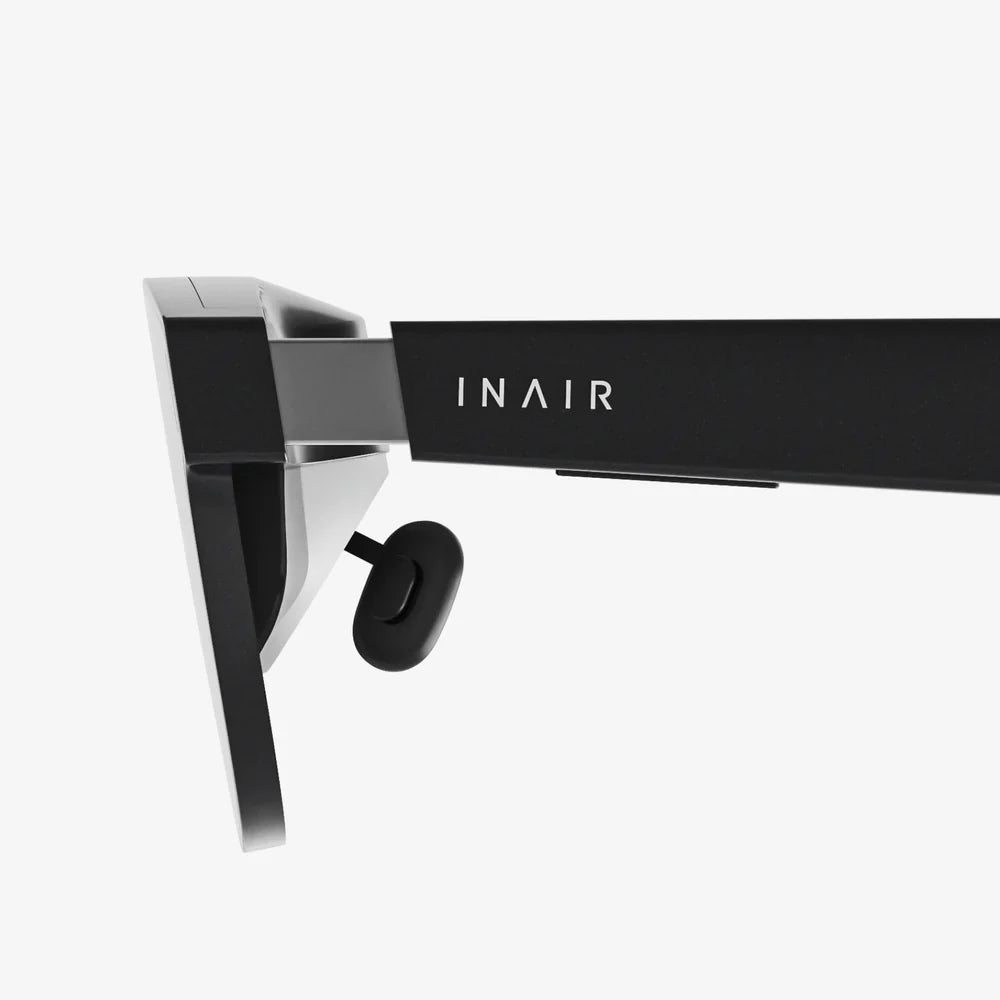
- by wangfred
Overview of Augmented Reality: Blending the Digital and Physical Worlds
- by wangfred
Imagine a world where digital information doesn't just live on a screen but is seamlessly woven into the very fabric of your physical surroundings—where historical figures narrate their stories on the street corners where they once stood, where complex engine repairs are guided by floating holographic arrows, and where your living room transforms into a battlefield for fantastical creatures. This is not a distant science fiction fantasy; it is the burgeoning reality being built today through the rapid advancement of augmented reality. This technology promises to fundamentally alter our perception of reality, merging the boundless potential of the digital realm with the tangible richness of the physical world, and this overview will serve as your comprehensive guide to its past, present, and exhilarating future.
At its essence, Augmented Reality (AR) is a technology that superimposes a computer-generated overlay—encompassing images, sounds, text, and even haptic feedback—onto a user's view of the real world. Unlike Virtual Reality (VR), which creates a completely immersive, digital environment that replaces the real one, AR enhances reality by adding to it. The goal is not to escape the physical world but to enrich it with contextual, interactive, and digital information. This creates a composite view that exists somewhere on the spectrum between the entirely real and the purely virtual, a concept often referred to as the Mixed Reality (MR) continuum.
The magic of AR lies in its three defining characteristics:
While AR feels like a modern innovation, its conceptual roots are surprisingly deep. The term "augmented reality" is credited to former Boeing researcher Thomas Caudell in 1990, but the pursuit of blending digital and physical began much earlier.
In 1968, computer scientist Ivan Sutherland, with the help of his student Bob Sproull, created what is widely considered the first head-mounted display system, known as The Sword of Damocles. This monstrous apparatus, so intimidating it was named after a threatening ancient Greek legend, used primitive computer graphics to display simple wireframe shapes that users could see superimposed over their physical environment. It was the foundational proof-of-concept that such a merger was possible.
The 1990s saw the first functional applications beyond the lab. The US Air Force's ARMAR project created a head-up display to help mechanics with complex repair tasks by overlaying wiring diagrams and instructions onto their field of view. In 1998, sports fans witnessed an early form of broadcast AR when the virtual "1st & Ten" line was first used during a live NFL game, seamlessly painting a yellow line onto the field for television viewers.
The true catalyst for mainstream awareness arrived in the 2010s with the proliferation of powerful smartphones. The combination of high-resolution cameras, fast processors, accurate sensors (gyroscopes, accelerometers, GPS), and robust mobile operating systems created a perfect platform for AR. This culminated in the 2016 global phenomenon, Pokémon GO, which demonstrated the mass-market appeal and addictive potential of location-based AR gaming, captivating hundreds of millions of users worldwide.
Creating a convincing and responsive augmented experience requires a sophisticated fusion of hardware and software components working in concert.
The value of AR extends far beyond gaming and entertainment. It is proving to be a powerful tool for solving real-world problems and enhancing efficiency across numerous sectors.
AR is revolutionizing medical training and patient care. Medical students can practice complex surgical procedures on detailed, interactive 3D holograms of human anatomy, reducing risk and improving learning outcomes. Surgeons can use AR headsets to overlay critical information—such as a patient's vital signs, 3D reconstructions of tumors, or guidance for precise incisions—directly into their field of view during an operation, minimizing the need to look away at monitors. AR can also assist nurses in finding veins for injections or help patients better understand their conditions through visualizations.
In industrial settings, AR is a game-changer for efficiency and accuracy. Warehouse workers wearing smart glasses can have order-picking instructions and optimal routes displayed before their eyes, dramatically speeding up fulfillment and reducing errors. Field service technicians can access interactive repair manuals and receive remote expert guidance, with annotations appearing directly on the malfunctioning equipment they are looking at. On assembly lines, AR can project digital templates onto physical objects, guiding workers through complex wiring or assembly tasks step-by-step.
AR is closing the gap between online shopping and the in-store experience. Customers can use their smartphones to "try on" everything from sunglasses and makeup to watches and hats. Furniture retailers offer apps that allow users to place true-to-scale 3D models of sofas, tables, and decor into their own living rooms to see how they look and fit before purchasing. This not only enhances consumer confidence but also significantly reduces return rates.
AR brings learning to life, transforming abstract concepts into tangible, interactive experiences. History students can take a walking tour of ancient Rome, seeing reconstructed buildings rise around them. Biology students can dissect a virtual frog or explore a life-sized, beating human heart from the inside. Mechanics-in-training can practice on virtual engine models, and chemistry students can safely conduct volatile experiments with digital molecules.
Professionals in the AEC industry use AR to visualize building designs at scale on the actual construction site. Architects and clients can walk through a full-scale holographic model of a building before a single brick is laid, allowing for design changes and approvals in context. On-site, construction crews can see where hidden elements, like electrical conduits or plumbing, are located behind walls, preventing costly mistakes and accidents.
Despite its immense potential, the widespread adoption of AR faces several significant hurdles that technologists and society must address.
The trajectory of AR points toward a future where digital information becomes an ambient, constant, and contextual layer over our reality. The eventual goal is the development of stylish, socially acceptable smart glasses that rival the functionality of today's smartphones, eventually aiming for a form factor as commonplace as regular eyeglasses. This will be powered by advancements in 5G/6G connectivity for cloud processing, AI for more natural and predictive interactions, and micro-optics for better displays.
We are moving toward the concept of the "spatial web" or "Web 3.0," where the internet breaks free from the confines of pages and screens and becomes mapped onto the physical world. Information will be tied to locations and objects, accessible simply by looking at them. This will unlock new paradigms for collaboration, communication, and creativity, fundamentally changing how we work, learn, shop, and socialize.
The line between the digital and the physical will continue to blur, creating a world where our environment is not just something we observe, but something we can actively shape and interact with in real-time. The potential is limited only by our imagination, and the journey to redefine reality itself has only just begun.
The world you see through your phone's camera is just a glimpse of what's to come; the next time you look around your room, your street, or your workplace, try to envision the invisible digital layer waiting to be unlocked—a dimension of information, storytelling, and utility that will soon become an indispensable part of everyday life, transforming not just what we see, but how we connect, create, and understand the universe around us.
Share:
Augmented Reality Impact on Business: Reshaping Operations and Customer Experiences
AR VR to Feature Displays: The Next Frontier in Visual Interface Technology