


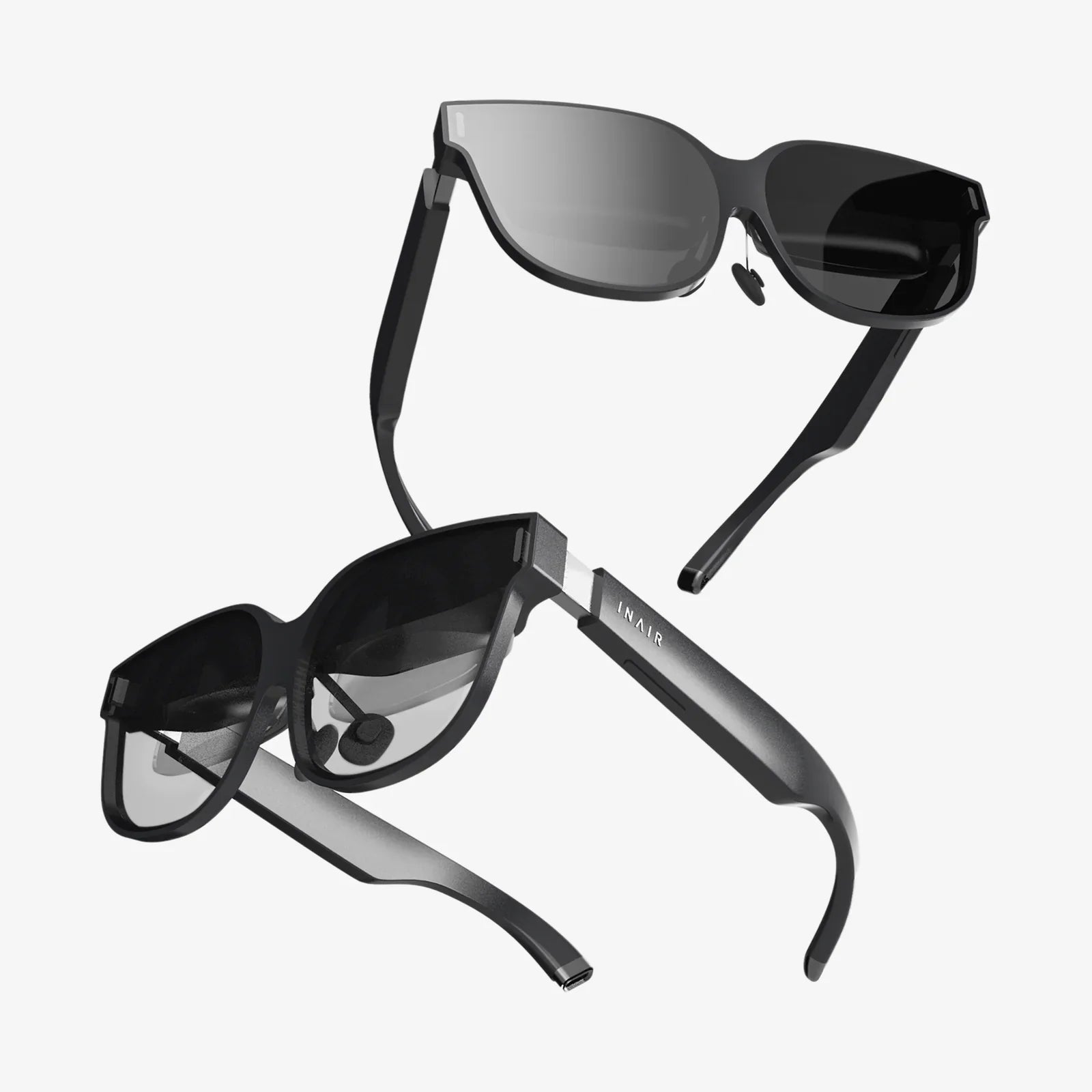
Imagine a world where digital instructions overlay a complex engine for a mechanic, where historical figures narrate their stories on a city street through your phone, or where a new piece of furniture is perfectly visualized in your living room before you buy it. This is no longer the realm of science fiction; it is the tangible, transformative power of augmented reality implementation, and it's reshaping how we interact with information, our environment, and each other. For forward-thinking businesses and developers, the question is no longer if AR will be relevant, but how to successfully implement it to create meaningful, engaging, and valuable experiences.
Demystifying the Core: What is Augmented Reality?
Before embarking on implementation, it's crucial to understand the fundamental technology. Augmented Reality (AR) is an interactive experience that superimposes computer-generated perceptual information—be it visual, auditory, haptic, or somatosensory—onto the user's real-world environment. Unlike Virtual Reality (VR), which creates a completely artificial digital environment, AR enhances the real world by adding a digital layer to it. This is achieved through a combination of hardware and software working in concert.
The Technological Pillars of AR
Successful augmented reality implementation rests on several key technological pillars:
- Sensing: Cameras and sensors (LiDAR, depth sensors) scan the physical environment to understand its geometry, surfaces, and lighting conditions.
- Understanding: Computer vision algorithms and Simultaneous Localization and Mapping (SLAM) technology process this sensor data to map the environment and track the user's position within it with remarkable accuracy.
- Rendering: The AR software renders the digital content (3D models, animations, text, video) in real-time, ensuring it aligns perfectly with the physical world's perspective and scale.
- Display: This rendered content is then presented to the user through a display, which can range from smartphones and tablets to specialized smart glasses and heads-up displays.
The Strategic Imperative: Why Invest in AR Now?
The drive for augmented reality implementation is fueled by more than just technological novelty; it offers concrete strategic advantages across numerous sectors.
Transforming Enterprise and Industrial Operations
In industrial settings, AR is a game-changer. It provides workers with hands-free, contextual information exactly when and where they need it. Technicians can see wiring diagrams overlaid on machinery, warehouse pickers can have optimal routes and item locations highlighted in their vision, and assembly line workers can receive step-by-step visual instructions directly on the assembly station, drastically reducing errors and training time.
Revolutionizing Retail and E-Commerce
The retail sector has been an early adopter of consumer-facing AR. Implementation allows customers to "try before they buy" in an unprecedented way. They can visualize how a new sofa will fit and look in their living room, "try on" watches or makeup virtually, or see how a new coat of paint would transform their home's exterior. This not only enhances customer engagement but also significantly reduces purchase hesitation and product return rates.
Enhancing Training and Education
AR creates immersive, interactive learning experiences that are far more effective than traditional methods. Medical students can practice complex surgical procedures on detailed 3D holograms of human anatomy. Mechanics can train on virtual engine models. History students can explore ancient ruins rebuilt in AR. This "learning by doing" in a risk-free environment accelerates comprehension and retention.
The Blueprint for Success: A Phased Approach to Implementation
Jumping into AR without a clear plan is a recipe for failure. A structured, phased approach is essential for a successful outcome.
Phase 1: Ideation and Defining the Use Case
This is the most critical phase. The goal is not to use AR for the sake of it, but to solve a real problem or create a unique value proposition. Ask fundamental questions: What specific user pain point are we addressing? How does AR provide a superior solution compared to existing methods? What is the key performance indicator (KPI) for success—is it reduced training time, increased sales conversion, or fewer assembly errors? A well-defined use case with clear objectives is the foundation of everything that follows.
Phase 2: Choosing the Right Technology Stack
With a defined use case, you can now select the appropriate technology. This involves several decisions:
- Device Targeting: Will the experience be marker-based (using a specific image to trigger the AR) or markerless (using SLAM for environment tracking)? Will it be built for smartphones (a wider reach) or for dedicated AR glasses (hands-free, more immersive)?
- Development Platform: Several robust software development kits (SDKs) and platforms exist for building AR experiences. The choice depends on the required features, supported devices, and development team's expertise.
- Content Creation: High-quality 3D models and animations are the heart of most AR experiences. You must decide whether to create these assets in-house or partner with a specialized 3D content studio.
Phase 3: Design and Development with the User in Mind
AR user experience (UX) design is a unique discipline. Principles from traditional screen-based design do not directly apply. Designers must consider the physical environment, user safety, and intuitive interaction models. How does a user place an object? How do they interact with it? How is the UI positioned in space so it is readable but not obstructive? Development then brings this design to life, focusing on performance optimization to ensure a smooth, stable experience that doesn't drain device batteries or overheat them.
Phase 4: Rigorous Testing and Deployment
Testing AR applications is complex. They must be tested in a multitude of real-world environments with different lighting conditions, surface textures, and physical obstacles. User acceptance testing (UAT) is vital to gather feedback on usability and intuitiveness. Deployment strategies vary; an industrial app for a specific headset will be distributed differently than a consumer-facing retail app on public app stores.
Phase 5: Maintenance, Analytics, and Iteration
An AR application is not a "fire-and-forget" project. It requires ongoing maintenance to ensure compatibility with new operating systems and devices. Furthermore, integrating analytics is crucial to measure the KPIs defined in Phase 1. How long are users engaging? What actions are they taking? This data provides invaluable insights for iterating on the experience and planning future enhancements.
Navigating the Challenges: Common Pitfalls and How to Avoid Them
The path to successful augmented reality implementation is fraught with potential obstacles. Awareness is the first step to mitigation.
Technical Hurdles: Performance and Fragmentation
AR is computationally intensive. Delivering a high-fidelity experience that runs smoothly on a range of devices is a significant challenge. Developers must be adept at optimization. Furthermore, the ecosystem is fragmented, with different devices offering varying capabilities in terms of sensors and processing power. Designing for the lowest common denominator or creating tiered experiences can help address this.
The User Experience Conundrum
A poorly designed AR experience can be confusing, frustrating, and ultimately dismissed as a gimmick. Overcoming the novelty factor to create a truly useful tool requires deep user empathy and rigorous testing. Onboarding is critical—users need to quickly understand how to interact with the digital content in their physical space.
Content Creation and Management
Creating accurate, high-quality 3D assets can be time-consuming and expensive. For large-scale implementations, like visualizing an entire product catalog in AR, a streamlined process for creating, managing, and updating this digital content is a necessity, often requiring a dedicated content management system (CMS) for AR.
The Future is Overlaid: Where AR is Headed
The technology underlying AR is advancing at a breathtaking pace. We are moving towards ever more seamless and immersive experiences.
The Rise of the Spatial Web and Wearables
The future of AR is inextricably linked to the development of lighter, more powerful, and socially acceptable smart glasses. As these wearables become commonplace, AR will evolve from a purpose-driven app to a persistent layer of information and interaction over our entire world—a concept often called the "Spatial Web" or the "Metaverse." This will redefine communication, collaboration, and how we access information.
Integration with Artificial Intelligence
The fusion of AR and AI will unlock new levels of intelligence and context-awareness. AI will power more robust object recognition, allowing AR systems to not just see a table, but understand it is a table and know its properties. It will enable semantic understanding of environments, predictive information display, and more natural, voice-driven interactions.
The journey of augmented reality implementation is a complex but immensely rewarding one. It demands a strategic mindset, a user-centric approach, and a willingness to navigate a rapidly evolving technological landscape. From the factory floor to the retail store, from the classroom to the living room, AR is proving its value as more than a novelty—it is a fundamental tool for enhancing human capability and understanding. The digital and physical worlds are converging, and the organizations that master the art of blending them will be the ones to define the next era of human-computer interaction, creating experiences that are not just seen but truly lived.
Share:
Immersive Augmented Reality Services Are Redefining Reality and Reshaping Industries
AI Glasses Comparison: A Deep Dive into the Future on Your Face