


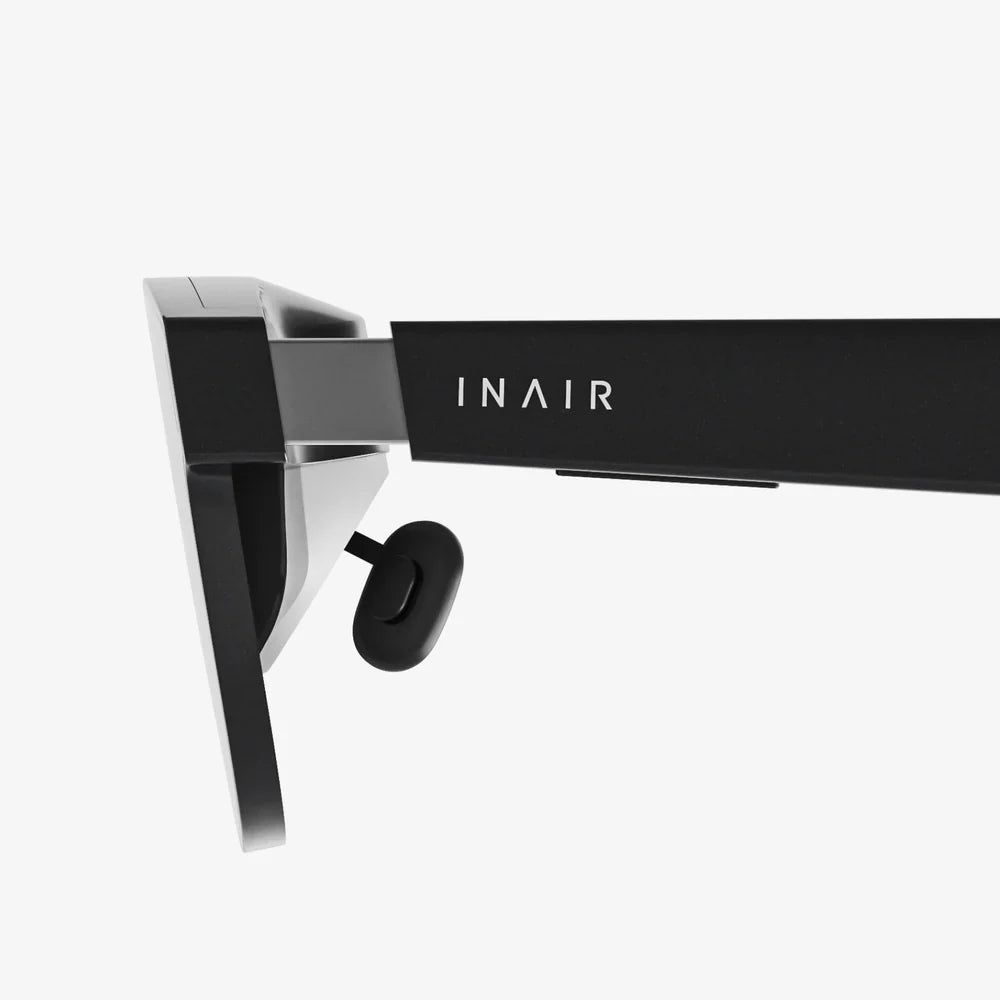
Imagine a world where information flows seamlessly into your field of vision, where language barriers dissolve with a whisper, and where the digital and physical realms merge into a single, intuitive experience. This is no longer the stuff of science fiction; it’s the burgeoning reality promised by AI glasses. The market is rapidly evolving from niche prototypes to consumer-ready devices, each vying to be your window to an augmented world. But with great potential comes a complex landscape of choices. This deep dive into the world of AI glasses comparison will cut through the hype, equipping you with the knowledge to discern the subtle yet critical differences between these futuristic wearables and find the pair that truly aligns with your vision of the future.
Defining the Category: More Than Just a Screen on Your Face
Before we can compare, we must define. AI glasses are not simply miniature displays attached to frames. They are a sophisticated convergence of hardware and software, designed to perceive, process, and project contextual information onto your real-world view. At their core, they are defined by a suite of integrated technologies:
- Advanced Microphones: Array microphones that use beamforming technology to isolate your voice from ambient noise, enabling clear voice commands and calls.
- High-Resolution Cameras: Sensors that act as the "eyes" of the device, capturing the world for object recognition, translation, and photography.
- Inward-Facing Sensors: Some models feature sensors that monitor your eye movement and attention, creating a more intuitive interface.
- Audio Systems: Open-ear speakers or bone conduction technology that delivers sound directly to your ears without blocking out environmental noise, crucial for situational awareness.
- Onboard Processing & Connectivity: A mini-computer in the arms of the glasses, often powered by a dedicated neural processing unit (NPU) for efficient AI tasks, connected via Bluetooth to your smartphone or with its own cellular connection.
- The Display (or Lack Thereof): This is the single greatest differentiator. Some models use MicroLED projectors to cast a transparent, holographic-like image onto specially coated lenses. Others forgo a visual display entirely, focusing purely on auditory AI assistance.
The Core Battlegrounds: Key Points of Comparison
When placing AI glasses side-by-side, several critical categories emerge that separate the contenders from the pretenders.
1. The Primary Function: Assistant, Recorder, or Navigator?
Not all AI glasses are created with the same purpose. Your first decision point is identifying the primary utility you seek.
- The Audio-Centric Assistant: These models prioritize discrete, voice-first interaction. They lack a visual display and function as an always-available, auditory AI companion. Their strengths lie in making calls, listening to music and podcasts, getting voice answers to questions, and receiving notifications—all hands-free. They excel at being an unobtrusive extension of your smartphone.
- The Visual Augmentation Pioneer: This category incorporates a transparent display, aiming to overlay digital information onto the real world. Use cases include seeing turn-by-turn navigation floating on the street, reading translated text in real-time as you look at a foreign menu, or viewing a presentation slide during a walk. The experience is more immersive but can be more battery-intensive and, in some early iterations, less socially discreet.
- The First-Person Capture Device: Some glasses are engineered primarily as a wearable camera for capturing photos and videos from a first-person perspective. The AI enhances this by enabling voice-controlled commands ("take a video"), object tracking, and automatic highlighting of key moments.
2. The Form Factor: Fashion, Discretion, and Comfort
If you won't wear them, their features are irrelevant. Form factor is paramount.
- Style and Aesthetics: Do they look like traditional eyewear, or do they scream "tech gadget"? Comparisons often reveal a stark contrast between models that prioritize a normal, even fashionable, appearance and those where the technology is visibly apparent through thicker arms or a prominent front-facing module.
- Weight and Balance: The distribution of battery and compute modules can make the difference between all-day comfort and a nagging headache. Lighter models with balanced weight are consistently rated higher for extended wear.
- Modularity: A significant advantage is the ability to swap out lenses. Can you purchase prescription lenses, sunglasses tints, or blue-light filtering options? This flexibility greatly enhances the value proposition, transforming the device from a tech toy into a true replacement for your everyday glasses.
3. The AI and Ecosystem: Brainpower and Boundaries
The "AI" in AI glasses isn't a monolith. Its capabilities and limitations are a major point of differentiation.
- On-Device vs. Cloud AI: Simpler commands may be processed directly on the glasses for speed and privacy. More complex queries, like image recognition or sophisticated translation, are typically sent to the cloud via your connected phone. The speed and reliability of this connection are crucial. Some high-end models are beginning to incorporate more powerful on-device AI to reduce latency and work offline.
- The Underlying AI Model: Most glasses leverage a major cloud-based large language model (like GPT-4, Gemini, or a proprietary equivalent) to power their conversational and generative capabilities. The choice of model can influence the quality, creativity, and accuracy of the responses you receive.
- Platform Integration: How deeply do the glasses integrate with your smartphone's operating system? Seamless access to your calendar, messages, maps, and music apps creates a cohesive experience. A closed or limited ecosystem can feel restrictive.
4. Battery Life and Performance: The Reality of Daily Use
Manufacturer claims often meet reality in harsh ways. Real-world battery life is a key comparison metric.
- Active Use vs. Standby: Battery life can vary dramatically between playing music, recording video, using the visual display, or simply being on and connected for notifications. A model might offer 8 hours of music playback but only 2 hours of continuous video recording.
- Charging Solutions: Is the charging case a sleek, portable power bank that offers multiple full charges, or is it a bulky dock? Can the glasses be used while charging? These practicalities significantly impact the user experience.
- Thermal Management: Intensive AI tasks and display usage generate heat. How well a design manages this thermals affects both comfort and sustained performance, preventing throttling during extended use.
5. Privacy and The Social Contract: The Unseen Elephant in the Room
This is perhaps the most sensitive and important area for comparison. A device with a camera and microphone on your face inherently raises concerns.
- Visual Indicators: The gold standard is a clear, always-visible LED light that illuminates when the camera is active. This informs those around you that recording is happening. The placement and brightness of this light are critical for trust.
- Audio Cues: Similarly, a distinct sound should play when initiating a video recording, ensuring it's not done covertly.
- Data Handling Policies: It is essential to compare the privacy policies of different manufacturers. Where is your data stored? Is it used to train their AI models? Can you delete it? Transparency here is a major competitive advantage for companies that prioritize it.
Looking Ahead: The Future of Augmented Vision
The current generation of AI glasses is merely the foundation. The pace of innovation is staggering, and the next few years will bring transformative changes. We are moving towards more powerful and efficient dedicated AI chipsets that will enable complex real-time object recognition and scene analysis entirely on the device, eliminating latency and privacy concerns associated with cloud processing. Display technology will advance towards retinal projection and holographic waveguides, creating brighter, fuller-color images that are visible in all lighting conditions without the need for dark tinted lenses. Ultimately, the goal is a pair of glasses that are indistinguishable from classic eyewear in form factor yet contain the computational power of a modern smartphone, offering a truly magical and seamless interface between ourselves and the digital universe.
The perfect pair of AI glasses doesn't exist yet—it's a deeply personal equation balancing functionality, form, and philosophy. But the journey to find them starts now. By looking beyond the marketing slogans and focusing on these core comparison points, you can navigate this exciting new frontier not as a bewildered consumer, but as an informed pioneer, ready to select the lens through which you'll view the next chapter of technology.
Share:
Augmented Reality Implementation: A Strategic Guide to Bridging the Digital and Physical Worlds
Augmented Reality Learning: Transforming Education from Classrooms to Corporate Training