


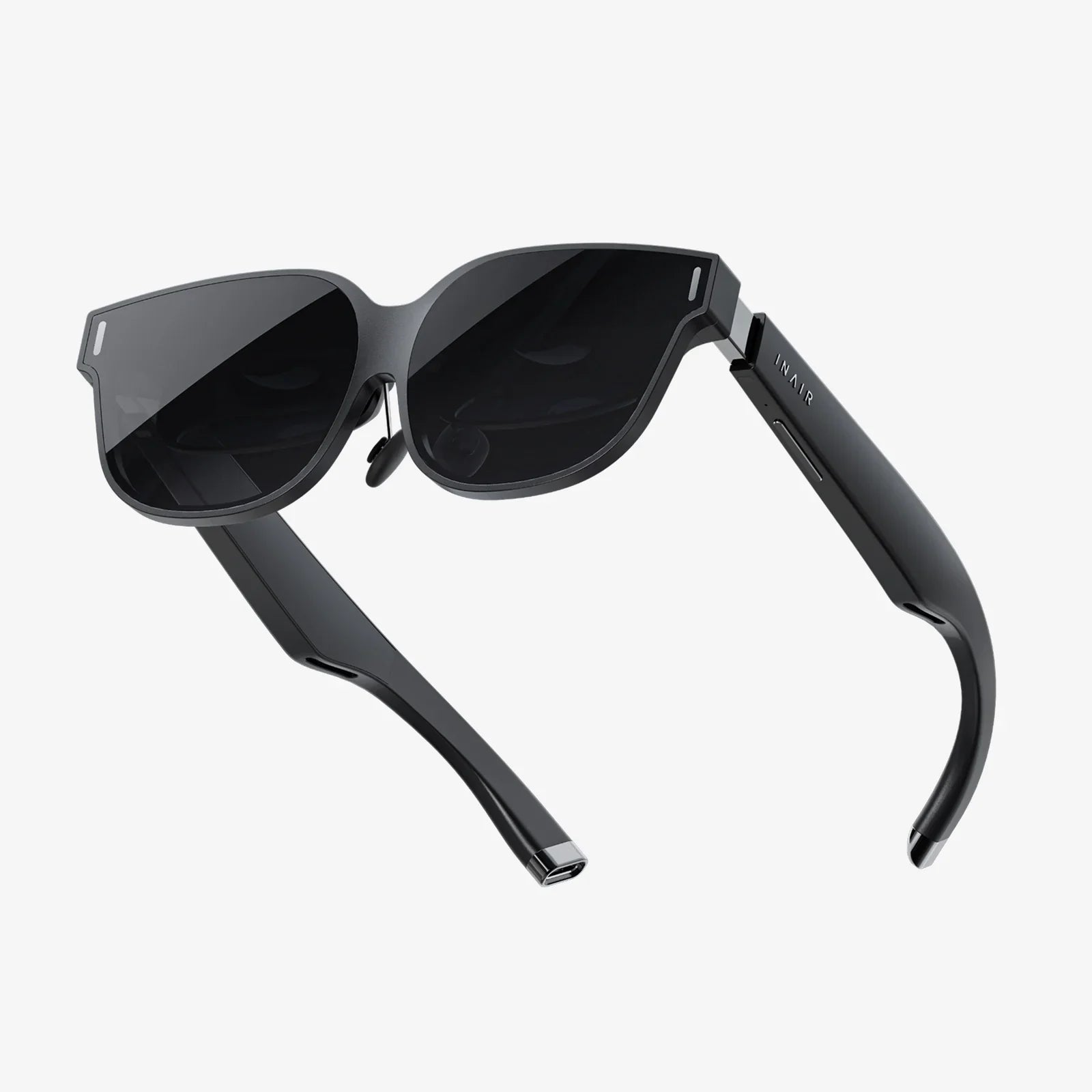
Imagine a world where the digital and physical seamlessly intertwine, where information overlays your field of vision, and remote experts can guide your hands through complex tasks from thousands of miles away. This is not a distant science fiction fantasy; it is the rapidly approaching reality being forged by the monumental shifts within the augmented reality industry. By 2025, the very fabric of how we work, learn, shop, and connect is poised for a revolution, driven by a convergence of technological advancements and evolving user expectations. The journey into this immersive future is already underway, and its potential is nothing short of breathtaking.
The Foundation: From Niche Novelty to Mainstream Infrastructure
The path to 2025 is built upon the significant progress of the past decade. The augmented reality industry has successfully navigated its early phase of novelty applications and proof-of-concept projects. The hardware, once clunky and prohibitively expensive, is evolving towards greater accessibility, comfort, and performance. Similarly, the software development kits and creation tools have matured, empowering a new generation of developers to build sophisticated AR experiences without needing a background in advanced computer vision.
This maturation is critical. It signifies a shift from asking if AR is possible to solving the practical challenges of how it will be implemented at scale. The focus for 2025 is on creating robust, reliable, and valuable experiences that seamlessly integrate into daily workflows and consumer lives, moving beyond marketing gimmicks to become indispensable tools.
Trend 1: The Unstoppable Rise of the Spatial Web and WebAR
Perhaps the most significant democratizing force in the AR landscape is the development of the Spatial Web and the proliferation of WebAR. The concept of the Spatial Web refers to a future iteration of the internet where digital information is mapped onto the physical world, creating a unified, context-aware experience.
WebAR is the key that unlocks this vision for the masses. Unlike traditional AR, which requires users to download a dedicated application, WebAR runs directly within a mobile web browser.
- Zero-Friction Access: Users can experience AR simply by clicking a link, eliminating the download barrier and vastly increasing potential reach for marketing campaigns, educational tools, and public information displays.
- Cross-Platform Compatibility: WebAR standards ensure experiences work across a wide range of devices and operating systems, making it a truly universal platform.
- The Democratization of AR: By 2025, we anticipate a massive explosion of WebAR content. Every major retailer will offer ‘view in your room’ features directly on their product pages, museums will provide interactive exhibit overlays via a simple QR code, and navigation apps will project arrows onto the street through your phone’s camera, all without an app install.
This trend will make AR an organic part of the internet browsing experience, fundamentally changing how we interact with digital content.
Trend 2: AI and Machine Learning Become the Brain of AR
If AR hardware provides the eyes, then Artificial Intelligence (AI) and Machine Learning (ML) are rapidly becoming its brain. The integration of AI is not just an enhancement; it is a fundamental requirement for the sophisticated, context-aware AR experiences predicted for 2025.
- Superior Scene Understanding: AI algorithms will move beyond simple object recognition to achieve deep semantic understanding of environments. An AR system will not just see a ‘table’ but will understand it is a ‘wooden dining table from the mid-century modern period, currently clear of obstructions.’ This allows for more intelligent and persistent content placement.
- Predictive and Personalized Overlays: ML models will analyze user behavior, preferences, and real-time context to serve up the most relevant AR information. A mechanic wearing AR glasses might automatically see the torque specifications for the bolt they are looking at, while a tourist might see historical facts about the building they are standing before, tailored to their known interests.
- Generative AR Content: AI will play a crucial role in generating dynamic AR content on the fly. Imagine pointing your device at a blank wall and having an AI generate a unique piece of virtual art tailored to your decor, or using voice commands to conjure and manipulate 3D models during a design meeting.
This symbiotic relationship between AI and AR will create experiences that are not only immersive but also intelligent, adaptive, and deeply personalized.
Trend 3: Enterprise and Industrial AR Reaches Maturity
While consumer AR captures headlines, the enterprise sector is where AR is already delivering tangible, high-value ROI, and this adoption is set to accelerate dramatically by 2025. The use cases are vast and transformative across numerous verticals.
- Remote Expert Guidance: This remains a killer app. Experienced specialists can see what a field technician sees in real-time, annotate their view, and guide them through complex repair or assembly procedures, drastically reducing travel costs, downtime, and error rates.
- Advanced Training and Simulation: AR provides a safe, cost-effective environment to train employees for high-stakes jobs. Surgeons can practice on virtual patients, factory workers can learn to operate expensive machinery, and warehouse staff can be trained on new picking procedures with digital overlays guiding their actions.
- Digital Twins and IoT Integration: AR will act as the visual interface for digital twins – virtual replicas of physical assets. Engineers can overlay real-time performance data, sensor readings, and maintenance histories directly onto equipment, enabling predictive maintenance and operational efficiency. A technician looking at a pump could see its internal pressure, temperature, and efficiency metrics floating beside it.
By 2025, AR will be a standard tool in the enterprise toolbox, deeply integrated into workflow software like ERP and CRM systems, making the workforce more skilled, safe, and efficient.
Trend 4: The Form Factor Evolution: Towards True Wearability
The dream of sleek, socially acceptable AR glasses that we wear all day remains the industry’s holy grail. While we may not be at full consumer-ready neural interfaces by 2025, the form factor will see radical improvements.
- The Bridge of Smart Glasses: We will see the proliferation of ‘smart glasses’ that prioritize style and all-day wearability. These devices will offer subtle notifications, audio, and basic contextual information rather than full-color, immersive 3D graphics. They will act as a gateway drug to more advanced AR.
- Specialized Enterprise Hardware: For industrial settings, hardware will become more robust, hands-free, and equipped with better battery life and connectivity (like 5G and Wi-Fi 6E). Think of safety-certified helmets with built-in AR displays for construction workers or comfortable, high-field-of-view glasses for designers.
- Breakthroughs in Waveguides and Display Tech: Advancements in optical technology, such as holographic waveguides and Laser Beam Scanning, will be crucial for creating smaller, brighter, and more energy-efficient displays. The race is on to create the perfect blend of a wide field of view, high resolution, and a small form factor.
The devices available in 2025 will represent a significant leap towards the ultimate goal of indistinguishable-from-normal eyewear, making persistent AR a practical reality.
Trend 5: The Content Revolution: From Creation to Consumption
An ecosystem is only as strong as its content. The AR content creation pipeline is undergoing its own revolution, lowering the barrier to entry and enabling new forms of storytelling and utility.
- Creator Tools Democratization: Powerful, user-friendly AR creation platforms will allow designers, artists, and marketers with no coding experience to build and publish complex AR experiences. This will fuel an explosion of diverse content, much like the rise of user-generated content on social media platforms.
- The Rise of the AR Cloud: The AR Cloud is a persistent, digital copy of the real world that allows AR experiences to be shared and persistent across multiple users and sessions. This is the infrastructure that will enable shared multiplayer AR games, persistent navigation arrows on streets, and location-based art installations that anyone can see. Development of the AR Cloud will be a major focus leading into 2025.
- New Narrative and Advertising Formats: Storytelling will become environmental and interactive. Brands will create immersive AR narratives that unfold in your living room, and advertising will shift from intrusive banners to contextual, helpful overlays in the physical world.
Navigating the Challenges on the Road to 2025
This transformative journey is not without its obstacles. For the AR industry to reach its full potential by 2025, several critical challenges must be addressed:
- Privacy and Data Security: AR devices, by their nature, collect vast amounts of visual and contextual data. Establishing clear, transparent, and robust frameworks for data ownership, usage, and security is paramount to earning public trust.
- Digital Divide and Accessibility: There is a risk that advanced AR could create a new digital divide between those who can afford the technology and those who cannot. Ensuring equitable access and designing for accessibility from the ground up will be crucial.
- User Experience and Interface Design: Designing intuitive interfaces for a 3D, spatial computing environment is a全新的 challenge. How do users interact with floating menus? How do we prevent information overload? The principles of good UX for AR are still being written.
- Battery Life and Connectivity: Demanding AR applications require significant processing power and data throughput, which drain batteries quickly. Advances in chip efficiency (e.g., dedicated AR processors) and widespread 5G/6G deployment are essential to untether the AR experience.
The companies and consortiums that successfully tackle these issues will be the ones that define the next decade of computing.
The augmented reality industry is not merely tracking towards incremental improvement; it is accelerating towards a fundamental paradigm shift in human-computer interaction. The trends converging for 2025 paint a picture of a world where digital intelligence is woven into the very fabric of our physical reality, enhancing our capabilities, enriching our understanding, and reshaping entire industries. The screen-based era of computing is giving way to an immersive, spatial future. The call to action is clear for businesses, developers, and creators: to begin exploring, experimenting, and building for this new reality today. The future is not something we enter; it's something we create, and in 2025, we will create it in layers over the world we see.
Share:
Virtual Phone Glasses: The Next Evolution in Personal Computing and Communication
Augmented Reality (AR) Market: Redefining Reality and Reshaping Global Industries