


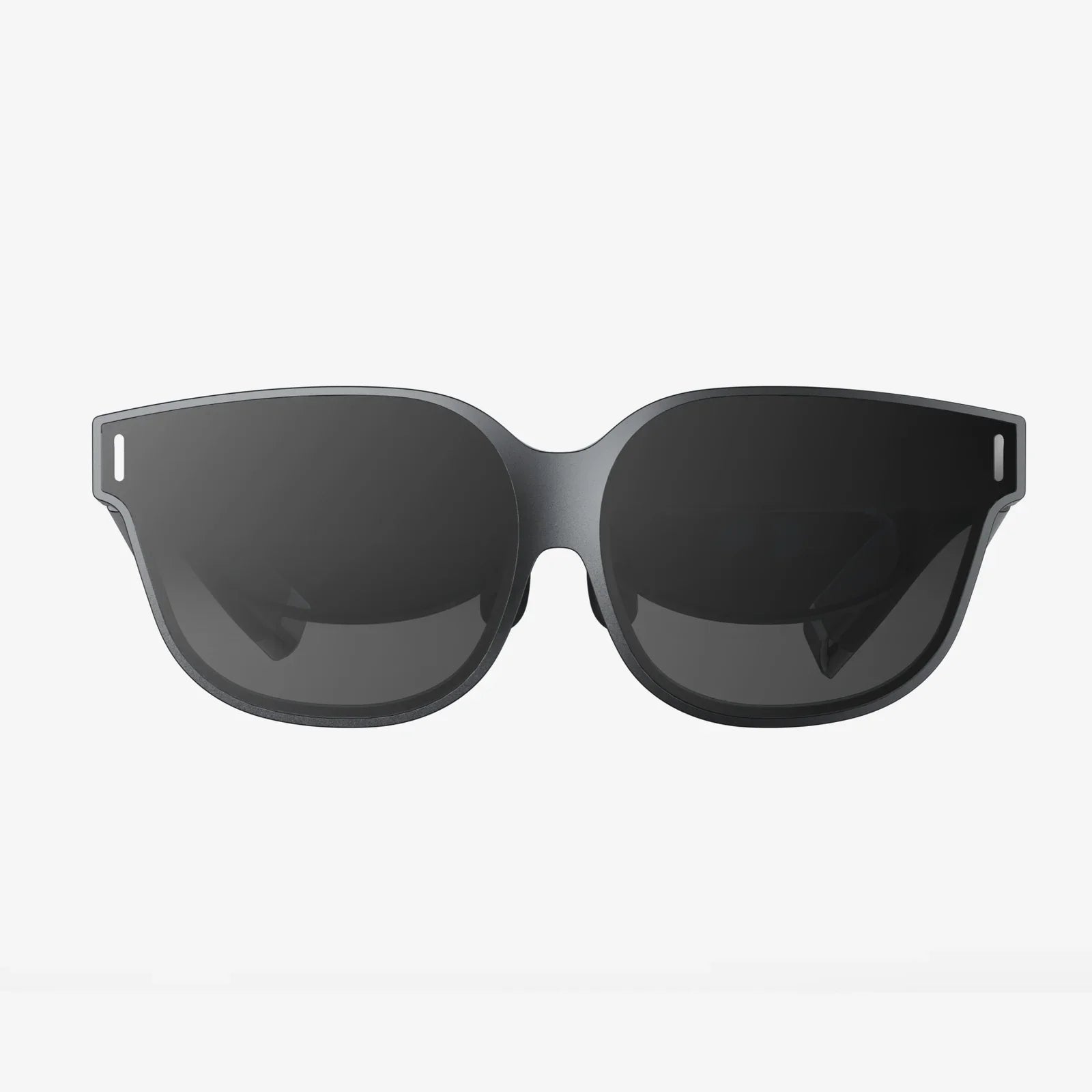
- by wangfred
Augmented Reality Interaction Is Reshaping Our Digital and Physical Worlds
- by wangfred
Imagine a world where the line between your digital life and your physical reality isn't just blurred—it's erased. Where information doesn't live on a screen you hold in your hand, but is painted onto the world itself, responding to your gaze, your gestures, and your voice. This isn't a distant science fiction fantasy; it's the emerging reality being built today through the rapid evolution of augmented reality interaction. This technological leap promises to be as transformative as the smartphone, fundamentally altering the fabric of communication, work, education, and entertainment. We are standing on the precipice of a new dimension of human-computer symbiosis, and it’s inviting us to reach out and touch the digital ether.
At its heart, augmented reality interaction is about creating intuitive and natural bridges between humans and digital data overlaid on the real world. Unlike virtual reality, which seeks to replace reality, AR aims to supplement it. This requires a unique set of interaction paradigms that move beyond the mouse, keyboard, and touchscreen.
One of the most powerful and intuitive forms of AR interaction is the use of our hands. Advanced computer vision algorithms and depth-sensing cameras allow devices to perceive and understand the intricate movements of our fingers and palms. This enables users to manipulate virtual objects as if they were physically present—pushing buttons, rotating 3D models, pulling sliders, or even casting virtual spells with a flick of the wrist. This direct manipulation creates a profound sense of agency and presence, making the digital content feel tangible and real.
For interaction to feel truly seamless, digital objects must understand and respect the physical environment. This is achieved through simultaneous localization and mapping (SLAM) technology. Devices scan and create a digital map of the room, recognizing surfaces like floors, walls, and tables. This allows a virtual character to convincingly hide behind your real sofa, or a digital instruction manual to sit firmly on top of your physical machinery, moving with it if adjusted. Interaction becomes about engaging with digital content within a spatially aware context.
Voice serves as a powerful complementary tool in the AR interaction toolkit. In situations where hands are busy or gestures are impractical, a simple voice command can summon information, initiate actions, or control interfaces. Furthermore, spatial audio—where sound seems to emanate from a specific point in the room—enhances immersion and provides critical feedback. The gentle hum of a virtual engine might come from the center of a physical car model, guiding the user's attention and reinforcing the object's perceived location.
Emerging technologies are beginning to incorporate eye-tracking, which allows the system to understand precisely where a user is looking. This enables gaze-based selection, where simply looking at a virtual button for a moment can activate it. It also allows for foveated rendering, a technique that concentrates processing power on the exact spot the user is focused on, creating incredibly sharp detail while optimizing performance. This subtle form of interaction feels almost telepathic, as the system responds to your intent before you've even raised a hand.
The potential of these interaction models extends far beyond gaming and entertainment. They are poised to revolutionize how professionals across countless fields perform their jobs.
In complex industrial settings, augmented reality interaction is a game-changer. A technician repairing a malfunctioning engine can wear AR glasses that overlay step-by-step instructions directly onto the machinery in their field of view. Using gesture or voice control, they can scroll through diagrams, highlight specific components, and even initiate a video call with a remote expert who can see their view and draw annotations into their reality. This hands-free, context-aware guidance drastically reduces errors, slashes training time, and improves safety.
The retail sector is being transformed by the ability to interact with products in your own space. Shoppers can use their smartphones or AR viewers to see how a new sofa would look in their living room, change its fabric with a gesture, and check if it fits through the door. This level of interactive preview reduces purchase anxiety and product returns, creating a more confident and satisfying consumer journey.
In medicine, AR interaction offers life-saving precision. Surgeons can have critical patient data, such as MRI scans or ultrasound imagery, projected directly onto their patient's body during an operation, creating a kind of "X-ray vision." Medical students can practice complex procedures on interactive, holographic human anatomies, dissecting layers and exploring systems through natural gestures, without the need for cadavers. This interactive learning accelerates understanding and improves surgical outcomes.
Education becomes an adventure with AR. Instead of reading about ancient Rome, students can walk through a digitally reconstructed Forum right in their classroom, using hand gestures to rotate and examine artifacts. Complex scientific concepts, from planetary orbits to molecular structures, become interactive 3D models that students can manipulate, explore, and truly understand. This shifts learning from a passive activity to an active, experiential discovery process.
As this technology becomes woven into the fabric of daily life, it will bring profound social and psychological questions to the forefront.
How do we interact with people who are partially immersed in an augmented layer? If someone is wearing AR glasses during a conversation, are they present? New social norms will need to develop around attention, privacy, and shared experiences. The concept of "presence" will be split between the physical and the digital, requiring a new etiquette for navigating these dual realities.
The ability to filter and alter our perception of reality carries significant risk. Will we use AR to hide visual pollution like graffiti and litter, or to add digital greenery to a concrete jungle? While this could be positive, it also raises concerns. If everyone can customize their reality, do we risk losing a shared common experience of the world? Could it be used to enforce harmful biases or create deeply personalized, inescapable filter bubbles that alter our perception of truth itself?
AR devices, by their very nature, are equipped with cameras and sensors that constantly scan the environment. This raises monumental privacy concerns. Who has access to the video feed of a party you're attending through your glasses? How is data about your home and habits being collected and used? The very technology that grants us superhuman perception could become the most pervasive surveillance tool ever created if not governed by strict ethical standards and robust regulations.
The current state of augmented reality interaction is just the beginning. The trajectory points toward even more seamless and neural integration.
The future of AR is a shift from headsets and glasses to something even more unobtrusive, like smart contact lenses. The technology will fade into the background, becoming an invisible layer enhancing our natural senses. Furthermore, AR systems will evolve from understanding the geometry of a room to understanding its context and intent. Your AR assistant will not only know a cup is on a table but will know you just finished your coffee and might want to order another, presenting the option subtly before you even ask.
The ultimate form of augmented reality interaction may bypass our senses entirely. Emerging brain-computer interface research aims to create a direct communication link between the brain and digital systems. Imagine thinking about wanting to see a navigation arrow, and it appearing in your visual field, or controlling a complex 3D model through pure intention. This would represent the final step in dissolving the barrier between human thought and digital manifestation, opening up possibilities we are only beginning to imagine.
The magic of augmented reality interaction lies not in the technology itself, but in its potential to unlock a more intuitive, informed, and empowered human experience. It promises a future where technology doesn't demand our attention but anticipates our needs, where learning is a visceral adventure, and where our digital tools feel like natural extensions of our own capabilities. The journey to seamlessly blend our atoms and our bits has already begun, and it’s quietly building a new layer of reality all around us, waiting for you to look up and engage.
Share:
The Glasses Multimodel AI Now: A New Vision for Human-Computer Interaction
Performance AI Glasses Future: The Invisible Revolution on Your Face