


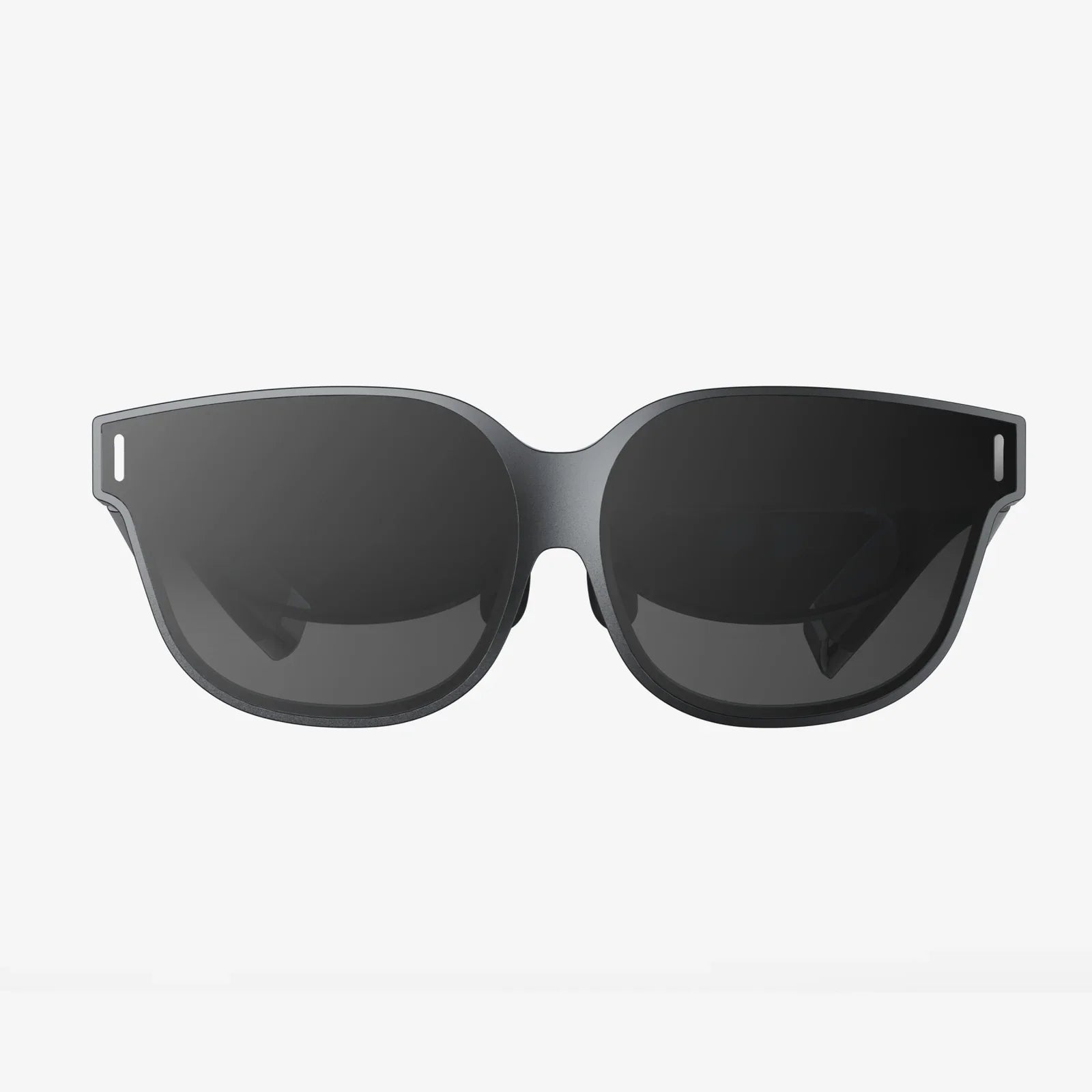
Imagine a world where the digital and the physical are no longer separate realms, but a single, seamless tapestry of experience. This isn't a distant science fiction fantasy; it’s the imminent future being built today, and its engine is a revolutionary class of device that fits on your face. The true power of this technology isn't just in the graphics it overlays onto the world, but in its fundamental nature as a wearable computer, a constant, intelligent companion that understands both the environment and you.
Deconstructing the Definition: More Than Meets the Eye
To call augmented reality a simple visual tool is to call the smartphone a mere telephone. It is a profound undersell. The term "wearable computer" is the key that unlocks its true potential. This definition breaks down into three critical, interconnected components.
The Computer: The Brain in the Frame
At its core, an AR device is a full-fledged computing system. It contains a System-on-a-Chip (SoC) with a Central Processing Unit (CPU) and a Graphics Processing Unit (GPU), responsible for the complex math of rendering digital objects in real-time. It has Random-Access Memory (RAM) for active tasks and solid-state storage for applications and data. It runs a sophisticated operating system designed to manage resources, run applications, and handle connectivity. This is a computer in every sense of the word, but its form factor demands a radical rethinking of power, thermal management, and miniaturization, pushing the boundaries of computational engineering.
The Wearable: The Paradigm of Constant Companionship
The "wearable" aspect is what fundamentally differentiates it from every computing platform that came before. Unlike a desktop PC anchored to a desk or a laptop carried in a bag, a wearable computer is on you. It is always available, contextually aware, and instantly accessible. This permanence shifts the human-computer relationship from one of intentional, scheduled interaction—"I will now go use the computer"—to one of ambient, continuous assistance. The computer fades into the background, becoming an extension of your own perception and cognition, rather than a tool you consciously pick up and put down.
The Sensors: The Bridge to the Real World
What truly separates an AR system from a smartphone strapped to your head is its array of advanced sensors. This suite acts as the computer's eyes and ears, allowing it to perceive and understand the physical world it is being worn in. This typically includes:
- Cameras: For capturing the user's field of view, reading text, and identifying objects.
- Depth Sensors (LiDAR, ToF): For mapping the geometry of a space, understanding distances, and enabling precise occlusion (where digital objects can appear behind real-world ones).
- Inertial Measurement Units (IMUs): Including accelerometers and gyroscopes to track head movement and orientation with extreme precision.
- Eye-Tracking Cameras: To understand user focus and intent, enabling more intuitive interaction.
It is the fusion of these three elements—the computational power, the wearable form, and the sensor array—that transforms the device from a passive display into an active, intelligent participant in your reality.
From Sci-Fi to Reality: The Evolution of the Wearable Computer
The concept of a wearable computer is not new. Visionaries have dreamed of it for decades. In 1968, computer scientist Ivan Sutherland created "The Sword of Damocles," a head-mounted display so primitive and heavy it had to be suspended from the ceiling, yet it laid the foundational ideas. Throughout the 80s and 90s, research continued within labs, often resulting in bulky backpacks wired to cumbersome headsets.
The true catalyst for the modern era was the smartphone. It solved the critical problems of miniaturization, power efficiency, and sensor technology at a mass-market scale. The components that make a powerful AR device possible—high-resolution micro-displays, tiny IMUs, efficient processors, and camera modules—were all perfected for the phone in your pocket. AR wearables are not a replacement for the smartphone; they are its evolutionary successor, integrating its technological achievements into a more immersive and contextually aware form factor.
The Seamless Symphony: How the Wearable AR Computer Operates
Putting on an AR device initiates a continuous, real-time dance between its components. The process is a marvel of modern engineering:
- Perception: The sensors constantly feed data about the environment and the user's movements into the computer's brain.
- Processing & Understanding: Sophisticated algorithms, often powered by machine learning, process this sensor data. This is where Simultaneous Localization and Mapping (SLAM) occurs—the device builds a map of the unknown environment while simultaneously tracking its own location within it. It identifies surfaces (floors, walls, tables), understands lighting, and recognizes objects.
- Rendering & Alignment: The GPU renders the requested digital content—a 3D model, a navigation arrow, a piece of text—and then precisely anchors it to a point in the physical world. This alignment must be perfect and persistent; a virtual pet must stay on the real floor, and a holographic instruction manual must remain fixed to the real machine it references, even as you walk around it.
- Display: Through a series of waveguides or other optical systems, the digital light is projected into the user's eyes, seamlessly blending with the incoming light from the real world.
This entire loop happens hundreds of times per second, creating the illusion of a stable, merged reality. The wearer perceives the digital object as being physically present.
Transforming Industries: The Practical Power of a Wearable Machine
The theoretical is impressive, but the practical applications are where the wearable computer proves its revolutionary worth. By providing hands-free access to information and digital tools exactly when and where they are needed, it is unlocking new levels of efficiency, safety, and understanding.
Revolutionizing Enterprise and Manufacturing
On the factory floor, the AR wearable is a superpower for technicians and assemblers. Instead of shuffling through paper manuals or looking back and forth at a tablet, instructions, schematics, and safety warnings are overlaid directly onto the machinery they are servicing. A remote expert can see what the on-site worker sees and draw arrows and annotations directly into their field of view, guiding them through a complex repair process from thousands of miles away. This reduces errors, slashes training time, and minimizes downtime.
Advancing Medical Practice and Patient Care
In medicine, the stakes are even higher. Surgeons can wear AR computers to visualize a patient's anatomy, such as CT scan data or the precise location of a tumor, projected directly onto the patient's body during surgery. This provides X-ray vision, improving accuracy and outcomes. Medical students can practice procedures on hyper-realistic holographic patients, and nurses can have a patient's vital signs and IV drip rates displayed in their periphery, allowing for constant monitoring without turning away from the person in their care.
Redefining Design and Architecture
Architects and interior designers are using AR wearables to step inside their creations before a single brick is laid. They can walk through a full-scale, holographic model of a building, assessing sightlines, spatial relationships, and lighting. Clients can see a virtual furnished apartment within the empty shell of their new home, making changes to layouts and finishes in real-time. This transforms the design process from abstract interpretation into experiential review.
Creating New Forms of Social Connection and Storytelling
Beyond utilitarian applications, the AR wearable computer is a new canvas for human connection and art. Social interactions can be transformed with shared holographic experiences—watching a virtual concert with a friend who lives in another country, playing a board game on a virtual table, or simply leaving persistent notes and drawings in a space for others to discover. Storytellers can create narratives that unfold in your living room, with characters interacting with your physical furniture, blurring the line between audience and participant.
The Inevitable Challenges: The Price of Wearing a Computer
For all its promise, the path to ubiquitous AR wearables is fraught with significant hurdles that must be overcome.
- Battery Life and Thermal Management: High-fidelity AR is computationally intensive, draining batteries and generating heat. Creating all-day wearable comfort requires breakthroughs in power-efficient chipsets, display technology, and battery chemistry.
- Social Acceptance and Aesthetics: Current designs, while improving, are still often bulky and conspicuous. For mass adoption, these devices must become as socially acceptable and stylish as a pair of eyeglasses. They need to be lightweight, comfortable, and something people actually want to wear.
- The Privacy Paradigm: A device with always-on cameras and microphones worn on your face presents unprecedented privacy concerns. Clear, transparent, and user-centric data policies are non-negotiable. The industry must establish ironclad rules about what data is collected, how it is processed (ideally on-device), and who has access to it.
- The Digital Divide: As with any transformative technology, there is a risk that its benefits will be available only to a privileged few, exacerbating existing social and economic inequalities.
The Future is Perceptual: Where Do We Go From Here?
The current state of AR is just the beginning. The trajectory points toward even deeper integration. The next evolution is toward contextual and perceptual computing. The wearable computer will not just see the world; it will understand context and user intent through advanced AI. It will know you are trying to cook a recipe and automatically pull up the instructions, highlight the ingredients in your fridge, and set a timer. It will recognize your stress levels from biometric cues and suggest a moment of mindfulness. The interface will evolve from clumsy hand controllers to intuitive gesture control, voice commands, and ultimately, brain-computer interfaces responding to subtle neural signals.
We are standing at the precipice of a fundamental shift in our relationship with technology. We are moving away from looking at a screen to looking through a computational lens that enhances our entire reality. This isn't about escaping into a virtual world; it's about being more powerfully present and capable in our own. The device on your face is the portal, and its nature as a wearable computer is the key that will unlock a new chapter of human experience, intelligence, and connection.
The screen that once demanded our full attention is dissolving, replaced by a subtle digital layer woven directly into the fabric of our daily lives—and this is just the first glimpse of a world where information doesn't live on a device in your hand, but flows effortlessly into your perception, empowering you to see, learn, and do things you never thought possible.
Share:
Latest Digital Product Trends 2025: The Dawn of a Seamless, Intelligent Future
Latest Digital Product Trends 2025: The Dawn of a Seamless, Intelligent Future