


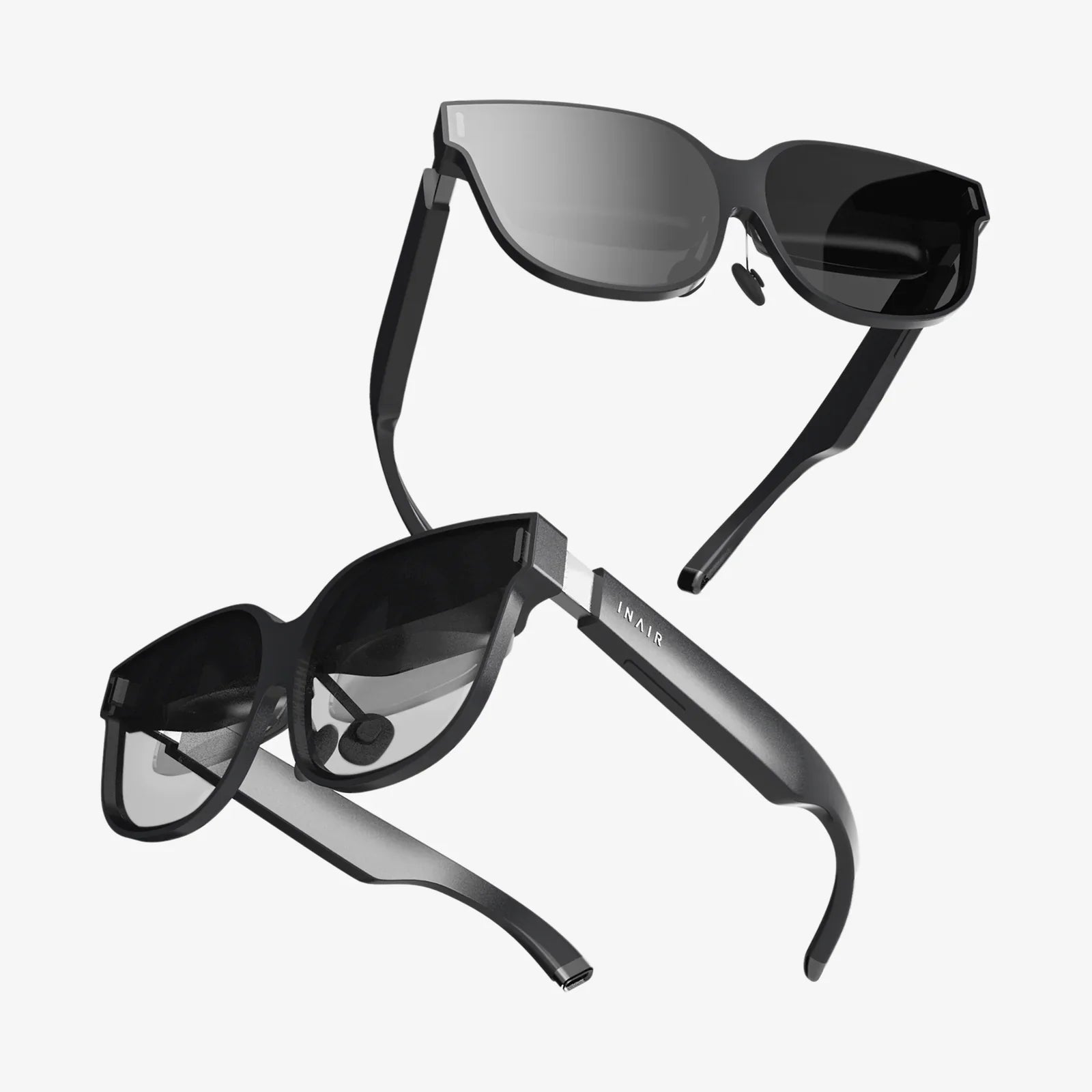
Imagine a world where information doesn’t live on a screen in your pocket but is woven seamlessly into the fabric of your everyday life. Where walking through a city reveals the history of its buildings layered over their facades, where complex repair instructions hover over the machinery you’re fixing, and where a virtual dinosaur stomps through your living room, convincing enough to make you jump. This is not a distant science fiction fantasy; it is the emerging reality being built today, and augmented reality is an example of the trend that is fundamentally reshaping our relationship with technology, information, and each other. This trend represents a profound shift from technology as a tool we use to technology as a layer we inhabit, a movement towards a more intuitive, contextual, and immersive digital future.
The Core Trend: From Isolated Screens to Contextual Layers
To understand why augmented reality is such a potent example, we must first define the broader trend it exemplifies. For decades, our primary interface with the digital world has been the screen—first the desktop monitor, then the laptop, and finally the smartphone. These devices created self-contained digital universes, wonderful in their capabilities but ultimately separate from our physical environment. We had to look down and away from the world to access digital information. The trend, of which AR is a leading manifestation, is the dissolution of this barrier. It’s the movement towards spatial computing, where the digital and physical realms coalesce.
This trend is characterized by several key principles:
- Contextual Awareness: Technology understands where it is and what is around it. It uses cameras, sensors, GPS, and machine learning to perceive the environment and overlay relevant information.
- Ambient Intelligence: Instead of demanding our full attention, information and assistance are provided subtly, on the periphery, available when needed but not constantly intrusive.
- Natural Interaction: We move away from typing and clicking towards interacting with digital content through gesture, voice, and gaze—modes of interaction that feel more human and intuitive.
- Ubiquity: The technology becomes pervasive, moving beyond dedicated devices to be integrated into everyday objects like glasses, car windshields, and even contact lenses.
Augmented reality is the most visible and advanced application of this trend, acting as the canvas upon which these principles are painted. It doesn’t seek to replace the real world with a virtual one (as Virtual Reality does) but to enhance and augment it with a valuable digital stratum.
How Augmented Reality Embodies the Trend
AR serves as the perfect case study for this paradigm shift because it physically demonstrates the convergence. It takes the abstract concept of ambient, contextual computing and makes it tangible.
The Technical Symphony: Sensors and Software
At its core, an AR system is a data-processing powerhouse that exemplifies the trend's reliance on a suite of advanced technologies working in concert.
- Computer Vision: This is the eyes of the system. Using camera input, algorithms can identify surfaces (planes), track objects, and understand the geometry of a space. This allows a virtual character to convincingly hide behind your real-world sofa.
- Simultaneous Localization and Mapping (SLAM): This technology allows a device to understand its position in an unknown environment while simultaneously mapping that environment. It’s how your phone can remember where you placed a virtual anchor even after you’ve walked away and come back.
- Edge Computing and 5G: Processing complex AR environments requires immense computational power. The trend is to offload this processing to the cloud (edge computing) and stream the results back to the device seamlessly, a process enabled by high-bandwidth, low-latency 5G networks. This prevents the device from overheating and allows for ever-more complex experiences.
- Artificial Intelligence and Machine Learning: AI is the brain. It’s what identifies that the object you’re pointing your phone at is a specific model of car and can then overlay its specifications, or recognizes a person’s face to add fun filters in real-time.
This fusion of hardware and software creates a system that is deeply aware of its context, a hallmark of the overarching trend.
Beyond Novelty: The Functional Revolution
While early AR was often dismissed as a gimmick for social media filters and mobile games, its evolution into a serious tool across industries solidifies its role as a key example of the trend.
- Industrial Design and Manufacturing: Engineers and designers use AR headsets to visualize 3D prototypes at full scale, overlaying them onto physical spaces to check for fit and function before a single physical part is manufactured. Assembly line workers see digital instructions and arrows directly over their workstations, reducing errors and training time.
- Healthcare and Medicine: Medical students can practice complex surgical procedures on detailed, virtual holograms of human anatomy. Surgeons can use AR to project critical patient data, like MRI scans, directly onto their field of view during an operation, keeping their focus on the patient.
- Retail and E-commerce: The trend of contextual commerce is powerfully demonstrated by AR. Customers can see how a piece of furniture would look in their actual living room, how a new shade of paint would transform their wall, or how a pair of glasses fits their face—all from their home, drastically reducing purchase uncertainty.
- Education and Training: Textbooks become interactive portals. A student studying astronomy can point their device at the sky to see constellations labeled; a history student can point their device at a ruin to see a digital reconstruction of the ancient building. This creates a deeply engaging and memorable form of contextual learning.
- Navigation and Maintenance: Instead of looking at a 2D map on a phone, AR navigation can project arrows onto the road through your car’s windshield. For field technicians, AR can highlight the specific component that needs maintenance and provide animated repair guides overlaid on the actual equipment.
In each of these cases, AR isn’t just a new feature; it’s a fundamental improvement to a process. It delivers information not to a separate screen, but directly into the context where it is needed, minimizing cognitive load and maximizing efficiency. This is the essence of the trend.
The Ripple Effects: Social, Ethical, and Economic Implications
A trend this powerful does not arrive without significant questions and consequences. The widespread adoption of a technology that blends the digital and physical so intimately will force us to confront new challenges.
The New Digital Divide
As with previous technological leaps, there is a risk of creating a new kind of inequality. Access to advanced AR hardware, high-speed connectivity, and the digital literacy to navigate these new spaces could become a significant differentiator in education, employment, and social participation. The trend could empower those with access while leaving others further behind in an analog world.
The Privacy Paradox
AR devices, by their very nature, are perceptual. They have cameras and sensors that are constantly scanning the environment. This raises profound privacy concerns. Who has access to the video feed from your AR glasses? How is data about your home, your workplace, and the people you interact with being collected, stored, and used? The trend towards ambient computing necessitates a parallel trend towards robust, transparent, and ethical data governance frameworks to prevent a dystopian future of perpetual surveillance.
Reality Filtration and Digital Vandalism
If everyone can add a digital layer to the world, who controls what is seen? We could face issues of "digital vandalism," where public spaces are tagged with offensive or distracting virtual graffiti. Conversely, there is the risk of "reality filtration," where corporations or governments can choose to erase or alter our perception of the physical world—hiding unsightly realities like homelessness or poverty behind a paid digital curtain, or inserting propaganda into the landscape. The trend challenges our very notion of a shared, objective reality.
The Future Horizon: From Glasses to Contact Lenses to Neural Interfaces
The current generation of AR, often experienced through smartphone screens or bulky headsets, is merely the infancy of this trend. The trajectory points towards ever-smaller, more powerful, and more integrated devices.
The next decade will likely see the maturation of stylish AR glasses that look indistinguishable from regular eyewear. These will become our primary gateway to the spatial web, replacing smartphones as our central connected device. We will interact with persistent digital objects and information that remain anchored in the world, accessible to anyone with the right permissions.
Looking further out, the trend moves beyond wearables to embed technology directly into our biology. AR contact lenses that project images directly onto the retina are already in active development. Beyond that, the ultimate expression of this trend may be brain-computer interfaces that can stimulate the visual cortex directly, creating digital overlays that are indistinguishable from reality itself. This would represent the final step in the journey from technology as a separate tool to technology as an integrated part of the human experience.
The potential is staggering: instant translation overlayed onto spoken words, perfect memory recall of every person you meet, and access to the entirety of human knowledge as a constant, ambient resource. But with this power comes immense responsibility, forcing us to grapple with what it means to be human in a world where the line between the born and the made, the real and the virtual, becomes increasingly blurred. The choices we make today in designing and regulating these technologies will echo for generations, defining the very fabric of our augmented future. The age of looking down at our devices is ending; the age of looking out at a world enhanced and enlightened by a digital layer is just beginning. Will you be ready to see what it has to show you?
Share:
What Is an XR Headset? The Ultimate Guide to Immersive Reality
Best AR Headset: A Comprehensive Guide to Navigating the Future of Augmented Reality