


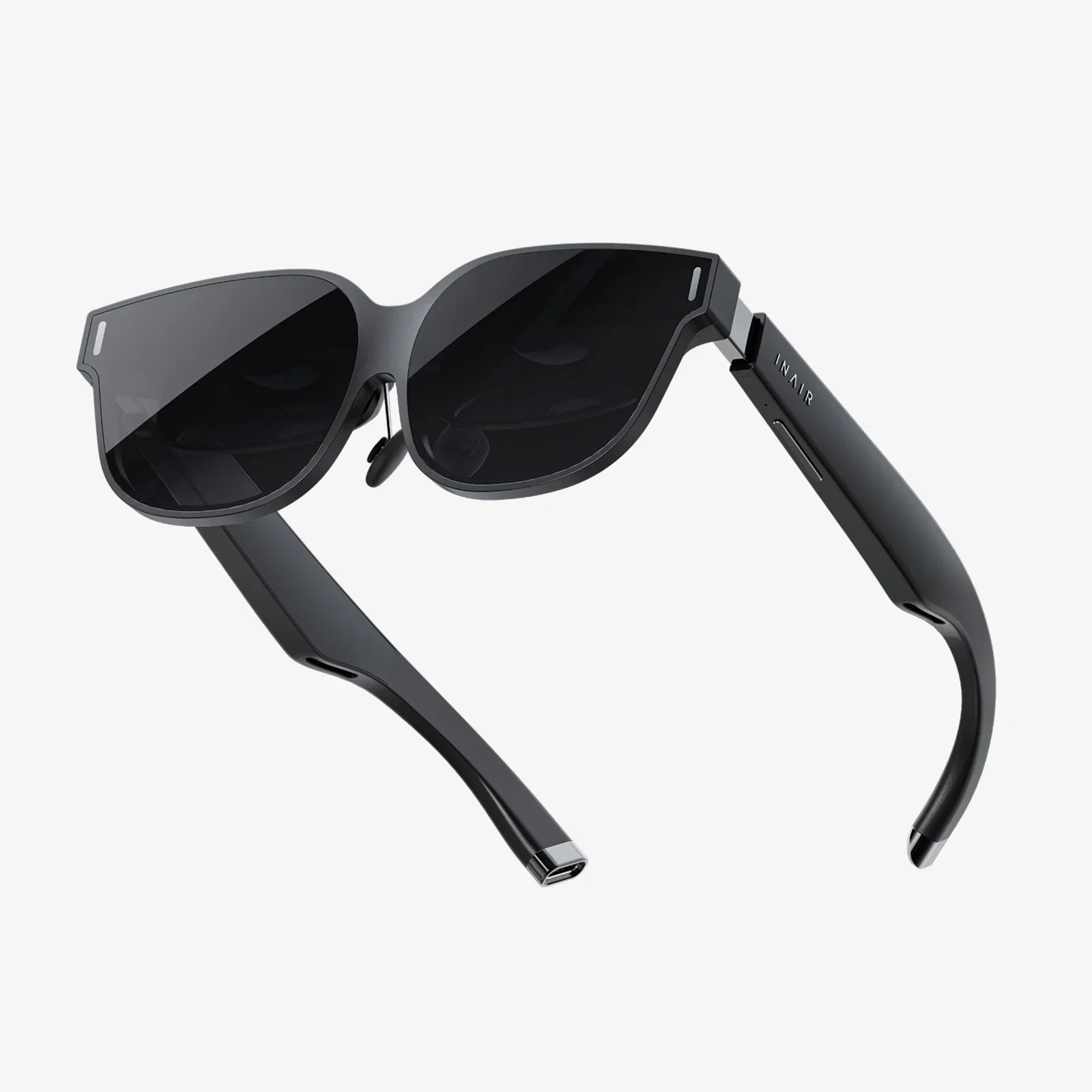
Imagine a device that can transport you to a virtual concert front row, overlay a life-sized digital dinosaur into your living room for a closer look, or project a complex engine schematic onto the real machinery you're learning to repair. This isn't science fiction; it's the present and future enabled by a single, powerful piece of technology sitting on your face. The world of immersive computing is here, and it’s all converging into one transformative gadget that promises to redefine our relationship with the digital realm. The buzz is real, the applications are staggering, and it all begins with understanding the key that unlocks these new dimensions of experience.
Demystifying the Acronym: The X in XR
To understand what an XR headset is, we must first decode the term "XR." XR stands for Extended Reality. It is not a specific technology itself but rather an umbrella term that encompasses all combined real-and-virtual environments generated by computer technology. Think of it as a spectrum of experiences.
On one end of this spectrum, you have the completely real environment—the physical world you perceive with your senses. On the opposite end, you have a fully virtual, digitally-generated environment. XR covers every possible combination and level of immersion between these two extremes. The primary technologies under the XR umbrella are:
- Virtual Reality (VR): A fully immersive digital experience that blocks out the physical world. Users are transported to a computer-generated simulation.
- Augmented Reality (AR): An overlay of digital content onto the real world. This content is anchored to and interacts with the physical environment in real-time.
- Mixed Reality (MR): A more advanced form of AR where digital objects are not just overlaid but can interact with and be occluded by the real world. A virtual character can hide behind your real sofa, for instance.
An XR headset, therefore, is a wearable device designed to deliver one or more of these immersive experiences directly to the user's eyes and ears. It is the hardware gateway to these extended realities.
Under the Hood: The Core Components of an XR Headset
While designs vary, most modern XR headsets share a common set of core components that work in concert to create a convincing immersive experience.
1. The Display Systems
The most critical component is the display. XR headsets use small, high-resolution screens (often OLED or LCD) placed very close to the eyes. These are viewed through specialized lenses that focus and reshape the image to fill the user's field of view (FOV), creating a sense of scale and depth. A wider FOV generally leads to a greater sense of immersion. High refresh rates (90Hz and above) are also crucial to prevent motion sickness and ensure a smooth, comfortable experience.
2. Tracking and Sensors
For the digital world to feel responsive and real, the headset must understand its own position in space and the position of the user. This is achieved through a suite of sensors:
- Inside-Out Tracking: Cameras on the headset itself constantly scan the surrounding environment, tracking features on walls and furniture to understand its own movement (a process called simultaneous localization and mapping, or SLAM).
- Outside-In Tracking: External sensors or base stations placed in the room track the position of the headset and controllers. This method is often considered highly precise but requires more setup.
- Inertial Measurement Units (IMUs): These include gyroscopes, accelerometers, and magnetometers that provide high-frequency data on the headset's rotation and acceleration, complementing the visual tracking data.
3. Processing Power
There are two primary architectures for processing:
- Tethered Headsets: These act as a display and sensor hub, but the heavy computational lifting—rendering complex graphics, running the experience—is handled by a powerful external computer or console connected via a cable.
- Standalone Headsets: These are all-in-one units with a mobile-grade system-on-a-chip (SoC), battery, and storage built directly into the headset. They are wireless and self-contained, offering greater freedom of movement but often with less graphical fidelity than tethered setups.
4. Lenses and Optics
Advanced lenses, including Fresnel and pancake lenses, are used to magnify the image from the small screens to fill the user's field of view. They also help to correct for visual distortions and ensure the image is sharp and clear across the entire display. The ability to adjust the interpupillary distance (IPD)—the distance between the lenses—is vital for user comfort and visual clarity.
5. Audio and Microphones
Immersive 3D spatial audio is a cornerstone of the XR experience. Built-in headphones or speakers create sound that seems to come from specific points in the virtual or physical space, enhancing realism. Integrated microphones allow for voice commands and communication with other users in social or professional applications.
6. Controllers and Input Methods
While hand-tracking is becoming more common, most systems come with dedicated motion controllers. These are tracked by the system and allow users to interact with the digital world—pointing, grabbing, throwing, and manipulating virtual objects. Advanced haptic feedback in these controllers provides a sense of touch, further deepening immersion.
The Spectrum of Experience: From VR to AR and MR
Not all XR headsets are created equal. They are often designed with a primary focus on one area of the XR spectrum, though the lines are increasingly blurring.
Virtual Reality (VR) Headsets
VR headsets are fully immersive. They completely occlude the user's vision of the real world, replacing it with a virtual one. This is typically achieved with an opaque display and a tight light-sealing facial interface. The primary goal is presence—the convincing feeling of "being there" in the digital environment. These are the go-to devices for gaming, immersive training simulations (like flight simulators or surgical training), and virtual tourism.
Augmented Reality (AR) Headsets and Smart Glasses
At the other end of the spectrum are AR devices, often called smart glasses. These are typically lightweight, glasses-like devices with transparent lenses. They project digital information (text, notifications, simple graphics) onto the real world but do not offer deep integration or occlusion. The digital elements are more like a heads-up display (HUD) superimposed on reality rather than a part of it. Their value lies in providing contextual information without requiring the user to look down at a phone.
Mixed Reality (MR) Headsets
MR headsets represent the cutting edge. They use advanced passthrough camera technology. Instead of transparent lenses, they have cameras on the outside that feed a live video feed of the real world to the internal displays. This allows the headset's processor to seamlessly blend and anchor digital objects into that video feed with incredible precision. The headset can understand the geometry of the room, allowing virtual objects to be placed on real tables and hidden behind real sofas. This creates a truly cohesive blend of real and virtual, making it ideal for design, remote collaboration, and complex interactive applications.
A World Transformed: The Applications of XR
The potential of XR extends far beyond entertainment. It is poised to revolutionize numerous sectors.
Enterprise and Industry
This is where XR is already delivering immense value. Companies are using XR for:
- Design and Prototyping: Architects and engineers can walk through full-scale 3D models of buildings or products before a single physical resource is spent.
- Training and Simulation: From training surgeons on virtual procedures to preparing warehouse employees for complex logistics, XR provides a safe, repeatable, and cost-effective training environment.
- Remote Assistance and Collaboration: A field technician wearing a headset can share their view with an expert thousands of miles away, who can then annotate the real world with arrows and instructions to guide the repair.
Healthcare
XR is being used for phobia treatment through exposure therapy in a controlled virtual environment, for physical rehabilitation by turning exercises into engaging games, and for helping medical students visualize complex human anatomy in 3D.
Education
Imagine history students "visiting" ancient Rome, biology students taking a journey through the human bloodstream, or astronomy students standing on the surface of Mars. XR makes experiential, immersive learning a reality, boosting engagement and retention.
Social Connection and Retail
Social VR platforms allow people to meet, play, and attend events as customizable avatars in shared virtual spaces, offering a new form of presence-based communication. In retail, customers can use AR to see how furniture would look in their home or how clothes might fit before making a purchase online.
Challenges and The Road Ahead
Despite the exciting progress, the XR industry faces significant hurdles on the path to mass adoption.
- Form Factor and Comfort: Headsets need to become lighter, smaller, more comfortable, and less socially conspicuous—evolving towards a standard pair of glasses.
- Battery Life: The high computational and display demands are a constant drain on batteries, especially for standalone devices. Major improvements in power efficiency are needed.
- Content and The "Killer App": While the library of experiences is growing, the industry is still searching for the definitive application that will drive every household to own a headset.
- Social Acceptance and Privacy: Wearing a camera on your face raises valid concerns about privacy and data collection. Social norms around wearing headsets in public are still undefined.
The future, however, is bright. Advancements in micro-displays, eye-tracking, haptics, and brain-computer interfaces promise even more seamless and intuitive interactions. The ultimate goal is a device that feels like a natural extension of ourselves, effortlessly blending the digital and physical to augment human capability.
The journey into extended reality is just beginning. From the bulky wired devices of yesterday to the sleek, powerful all-in-ones of today, XR headsets are rapidly evolving from a niche gadget into a foundational computing platform. They hold the promise of not just changing how we play games, but how we work, learn, connect, and understand the world around us. The line between what's real and what's digital is dissolving, and the gateway to this new frontier is waiting to be worn. The next time you see someone gesturing at the air, know they might be architecting a skyscraper, practicing a heart surgery, or simply fishing on a quiet virtual lake—all without leaving the room.
Share:
Slim VR Headset: The Unobtrusive Future of Immersive Technology
Augmented Reality Is an Example of the Trend Reshaping Our Digital and Physical Worlds