


Imagine a world where digital information doesn't just live on a screen but is seamlessly woven into the fabric of your physical reality—where your glasses can overlay schematics onto a malfunctioning engine, your phone can show how a new sofa would look in your living room before you buy it, and a surgeon can see a patient's vital signs and 3D anatomical models while performing a delicate procedure. This is no longer the stuff of science fiction; it is the rapidly materializing present and future promised by augmented reality (AR). For investors, developers, and corporate strategists, the race to understand and capitalize on this transformation is already underway, making comprehensive augmented reality market research not just valuable, but absolutely indispensable for navigating the next digital frontier.
The Foundation: Defining the Augmented Reality Landscape
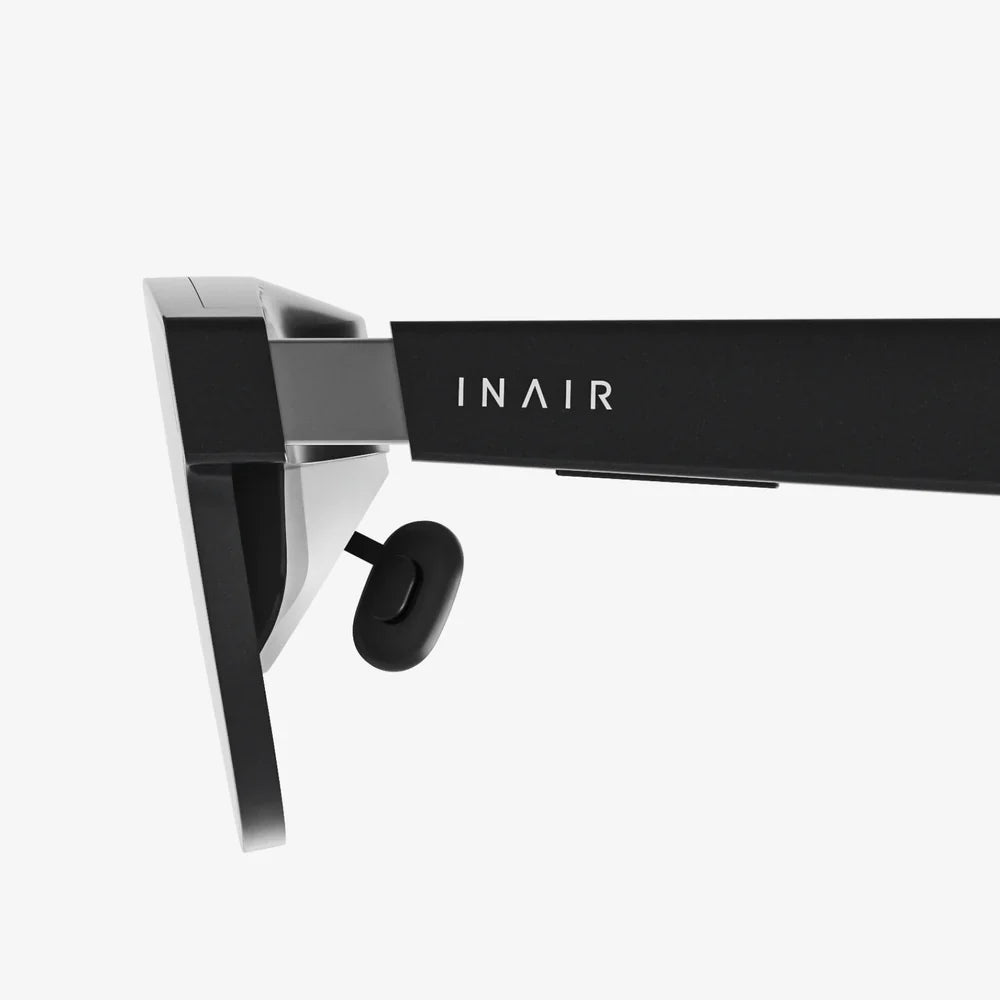
Before delving into the market dynamics, it is crucial to establish a clear definition. Augmented reality is a technology that superimposes a computer-generated image, video, or 3D model onto a user's view of the real world, thus providing a composite view that augments the physical environment with digital information. This distinguishes it from virtual reality (VR), which creates a completely immersive, digital experience that shuts out the physical world. The AR experience can be delivered through a spectrum of devices, from ubiquitous smartphones and tablets to more specialized equipment like smart glasses, heads-up displays (HUDs), and even emerging technologies like AR contact lenses.
The core value proposition of AR lies in its ability to enhance human capabilities: improving how we work, learn, make decisions, and interact with the world around us. This fundamental utility is the primary engine driving its adoption across a dizzying array of sectors. Effective augmented reality market research must therefore begin by mapping this complex and evolving ecosystem, which includes hardware manufacturers, software developers, content creators, platform providers, and enterprise solution integrators.
Catalysts of Growth: Key Drivers Propelling the AR Market
The exponential growth projected for the AR market is not occurring in a vacuum. It is being fueled by a powerful convergence of technological advancements, economic imperatives, and shifting user expectations. Market research must continuously monitor these drivers to forecast trends accurately.
1. Technological Advancements
The relentless pace of innovation in several key fields is making AR more powerful, affordable, and accessible. Improvements in semiconductor technology are yielding smaller, more energy-efficient processors capable of handling complex computer vision tasks. Breakthroughs in display technology, such as micro-LED and waveguides, are making AR wearables lighter, less obtrusive, and capable of delivering brighter, higher-resolution imagery. Furthermore, the rollout of high-speed, low-latency 5G networks is critical for supporting cloud-based AR experiences, offloading intensive processing and enabling real-time data streaming and multi-user collaboration.
2. Enterprise Adoption and the ROI Imperative
While consumer AR applications like gaming and social media filters capture public attention, the most significant and immediate growth is occurring within the enterprise sector. Companies are investing heavily in AR solutions because they demonstrably improve efficiency, reduce errors, and save money—delivering a clear return on investment (ROI). AR is revolutionizing fields like remote assistance, where an expert can guide a field technician through a repair by annotating their live field of view; in complex assembly and manufacturing, where digital work instructions are overlaid directly onto components; and in logistics and warehousing, where workers can see optimal picking paths and inventory data hands-free.
3. The Shift to Spatial Computing
AR is a cornerstone of the broader shift towards spatial computing—a paradigm where the digital and physical worlds merge into an environment where software can understand and interact with 3D space. This shift is being championed by some of the world's largest technology companies, whose investments and strategic pivots signal a long-term belief in this future. Their development of comprehensive operating systems and software development kits (SDKs) for AR is lowering the barrier to entry for developers and creating a more standardized and robust software ecosystem.
Methodologies for Augmented Reality Market Research
Conducting effective research in such a dynamic field requires a multi-faceted approach. Traditional market research methods must be adapted and combined with more specialized techniques.
- Primary Research: This involves gathering data directly from the source. Methods include in-depth interviews with industry executives, engineers, and product managers; surveys distributed to developers and enterprise IT decision-makers; and ethnographic studies observing how users interact with AR technology in real-world settings, such as a factory floor or a retail store.
- Secondary Research: This entails synthesizing existing information from a wide range of sources, including financial reports and earnings calls from public companies, patent filings that reveal R&D directions, analysis of academic papers on AR-related technologies, and monitoring news and announcements from startups and established players.
- Technology Scouting and Patent Analysis: Given the R-intensive nature of AR, tracking innovation is paramount. Researchers analyze patent landscapes to identify emerging trends, key innovators, and potential technological bottlenecks or white spaces ripe for innovation.
- Market Sizing and Forecasting: Using a combination of top-down and bottom-up analysis, researchers model the total addressable market (TAM), serviceable available market (SAM), and serviceable obtainable market (SOM). This involves segmenting the market by device type, application, enterprise vs. consumer, and geography to build a detailed picture of current and future value.
Application Deep Dive: Where is AR Making an Impact?
The true measure of AR's potential is revealed in its practical applications. Market research must dissect each vertical to understand its unique drivers, challenges, and growth trajectory.
Retail and E-commerce
AR is fundamentally changing the retail experience. Virtual try-on for apparel, accessories, and cosmetics allows customers to visualize products on themselves from home, reducing purchase hesitation and lowering return rates. For home goods, AR furniture placement apps enable users to see how a product would fit and look in their actual space. This application directly addresses a key pain point in online shopping and is becoming a standard feature expected by consumers.
Industrial Manufacturing and Maintenance
This is arguably the most mature and impactful application area for enterprise AR. Technicians wearing AR glasses can access digital work manuals and schematics overlaid on the equipment they are servicing, allowing them to work hands-free and with greater accuracy. In assembly, AR can guide workers through complex wiring or piping sequences, reducing training time and minimizing errors. The value in reducing downtime, improving first-time fix rates, and enhancing worker safety is immense and easily quantifiable, driving rapid adoption.
Healthcare and Medicine
AR is poised to revolutionize medical training, surgical planning, and patient care. Medical students can use AR to explore detailed, interactive 3D models of human anatomy. Surgeons can use AR projections to visualize a patient's internal anatomy, such as the precise location of a tumor or blood vessel, directly on the patient's body during an operation, improving precision and outcomes. AR can also assist in complex medical procedures like vein detection and phlebotomy.
Education and Training
AR brings abstract concepts to life, creating immersive and engaging learning experiences. Students can interact with historical artifacts, explore the solar system, or dissect a virtual frog. In corporate training, AR is used to simulate dangerous or expensive scenarios, allowing employees to practice skills in a safe, controlled environment. This is particularly valuable for training mechanics on new vehicle models or preparing first responders for emergency situations.
Navigating the Challenges: Barriers to Adoption
Despite its promise, the AR market faces significant headwinds that market research must accurately assess. These include the high cost of development for sophisticated applications, the current limitations of hardware (battery life, field of view, comfort), and lingering concerns over data privacy and security, especially when using devices equipped with always-on cameras. Furthermore, a lack of standardized development platforms can fragment the market and increase costs. Perhaps the most significant challenge is creating a compelling and intuitive user experience that provides genuine utility without being gimmicky or cumbersome. Research must identify which of these barriers are temporary technological hurdles and which represent more fundamental, long-term challenges.
The Future Horizon: What's Next for AR?
Augmented reality market research is not just about analyzing the present; it is about forecasting the future. Several key trends are shaping the long-term trajectory of the industry. The eventual arrival of true consumer-grade AR glasses—stylish, affordable, and with all-day battery life—is considered the holy grail that will unlock mass adoption. This will be coupled with the development of a pervasive AR cloud—a digital twin of the real world that allows for persistent AR experiences that can be shared and accessed by millions of users simultaneously. Furthermore, the integration of Artificial Intelligence (AI) is making AR systems more intelligent and context-aware, enabling them to better understand environments and user intent to deliver more relevant information.
The line between the digital and the physical is blurring at an unprecedented rate, and augmented reality is the lens through which this new hybrid world will be viewed. The businesses that will thrive in this new paradigm are not those that simply adopt the technology, but those that leverage deep, insightful augmented reality market research to understand its nuances, anticipate its disruptions, and strategically deploy it to solve real human problems. The next decade will be defined by those who can see the opportunity not just on a screen, but all around them.
Share:
What Are Virtual Glasses - A Portal to the Future of Sight
VR Eye Glasses: The Future of Immersive Technology and Its Impact on Your Vision