


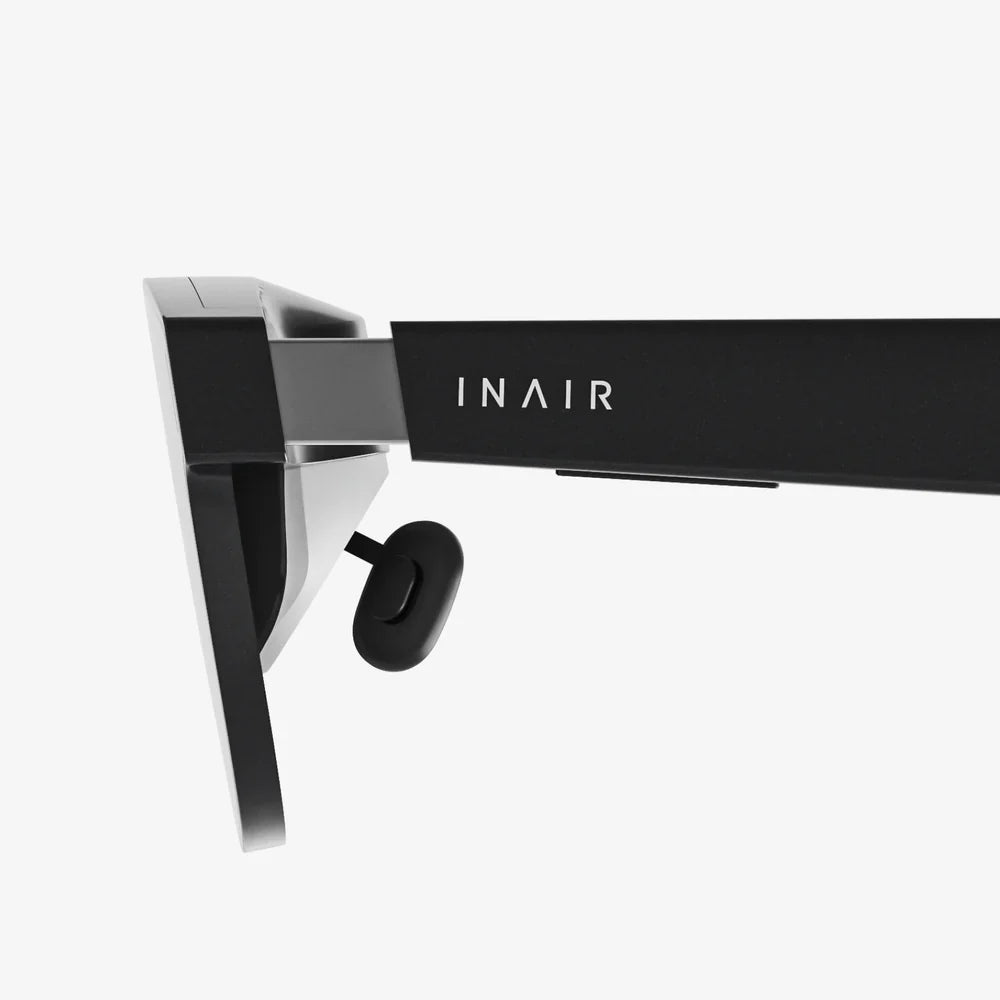
Imagine a world where information floats before your eyes, where digital assistants appear as holograms in your living room, and where the line between the physical and virtual realms seamlessly blurs. This is not a distant science fiction fantasy; it is the imminent future being crafted by a revolutionary technology known as virtual glasses. This wearable tech is poised to redefine our reality, offering a glimpse into a future where our visual field becomes an interactive canvas for the digital universe.
Beyond the Hype: Defining the Digital Lens
At its core, the term virtual glasses refers to a wearable headset, typically in the form of spectacles or a lightweight visor, that projects digital imagery and information onto the user's field of view. Unlike their bulkier predecessors, modern iterations are designed for all-day comfort, aiming to integrate computing power into our daily lives as unobtrusively as a standard pair of prescription lenses. The fundamental magic lies in their ability to superimpose computer-generated graphics—text, images, 3D models, and videos—onto the real world, a technology broadly categorized as augmented reality (AR). In more immersive applications, they can also function as a gateway to entirely virtual environments (VR), blocking out the physical world to transport the user elsewhere.
The Symphony of Technology: How They Create New Realities
The creation of this blended reality is an engineering marvel, a symphony of sophisticated components working in perfect harmony.
The Optical Heart: Waveguides and Microdisplays
The most critical component is the optical system. High-tech, transparent lenses act as waveguides, using nanotechnology to bend light and project images directly onto the retina. These images are generated by minuscule micro-displays, often based on LED or laser technology, which are incredibly small yet capable of producing vibrant, high-resolution graphics. This complex optical assembly is what allows the user to see both the real world and the digital overlay simultaneously and in focus.
The Brain and Senses: Processors and Sensors
Powering this experience is a miniaturized computer system-on-a-chip, a powerhouse processor that handles complex rendering, spatial mapping, and AI computations. This brain is fed a constant stream of data from a suite of sensors. These typically include:
- Cameras: To see the world from the user's perspective, enabling object recognition and spatial tracking.
- Depth Sensors: To map the environment in 3D, understanding the distance and geometry of surrounding objects.
- Inertial Measurement Units (IMUs): Gyroscopes and accelerometers that track the precise movement and rotation of the user's head in real-time.
- Eye-Tracking Cameras: To monitor where the user is looking, enabling intuitive control and rendering optimization.
Bridging the Digital and Physical: Spatial Computing
The true genius of virtual glasses is not just in displaying images but in anchoring them to the physical world. This is achieved through a process called spatial computing. By fusing data from all its sensors, the device constructs a live digital twin of your environment. This allows a virtual character to convincingly sit on your real sofa, or a navigation arrow to appear fixed to the street ahead, rather than floating arbitrarily in your vision. This contextual awareness is what makes the technology feel magical and genuinely useful.
A World of Applications: From Practical to Fantastic
The potential use cases for this technology are vast, stretching across every facet of human endeavor.
Revolutionizing the Professional Sphere
In the workplace, virtual glasses are transformative tools. A surgeon can see vital signs and 3D anatomical guides overlaid directly on their patient during a procedure. A field engineer can have schematics and expert guidance displayed on the complex machinery they are repairing, hands-free. An architect can walk clients through a full-scale, holographic model of a building before a single brick is laid. These applications boost efficiency, reduce errors, and democratize expertise.
Redefining Social Connection and Entertainment
Socially, this technology promises to evolve remote communication from flat video calls into shared, immersive experiences. Imagine playing a board game with holographic avatars of friends and family who appear to be sitting around your table, or attending a concert where fantastical visual effects are rendered uniquely for you. Gaming will leap out of the screen and into your environment, transforming your home into a dungeon, a racetrack, or a starship bridge.
Enhancing Daily Life and Accessibility
For the individual, virtual glasses could become the ultimate personal assistant. Navigation arrows painted onto the sidewalk, real-time translation of foreign language signs, and contextual information about landmarks, restaurants, and products will become instantly available. For individuals with visual or hearing impairments, the technology offers profound possibilities, from highlighting obstacles and amplifying text to providing real-time captioning of conversations happening around them.
Navigating the Uncharted: Challenges and Ethical Considerations
This powerful technology does not arrive without significant challenges and profound ethical questions that society must urgently address.
The Privacy Paradox
Devices equipped with always-on cameras and microphones, constantly scanning and recording our environments, represent a privacy nightmare. The data collected—what we look at, where we go, who we interact with—is incredibly intimate. Robust, transparent frameworks for data ownership, consent, and security are not optional; they are prerequisites for public trust. The potential for unauthorized surveillance, both by corporations and governments, is a serious threat that must be mitigated through regulation and ethical design.
The Social and Psychological Impact
What happens to human interaction when everyone is partially immersed in a digital layer? Will we become more disconnected from the people physically around us? There are concerns about further societal distraction, the potential for new forms of addiction, and the psychological effects of perpetual information overload. Furthermore, the creation of convincing digital forgeries or harmful content within augmented reality could have dangerous real-world consequences.
The Digital Divide and Accessibility
There is a real risk that this technology could exacerbate existing social and economic inequalities. If virtual glasses become essential for work, education, and social participation, a new "hardware divide" could emerge between those who can afford them and those who cannot. Ensuring equitable access and designing for inclusivity from the outset is crucial to prevent a two-tiered society.
The Road Ahead: From Prototype to Paradigm
The current generation of devices is merely the beginning. The trajectory points toward glasses that are indistinguishable from regular eyewear, with all-day battery life, cellular connectivity, and ever more powerful and intuitive interfaces controlled by gaze, gesture, and voice. They will evolve from a separate device into a seamless extension of our minds and senses. The ultimate goal is a technology that feels less like a tool and more like a natural enhancement of human capability, amplifying our intelligence and creativity without isolating us from the real world.
The journey into this augmented age is already underway, and it promises to be one of the most significant technological and cultural shifts of the 21st century. It offers a canvas to reimagine everything from how we work and learn to how we connect and create. The question is no longer if this future will arrive, but how we will choose to shape it. The potential for wonder is limitless, but so is the responsibility to build it wisely. The next era of human vision is dawning, and it will be framed by a simple, yet infinitely powerful, pair of virtual glasses.
Share:
Augmented Reality India: The Digital Revolution Reshaping a Nation's Reality
Augmented Reality Market Research: Navigating the Next Digital Frontier