The digital and physical worlds are on a collision course, and by 2025, the resulting fusion promises to reshape everything from how we work and learn to how we shop and play. The augmented reality market is not a distant sci-fi fantasy; it is a rapidly accelerating force, and its trajectory points toward a future where information and imagination are seamlessly overlaid onto our everyday reality. Understanding the key augmented reality market trends 2025 is essential for anyone looking to navigate the next wave of technological disruption.
The Foundation: From Niche Novelty to Mainstream Utility
To appreciate where augmented reality is headed, one must first understand its evolution. For years, AR existed primarily as a novel feature in social media filters or mobile games. It was often clunky, required specific triggers, and struggled with inconsistent user experiences. The journey to 2025 is a story of this technology maturing, moving beyond gimmicks to deliver tangible, indispensable value.
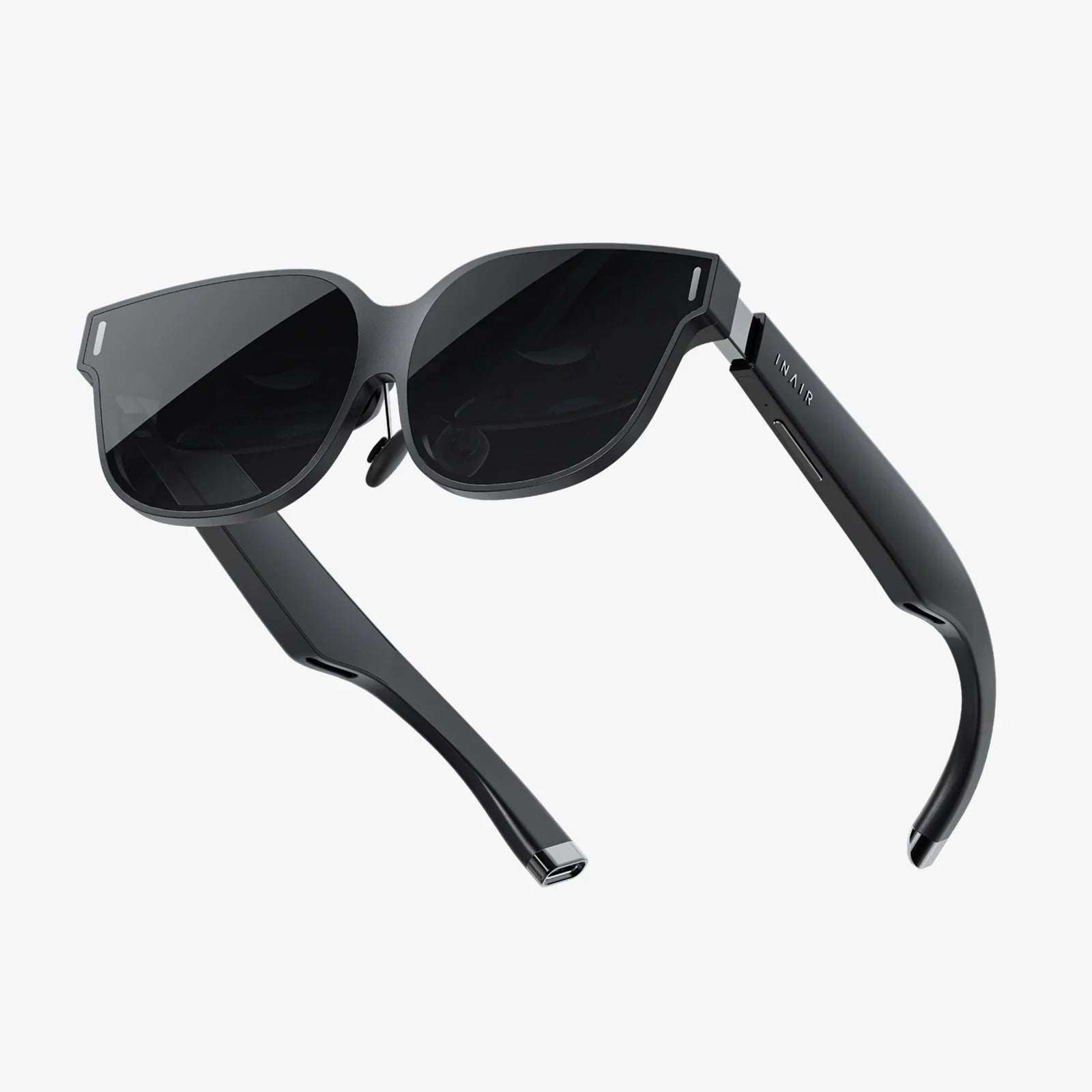
The catalyst for this shift is a powerful combination of hardware innovation, software development, and significantly improved connectivity. The advent of standalone AR glasses, though still evolving, is eliminating the need to constantly hold up a smartphone. Meanwhile, advancements in 5G and edge computing are providing the low-latency, high-bandwidth backbone necessary for streaming complex, real-time AR experiences without lag or interruption. This robust foundation is what will allow the market to explode into a multitude of practical applications.
Enterprise and Industrial Adoption: The Primary Growth Engine
While consumer applications often grab headlines, the most significant and immediate growth within the augmented reality market trends 2025 is occurring in the enterprise and industrial sectors. Here, AR is solving critical business problems, improving efficiency, reducing errors, and enhancing safety, which translates directly to a compelling return on investment.
Revolutionizing Manufacturing and Field Services
On factory floors and in field service operations, AR is becoming an indispensable tool. Technicians can wear smart glasses that overlay digital work instructions, schematics, and safety alerts directly onto the machinery they are repairing. This hands-free access to information allows for faster diagnostics, reduces training time for new employees, and minimizes costly mistakes. Remote expert assistance is another game-changer; a specialist located thousands of miles away can see what a field technician sees and annotate their real-world view with arrows and notes, guiding them through a complex procedure without ever needing to be on-site.
Transforming Design and Prototyping
In sectors like architecture, engineering, and construction, AR is revolutionizing the design process. Architects can project full-scale 3D models of buildings onto empty plots of land, allowing stakeholders to walk through and experience the design before a single foundation is poured. This enables early detection of design flaws, facilitates better client communication, and streamlines the entire planning process. Similarly, automotive designers can use AR to visualize and interact with life-sized models of new vehicle components, accelerating innovation and collaboration.
Enhancing Retail and Logistics
The logistics and warehousing industry is leveraging AR to create smarter warehouses. AR-powered smart glasses can guide warehouse pickers along the most efficient routes, visually highlight the exact shelf location of an item, and display inventory information, dramatically speeding up order fulfillment and reducing errors. In retail, AR is being used for sophisticated inventory management, allowing staff to quickly scan shelves and receive real-time data on stock levels and product information.
The Consumer Arena: Beyond Filters and Games
On the consumer front, the augmented reality market trends 2025 point toward a gradual but steady integration into daily life. The path to mass adoption will be less about a single "killer app" and more about a proliferation of useful, engaging applications that enhance everyday activities.
The Future of Shopping is Experiential
E-commerce will be utterly transformed. Shoppers will be able to use their smartphones or AR glasses to visualize products in their own space with photorealistic accuracy. Trying on clothes, experimenting with new makeup shades, seeing how a new sofa fits in a living room, or test-driving a new paint color on the walls will become standard practice. This "try before you buy" experience will drastically reduce purchase hesitation and product returns, building greater consumer confidence in online shopping.
Immersive Learning and Skill Development
Education and training will become deeply immersive. Students will dissect virtual frogs, walk through ancient Roman ruins reconstructed in their classroom, and interact with complex molecular structures. For personal development, AR will provide interactive, step-by-step overlays for learning new skills, from repairing a bicycle to playing a complex guitar chord, making knowledge acquisition more accessible and effective than ever before.
Navigation and Contextual Information
Turn-by-turn navigation will evolve from a 2D map on a screen to arrows and directions painted onto the real world through your glasses or phone camera. Walking through a city, you could see historical information pop up about landmarks, get ratings and menus overlaid on restaurants as you pass them, or receive real-time translations of street signs. This layer of contextual data will make navigating and understanding our environments infinitely richer.
Technological Catalysts Powering the 2025 Vision
Several key technologies are converging to make these ambitious trends a reality by 2025.
The Hardware Evolution: Towards True Wearability
The success of AR hinges on the development of comfortable, socially acceptable, and high-performing glasses. The trend is moving away from bulky, tethered devices towards sleek, lightweight glasses that resemble traditional eyewear. Improvements in waveguide technology, micro-LED displays, and battery efficiency are critical to this miniaturization. Furthermore, the development of more natural user interfaces, like gesture control and voice commands, will reduce reliance on handheld controllers and make interactions more intuitive.
Artificial Intelligence: The Brain Behind the Scene
AI is the silent engine powering compelling AR. Computer vision algorithms allow AR devices to understand and interpret the environment, recognizing objects, surfaces, and spatial geometry. Machine learning enables predictive and personalized experiences, anticipating user needs and serving up relevant information. Natural language processing allows for seamless voice interaction. Without advanced AI, AR would be a dumb display; with it, it becomes a contextual and intelligent assistant.
The Spatial Web and Interoperability
A major trend moving toward 2025 is the development of the "spatial web" or "WebAR." This concept involves creating a version of the internet that is anchored to the physical world, where digital objects and information have a persistent location. For this to work, open standards and interoperability between different AR platforms and devices are essential. This would allow a digital sculpture placed in a public park by one person to be seen by anyone else visiting that location, fostering shared experiences and a cohesive AR layer over reality.
Challenges and Considerations on the Road to 2025
Despite the optimistic trends, the path to a ubiquitous AR future is not without significant hurdles.
Privacy and Data Security: AR devices, by their very nature, are data collection powerhouses, with cameras and sensors constantly scanning the environment. This raises profound questions about privacy, data ownership, and security. Establishing clear ethical guidelines and robust regulatory frameworks will be paramount to earning public trust.
Digital Divide and Accessibility: There is a risk that advanced AR technology could become a luxury, exacerbating the digital divide. Ensuring that the benefits of AR are accessible and affordable to a broad population, not just a privileged few, is a critical societal challenge.
User Experience and Digital Fatigue: Designing for AR is fundamentally different from designing for flat screens. There is a danger of creating overwhelming experiences cluttered with notifications and digital junk. The industry must focus on human-centric design that enhances reality without overwhelming it, avoiding a new form of digital fatigue.
Health and Safety: Long-term effects of wearing AR headsets and having digital light projected into users' eyes are still being studied. Furthermore, safety concerns around distracted users walking in public spaces or even driving must be addressed through thoughtful design and public awareness campaigns.
The augmented reality market is building towards an inflection point, and 2025 is poised to be a landmark year where these trends crystallize into a new computing paradigm. It is a movement from isolation behind screens to interaction within our world, augmenting our human capabilities and reshaping countless industries in the process. The businesses, creators, and policymakers who understand and adapt to these trends today will be the ones defining the reality of tomorrow.
Imagine a world where your morning run is guided by a virtual coach pacing beside you, your commute is highlighted with traffic alerts only you can see, and your work meeting involves manipulating 3D data models with a wave of your hand. This is not a distant dream but the tangible destination of current innovation. The convergence of AI, 5G, and sleek hardware is building an immersive layer atop our reality, and by 2025, stepping into this enhanced world will feel less like using a new app and more like unlocking a new way of seeing. The race to own this spatial layer is already on, and its winners will redefine the next decade of human-computer interaction.


Share:
Augmented Reality Function: The Invisible Layer Reshaping Our World
Jobs in Augmented Reality: A Comprehensive Guide to the Next Digital Frontier