


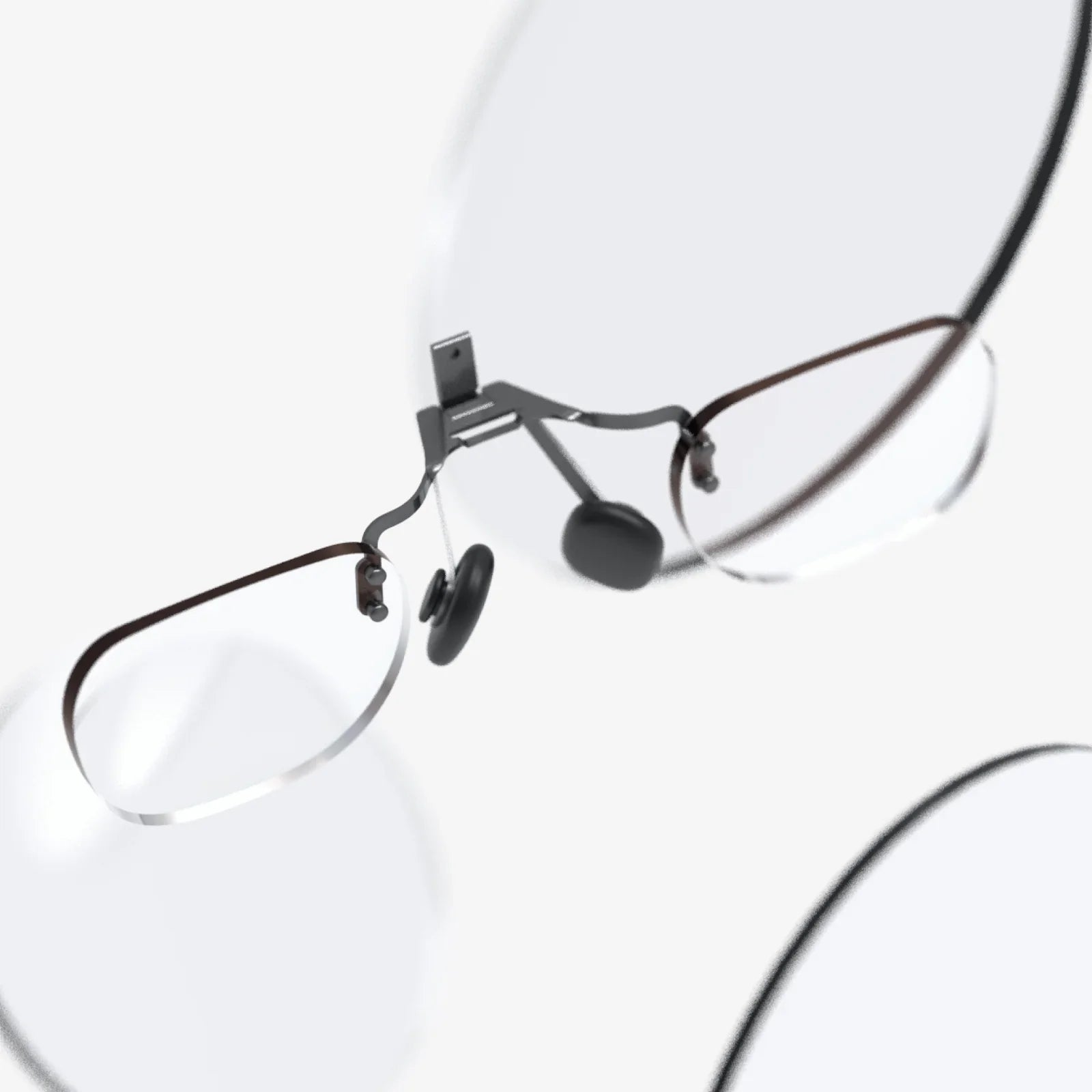
- by wangfred
Augmented Reality Function: The Invisible Layer Reshaping Our World
- by wangfred
Imagine a world where information doesn’t just live on your screen but is painted onto the very fabric of reality around you. Where instructions for assembling a complex piece of machinery hover directly over the components, a historical figure stands beside you to narrate the event you’re witnessing, and the potential new sofa in your living room is judged for its fit and color before you ever click ‘buy.’ This is no longer the stuff of science fiction; it is the present and rapidly evolving future powered by the augmented reality function. This technology, which superimposes digital information—images, sounds, text, and 3D models—onto our view of the physical world, is quietly transitioning from a captivating gimmick into an indispensable, invisible layer that is fundamentally reshaping how we work, learn, shop, and interact with our environment.
To understand the profound impact of the augmented reality function, we must first move beyond the popular perception of playful selfie filters and game characters appearing in parks. At its core, AR is a sophisticated symphony of hardware and software working in concert to bridge the digital and physical divide. The process begins with a sophisticated computer vision system. Using cameras and sensors, the device—whether a smartphone, a set of smart glasses, or a head-mounted display—scans the environment in real-time. It doesn’t just see a flat image; it works to understand it. This is where simultaneous localization and mapping (SLAM) technology comes into play. SLAM allows the device to both map the environment (identifying floors, walls, tables, and other surfaces) and localize itself within that map. It creates a spatial understanding of the world, answering the critical questions: Where am I? and What is around me?
Once this spatial anchor is established, the augmented reality function can place digital content with astonishing precision. This content is not merely pasted onto the screen; it is contextually aware, locked onto a specific point in the real world. If you walk around a digital object, you can view it from different angles. If you place a digital vase on a physical table, it will remain there, occluded correctly if a real-world person walks in front of it. This illusion of coexistence is the magic of AR. It’s achieved through a complex interplay of advanced algorithms for object recognition, depth tracking, and lighting estimation, ensuring the virtual elements match the scale, perspective, and even the ambient light of their physical surroundings, creating a seamless and believable composite reality.
While consumer applications often grab headlines, some of the most powerful and mature uses of the augmented reality function are found in industry and healthcare, where it is solving real-world problems and delivering tangible value.
On factory floors, construction sites, and in field service, AR is revolutionizing workflows. Technicians wearing AR smart glasses can see schematics, instruction manuals, and animated guides overlaid directly onto the machinery they are repairing. This augmented reality function provides hands-free access to crucial information, drastically reducing errors, shortening training times for new employees, and minimizing downtime. A novice worker can perform complex tasks with the guidance of a remote expert who can see their view and annotate the real world with digital arrows, circles, and notes. In logistics and warehousing, AR can display optimal picking routes and instantly highlight items on a shelf, supercharging efficiency and accuracy in fulfillment centers. This is not about replacing human workers but about augmenting their capabilities, making them more efficient, safe, and knowledgeable.
In the medical field, the stakes are immeasurably high, and the augmented reality function is rising to the challenge. Surgeons are using AR to visualize complex anatomical structures in 3D before making an incision. By overlaying CT or MRI scans directly onto a patient’s body, a surgeon can essentially see “inside” the patient, improving precision and reducing risks during procedures. This technology is also revolutionizing medical training, allowing students to practice on virtual patients and explore detailed, life-size holograms of human anatomy from every angle. Furthermore, AR is being used for patient education, helping doctors explain complex conditions and procedures in a visual, intuitive way that a 2D diagram never could, leading to better understanding and informed consent.
The transformative power of the augmented reality function extends far beyond specialized fields, poised to change the very nature of everyday activities like shopping, learning, and socializing.
The retail sector is undergoing an AR-powered metamorphosis. The augmented reality function is solving one of online shopping's biggest drawbacks: the inability to physically interact with a product. Furniture retailers allow customers to place true-to-scale 3D models of sofas, tables, and lamps in their own living spaces using their smartphone camera. Fashion brands enable users to “try on” sunglasses, watches, and makeup virtually. This not only drastically reduces purchase uncertainty and product returns but also creates a more engaging and confident shopping experience. In physical stores, AR can unlock additional product information, reviews, and styling suggestions simply by pointing a phone at an item, blurring the lines between the online and offline retail worlds.
Education is another domain being profoundly enriched by AR. Textbooks become interactive portals; a chapter on astronomy can project a rotating solar system above the page, while a history lesson can resurrect ancient civilizations in the classroom. The augmented reality function transforms abstract concepts into tangible, interactive models. Students can dissect a virtual frog, walk through a human heart, or manipulate geometric shapes, fostering deeper understanding and engagement through experiential learning. This technology caters to diverse learning styles and has the potential to make education more accessible and captivating for everyone.
On a societal level, AR is creating new forms of shared experience and expression. Social media filters were just the beginning. The augmented reality function is enabling location-based experiences where digital art, games, and narratives are tied to specific physical places, encouraging exploration and turning entire cities into interactive playgrounds. It offers new tools for artists to create and for individuals to express their identity, overlaying their worldview with a digital layer of creativity and information. This shared, augmented space has the potential to become a new canvas for public art, collaborative storytelling, and community interaction.
Despite its immense potential, the widespread adoption of the augmented reality function is not without significant hurdles. For AR to move from a compelling application to a ubiquitous utility, several challenges must be addressed.
Technologically, hardware needs to become lighter, more powerful, more socially acceptable, and offer longer battery life. The current reliance on smartphones is a stepping stone; the true potential of AR will be unlocked with comfortable, stylish, and always-on eyewear. Furthermore, creating high-fidelity, performant 3D content at scale remains a complex and resource-intensive endeavor. The digital layer must be as rich and detailed as the physical one to be truly persuasive.
Perhaps the most pressing concerns are those of privacy and data ethics. An AR device that is constantly scanning and interpreting its environment is, by its very nature, a powerful data collection tool. The questions of who has access to this environmental data, how it is stored, and what it is used for are paramount. Robust frameworks and transparent policies are required to prevent misuse and ensure that this powerful technology is developed and deployed responsibly, with user trust at its core.
Finally, there is the challenge of the digital divide. As the augmented reality function becomes more integrated into essential services like education, navigation, and commerce, ensuring equitable access is critical to prevent a scenario where an augmented upper class benefits from a layer of reality that is invisible to others.
The ultimate success of the augmented reality function will be its disappearance. The goal is not to be noticed as a technology but to fade into the background, becoming as intuitive and unnoticeable as the touchscreen is today. We are moving towards a future where contextual information is simply present in our field of view when we need it, without a conscious command. Your car’s directions will be painted onto the road itself, the name of a rare flower will appear as you glance at it on a hike, and a notification will subtly materialize in your periphery without pulling you out of the moment.
This is the promise of the augmented reality function: not to replace our reality, but to enhance it. To make us smarter, more capable, and more connected to the information and people that matter. It is a tool for unlocking human potential, providing a seamless bridge between our digital knowledge and our physical existence. The invisible layer is being woven into the world around us, and it is set to redefine reality as we know it, transforming every industry and everyday life in ways we are only beginning to imagine.
Share:
Augmented Reality in AI-Driven Automation: The Synergy Reshaping Modern Industry
Augmented Reality Market Trends 2025: A Deep Dive into the Future of Digital Interaction