


Imagine a world where digital instructions float seamlessly over a malfunctioning engine, guiding your every repair; where historical figures step out of textbooks to narrate their stories in your living room; where complex surgical data is superimposed directly onto a patient, giving surgeons x-ray vision. This is no longer the realm of science fiction but the tangible, accelerating present powered by a sophisticated and disciplined approach known as augmented reality methodology. This structured framework is the unsung hero behind the magic, transforming whimsical concepts into robust, scalable, and impactful AR experiences that are reshaping our reality, one layer at a time.
The Foundational Pillars of AR Methodology
At its core, augmented reality methodology is a multidisciplinary framework that guides the conception, design, development, and deployment of AR experiences. It is a synthesis of software engineering, user experience (UX) design, spatial computing, and human-computer interaction principles. Unlike traditional app development, AR methodology must account for the unpredictable and dynamic nature of the real world, making its foundational pillars uniquely critical.
Precise Environmental Understanding and Tracking
The first and most crucial pillar is the technology's ability to understand and track the environment. This goes far beyond simple marker-based recognition. Modern AR methodology leverages a suite of advanced techniques:
- Simultaneous Localization and Mapping (SLAM): This is the cornerstone of markerless AR. SLAM algorithms allow a device to simultaneously map an unknown environment and pinpoint its own location within that map in real-time. This creates a persistent spatial anchor, enabling digital objects to stay locked in place as the user moves.
- Plane Detection: Identifying horizontal (floors, tables) and vertical (walls) surfaces is essential for placing digital content convincingly. The methodology involves algorithms that can distinguish these planes from complex geometry.
- Depth Sensing and Occlusion: Using specialized sensors or computer vision, advanced AR systems can understand the depth of a scene. This allows digital objects to be realistically obscured by real-world objects, a critical factor for immersion. For instance, a virtual character can walk behind a real sofa.
- Environmental Lighting Estimation: To blend digital assets into the real world, they must be lit consistently with their surroundings. The methodology incorporates techniques to analyze ambient light color, intensity, and direction, applying the same properties to virtual objects to eliminate the "glowing" effect and cast believable shadows.
The Human-Centered Design Imperative
AR is a profoundly intimate technology, overlaying information directly onto a user's perception of reality. Therefore, a human-centered design (HCD) approach is not a luxury but a fundamental pillar of its methodology. This involves:
- Contextual Awareness: Designing for AR requires a deep understanding of the user's environment, task, and cognitive load. An AR experience for a factory floor worker must be starkly different from one for a child learning the solar system. The methodology mandates extensive user research conducted within the context of use.
- Intuitive Interaction Paradigms: Traditional touchscreen gestures are often inadequate. AR methodology explores and standardizes new interaction models like gaze-based selection, gesture control, voice commands, and even haptic feedback. The goal is to create interactions that feel natural and minimize fatigue.
- Information Layering and Prioritization: The biggest design challenge is avoiding information overload. The methodology provides frameworks for deciding what information to display, when, and how prominently. Techniques like diegetic UI (where interface elements exist within the world space) are prioritized over non-diegetic UI (overlaid screens) to maintain immersion.
The AR Development Lifecycle: A Phased Approach
Translating an AR concept into a polished product requires a rigorous, iterative lifecycle. This process, central to AR methodology, can be broken down into several key phases.
Conceptualization and Feasibility Analysis
This initial phase is about answering the "why" and "if." Teams must define the core objective: Is the AR experience meant to inform, instruct, entertain, or enhance efficiency? A key part of the methodology here is conducting a feasibility study. This involves assessing technical constraints (device capabilities, environmental stability), economic viability (development cost vs. ROI), and user readiness. Storyboarding and creating low-fidelity prototypes, often using simple tools, help visualize the experience before a single line of code is written.
Experience Design and Prototyping
This is where the HCD pillar comes to life. Designers create detailed user journeys and wireframes that map the user's flow through the AR experience. They define the spatial UI, interaction patterns, and the narrative of the digital overlay. High-fidelity prototyping is crucial. Using game engines and AR development platforms, teams create interactive prototypes to test core functionalities like tracking stability, object placement, and user interactions. This iterative testing, ideally with real users in the target environment, helps identify and rectify usability issues early.
Development and Integration
This phase involves the actual construction of the experience. The AR methodology does not prescribe a single programming language but often leverages game engines, which provide powerful rendering capabilities and integrated AR toolkits. Development focuses on:
- Building the AR Core: Implementing and fine-tuning SLAM, plane detection, and other environmental understanding features.
- Creating 3D Assets and Animations: Developing optimized, high-quality digital content that will be superimposed onto the real world.
- Integrating Back-End Systems: Connecting the AR experience to cloud services, databases, or enterprise systems (e.g., for pulling real-time data or tracking user progress).
- Optimizing Performance: Ensuring the application runs smoothly, maintains a high frame rate, and does not overheat the device, which is paramount for user comfort and safety.
Rigorous Testing and Quality Assurance
Testing an AR application is exponentially more complex than testing a standard 2D app. The methodology requires a multi-faceted QA strategy:
- Environmental Testing: The app must be tested under a vast array of lighting conditions (bright sun, low light), on different textures and surfaces, and in various spatial contexts (cluttered rooms, open spaces).
- Device Fragmentation Testing: Ensuring the experience performs consistently across a range of supported devices with different cameras, sensors, and processing power.
- User Experience Testing: Observing real users to catch issues with interaction intuitiveness, information clarity, and physical comfort (e.g., neck strain from holding a device too long).
- Usability and Safety Testing: Crucially, AR experiences must be evaluated for real-world safety. Does the application obscure the user's view in a dangerous way? Does it encourage behavior that could lead to injury?
Deployment, Maintenance, and Analytics
Deploying an AR application, especially for enterprise use, requires careful planning. The methodology covers distribution channels, user onboarding, and training. Post-launch, maintenance is ongoing. This includes updating content, fixing bugs, and ensuring compatibility with new operating systems and devices. Furthermore, integrating analytics is key to measuring success. Teams track metrics like user engagement, session length, completion rates for tasks, and, most importantly, the defined KPIs from the conceptualization phase (e.g., reduced error rates in assembly, improved training retention).
Overcoming Inherent Challenges
No methodology is without its challenges, and AR presents some of the most formidable in software development.
- The Variability of the Real World: Designing for a controlled digital environment is predictable; designing for every possible living room, factory, or outdoor space is not. The methodology must embrace and plan for this inherent chaos through robust error handling and adaptive algorithms.
- Hardware Limitations: Battery life, thermal performance, and computational power are significant constraints. Efficient coding and aggressive optimization are non-negotiable tenets of the methodology.
- The Network Effect and Persistent AR:
For AR to become a shared, collaborative medium, experiences must be persistent and multi-user. This means creating a shared coordinate system so that multiple users can see and interact with the same digital objects in the same physical space, even if they join at different times. This requires sophisticated cloud-based anchors and precise, low-latency synchronization, presenting a major technical hurdle that the methodology is continually evolving to address.
Ethical Considerations and the Future
A responsible augmented reality methodology must include a framework for addressing the ethical implications of the technology.
- Privacy and Data Security: AR devices, with their always-on cameras and sensors, collect unprecedented amounts of data about users and their environments. The methodology must enforce principles of data minimization, anonymization, and secure storage. Users must have clear control over what data is collected and how it is used.
- Digital Addiction and Reality Blurring: As AR becomes more compelling, the risk of addiction and the difficulty in distinguishing between the digital and physical worlds could increase. Ethical design principles should promote digital well-being and encourage users to remain engaged with their actual surroundings.
- Accessibility and the Digital Divide: The methodology must prioritize making AR experiences accessible to people with diverse abilities, considering visual, auditory, and motor impairments. Furthermore, the cost of hardware risks creating a new digital divide, an issue that requires broader societal attention.
- Advertising and Content Moderation: The potential for spammy virtual advertisements cluttering physical spaces or for harmful/offensive user-generated AR content is a serious concern. Establishing norms and technologies for content moderation in spatial computing is an urgent and complex challenge.
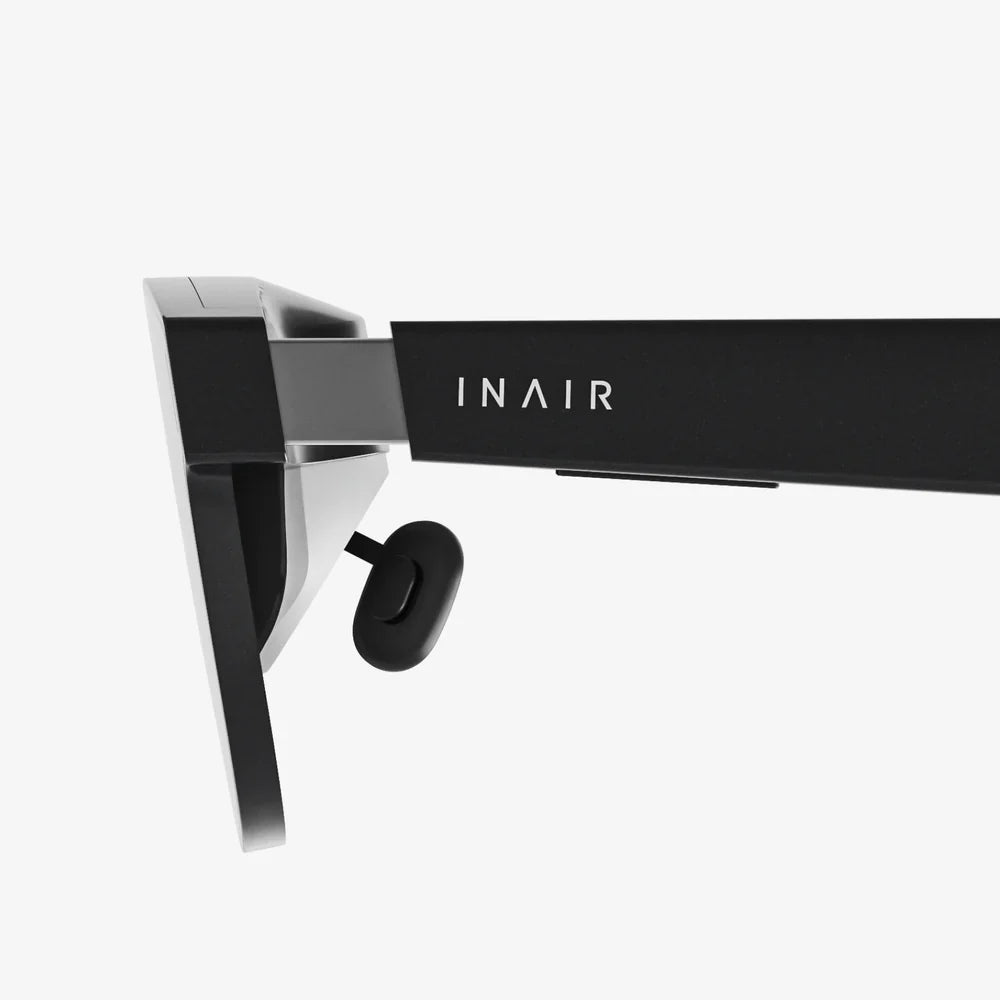
The Path Forward: Towards an Ambient AR Future
The future of augmented reality methodology is moving towards ambient computing—where technology recedes into the background, and the interaction becomes frictionless and intuitive. This will be powered by advancements in wearables like smart glasses, which will offer a truly hands-free experience. The methodology will increasingly integrate with Artificial Intelligence and the Internet of Things (IoT), enabling AR systems that are not just aware of the environment but can understand it semantically and respond intelligently to real-time data streams from connected devices. The line between the digital and physical will not just be blurred; it will be woven into a single, coherent fabric of human experience.
The true power of augmented reality methodology lies not in the novelty of digital overlays, but in its capacity to make us more capable, more informed, and more connected to the world around us. It provides the essential blueprint for building this future responsibly, ensuring that as we augment our reality, we enhance our humanity rather than detract from it. The next great leap in computing is already here, waiting to be built, and it starts with a disciplined, creative, and ethical approach to blending our worlds.
Share:
What's the Best VR Headset to Buy? A 2024 Buyer's Deep Dive Guide
Purchase VR Headset: The Ultimate Buyer's Guide to Virtual Reality