


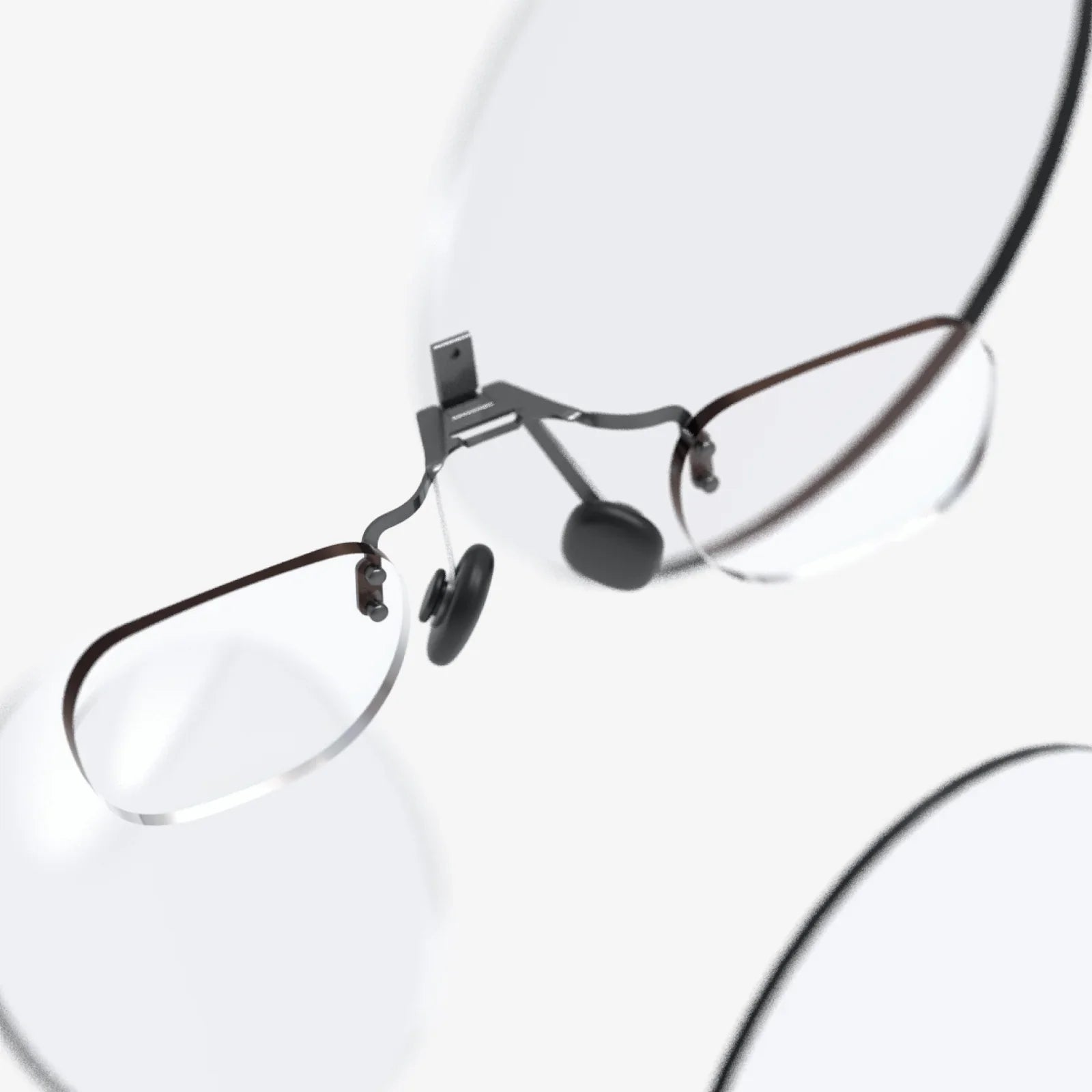
Imagine a world where your living room becomes a virtual showroom, historical figures step out of your textbooks to give a lecture, and a recipe’s instructions are superimposed directly onto the ingredients in front of you. This is no longer the stuff of science fiction; it is the rapidly evolving present of augmented reality online. Unlike its fully immersive cousin, virtual reality, which requires a headset to transport you to a different world, AR enhances our existing reality by overlaying digital information—images, data, 3D models, and animations—onto our physical environment through the screens of our ubiquitous devices. This seamless fusion of the digital and the physical, accessible to anyone with a smartphone or tablet, is fundamentally altering how we learn, shop, play, and connect, weaving a persistent digital layer directly into the fabric of our daily online experiences.
Demystifying the Magic: How Online AR Works
At its core, augmented reality online is a sophisticated dance between your device’s hardware and powerful cloud-based software. The process begins with your device’s camera capturing the real-world environment in real-time. This visual data is then sent to a processor, either on the device itself or, more commonly for complex tasks, to powerful remote servers. Sophisticated computer vision algorithms and simultaneous localization and mapping (SLAM) technology spring into action, analyzing the scene to understand surfaces, depths, and points of reference. This allows the digital content to be anchored precisely within the physical space, ensuring it doesn’t float aimlessly but appears locked in place, responding to your movements and perspective shifts. Finally, the composited image—the real-world view now enriched with digital elements—is rendered on your screen, creating the magical illusion of coexistence.
The true engine of this revolution is the web. Early AR experiences required users to download specific applications, creating friction and barriers to adoption. The advent of WebAR changed everything. By leveraging standard web technologies like WebGL and WebXR, developers can now deliver rich AR experiences directly through a web browser. A user simply clicks a link or scans a QR code, and within seconds, without any app installation, they are immersed in an augmented world. This frictionless access has democratized AR, making it a mass-market tool for engagement rather than a niche novelty for early adopters.
The New Digital Marketplace: Revolutionizing Retail and E-Commerce
Perhaps the most immediate and impactful application of online augmented reality is in the realm of retail. For years, online shopping has been plagued by a critical limitation: the inability to try before you buy. Augmented reality is solving this ‘try-on’ problem with astonishing efficacy, effectively bridging the gap between the convenience of e-commerce and the confidence of an in-store purchase.
Imagine shopping for a new sofa. Instead of guessing whether it will fit in your lounge or match your décor, you can now project a true-to-scale 3D model of the sofa into your actual room. You can walk around it, see how it looks from different angles, and even visualize it in different colors—all from your phone. This ‘virtual try-on’ capability extends far beyond furniture. Shoppers can see how a new watch looks on their wrist, how a pair of sunglasses fits their face, or how a shade of lipstick complements their skin tone. This dramatically reduces purchase hesitation and, consequently, product return rates, providing a tangible return on investment for businesses while delivering a superior, more confident shopping experience for the consumer.
Transforming the Classroom and the Workspace
Beyond commerce, augmented reality online is a powerful pedagogical tool, turning abstract concepts into tangible, interactive experiences. Education is being transformed from a passive activity into an active exploration. A student studying anatomy can explore a beating heart in 3D, peeling back layers to understand the circulatory system. A history class can witness historical events unfold on their desk, with animated figures reenacting famous battles. Chemistry students can manipulate virtual molecules, seeing how they bond and react without the need for a physical lab. This interactive, visual learning enhances comprehension and retention, catering to a variety of learning styles and making education more engaging and accessible.
In the corporate and industrial worlds, AR is driving unprecedented gains in efficiency and safety. Remote assistance is a prime example. A field technician facing a complex repair can don AR glasses or use a tablet, streaming their point-of-view to an expert located thousands of miles away. The expert can then annotate the technician’s live view with arrows, diagrams, and notes, guiding them through the process step-by-step as if they were standing right beside them. This reduces downtime, minimizes errors, and allows a single expert to support a global workforce. Furthermore, complex assembly instructions or data visualizations can be overlaid directly onto machinery, streamlining workflows and reducing cognitive load for workers.
Redefining Social Connection and Storytelling
Human connection is also getting an augmented makeover. Social media platforms are increasingly integrating AR filters and effects, allowing users to add playful digital elements to their videos and photos. These range from simple face filters to complex, interactive games that multiple people can play together in a shared physical space. This shared AR experience creates new forms of playful interaction and collaborative storytelling, fostering connection in a digitally-native language.
For marketers and advertisers, online AR offers a revolutionary canvas for engagement. Instead of a static print ad, a magazine page can come to life when viewed through a smartphone, launching a video, a game, or an interactive product demonstration. A movie poster can transform into a trailer or allow users to take a picture with a digital version of a character. This creates memorable, immersive campaigns that generate valuable data on user interaction, moving beyond mere impressions to meaningful engagement.
Navigating the Challenges: Privacy, Accessibility, and the Future
Despite its immense potential, the path forward for augmented reality online is not without significant challenges. The technology raises profound questions about data privacy and security. AR applications, by their very nature, require continuous access to a device’s camera and must process vast amounts of visual data from a user’s personal environment. The potential for this data to be misused, stored, or analyzed without explicit consent is a serious concern that developers and regulators must address with robust ethical frameworks and transparent policies.
Furthermore, the digital divide remains an issue. While smartphone penetration is high, the quality of devices varies greatly. A high-end smartphone will deliver a smooth, convincing AR experience, while an older model may struggle with tracking and rendering, creating a fragmented user experience. Ensuring that AR remains an inclusive technology, rather than one that exacerbates existing inequalities, is a crucial consideration for its long-term health.
Looking ahead, the convergence of AR with other emerging technologies like 5G and artificial intelligence will unlock even more possibilities. 5G’s ultra-low latency and high bandwidth will enable even more complex and photorealistic AR experiences to be streamed instantly from the cloud. AI will enhance object recognition, allowing AR systems to not just see surfaces but truly understand the objects in a scene—distinguishing a dog from a cat, a car from a truck, and enabling more intuitive and context-aware interactions.
The ultimate evolution may lie in the development of more comfortable and socially acceptable wearable technology, like advanced AR glasses, which could eventually replace the smartphone as our primary portal to the digital layer. This would make the augmented world a persistent, hands-free experience, seamlessly integrated into our field of vision throughout the day.
The silent revolution of augmented reality online is already here, quietly transforming our screens into windows to a blended world of infinite possibility. It’s shifting the internet from something we look at on a page to an interactive dimension we can step into and manipulate, fundamentally changing our relationship with both information and each other. The next time you pick up your phone, remember—you’re not just holding a device; you’re holding a lens to a new layer of reality, waiting for you to look through and explore.
Share:
AI Glasses Brands Are Redefining Reality: A Deep Dive Into The Next Tech Revolution
Virtual Eye Glasses: The Future of Vision, Work, and Digital Interaction