


- by wangfred
Augmented Reality Performance: The Unseen Engine Powering a New Digital Reality
- by wangfred
Imagine a world where digital information doesn't just live on a screen but is seamlessly woven into the fabric of your everyday life. You point your device at a complex piece of machinery, and animated repair instructions hover over its components. You walk through a city, and historical figures from centuries past narrate the stories of the buildings around you. You try on a new piece of furniture in your living room, seeing its exact dimensions and finish in real-time before you buy. This is the promise of augmented reality (AR), a technology poised to revolutionize how we work, learn, and play. But for this digital dream to feel real, for it to be more than a clunky, frustrating gimmick, it relies entirely on one invisible, critical factor: flawless augmented reality performance. The magic doesn't happen by accident; it’s the result of a relentless pursuit of technical excellence, where a single dropped frame or a misaligned virtual object can shatter the illusion and break the user's sense of immersion.
Augmented reality performance is a multifaceted concept. It isn't just about raw processing speed or high-resolution graphics; it's a delicate symphony of several interdependent elements working in perfect harmony. When we speak of high-performance AR, we are referring to a system that excels across four key pillars.
At its core, AR is about anchoring digital content to the real world. This process, known as tracking and registration, is the absolute bedrock of performance. It involves the device understanding its own position and orientation in space (pose estimation) and then precisely placing virtual objects within that space.
Once the system knows where things are, it must render the graphics. AR rendering is uniquely challenging because it must be done in real-time, at a high frame rate, and with minimal latency.
Delivering this experience requires immense computational power. Continuously processing high-resolution camera feeds, running complex computer vision algorithms, and rendering high-fidelity 3D graphics is a tremendous burden on the central processing unit (CPU), graphics processing unit (GPU), and, crucially, the digital signal processor (DSP) and neural processing unit (NPU).
This creates a significant challenge: thermal throttling. As these components work hard, they generate heat. To prevent damage, the device will eventually slow down its processors, directly degrading performance. A well-performing AR system isn't just powerful; it's also optimized to manage its thermal output, distributing workloads efficiently across specialized hardware to maintain a consistent experience without overheating.
All this processing power comes at a cost: energy consumption. An AR application that drains a device's battery in 30 minutes is impractical, no matter how visually stunning it is. Performance, therefore, includes power efficiency. This involves hardware design with efficient chipsets and software optimization to ensure that not a single cycle of processing power is wasted, maximizing the duration of the immersive experience.
To optimize performance, we must first be able to measure it. Developers rely on a suite of metrics to quantify the user experience.
Creating a high-performance AR experience is a constant battle against constraints. Developers must navigate a labyrinth of trade-offs.
Every AR developer is constrained by a fundamental triangle: Visual Fidelity vs. Performance vs. Battery Life. You can have stunning, highly detailed graphics, but it will consume more power and risk lower frame rates. You can prioritize buttery-smooth performance and long battery life, but you might have to simplify your 3D models and textures. Finding the perfect balance for a specific use case is the art and science of AR development. A medical training app might prioritize flawless tracking and minimal latency over photorealistic graphics, while a marketing campaign for a new car might temporarily favor visual splendor.
Unlike developing for a console with fixed hardware, AR developers must account for an almost infinite number of real-world variables: poor lighting, blank walls (feature-poor environments), fast movement, reflective surfaces, and the vast range of device capabilities across different models and generations. An app that performs flawlessly in a bright, well-textured office might fail completely in a dim, glossy-floored hallway. Robust performance means building resilience against these environmental challenges.
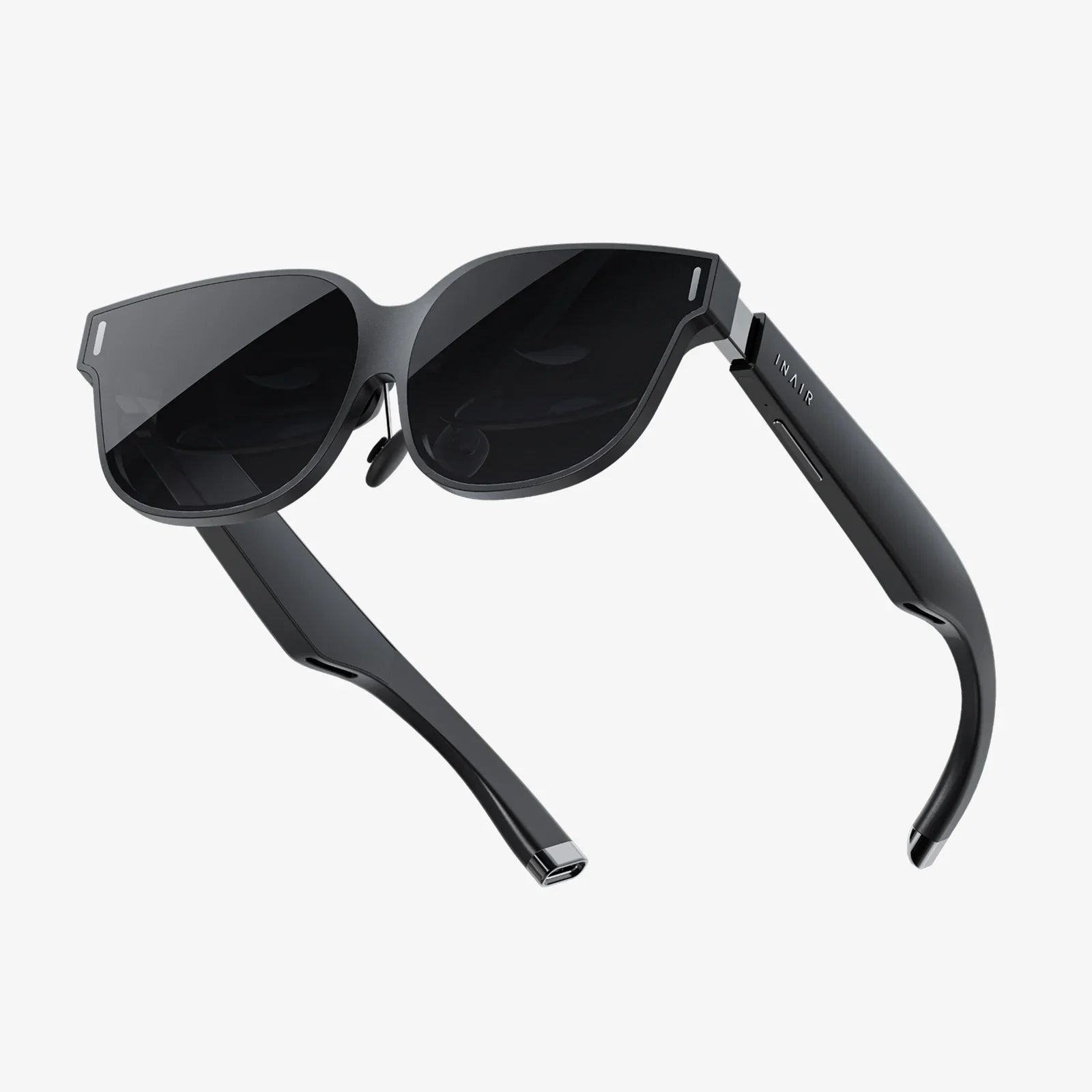
While smartphone-based AR has democratized the technology, it is inherently limited by its form factor—a single camera, consumer-grade sensors, and severe thermal constraints. The next leap in augmented reality performance is being driven by dedicated AR wearables, like smart glasses.
These devices are designed from the ground up for AR, incorporating advanced features that directly address performance hurdles:
This hardware evolution will unlock AR experiences that are persistent, hands-free, and truly seamless, moving the technology from a tool you hold up to a tool you wear.
The pursuit of augmented reality performance is not an academic exercise. It has direct and profound implications for the adoption and utility of the technology.
The true potential of augmented reality will remain locked away until its performance becomes invisible. We are moving toward a future where the line between the digital and the physical isn't just blurred—it's erased. This won't happen because the graphics are photorealistic, but because the underlying performance is so impeccable, so instantaneous, and so reliable that we stop perceiving the technology altogether. We will simply interact with a richer, more informative, and more magical world. The race to perfect this unseen engine is the most important competition in tech, and the winner will unlock the next chapter of human-computer interaction, transforming everything from how we perform surgery to how we remember our past. The future isn't just augmented; it's performant.
Share:
AR VR Market Growth 2030: The Decade of Digital Immersion and Economic Transformation
What Is AR and What Is VR: A Deep Dive into the Digital Frontier