Imagine a world where the digital and the physical are no longer separate realms, where you can learn complex surgery by practicing on a holographic patient, or explore the ancient ruins of Rome from your living room. This is no longer the stuff of science fiction; it is the emerging reality shaped by two of the most transformative technologies of our time: Augmented Reality and Virtual Reality. The journey to understand these digital frontiers begins with a simple question: what is AR and what is VR?
Defining the Realms: Core Concepts
At their heart, both AR and VR are technologies designed to alter our perception of reality, but they do so in fundamentally different ways. Understanding this distinction is the first step toward grasping their potential.
What is Virtual Reality (VR)?
Virtual Reality is the technology of complete immersion. It operates on a simple yet powerful principle: replace your real-world environment with a simulated, digital one. When you don a VR headset, you are visually and audibly transported to a different place. This could be a computer-generated fantasy landscape, a 360-degree video of a real location, or a digital simulation of a building that hasn't been constructed yet. The goal of VR is to create a sense of presence—the convincing feeling that you are actually "there" in the virtual environment. This is achieved by blocking out the physical world and tracking your head movements, so the digital world responds and moves exactly as you would expect the real one to.
What is Augmented Reality (AR)?
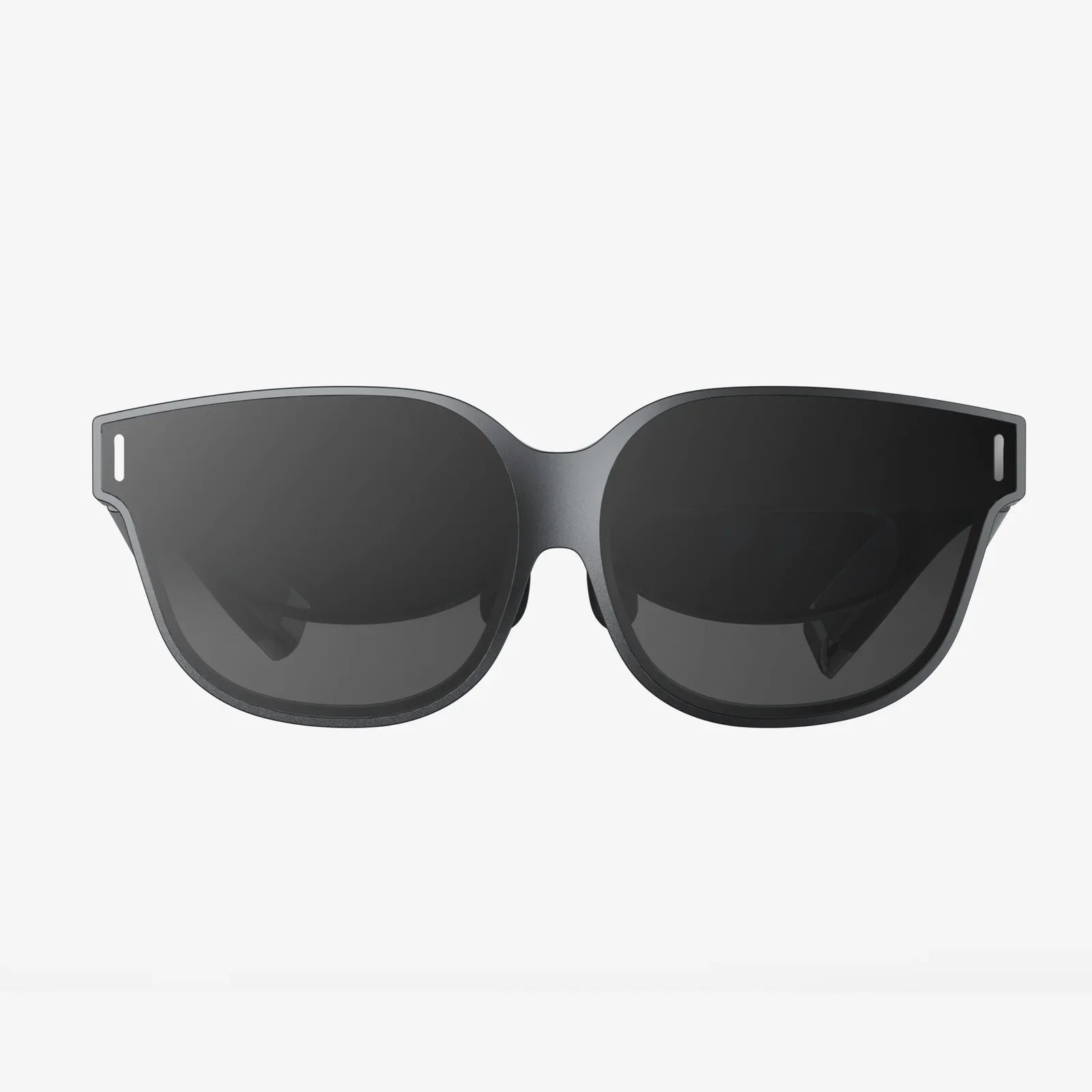
Augmented Reality, in contrast, is the technology of overlay. Instead of replacing your reality, it enhances it by superimposing digital information—images, text, 3D models, animations—onto your view of the real world. You are not taken out of your environment; your environment is made more informative and interactive. The most ubiquitous example is the camera on a smartphone or tablet. Using the screen as a viewfinder, you can see your actual surroundings, but the software adds a layer of digital content on top. Think of a navigation app that projects arrows onto the live street view, or a game that makes cartoon characters appear to run around your coffee table. More advanced AR is delivered through transparent glasses or lenses, allowing for a hands-free experience where digital objects appear to coexist with physical ones.
The Technological Engine Room: How They Work
The magic of AR and VR is powered by a sophisticated fusion of hardware and software, each with its own set of complex requirements.
The Architecture of Virtual Reality
A VR system is a feat of engineering designed to trick the human brain. It consists of several key components:
-
The Head-Mounted Display (HMD): This is the helmet or headset that contains the screens displayed in front of your eyes. Modern HMDs use high-resolution, fast-refresh-rate displays to create a crisp, smooth image that reduces the latency that can cause motion sickness.
-
Tracking Systems: For immersion to work, the virtual world must move in perfect sync with your head and body. This is achieved through a combination of internal sensors (like gyroscopes and accelerometers) and external sensors or cameras that precisely track the position and orientation of the HMD and controllers in 3D space.
-
Audio Systems: Spatial or 3D audio is critical. Sounds change based on your head position, so a voice behind you will sound like it's coming from behind, deepening the sense of realism.
-
Input Devices: These are your hands in the virtual world. From simple controllers with buttons and joysticks to advanced gloves that track finger movements, these devices allow you to interact with and manipulate the virtual environment.
-
Computational Power: Rendering two high-resolution images (one for each eye) at a very high frame rate requires immense graphical processing power, typically supplied by a powerful computer or a console.
The Mechanics of Augmented Reality
AR technology focuses on seamlessly blending the real and the digital. Its core functions include:
-
Sensing the World: Cameras and sensors continuously scan the user's environment. This is the first step to understanding the context for digital overlay.
-
Processing and Perception: This is where the heavy computing happens. Using techniques like Simultaneous Localization and Mapping (SLAM), the device constructs a digital map of the space in real-time and understands its own position within that map. It also performs object recognition to identify surfaces, tables, walls, and specific items like a product box.
-
Projection and Display: Once the environment is understood, the system renders the digital content and aligns it perfectly within the user's field of view. On smartphones, this is done on the screen. On AR glasses, it's achieved through miniature projectors that beam light onto the transparent lenses, making the image appear in the real world.
-
Connectivity: Many complex AR applications offload processing to the cloud via a fast internet connection, allowing for more detailed and dynamic digital overlays without requiring bulky local hardware.
A World of Applications: Beyond Gaming
While gaming and entertainment were the initial driving forces, the true potential of AR and VR is being realized in a vast array of professional and practical fields.
Transforming Industries with VR
-
Healthcare: Surgeons train for complex procedures in risk-free VR simulations. Medical students explore detailed 3D models of the human body. VR is also used for exposure therapy to treat phobias and PTSD, allowing patients to confront triggers in a controlled, safe setting.
-
Education and Training: Imagine history students witnessing historical events unfold around them or astronomy students taking a walk through a scaled model of the solar system. VR provides experiential learning that is impossible with textbooks. Similarly, companies use VR to train employees for dangerous jobs, like working on an oil rig or responding to a fire, without any real-world risk.
-
Architecture and Real Estate: Architects and clients can "walk through" a building's design long before the foundation is poured. Real estate agents offer virtual tours of properties across the globe, saving time and resources.
-
Remote Collaboration: With VR, geographically dispersed teams can meet in a shared virtual boardroom, interact with 3D models of their products, and collaborate as if they were in the same physical space.
Augmenting Everyday Life with AR
-
Retail and E-commerce: Customers can use AR to "try on" clothes, see how a new sofa would look in their living room, or visualize what a new coat of paint would do for a room's ambiance. This reduces uncertainty and increases consumer confidence.
-
Manufacturing and Maintenance: Factory workers can have schematics and instructions overlaid directly onto the machinery they are repairing. This improves accuracy, speeds up processes, and reduces errors. Technicians can see step-by-step guides superimposed on complex equipment.
-
Navigation: AR can revolutionize how we navigate. Instead of looking at a 2D map on a phone, arrows and directions can be projected onto the actual street through your phone's camera or future AR glasses, making it intuitive to find your way.
-
Education and Information: Point your phone at a historical monument, and see it reconstructed to its former glory with an overlay explaining its history. Point it at a restaurant, and see its reviews and menu pop up. AR turns the world into an interactive information landscape.
The Challenges and The Horizon: Looking Ahead
Despite rapid advancement, both fields face significant hurdles. For VR, the issues of cost, technical requirement, and physical discomfort ("VR sickness") for some users remain barriers to mass adoption. The hardware needs to become lighter, wireless, and more affordable. For AR, the challenge is creating glasses that are socially acceptable, stylish, and powerful enough to handle complex tasks without being bulky or having limited battery life. There are also serious concerns about privacy, data security, and the potential for digital spam cluttering our physical vision.
Yet, the future is incredibly bright. We are moving towards the concept of the "Metaverse," a persistent network of shared, interconnected virtual spaces often accessed via VR. The lines between AR and VR are also beginning to blur with technologies like Mixed Reality (MR), which allows for real-time interaction between physical and digital objects. Imagine reaching out and touching a virtual object in your real living room and having it respond—this is the promise of MR. Furthermore, advancements in haptic feedback will allow us to not just see and hear digital worlds, but to feel them, adding a whole new layer of immersion.
The distinction between staring at a screen and living within an experience is collapsing, paving the way for a future where our reality is limited only by our imagination. The next time you look around your room, just consider the invisible digital layer that could one day transform it into anything you can dream of.


Share:
Augmented Reality Performance: The Unseen Engine Powering a New Digital Reality
Latest Developments in Augmented Reality Glasses: A New Era of Wearable Computing