


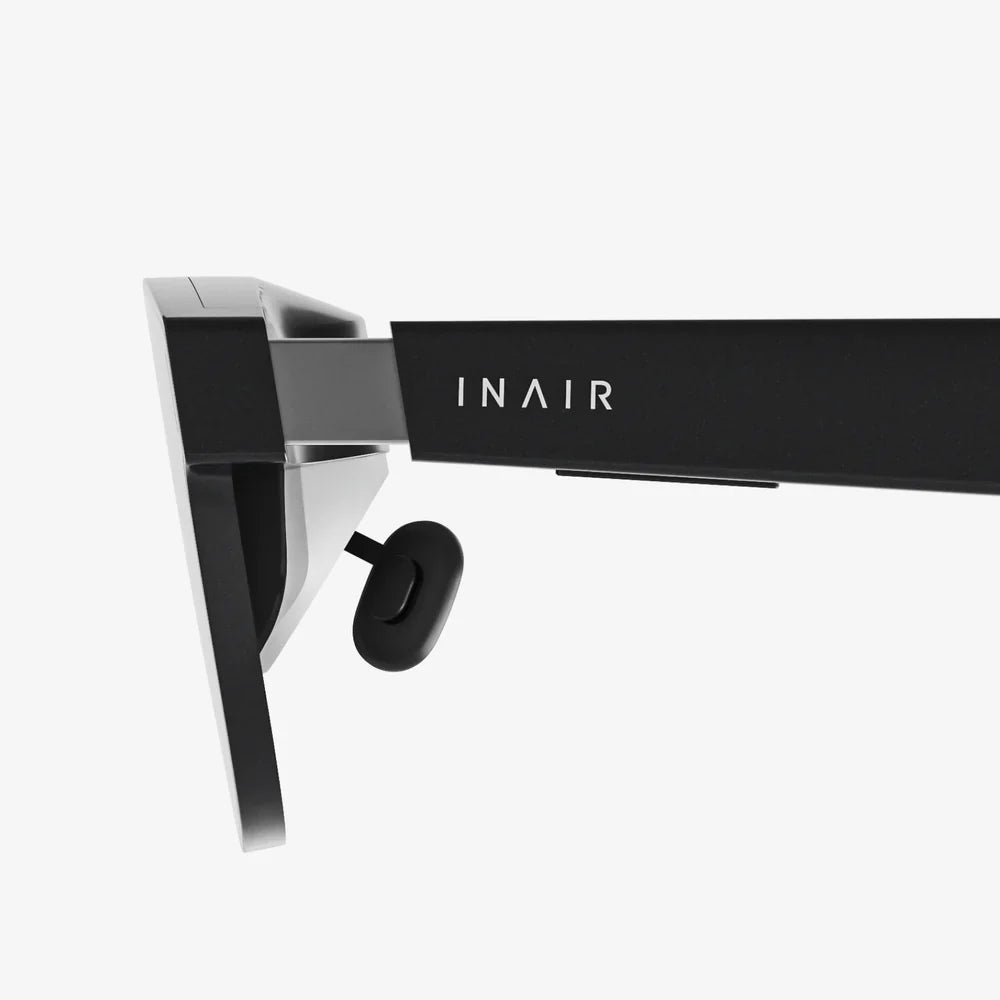
Imagine a world where information doesn’t live on a screen in your hand but is woven seamlessly into the fabric of your reality. Directions float on the pavement before you, the history of a monument unfolds as you gaze upon it, and a colleague’s avatar sits across from you at your kitchen table, discussing a project as if they were truly there. This is the promise, the tantalizing future, beckoning from the horizon of consumer technology. It’s a future powered not by a device you look at, but by a device you look through. We are on the cusp of a paradigm shift, moving from the smartphone era to the age of spatial computing, and the key that will unlock this new dimension is a pair of augmented reality phone glasses.
Beyond the Hype: Defining the True Nature of AR Glasses
The term "augmented reality phone glasses" can feel futuristic and abstract, often conflated with virtual reality or dismissed as a gimmick. It is crucial to understand what separates this technology from its predecessors and why it represents such a fundamental leap.
At its core, augmented reality (AR) is the real-time integration of digital information with a user's physical environment. Unlike Virtual Reality (VR), which creates a completely immersive, digital environment that replaces the real world, AR supplements reality, adding a layer of data, imagery, and interaction onto the world we already see. The "phone glasses" component is equally critical. This denotes a wearable, glasses-like form factor that is not a standalone supercomputer but a sophisticated window. It acts as a display and sensor hub, often leveraging the processing power, connectivity, and ecosystem of a paired smartphone—or increasingly, a dedicated, miniaturized computing unit—to function. This symbiotic relationship makes the technology feasible, powerful, and accessible.
The ultimate goal is to create what technologists call an "invisible interface." We moved from command-line interfaces (CLI) to graphical user interfaces (GUI) on desktops, and then to touch interfaces (TUI) on smartphones. The next logical step is the Zero-User Interface (Zero-UI), where we interact with technology through natural means: voice, gesture, gaze, and context. Augmented reality phone glasses are the physical embodiment of this concept, aiming to make the technology itself recede, leaving only its benefits enhanced upon our perception.
The Architectural Marvel: How AR Phone Glasses Work
Creating a convincing and useful augmented overlay on the real world is a monumental feat of engineering. It requires a symphony of advanced components working in perfect harmony.
The Display Systems: Painting Light onto the World
This is perhaps the most significant technical challenge. How do you project bright, high-resolution, full-color images that are visible in everything from a dimly lit room to bright sunlight, all while keeping the glasses lightweight and socially acceptable? Several competing technologies are vying for dominance.
- Waveguide Technology: This is currently the leading method for many ambitious designs. It involves projecting light into a tiny, transparent piece of glass or plastic etched with microscopic patterns. These patterns bounce the light down the waveguide and then directly into the user's eye, effectively painting the digital image onto their retina. This allows for a relatively slim form factor but can present challenges with field of view and brightness.
- Birdbath Optics: A more established approach uses a configuration of mirrors and beam splitters (resembling a birdbath) to fold the light path from a micro-display into the eye. This can offer excellent image quality and color but often results in a bulkier design.
- Retinal Projection: A more futuristic concept involves using lasers to scan images directly onto the retina. This promises incredibly high resolution and a large potential field of view but remains largely in the R&D phase due to significant safety and regulatory hurdles.
Sensing the World: The Digital Nervous System
For the digital world to interact with the physical one, the glasses must understand their environment with incredible precision. This is achieved through a suite of sensors:
- Cameras: Multiple cameras serve different purposes. Standard RGB cameras capture video for recording or video calls. Depth-sensing cameras (like time-of-flight sensors) map the environment in 3D, understanding the distance and shape of every surface. This is essential for placing digital objects convincingly on a table or avoiding walls when navigating.
- Inertial Measurement Units (IMUs): These accelerometers and gyroscopes track the precise movement and rotation of your head in real-time, ensuring the digital overlay stays locked in place as you move.
- LiDAR Scanners: By firing out thousands of laser points per second, LiDAR creates a highly detailed 3D mesh of the environment, drastically improving spatial awareness and object occlusion (where a digital object can appear to hide behind a real-world physical object).
- Eye-Tracking Cameras: Tiny cameras pointed at the eyes are a powerhouse feature. They enable intuitive interaction (selecting an item by looking at it), enable foveated rendering (saving processing power by rendering only the center of your gaze in high detail), and create more realistic avatars in social applications by replicating your eye movements.
- Microphones and Speakers: For voice input and private audio output, creating an immersive audio experience that integrates directional sound with the real world.
The Brain: Processing and Connectivity
All this data must be processed instantaneously. Early models rely on a connected smartphone to handle the heavy computational lifting, streaming the visual output back to the glasses. However, the industry is rapidly moving toward standalone devices with onboard processors, dedicated operating systems, and all-day battery life, often via a small, separate battery pack. Connectivity, through Wi-Fi and eventually 5G/6G, is vital for accessing cloud-based services and data in real-time.
A Day in the Life: The Transformative Applications
The technology is impressive, but its value is realized in its applications. The use cases for augmented reality phone glasses extend far beyond flashy games and filters; they promise to redefine fundamental human activities.
Revolutionizing Productivity and Work
The concept of the desktop will evaporate. Instead of being confined to monitors, your digital workspace can surround you. Architects could walk clients through 3D models of unbuilt structures overlaid onto the physical construction site. Surgeons could have vital signs and MRI data visually pinned to their patient during an operation. Field technicians could have schematics and instruction manuals visually overlaid onto the complex machinery they are repairing, with a remote expert able to see their view and draw annotations directly into their field of vision to guide them. The "virtual office" becomes a tangible place, where remote colleagues can collaborate around a virtual whiteboard as if sharing a physical room, breaking down the barriers of geography.
Redefining Social Connection and Entertainment
Social media will evolve from a feed on a screen to a shared layer on the world. Imagine watching a live sports game with stats and player information appearing over the action, or sharing a virtual movie screen on your living room wall with a friend who lives across the country. Live concerts could be experienced from the best seat in the house, with immersive visual effects, all from your home. Storytelling will become participatory, with narrative adventures unfolding in your own neighborhood, turning parks and city streets into interactive gaming landscapes.
Enhancing Daily Navigation and Learning
Gone are the days of glancing down at a phone map. Navigation arrows can be painted onto the road, guiding you turn-by-turn while keeping your eyes up and aware. You could look at a restaurant and instantly see its reviews and menu. Tourism will be revolutionized; gazing at a historical landmark could trigger a historical reenactment to play out before your eyes, with figures from the past narrating their stories. For lifelong learning, this is a quantum leap. Anatomy students could walk around a life-sized, interactive hologram of the human body. Mechanics could learn to assemble an engine with digital guides showing the exact placement of each part.
The Inevitable Challenges: Barriers to a Glasses-Bound Future
For all its promise, the path to ubiquitous augmented reality phone glasses is fraught with significant obstacles that must be overcome.
The Form Factor Conundrum
The greatest hurdle is perhaps the most obvious: making them something people actually want to wear. The holy grail is a device that is indistinguishable from a regular pair of stylish glasses—lightweight, comfortable, and socially acceptable. Current technology often forces a trade-off between capability and aesthetics. Achieving all-day battery life, powerful processing, advanced sensors, and a high-quality display in a package that doesn't look like a sci-fi prop is the defining challenge of the industry.
The Privacy Paradox
This is arguably the most critical societal challenge. Devices with always-on cameras and microphones, capable of continuously recording and analyzing the world, represent a privacy nightmare. The potential for unauthorized surveillance, facial recognition on a massive scale, and the constant collection of biometric data (like eye movements and gait) is unprecedented. Robust legal frameworks, clear user consent models, and perhaps even technological solutions like physical camera shutters or on-device processing that doesn't stream data to the cloud will be non-negotiable prerequisites for public adoption.
The Digital Divide and Social Etiquette
Will this technology create a new class of "augmented" individuals, further widening the gap between the connected and the unconnected? Furthermore, new social norms will need to be established. Is it rude to wear glasses that allow you to browse the internet while someone is talking to you? How do we know if someone is recording us? Navigating these new social contracts will be a gradual and potentially awkward process for society.
Gazing into the Crystal Ball: The Long-Term Trajectory
The first generation of consumer-grade augmented reality phone glasses will likely be imperfect, targeting developers, enthusiasts, and specific enterprise niches. But the trajectory is clear. The technology will follow the same path as mobile phones: components will shrink, batteries will improve, software will become more sophisticated, and prices will fall.
Within a decade, we may see contact lens versions or even neural interfaces that bypass the eyes entirely. The line between what is "real" and what is "digital" will become increasingly blurred. This is not merely a new product category; it is a foundational technology that has the potential to reshape how we work, learn, play, and connect with each other and the world around us. It is the next major computing platform, and its integration into our lives will be as profound as the introduction of the smartphone, if not more so.
The journey from a pocketable rectangle of glass and metal to an intelligent lens through which we perceive our world has already begun. The question is no longer if this future will arrive, but how quickly we can adapt to its immense possibilities and navigate its profound challenges. The next time you glance at your phone, consider that its ultimate successor might not be something you hold in your hand, but something you wear on your face, forever changing what you see when you look up.
Share:
AR Goggles Price - A Comprehensive Guide to Navigating the Cost of Immersive Technology
Augmented Reality Glasses South Africa: A New Reality Unfolding