


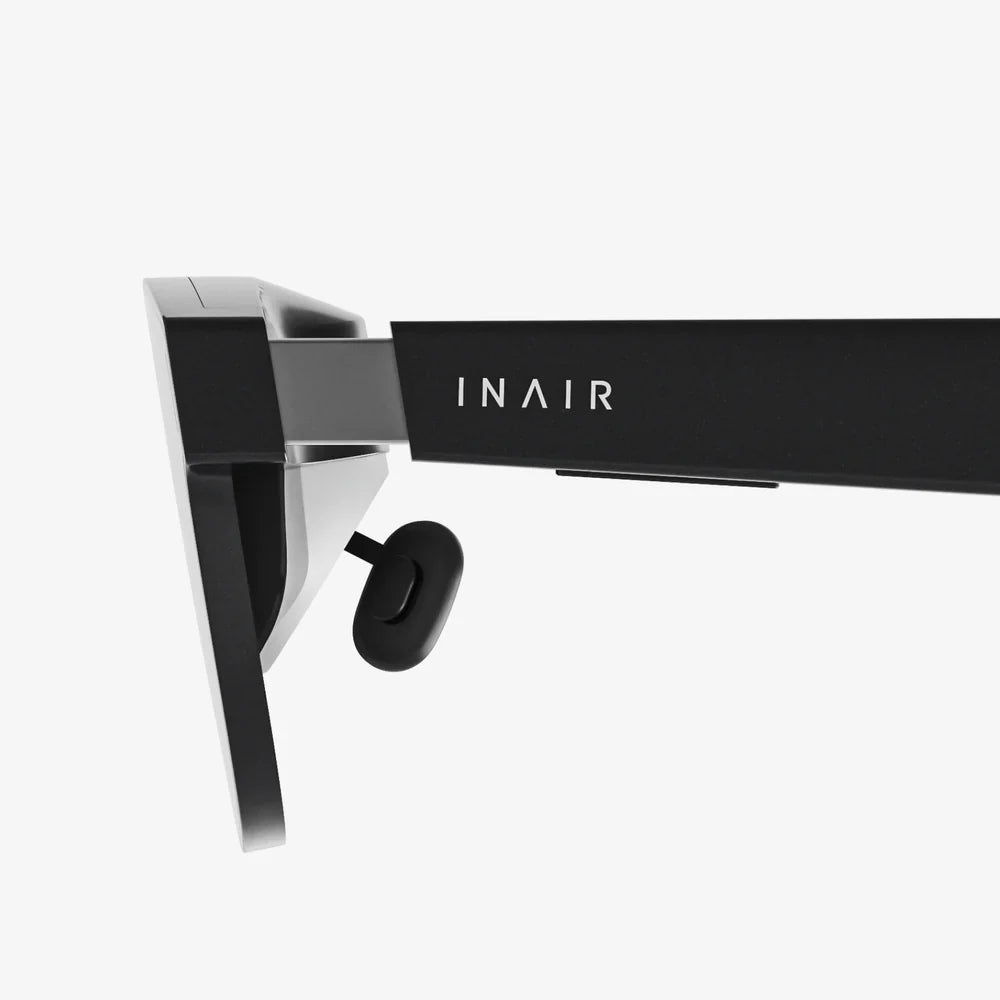
Imagine a world where your glasses don’t just help you see, but they see for you—recording, analyzing, and overlaying information onto every person you meet and every place you go. This is the promise and peril of augmented reality, a technology poised to revolutionize our lives, but at a potential cost to our most fundamental right: privacy. The very features that make AR so compelling—its immersive, contextual, and personalized nature—are the same ones that create a perfect storm for unprecedented surveillance and data exploitation. The question is no longer if this future will arrive, but how we will navigate its hidden dangers before they become ingrained in the fabric of our daily existence.
The Data-Hungry Nature of Augmented Reality
Unlike traditional screen-based technologies, AR is inherently contextual. To function, it must understand the user's environment in intimate detail. This requires a constant, voracious appetite for data, far exceeding that of a smartphone or social media app.
At its core, an AR device is a sophisticated sensor platform. It typically includes:
- High-Resolution Cameras: To capture live video of the user's surroundings.
- Depth Sensors and LiDAR: To create precise 3D maps of the environment, measuring distances and understanding spatial relationships.
- Microphones: To capture audio for voice commands and contextual awareness.
- Inertial Measurement Units (IMUs): Including accelerometers and gyroscopes to track the device's movement and orientation.
- GPS and Wi-Fi/Bluetooth: To determine the user's geographical location.
- Eye-Tracking Sensors: In some devices, to understand where the user is looking to enable intuitive interaction.
This suite of sensors operates continuously, collecting a real-time, multi-dimensional data stream of the user's life. This raw data is then processed, often both on the device and in the cloud, to identify objects, recognize faces, map surfaces, and ultimately deliver the augmented experience. The privacy implication is profound: for AR to work, it must first engage in a form of persistent, passive surveillance.
Persistent Mapping and the End of Anonymous Spaces
One of the most significant augmented reality privacy concerns stems from its need to map and remember spaces. For AR applications to place digital objects persistently in the real world—a virtual sculpture in a park or directions painted on the floor of a mall—they must create a detailed, recognizable map of that location.
This process, often called "world mapping" or "scene understanding," involves generating a unique spatial fingerprint of a place. This fingerprint is based on the precise geometry of the space, the visual features of surfaces, and the objects within it. The concern arises when these maps are stored, shared, or aggregated.
- Corporate Surveillance: A retail store could use AR to offer product information, but the same spatial map could track exactly which aisles a customer lingers in, which products they pick up, and even where their gaze falls. This creates a physical counterpart to online cookie tracking, but far more invasive.
- Government and Law Enforcement: Persistent maps of public and private spaces could be accessed by authorities, creating a searchable, three-dimensional record of environments. This could be used for mass surveillance, potentially identifying everyone who attended a protest or visited a specific location.
- The Death of Anonymity: If every physical space is continuously mapped and monitored by AR networks, the concept of being anonymous in a crowd evaporates. Your path through a city, your casual interactions, and your private moments in supposedly secluded areas could all be recorded and analyzed.
This creates a fundamental shift: our physical surroundings, once ephemeral and anonymous, become permanent, datafied, and monitored.
Biometric Data: The Ultimate Personal Identifier
If environmental mapping threatens the privacy of spaces, the biometric capabilities of AR threaten the privacy of people. AR systems, by their very design, are poised to become the most efficient biometric data collectors ever created.
- Facial Recognition: An AR device with a forward-facing camera can continuously scan and identify faces in the user's field of view. This could be used for helpful purposes, like displaying a contact's name when you meet them. But it could also enable mass identification in public, private recording of strangers without consent, and a new era of social discrimination.
- Gaze and Attention Tracking: Where we look reveals our interests, desires, and intentions. AR devices with eye-tracking can monitor this intimately. An advertiser could know precisely which ad you looked at and for how long. An employer could monitor the attention of workers on an assembly line. This data is a window into our unconscious thoughts and preferences.
- Emotional Analysis: By analyzing micro-expressions, gait, and voice tone, AR systems could infer a user's emotional state. This "emotional biometrics" could be used to manipulate moods for advertising or to assess individuals for risk, trustworthiness, or employability, raising serious questions about algorithmic bias and the right to emotional privacy.
- Voiceprints and Audio Surveillance: Always-on microphones can capture not just your commands, but every conversation around you, creating a detailed audio log of your social and professional life.
The aggregation of this biometric data creates a digital profile of unparalleled depth. It’s not just what you search for online; it’s how you react to the real world, who you look at, and what you feel. This is the core of the self, and it is now a commodity to be mined.
Informed Consent in an Augmented World
The current model of "informed consent," based on lengthy terms-of-service agreements that users click without reading, is completely inadequate for the AR age. The context of data collection in AR is too dynamic and complex.
How does one provide consent when the data being collected is not just about you, but about everyone and everything around you? If you walk into a coffee shop wearing AR glasses, you might be implicitly consenting to data collection, but the other patrons did not. This is known as the "bystander problem," and it represents a massive ethical and legal challenge.
Furthermore, the data collected is often so nuanced—a glance, a sigh, a hesitant pause—that it is impossible to meaningfully communicate its use in a traditional consent form. New frameworks are needed, such as:
- Contextual and Granular Consent: Systems that ask for permission in the moment and for specific data types (e.g., "This app would like to use the camera to identify this flower" vs. "This app requests full access to your camera feed").
- Visual Cues and AR Ethics: Developing a universal symbol or light on AR devices that indicates when recording or mapping is active, signaling to others that they are in a data-collection environment.
- Bystander Rights: Legal frameworks that give individuals rights over data collected about them by others' devices, perhaps through AR systems automatically blurring faces and obscuring identifiable details of non-consenting individuals.
The Security Threat: When the Digital Layer is Compromised
Augmented reality privacy concerns are not limited to how companies use data legitimately; they extend to what happens when malicious actors gain access. The potential for harm is catastrophic.
- Data Breaches: A breach of an AR company's servers wouldn't just leak emails and passwords. It could leak precise 3D maps of millions of homes and offices, continuous location histories, and intimate biometric databases. This is a treasure trove for blackmail, stalking, and identity theft.
- Malicious Augmentation: Hackers could overlay the real world with dangerous misinformation. Imagine AR navigation arrows that lead you into danger, or safety instructions on machinery that are deliberately incorrect. The blending of reality and digital information makes users uniquely vulnerable to this form of attack.
- Spoofing and Manipulation: By understanding the spatial mapping of an AR system, an attacker could potentially "spoof" the environment, tricking the device into seeing objects or people that aren't there, or hiding those that are. This could have serious consequences in critical applications like surgery or engineering.
Securing the AR pipeline—from sensor to cloud to display—is not just a technical challenge; it is a prerequisite for public safety and trust.
Forging a Path Forward: Ethics, Regulation, and Design
Addressing these monumental challenges requires a multi-faceted approach involving technologists, policymakers, ethicists, and the public. We cannot rely on retroactive fixes; privacy must be baked into the very DNA of AR technology, a concept known as Privacy by Design.
- On-Device Processing: The most powerful privacy-preserving technique is to process data locally on the device itself, never sending raw sensor data to the cloud. Only the necessary information (e.g., "the user wants to buy a coffee") would be transmitted, not the video feed that showed them walking past three cafes.
- Federated Learning: This technique allows algorithms to learn from data across many devices without the data ever leaving the device. Models are trained locally and only the model updates are shared, aggregating knowledge while preserving individual privacy.
- Next-Generation Regulation: Laws like the GDPR and CCPA are a start, but they were not written with immersive technologies in mind. New regulations must specifically address biometric data, environmental mapping, and the rights of bystanders. They must mandate data minimization, purpose limitation, and strong security standards for AR developers.
- Ethical Frameworks and Audits: Companies developing AR technologies should adopt public ethical frameworks and submit to independent audits of their privacy and security practices. Transparency reports detailing data collection and use should become the norm.
- Public Discourse and Digital Literacy: A broad societal conversation is essential. Users need to understand the capabilities and risks of these technologies to make informed choices and demand accountability.
The goal is not to stifle innovation but to channel it responsibly. The immense benefits of AR—in education, healthcare, remote work, and entertainment—can be realized without creating a dystopian surveillance panopticon.
The shimmering promise of augmented reality is not just about overlaying digital dragons in your living room or getting directions floating before your eyes. It's about enhancing human potential and connection with our environment. But that future is only worth building if it includes robust protections for the intimate details of our physical lives. The data collected by these devices—the maps of our homes, the scan of our face, the tracking of our gaze—is not abstract; it is the digital essence of our lived reality. The choices we make today, in boardrooms, legislative halls, and design labs, will determine whether the augmented world empowers us or simply watches us, crafting a future of enhanced human experience rather than one of eroded human dignity.
Share:
Best AI Glasses for Everyday Use 2025: The Ultimate Guide to Smart Eyewear
Can U Wear Glasses With VR? A Complete Guide to Virtual Reality and Eyewear