


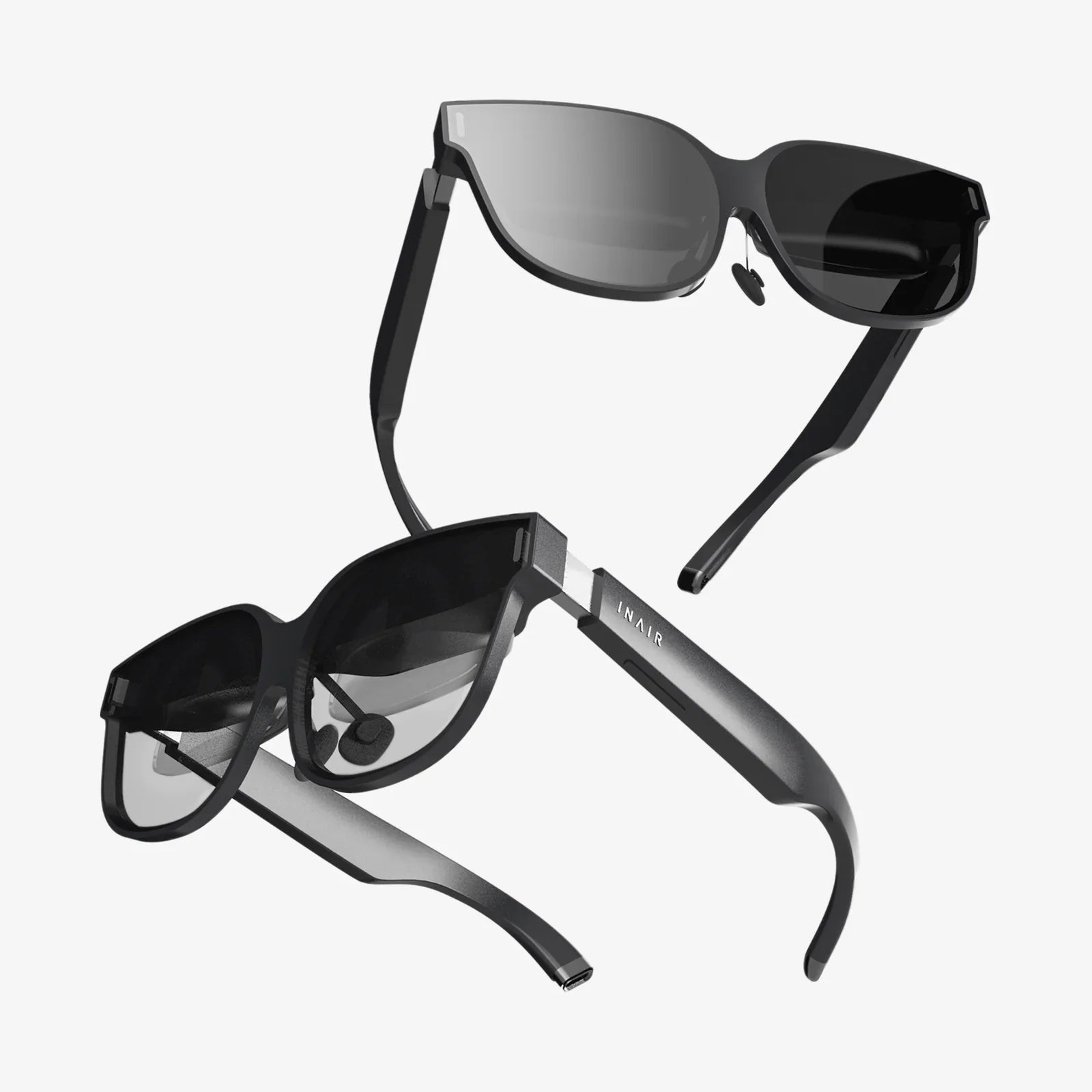
- by wangfred
Augmented Reality Problem: Navigating the Unseen Pitfalls of Our Digital Overlay
- by wangfred
Imagine a world where information dances before your eyes, where digital guides lead you through complex tasks, and mythical creatures hide in your local park, waiting to be discovered. This is the dazzling promise of augmented reality (AR), a technology poised to reshape our perception of the world itself. But behind this shimmering potential lies a darker, more complex landscape—a series of profound and largely unaddressed augmented reality problems that could dictate whether this technology becomes a empowering tool or a societal burden. The journey into our augmented future is not just about technological triumph; it's about navigating a minefield of ethical, practical, and human challenges.
For AR to fulfill its promise, it must work flawlessly within the chaotic and unpredictable nature of the real world. This presents a monumental technical challenge. Unlike a controlled virtual environment, the physical world is constantly changing—lighting shifts, objects move, and spaces are reconfigured.
A core augmented reality problem is achieving precise and persistent spatial mapping. For digital objects to feel real, they must stay anchored in place, even if the user looks away or moves through the environment. Current systems often struggle with this, leading to a phenomenon known as "drift," where virtual elements wobble, jump, or misalign, instantly shattering the illusion and breaking user immersion. This isn't just an annoyance; for professional applications in surgery or engineering, such inaccuracies could have dangerous consequences.
Furthermore, the hardware itself presents a significant barrier. Achieving a form factor that is socially acceptable, comfortable for all-day wear, and provides high-resolution, wide-field-of-view visuals remains a holy grail for developers. The competing demands of processing power, battery life, and sleek design create a vicious cycle of compromise. This augmented reality problem of hardware limitations directly impacts adoption rates, as consumers are unlikely to embrace bulky, uncomfortable, or short-lived devices.
Perhaps the most alarming category of augmented reality problems revolves around privacy. AR devices, by their very nature, are data collection powerhouses. To understand the world, they must continuously see it, listen to it, and map it. This means they are perpetually capturing vast amounts of information, not just about the user, but about everyone and everything in their vicinity.
Consider the implications of always-on cameras and microphones in public spaces. These devices could inadvertently record private conversations, film individuals without their consent, and create detailed 3D maps of homes and private property. The data collected is a treasure trove for malicious actors or overreaching corporations. This creates a massive augmented reality problem: how do we balance the functional need for environmental data with the fundamental right to privacy?
The concept of informational privacy is turned on its head. With object recognition and facial recognition, an AR device could instantly pull up a staggering amount of personal data about a stranger on the street—their social media profiles, employment history, or relationship status—simply by looking at them. This leads to a severe power imbalance between the wearer and the unwitting subject, potentially eroding social trust and creating a culture of suspicion and constant surveillance. Without robust, forward-thinking regulations and ethical frameworks, AR could become the ultimate tool for data exploitation.
When you overlay digital content onto the physical world, you inherently create distractions. This introduces a critical augmented reality problem concerning user safety and the safety of others. A pedestrian engrossed in an AR game is less aware of traffic, obstacles, or other people. A driver using an AR navigation head-up display might have their focus diverted from the road by a persistent notification or an animated advertisement.
The cognitive load of processing both real and virtual information simultaneously is significant. This divided attention can lead to accidents, injuries, and a reduced awareness of one's surroundings. Furthermore, prolonged use of AR can lead to physical discomfort, including eye strain, headaches, and a phenomenon known as "vergence-accommodation conflict," where the brain struggles to reconcile the focus distance of the virtual content with the real world, potentially causing long-term visual issues.
This safety challenge extends beyond the individual. The proliferation of AR content could lead to visual pollution in public spaces. If everyone is vying to place virtual advertisements, art, or annotations in a popular location, the result could be a chaotic, overwhelming, and potentially hazardous digital layer that obscures critical real-world information.
As with any transformative technology, access will not be equal. The augmented reality problem of accessibility threatens to create a new, more immersive digital divide. High-quality AR experiences will likely require expensive hardware and reliable, high-speed internet connectivity. This could create a world where the affluent have access to an enhanced layer of information, education, and entertainment, while lower-income populations are left with a diminished, un-augmented reality.
This divide isn't just economic; it's also physical. Current AR technology often fails to account for users with disabilities. Those with visual impairments may not be able to see the overlays, while those with motor disabilities might find gesture-based controls difficult or impossible to use. If AR becomes integral to navigating cities, accessing public services, or performing jobs, then failing to design for inclusivity from the outset will systematically exclude large segments of the population, exacerbating existing inequalities.
The most insidious augmented reality problems may be the ones that slowly reshape human psychology and social interaction. By offering a curated, personalized, and often gamified view of the world, AR has the potential to alter our relationship with reality itself.
We risk fostering a culture of experiential avoidance, where individuals retreat into a more pleasing digital overlay rather than engaging with the unvarnished real world. This could diminish serendipitous social interactions, reduce appreciation for unadorned nature, and create a new form of escapism. The constant barrage of notifications and information could also exacerbate attention deficits and contribute to anxiety.
On a societal level, AR allows for the creation of "filter bubbles" in physical space. Two people standing in the same location could see entirely different digital worlds—one might see historical facts and public art, while another sees a barrage of commercial and ideological content tailored to their profile. This challenges our shared sense of reality and common experience, potentially making it harder to find common ground and fostering further social fragmentation. The very notion of "truth" could become contingent on which digital layer one subscribes to.
Solving these augmented reality problems is not a task for technology companies alone. It requires a multidisciplinary effort involving ethicists, policymakers, designers, and the public. The path forward must be paved with deliberate action.
We need strong legal frameworks that establish clear rules for data collection, storage, and usage. Concepts like "augmented reality privacy zones"—where data collection is prohibited in sensitive areas like homes and schools—must be explored. Ethical design must become a non-negotiable standard, prioritizing user well-being over engagement metrics. This includes developing intuitive ways to distinguish between real and virtual content and building in "reality checks" to ensure users remain grounded.
Furthermore, the development of AR must be inclusive and participatory. A diverse range of voices must be involved in its creation to ensure it serves humanity broadly, not just a narrow demographic. Public discourse about the kind of augmented future we want to live in is essential before the technology becomes ubiquitous and its norms are locked in.
The allure of augmented reality is undeniable, offering a canvas for human creativity that is as vast as the world itself. But this power carries immense responsibility. The augmented reality problems we face are not mere bugs to be fixed; they are fundamental questions about privacy, safety, equity, and the human experience. By staring directly into these challenges now, before the technology is fully formed, we have a rare opportunity to steer its development consciously. The goal is not to stop progress, but to shape it—to ensure that the layer we add to our world enhances our humanity rather than diminishes it, fostering a future where technology amplifies reality without overwriting what makes it truly human.
Share:
5K VR Glasses: The Definitive Guide to High-Resolution Virtual Reality
New in Augmented Reality: The Next Digital Revolution Transforming Our World