


- by wangfred
Augmented Reality Production Design: Revolutionizing Storytelling and Spatial Creation
- by wangfred
Imagine stepping into a film set before a single physical prop has been built, yet seeing the entire world materialize around you through a simple visor. Envision an architect walking through the skeletal frame of a new building, not with blueprints, but with fully realized structural and interior designs overlaid perfectly onto the unfinished space. This is no longer the realm of science fiction; it is the present and future being forged by the revolutionary discipline of augmented reality production design. This convergence of digital artistry and physical space is dismantling long-standing barriers in creative industries, offering a glimpse into a future where our environments are as malleable as clay and stories can be experienced, not just observed.
At its core, augmented reality production design is the practice of using AR technology to design, visualize, and orchestrate complex environments and narratives that blend digital assets with physical locations. It moves far beyond simple overlays or gimmicky filters. It is a holistic approach to spatial creation that considers user interaction, environmental context, and narrative flow as fundamental components of the design process. Unlike virtual reality, which seeks to replace the user's reality, AR design enhances and augments it, creating a symbiotic relationship between the real and the virtual.
The role of the production designer has thus evolved from a master of physical sets and static storyboards to a conductor of dynamic, interactive experiences. They are now required to possess a unique hybrid skillset—a deep understanding of traditional design principles like color theory, composition, and lighting, combined with fluency in 3D modeling, spatial computing, and user experience (UX) logic. This fusion is giving birth to entirely new creative roles and collaborative workflows that are reshaping entertainment, architecture, education, and retail.
The traditional production pipeline, often linear and siloed, is being radically transformed into an iterative, integrated loop thanks to AR. The journey begins not on a computer screen, but in the actual location where the experience will unfold.
Gone are the days of relying solely on photographs, measurements, and imagination. AR allows designers to project and scale their digital models directly into a physical space. A location scout for a film can use an AR headset or tablet to see how a digital set extension would look on a practical location, assessing sightlines, lighting conditions, and spatial relationships in real-time. This immediate feedback loop eliminates costly guesswork and enables confident decision-making long before construction begins. An empty warehouse can become a bustling alien marketplace; a city street can be tested as a period piece backdrop with digital props and signage overlaid onto the existing architecture.
In this new paradigm, prototyping is instantaneous and collaborative. Designers can build low-fidelity 3D models, known as 'grey boxing,' and place them in the real world to test scale, proportion, and movement. Directors, cinematographers, and other stakeholders can don devices and walk through these virtual mock-ups together, providing feedback and requesting changes that the designer can implement on the fly. This collaborative iteration fosters a shared vision and ensures that every creative decision is informed by its real-world context. It democratizes the design process, allowing non-technical team members to engage with and understand the proposed environment in an intuitive way.
Once designs are approved, high-fidelity assets are created. These are not just visual models; they are intelligent objects embedded with data. This data can dictate how the object interacts with the physical environment—how it occludes behind real-world objects, how it responds to real-world lighting, and even how a user can manipulate it. The final step is the precise anchoring of these assets into the physical world using advanced tracking technologies like SLAM (Simultaneous Localization and Mapping), which maps the environment and tracks the user's position within it to ensure a stable and convincing merge of realities.
The arsenal available to the modern AR production designer is both powerful and increasingly accessible. A suite of sophisticated software platforms enables the creation of complex, interactive scenes. These tools allow for the import of assets from standard 3D creation suites, provide environments for coding interactivity and logic, and offer simulators to test experiences across different devices without leaving the desk.
On the hardware front, the spectrum ranges from powerful tethered headsets offering the highest fidelity for studio-based pre-visualization, to untethered stand-alone devices that offer freedom of movement for on-location work, to the ubiquitous smartphone, which serves as a mass-market portal for AR experiences. The choice of hardware is a critical design decision itself, influencing the scope, interaction model, and intended audience of the final production.
The impact of AR production design extends far beyond the film and television industry, permeating fields where spatial understanding and experiential learning are paramount.
In the AEC industry, AR is revolutionizing every phase of a project. Architects can present their designs to clients not as static renderings, but as full-scale models they can walk around and through. Engineers can overlay complex wiring, plumbing, and structural schematics onto a construction site, allowing for precise implementation and clash detection before a single wall is closed up. This 'seeing through walls' capability drastically reduces errors, delays, and costly change orders.
On stage, AR production design is creating a new form of 'magic.' Performers can interact with digital characters and fantastical environments that are invisible to the naked audience but appear on large screens or through personal devices. This allows for breathtaking visual effects that would be impossible or prohibitively expensive to achieve with physical sets, all while preserving the live, visceral energy of a theatrical performance. Concert tours are employing AR to create immersive visual spectacles that extend from the stage into the entire arena.
The retail space is being redefined by AR. Production designers are now crafting experiences that allow consumers to 'try before they buy' with unprecedented accuracy. Customers can see how a piece of furniture fits and looks in their living room, how a new shade of paint affects the mood of a room, or how a pair of glasses frames their face. This application transforms the shopping journey from a transaction into an engaging experience, reducing purchase anxiety and minimizing returns.
Museums and historical sites are using AR production design to bring history to life. Instead of imagining the past while looking at ruins, visitors can use a device to see a historical site rebuilt before their eyes, complete with animated figures going about their daily lives. In classrooms, complex scientific concepts, from human anatomy to planetary physics, can be visualized in 3D space, turning abstract ideas into tangible, interactive models that enhance comprehension and retention.
Despite its immense potential, the path forward for AR production design is not without its obstacles. The technical challenge of creating persistent and accurate world-locking—ensuring digital objects stay perfectly placed in the real world under varying conditions—remains significant. Designing intuitive and accessible user interfaces for spatial computing requires a rethinking of decades of 2D design principles.
Furthermore, the ethical implications are profound. Designers must now consider digital permanence and privacy, pondering who has the right to place digital content in public and private spaces. The concept of 'spam' could evolve from an email inbox nuisance to a visual layer of unwanted advertisements and information cluttering our physical reality. Establishing a ethical framework for this new medium is as crucial as developing its technology.
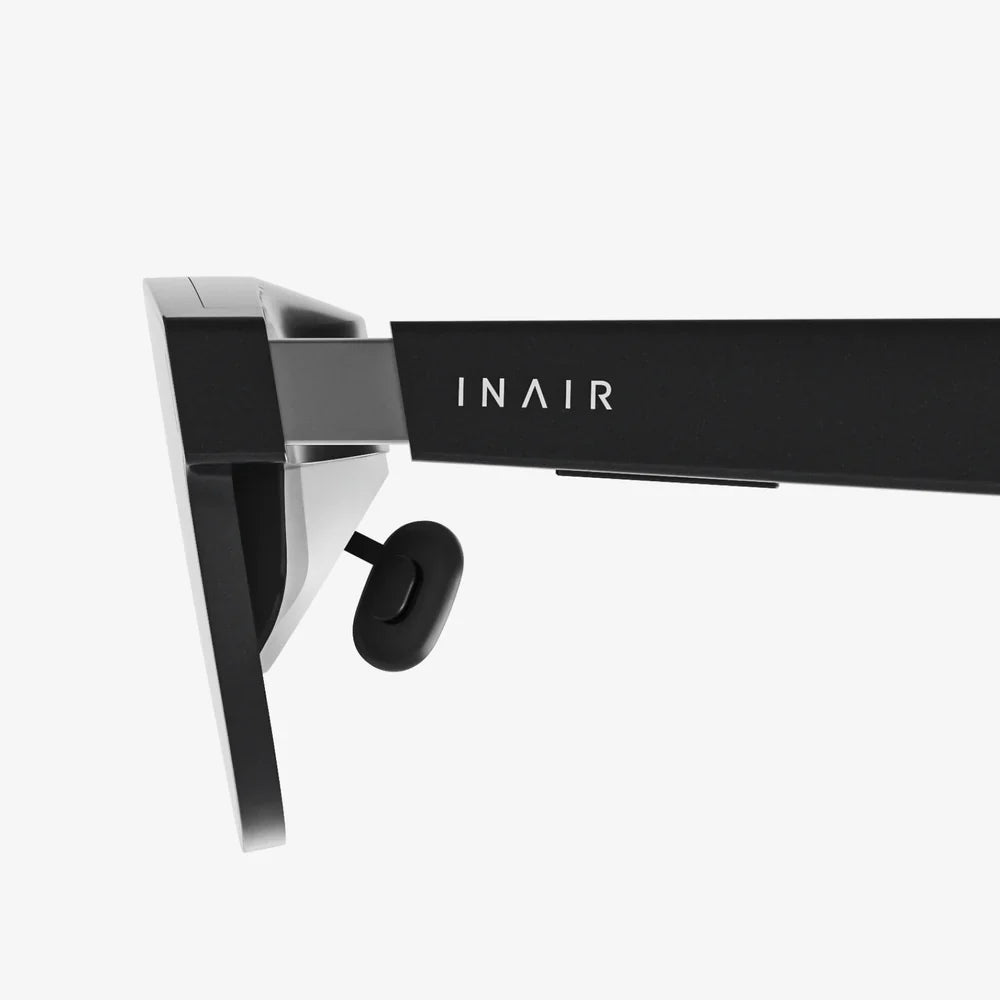
As hardware becomes more lightweight, powerful, and socially acceptable, and as software becomes more intelligent and context-aware, the potential for AR production design will expand exponentially. We are moving towards a future where AR interfaces are seamlessly integrated into everyday eyewear, making the augmentation a constant, subtle layer on our perception of reality.
This will give rise to the ultimate goal of the production designer: to create immersive, narrative-rich experiences that feel so natural and integrated that the technology itself becomes invisible. The art will no longer be about the spectacle of the effect, but about the elegance and emotional resonance of the experience. The digital and the physical will cease to be distinct categories, merging into a unified canvas for human creativity. The world around us will become a living, breathing story, waiting to be designed and discovered with a simple glance, forever changing our relationship with the space we inhabit and the stories we tell within it.
Share:
Smart Glasses AI News Today: The Dawn of a New Augmented Reality Era
Augmented Reality Market Size 2030: A Trillion-Dollar Transformation