


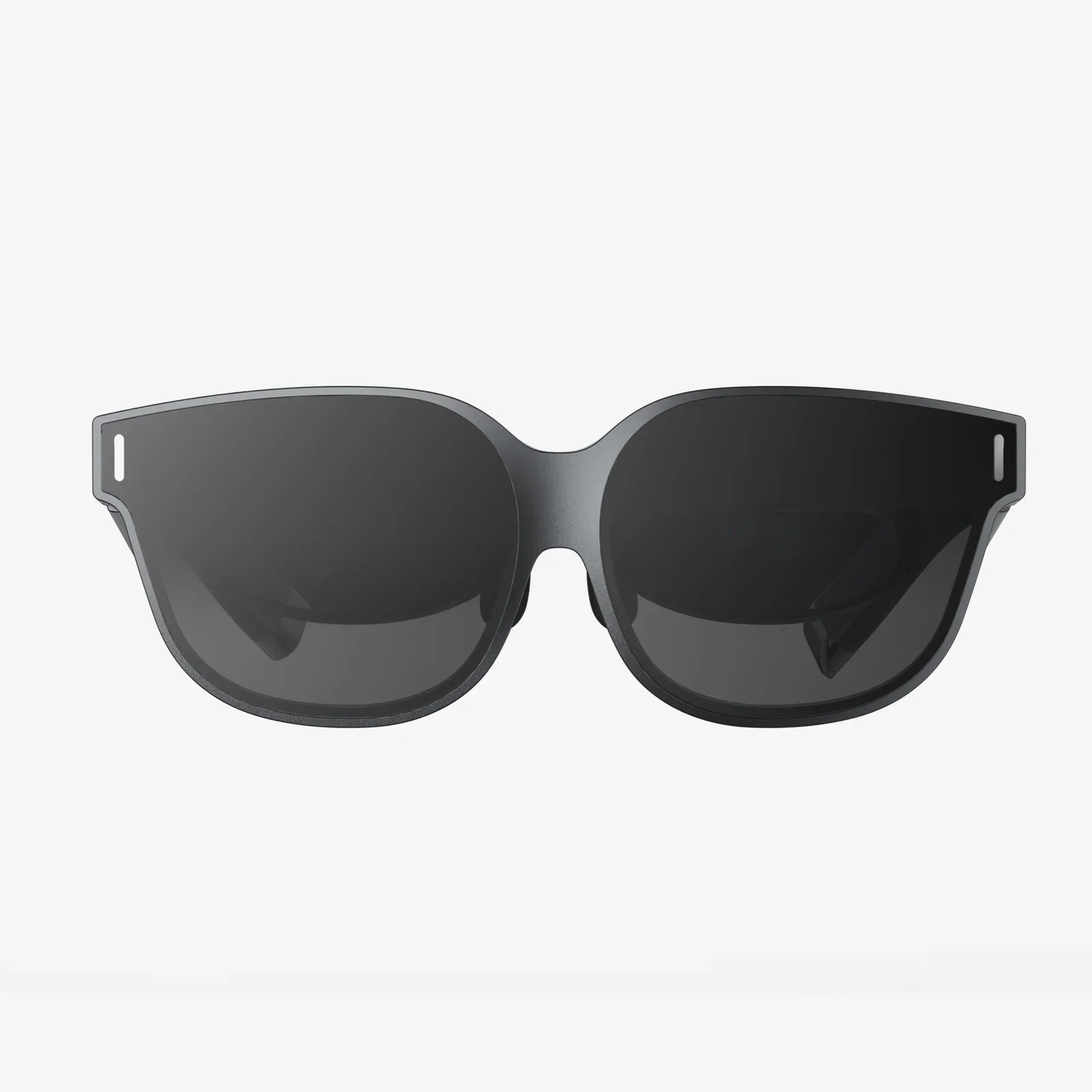
The shimmering promise of a world enhanced by digital layers is no longer the stuff of science fiction. It is arriving on our streets, in our homes, and through our devices, offering unparalleled utility, entertainment, and connection. Yet, beneath the captivating surface of this technological leap lies a complex web of unforeseen consequences and profound dangers. The very nature of augmented reality—its ability to seamlessly blend the virtual with the physical—creates a unique and potent set of risks that we are only beginning to comprehend. To embrace its benefits blindly is to walk headlong into a future fraught with peril; to understand its shadows is to navigate toward a safer, more equitable integration of this transformative technology.
The Erosion of Personal Privacy and Data Exploitation
The most immediate and alarming risk posed by augmented reality is its potential to become the ultimate surveillance machine. Unlike a smartphone that we glance at periodically, AR envisions a always-on, always-worn device—glasses or contact lenses—that sees what we see, hears what we hear, and records our environment continuously. This creates an unprecedented data collection vector.
This persistent capture extends far beyond simple video. Sophisticated sensors, including LiDAR, depth sensors, and eye-tracking cameras, will map our physical spaces in intricate 3D detail, monitor our biometric responses (pupil dilation, heart rate via subtle facial blood flow analysis), and track our gaze to understand precisely what captures our attention and for how long. The data harvested is not just personal; it is hyper-personal, intimate, and contextually rich.
The implications for privacy are dystopian. This data could be used to build a perfect psychological profile, revealing our unspoken desires, insecurities, and biases. It could record sensitive information in the background—a medical document on a desk, a private conversation, a financial statement—without our explicit consent. The concept of a "home" as a private sanctuary dissolves when a device can scan and transmit its contents. Furthermore, the potential for this data to be hacked, leaked, or subpoenaed creates a massive vulnerability, exposing the most intimate details of our lives to malicious actors, corporations, or governments.
Physical Safety and Spatial Hazards
While AR can overlay helpful navigation arrows or information onto the real world, this very feature introduces significant physical safety risks. Cognitive absorption, or the phenomenon of becoming so engrossed in digital content that we disengage from our physical surroundings, is a primary concern. A user chasing a digital character or engrossed in a floating news feed may easily fail to notice a curb, a street sign, another pedestrian, or an oncoming vehicle.
This creates a new form of distracted walking and, more alarmingly, distracted driving. Early experiments with AR head-up displays in vehicles show promise, but they also risk creating visual and cognitive overload, where the driver must constantly differentiate between critical real-world events and non-critical digital notifications. The latency between a real-world event and the AR system's processing and display of it could be the difference between a safe maneuver and a catastrophic accident.
Beyond immediate physical harm, there is the risk of spatial vandalism and malicious digital defacement. Imagine an architect's view of a new building being obscured by digital graffiti, or a surgeon's AR-guided display being hacked to overlay incorrect instructions during a critical procedure. The blurring of lines means that attacks in the digital realm can now have direct and dangerous consequences in the physical one.
Psychological and Societal Fragmentation
The long-term psychological effects of persistent AR use are perhaps the most profound and least understood of its risks. By offering a curated, gamified, or ad-filled layer on top of reality, AR technologies inherently present a mediated experience of the world. This risks fostering what some theorists call "experience divides," where individuals no longer share a common baseline reality.
Two people standing on the same street corner could be seeing entirely different things: one sees historical facts and architectural details, while the other sees a world cluttered with advertisements and branded entertainment. This challenges our shared sense of place and common facts, potentially accelerating the societal polarization we already see fueled by social media algorithms. Reality itself becomes personalized, and thus, fragmented.
Furthermore, AR poses a significant threat to mental well-being. The technology could exacerbate anxiety and depression through constant social comparison (e.g., overlaying idealized avatars or life stats onto people in real-time) or body dysmorphia through filters that alter our perceived appearance. The ability to filter out unpleasant aspects of the real world—a homeless person, a dilapidated building, a distressing news ticker—might provide short-term comfort but ultimately promotes dissociation and a failure to engage with and address real-world problems. We risk creating a society that prefers a comfortable, branded illusion to an unvarnished, challenging, but authentic reality.
The Weaponization of Perception and Security Threats
Augmented reality provides a powerful new canvas for misinformation and manipulation. The concept of "deepfakes" for video is terrifying enough, but AR could enable "real-time deepfakes" or "reality deepfakes." Malicious actors could create convincing digital overlays that make a politician appear to say something they did not, make a building appear derelict or abandoned, or make a harmless individual appear threatening. This is not just spreading false information; it is hijacking human perception itself, making it incredibly difficult to trust one's own eyes and ears.
This technology could be weaponized for geopolitical purposes, to incite violence, or to destabilize markets. Imagine the panic if a significant number of people in a financial district simultaneously saw a fake news alert about a market crash overlaid on their actual surroundings. The speed and visceral believability of such an attack could cause real-world chaos before it could be debunked.
On a individual level, AR opens new vectors for sophisticated phishing and social engineering attacks. A hacker could overlay a fake login portal onto a legitimate public terminal, or create a convincing digital avatar of a tech support agent that appears to be standing right in front of you. The immersive and convincing nature of AR makes users far more susceptible to these deceptions.
Legal, Ethical, and Regulatory Gray Zones
The march of AR technology is rapidly outpacing our legal and ethical frameworks, creating a wild west of unanswered questions. Who is liable when a user following AR navigation instructions walks into traffic? Is it the user, the app developer, the device manufacturer, or the city that designed the road? Current product liability laws are ill-equipped to handle these scenarios.
Intellectual property rights become incredibly murky. If an artist creates a digital sculpture and places it in a public park through an AR platform, who owns the digital space it occupies? Can a company project a virtual advertisement onto the side of your house without your permission? The clash between digital property and physical property rights will define legal battles for decades to come.
Furthermore, the potential for always-on recording raises grave concerns about consent. In a world where everyone is wearing AR glasses, the notion of a "reasonable expectation of privacy" in public spaces evaporates. Every conversation, every interaction, could be recorded, analyzed, and stored by anyone nearby. Societies will be forced to radically redefine the boundaries of consent and privacy in the physical world.
Mitigating the Risks: A Path Toward Responsible AR
Confronting these risks is not a call to halt progress but a mandate for responsible innovation. Mitigation must be a multi-stakeholder effort involving developers, policymakers, and users. Technologically, a "privacy by design" approach is non-negotiable. This includes developing on-device processing for sensitive data (like eye-tracking) so it never leaves the user's control, implementing clear visual and audio indicators when recording is active, and creating robust permission systems that give users granular control over what data is collected and how it is used.
Regulators must move swiftly to establish clear rules of the road. This includes updating data protection laws like GDPR to encompass biometric and spatial data, creating safety standards for AR interfaces in critical contexts like driving and surgery, and legislating against digital trespass and perceptual manipulation.
Most importantly, digital literacy education must evolve. Users must be taught to critically evaluate AR content, understand the data they are generating, and recognize the potential for manipulation. Developing a healthy skepticism toward mediated experiences will be a crucial skill for navigating the 21st century.
The future of our perception is being coded today. Augmented reality offers a mirror that can either illuminate our world with wonder or distort it beyond recognition. The weight of that outcome rests not on the technology itself, but on the choices we make now. By staring unflinchingly into the shadows it casts, we can harness the light of AR to build a future that enhances reality without eroding our humanity, our safety, or our truth. The gateway to this blended world is opening; we must ensure we enter it with our eyes wide open to both its dazzling potential and its profound perils.
Share:
AI Glasses Capabilities: Redefining Reality Through Augmented Intelligence
Vision Augmented Reality: Redefining Our Perception of the World