


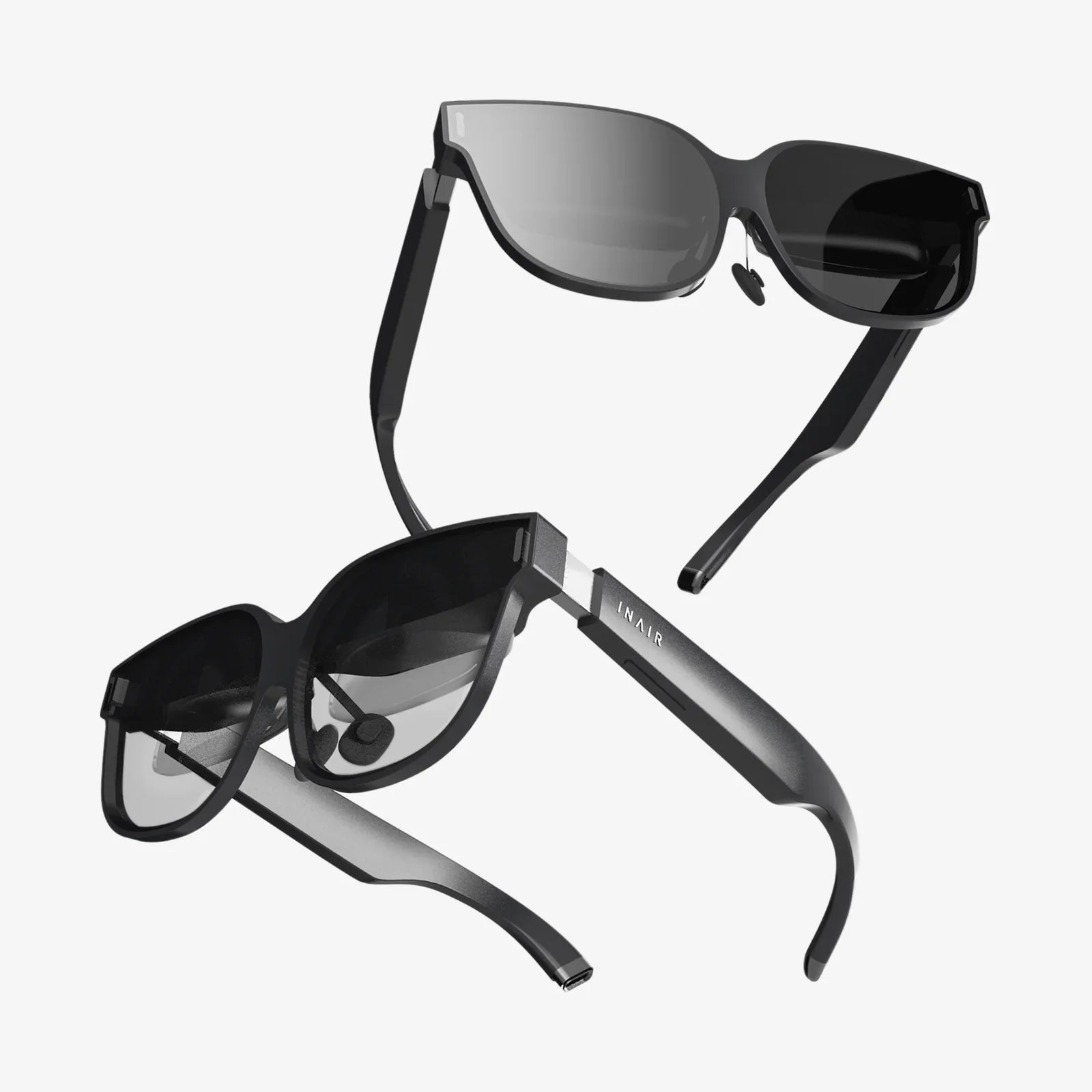
Imagine a world where the line between the digital and the physical blurs into irrelevance. Where information doesn’t live on a screen you hold in your hand, but is painted onto the world itself, accessible with a glance, a gesture, or a spoken word. This is the promise of Vision Augmented Reality, a technology poised to leap from the pages of science fiction and become as integral to our daily lives as the smartphone. It’s a revolution not of what we see, but of how we see, offering a new lens through which to experience reality itself. The journey into this enhanced world is beginning, and it promises to reshape everything from how we work and learn to how we connect and create.
The Core Mechanics: How Vision Augmented Reality Works
At its essence, Vision Augmented Reality is the technological superimposition of computer-generated sensory input—primarily visual and auditory data—onto a user's real-world view in real-time. Unlike Virtual Reality, which seeks to replace the user’s environment entirely, AR aims to supplement and enhance it. This magic is achieved through a sophisticated interplay of hardware and software components.
The process begins with sensors and cameras that act as the eyes of the system. These components continuously scan the user’s environment, capturing a rich stream of data. This data is then processed by powerful algorithms that perform two critical functions: scene understanding and tracking. Scene understanding involves identifying surfaces (floors, walls, tables), objects, and even environmental lighting conditions. Simultaneously, tracking—often through a combination of GPS, accelerometers, gyroscopes, and computer vision—precisely pinpoints the user’s position and orientation in space, both relative to the world and to the digital content.
Once the environment is mapped and the user is tracked, the processing unit (whether a dedicated device, a smartphone, or powerful cloud servers) renders the appropriate digital content. This could be a 3D model, a string of text, an animated character, or a navigational arrow. The final, and most crucial step, is display and projection. This is where the user finally perceives the blend. Current methods range from smartphone screens that use the camera feed as a background, to more advanced optical see-through displays like smart glasses and future contact lenses. These transparent displays use waveguides, holographic optical elements, or micro-projectors to beam light directly into the user’s eye, making digital objects appear to occupy real space with convincing solidity.
Beyond the Novelty: The Practical Applications of Vision AR
The true power of Vision Augmented Reality is revealed not in tech demos, but in its vast potential to solve real-world problems and enhance human capability across countless domains.
Revolutionizing Enterprise and Industrial Fields
Perhaps the most immediate and impactful adoption of Vision AR is occurring in industrial settings. Here, the technology is a powerful tool for efficiency, accuracy, and safety. Field service technicians can wear smart glasses that overlay schematics, highlight specific components, and provide step-by-step animated repair instructions directly onto the machinery they are fixing, freeing their hands and eliminating constant glances at a manual. In complex manufacturing and logistics, warehouse workers can have order-picking information and optimal navigation routes superimposed on their view, drastically reducing errors and speeding up fulfillment. Architects and construction engineers can walk through a physical building site and see the proposed digital structural designs aligned perfectly with the real world, allowing for unprecedented planning and visualization.
Transforming Healthcare and Medicine
In healthcare, Vision AR is moving from a futuristic concept to a life-saving tool. Surgeons can have critical patient data, such as heart rate and blood pressure, displayed in their periphery without looking away from the operating field. More advanced systems can project 3D reconstructions from CT or MRI scans directly onto a patient’s body, essentially giving clinicians "X-ray vision" to guide incisions and procedures with extreme precision. This technology is also revolutionizing medical training, allowing students to practice complex procedures on detailed, interactive holographic models before ever touching a real patient.
Redefining Education and Training
Education stands to be utterly transformed. Instead of reading about ancient Rome, students could don a headset and witness a virtual Colosseum come to life in the center of their classroom. Complex abstract concepts in physics, biology, and chemistry become tangible; students can manipulate virtual molecules, witness the orbit of planets around them, or dissect a virtual frog with no physical cost or ethical concerns. This shift from passive learning to immersive, interactive experiences has the potential to unlock deeper understanding and engagement for learners of all ages.
Reshaping Retail and Commerce
The retail experience is being reimagined through the lens of AR. The dreaded "will it fit?" question for furniture is solved by apps that allow you to place true-to-scale 3D models of a sofa or table directly into your living room, letting you walk around it and see it from every angle before purchase. Fashion retailers offer virtual try-ons for clothes, glasses, and makeup, allowing for confident online shopping. This "try-before-you-buy" paradigm reduces return rates and creates a more engaging and personalized customer journey.
The Invisible Infrastructure: Connectivity and The Cloud
For Vision Augmented Reality to deliver rich, persistent, and shared experiences, it cannot exist on a device alone. It requires a robust and invisible infrastructure. This is where high-speed, low-latency connectivity, particularly 5G and eventually 6G, becomes critical. The immense data processing required for complex AR experiences can be offloaded to powerful cloud servers, keeping the wearable device lightweight and energy-efficient. This cloud-based model also enables the concept of the digital twin—a persistent, real-time digital replica of a physical space or object. Users in different locations could see and interact with the same digital content anchored to a real-world location, enabling collaborative design, multiplayer games, and shared social experiences that feel truly unified.
Navigating the Obstacles: Challenges on the Path to Adoption
Despite its immense potential, the widespread adoption of Vision Augmented Reality faces significant hurdles that must be overcome.
Hardware Limitations: The dream device—something as socially acceptable and comfortable as everyday eyeglasses, with all-day battery life, a wide field of view, and high-resolution displays—remains elusive. Current technology often involves trade-offs between performance, form factor, and cost.
User Experience (UX) Design: Interacting with a floating, intangible interface is a fundamentally new paradigm. Designing intuitive gestures, voice commands, and visual feedback that feel natural and not cumbersome is a monumental challenge for designers. Information overload and visual clutter are constant risks that could render the technology more distracting than helpful.
The Privacy Paradox: Vision AR devices, by their very nature, are equipped with always-on cameras and sensors that constantly observe the user's environment. This raises profound questions about data collection, surveillance, and consent. Who has access to this continuous stream of audio and visual data? How is it stored and used? Establishing clear ethical guidelines and robust security frameworks is not optional; it is a prerequisite for public trust.
Social Acceptance and The "Glasshole" Effect: Early attempts at wearable displays were met with social skepticism and even derision. Normalizing the use of technology that can record others without their explicit knowledge and navigating new social etiquette around their use in public spaces is a societal challenge that extends far beyond engineering.
The Future Lens: What Lies Ahead for Vision Augmented Reality
The trajectory of Vision AR points toward a future of even deeper integration. We are moving toward contact lens displays and eventually direct neural interfaces that could bypass the eye entirely, projecting information directly into the brain's visual cortex. This would represent the final step in blending the digital and physical, creating a truly seamless experience.
In this future, AR will become less of a distinct "app" and more of an invisible layer blanketing our reality—a permanent digital companion. It will act as a contextual guide, an infinite knowledge repository, a creative canvas, and a social conduit, all accessible instantly. It could help those with visual or auditory impairments by highlighting obstacles, amplifying sounds, or translating speech into subtitles in real-time, fundamentally enhancing human ability.
We are standing at the precipice of a new era of computing, one that is spatial, contextual, and intimately woven into the fabric of our daily lives. The device in our pocket will fade away, replaced by an intelligent layer of information that enhances our perception of everything we see. The world is about to get a whole lot more interesting.
The screen is dissolving. The keyboard is fading. The next interface isn't something you will hold; it's something you will wear, and eventually, it will be something you simply see. Vision Augmented Reality is quietly building a new world atop our own, an invisible digital city waiting to be unveiled. The question is no longer if this future will arrive, but how quickly we can adapt to it, shape it responsibly, and decide what we want this powerful new lens to reveal about our world—and about ourselves.
Share:
Augmented Reality Risks: Navigating the Unseen Dangers of a Blended World
AR(VR) Tech: Redefining Reality and Reshaping Our World