


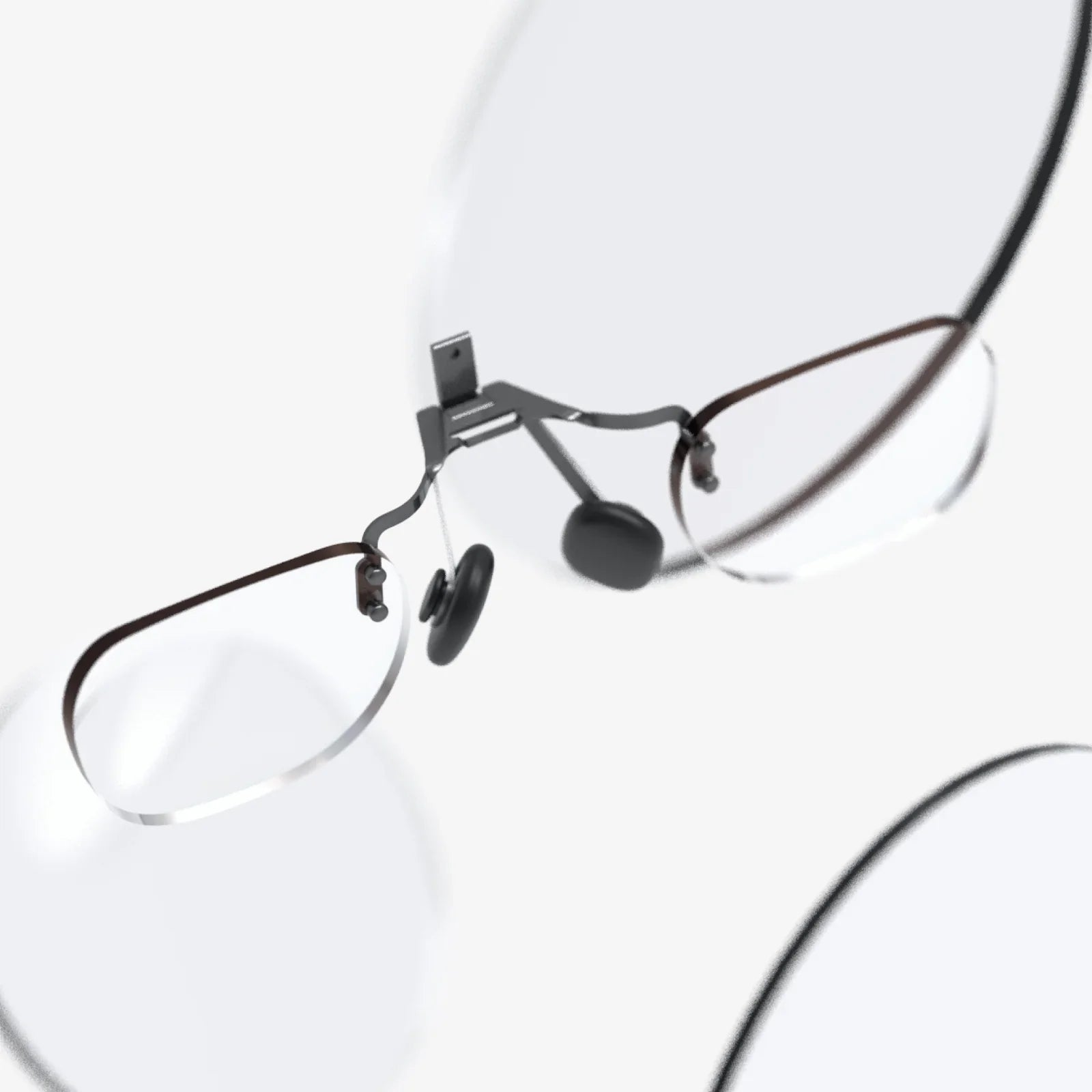
Imagine a world where the digital and the physical are no longer separate realms but a single, intertwined experience. This is the promise and the power of augmented reality techniques, a suite of technologies that are quietly, yet profoundly, revolutionizing everything from how we shop and learn to how we perform complex surgeries and maintain industrial equipment. This is not a distant sci-fi fantasy; it is the unfolding present, and its implications are staggering. The virtual is being seamlessly stitched into the fabric of our daily lives, and it’s changing our perception of reality itself.
The Core Mechanics: How AR Techniques Bridge Realities
At its heart, augmented reality is about overlay and context. Unlike virtual reality, which seeks to replace the user’s environment with a simulated one, AR aims to supplement the real world with computer-generated perceptual information. This seemingly simple act is powered by a sophisticated orchestra of hardware and software working in concert.
Sensing the World: Computer Vision and Tracking
The first and most critical step for any AR system is to understand the environment it is augmenting. This is achieved through a combination of sensors and advanced computer vision algorithms. Cameras act as the eyes of the system, capturing the live video feed of the user’s surroundings. From this visual data, the system must perform several complex tasks in real-time:
- Feature Point Detection and Tracking: The software identifies unique features or points in the environment—edges, corners, textures—and tracks their movement frame-by-frame as the user moves. This allows the digital content to remain locked to a specific point in the real world.
- Object Recognition: More advanced systems can recognize specific objects, such as a piece of machinery, a product on a shelf, or a human face. This enables context-aware augmentations that are relevant to the object itself.
- Simultaneous Localization and Mapping (SLAM): This is the holy grail of environmental understanding. SLAM techniques allow the device to both map an unknown environment and track its own position within that map simultaneously. It creates a persistent spatial understanding, which is essential for placing digital objects that appear to have real weight and permanence.
Registration and Rendering: Making the Digital Feel Real
Once the environment is understood, the system must render the digital content and composite it onto the user’s view with perfect alignment, a process known as registration. The goal is photorealistic integration, where virtual objects obey the laws of physics—they cast shadows, are occluded by real objects, and respond to the lighting conditions of the environment. Techniques like environmental lighting probes and depth sensing are used to achieve this convincing blend. The rendering must also be performed with extremely low latency; any lag between the user’s head movement and the update of the display can break the illusion and cause discomfort.
The Display: Windows to an Augmented World
How this augmented view is presented to the user varies significantly across devices:
- Smartphone and Tablet AR: The most accessible form of AR uses the device’s screen as a viewport. The camera captures the world, the processor augments it, and the screen displays the combined image. While effective, it requires holding a device up, which is not ideal for prolonged use.
- Smart Glasses and Headsets: These wearable devices project imagery directly onto transparent lenses (optical see-through) or use cameras to capture the world and screens to display the augmented view (video see-through). They offer a hands-free experience, which is crucial for enterprise and professional applications.
- Specialized Projectors: In some industrial settings, AR is achieved by projecting digital information directly onto physical surfaces, such as outlining where a worker should drill holes on a piece of machinery.
Transforming Industries: The Practical Power of AR
The theoretical potential of AR is vast, but its real-world applications are already delivering tangible value across numerous sectors.
Revolutionizing Enterprise and Manufacturing
Perhaps the most mature adoption of AR is in industrial settings. Here, AR techniques are solving critical problems of efficiency, accuracy, and training.
- Assembly, Maintenance, and Repair: Technicians wearing smart glasses can see digital work instructions overlaid directly on the equipment they are servicing. Animated arrows can point to specific components, torque values can be displayed next to bolts, and remote experts can see what the technician sees and draw annotations into their field of view, guiding them through complex procedures. This reduces errors, slashes training time, and minimizes downtime.
- Design and Prototyping: Engineers and designers can visualize 3D prototypes at full scale in a real-world context before a single physical part is manufactured. They can walk around a virtual model of a new engine or building, assessing ergonomics, spotting design flaws, and making changes in real-time, saving immense costs in the prototyping phase.
- Logistics and Warehousing: AR can dramatically optimize picking and packing processes in warehouses. Workers see the most efficient routes through the aisles displayed on their screens, with digital arrows guiding them to the exact shelf location. Key information about the items to be picked is overlaid, reducing errors and increasing speed.
Redefining Healthcare and Medicine
In medicine, where precision is paramount, AR is becoming a life-saving tool.
- Surgical Guidance: Surgeons can use AR to see critical information, such as the location of tumors or major blood vessels, projected directly onto the patient’s body during an operation. This creates a kind of “X-ray vision,” allowing for more precise, less invasive procedures and potentially improving patient outcomes.
- Medical Training and Education: Students can practice procedures on detailed, interactive 3D holograms of the human body, dissecting virtual anatomy without the need for cadavers. This provides an unparalleled understanding of spatial relationships between organs, muscles, and vasculature.
- Patient Education and Rehabilitation: Doctors can use AR models to explain complex conditions and treatment plans to patients in a visually intuitive way. In physical therapy, AR games and visual cues can guide patients through exercises, making rehabilitation more engaging and effective.
Enhancing Retail and E-Commerce
The retail sector is leveraging AR to bridge the gap between online shopping and the in-store experience, helping to reduce purchase uncertainty.
- Virtual Try-On: Customers can see how glasses, makeup, or clothing will look on them using their smartphone camera or webcam. For furniture and home decor, apps allow users to place true-to-scale 3D models of products in their own living space to see how they fit with the existing décor before buying.
- Interactive Marketing and In-Store Navigation: Brands are creating immersive AR experiences for marketing campaigns. In physical stores, AR wayfinding on a customer’s smartphone can help them locate products quickly, and pointing their phone at a product could reveal additional information, reviews, or customization options.
Creating New Frontiers in Education and Navigation
AR has the innate ability to make learning and navigation more contextual and engaging.
- Interactive Learning: Textbooks come to life; students can point their device at a page about the solar system to see a rotating 3D model of the planets orbiting the sun. History lessons can be transformed with historical figures and events reenacted in the classroom.
- Navigation: Beyond simple turn-by-turn directions on a map, AR navigation can overlay giant arrows and street names onto the live view from your camera, making it intuitive to navigate complex urban environments or large indoor spaces like airports and museums.
The Challenges and Ethical Considerations
Despite its promise, the widespread adoption of augmented reality techniques is not without significant hurdles and profound ethical questions.
- Technical Limitations: Battery life, processing power, display resolution, and field of view are all constraints that current hardware faces. Creating a comfortable, all-day wearable device that is both powerful and socially acceptable remains a key challenge for engineers.
- User Experience and Safety: Designing intuitive interfaces for AR is difficult. Information must be presented in a way that is helpful without being overwhelming or obscuring the user’s view of the real world, which is critical for safety, especially when walking or driving.
- Privacy and Data Security: AR devices, with their always-on cameras and microphones, are unparalleled data collection machines. They constantly scan and analyze our personal spaces, faces, and activities. This raises enormous privacy concerns. Who has access to this data? How is it stored and used? The potential for surveillance is unprecedented.
- The Digital Divide and Accessibility: As with any advanced technology, there is a risk that AR could exacerbate social and economic inequalities. Will access to AR-enhanced education and information become a new class differentiator?
- Reality Blurring and Psychological Impact: When the line between what is real and what is digital becomes increasingly blurred, what are the long-term psychological effects? Could it lead to new forms of addiction, dissociation, or the devaluation of physical reality?
The Future is Layered: What Comes Next?
The evolution of AR is moving towards more seamless, context-aware, and intelligent systems. We are progressing towards the concept of a persistent "digital twin" of the world—a shared, always-on AR layer that is anchored to our physical reality. This "spatial web" will allow for digital information and experiences to be persistently tied to locations and objects, accessible to anyone with the right device. The convergence of AR with Artificial Intelligence and 5G connectivity will unlock even more powerful applications, from real-time language translation overlaid on street signs to AI assistants that can see what we see and provide contextual information instantly. The next interface is no interface at all; it is the world around us, enhanced and made infinitely more useful.
The door to a digitally-augmented existence is now open, and there is no turning back. The choices we make today—in designing these systems, establishing ethical guidelines, and ensuring equitable access—will determine whether this powerful technology becomes a tool that empowers humanity and enriches our reality, or one that fragments it. The future isn't just something we enter; it's a layer we will actively build and experience, all around us.
Share:
Cheap Augmented Reality Technology is Democratizing Our Digital Future
How to Create AR VR Content: The Ultimate Guide for Immersive Storytelling