


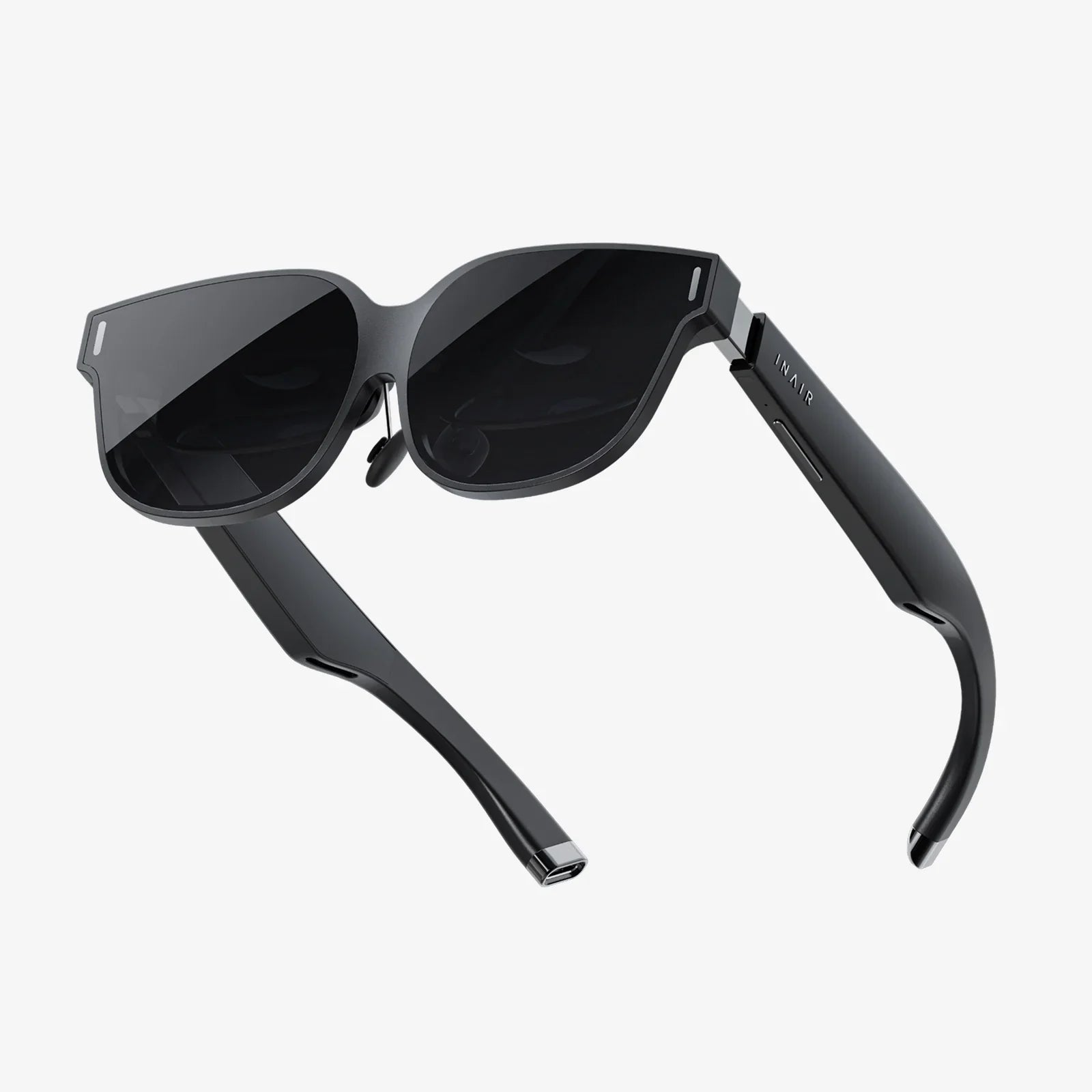
Imagine a world where digital information doesn't just live on a screen but is seamlessly woven into the fabric of your everyday life, accessible not to a privileged few with deep pockets, but to anyone with a simple device. This is no longer a futuristic fantasy reserved for high-budget research labs; it is the rapidly unfolding reality, powered by the quiet but revolutionary rise of cheap augmented reality technology. The barriers are crumbling, and the virtual is spilling into the real in ways that are set to redefine everything from how we learn and work to how we play and connect.
The Great Equalizer: From Niche to Mainstream
For years, augmented reality was synonymous with clunky, expensive headsets that required powerful, dedicated computing hardware. It was a technology trapped in the prototype phase, a dazzling demo with a staggering price tag that kept it far from the hands of consumers, educators, and small businesses. The turning point wasn't a single breakthrough but a convergence of several technological trends that collectively democratized AR.
The most significant catalyst has been the ubiquitous smartphone. Modern smartphones are, in essence, sophisticated AR devices already in billions of pockets. They pack high-resolution cameras, powerful processors, accurate GPS, gyroscopes, and accelerometers—all the essential sensors needed to understand and overlay information onto the real world. This eliminated the single biggest hurdle: the need for specialized hardware. Developers could now build AR experiences for a massive existing market, driving innovation and investment in software and accessibility.
How It Works: The Magic Behind the Affordability
The core function of AR is to recognize the world and anchor digital content to it. Cheap AR leverages several key techniques to achieve this without expensive dedicated components.
- Marker-Based AR: This is one of the simplest and most reliable forms. It uses a predefined visual marker (like a QR code or a specific image) as a trigger. The device's camera identifies the marker, and the software uses its position and orientation to place a digital model on top of it. This is incredibly efficient and requires minimal processing power.
- Markerless AR (Surface Detection): More advanced than marker-based, this technique uses the device's sensors to detect horizontal planes like floors and tables, or vertical planes like walls. This allows users to place virtual furniture in their room or a character on their desk without needing a physical marker. Modern algorithms have become highly efficient at this, making it a standard feature on mobile operating systems.
- Cloud Processing: For the most complex AR tasks, like persistent, large-scale world mapping or highly detailed object recognition, the heavy computational lifting can be offloaded to the cloud. This means the user's device doesn't need to be the most powerful on the market; it just needs a stable internet connection to send and receive data, making sophisticated AR experiences possible on mid-range hardware.
Transforming Industries: The Practical Power of Accessible AR
The true impact of cheap AR is measured not in its technological specs but in its practical applications across diverse fields.
Revolutionizing Education and Training
In classrooms from elementary school to medical school, AR is turning abstract concepts into interactive, 3D models. Students can dissect a virtual frog on their desk, watch historical battles play out on their classroom floor, or explore the solar system from their schoolyard. For vocational training, mechanics can learn to repair an engine by following AR cues overlaid on the actual machinery, and surgeons can practice complex procedures on virtual patients, drastically reducing risk and cost.
Redefining Retail and E-Commerce
The "try before you buy" dilemma of online shopping is being solved by AR. Customers can now use their phone to see how a new sofa would look in their living room, how a pair of glasses fits their face, or how a shade of paint changes the mood of a room. This reduces purchase anxiety and product returns, creating a more confident and satisfying shopping experience that bridges the gap between the digital and physical store.
Enhancing Manufacturing and Field Work
On the factory floor or at a remote worksite, AR is becoming an indispensable tool. Technicians wearing simple AR glasses or using a tablet can see wiring diagrams overlaid directly on the equipment they are repairing. Warehouse workers can receive visual picking instructions that guide them to the exact shelf and bin, streamlining logistics. This hands-free access to information improves accuracy, speeds up workflows, and enhances safety.
The Challenges and Considerations of an Augmented World
While the potential is immense, the path forward is not without its obstacles. The affordability of the technology introduces new challenges that society must address.
- Privacy in a Mapped World: AR systems, by their nature, are constantly scanning and interpreting the environment. This raises critical questions about data ownership and privacy. Who has access to the 3D map of your home created by an AR app? How is facial recognition data being used in public AR experiences? Establishing clear ethical guidelines and robust data protection frameworks is paramount.
- The Digital Divide: While cheap, AR still requires a smartphone and data connectivity. There is a risk that the benefits of this technology could exacerbate existing social and economic inequalities if access is not universal. Ensuring equitable access is a ongoing challenge.
- User Experience and Digital Fatigue: Poorly designed AR can be clunky, confusing, or simply annoying. Developers must focus on creating intuitive, valuable, and non-intrusive experiences. There is also a concern about digital overload—constantly mediating the world through a screen could have unforeseen psychological effects.
The Future is Overlaid: What's Next for Affordable AR
The trend towards cheaper, more powerful, and more integrated AR is accelerating. We are moving towards more seamless form factors, like lightweight glasses that look like ordinary eyewear but project information directly onto the retina. The development of the "AR cloud"—a persistent, shared digital layer over the physical world—will enable collaborative experiences and context-aware information that is always available.
Furthermore, the convergence of AR with artificial intelligence will create systems that don't just display information but truly understand context and intent. Your AR device could translate a foreign menu in real-time, identify a plant on a hike and explain its properties, or provide subtle social cues during a conversation. This will move AR from a novelty to an indispensable assistant, seamlessly integrated into the background of our lives.
The era of expensive, isolated AR experiments is over. We are entering the age of pervasive, practical, and profoundly personal augmentation. The technology has escaped the lab and is now thriving in our homes, schools, and workplaces. It’s a tool for creativity, a bridge for understanding, and a lens through which we can enhance our perception of reality itself. The most exciting part? This transformation is just beginning, and it’s an open invitation for everyone to participate, create, and shape the world we will all soon share.
Share:
AR VR Metaverse Technology Developments Are Reshaping Our Digital and Physical Worlds
Augmented Reality Techniques Are Reshaping Our World and Redefining Reality Itself