Imagine a world where digital information doesn’t just live on a screen but is seamlessly woven into the fabric of your everyday reality, enhancing your perception, understanding, and interaction with the environment around you. This is the promise and the profound meaning of augmented reality technology, a transformative force poised to reshape everything from how we work and learn to how we connect and play. It’s not science fiction; it’s a rapidly evolving technological paradigm that is already beginning to alter our lived experience, and understanding its essence is the first step to navigating the future it is building.
Defining the Digital Overlay: What Exactly is Augmented Reality?
At its most fundamental level, the meaning of augmented reality (AR) technology is the integration of digital information—be it visual, auditory, or haptic—with the user's real-world environment in real-time. Unlike Virtual Reality (VR), which creates a completely immersive, artificial digital environment, AR takes the existing world and layers new information on top of it. The core objective is to enhance one’s perception of reality, not replace it entirely. This augmentation is interactive and registered in three dimensions, meaning the digital objects appear to coexist in the same space as physical objects.
The key differentiator lies in its relationship with the real world. A user wearing a VR headset is blind to their physical surroundings; they are transported elsewhere. A user experiencing AR, whether through a smartphone, smart glasses, or a head-up display, remains present in their environment, but that environment is now enriched with contextual data, 3D models, and interactive prompts. This blending is so central to its definition that AR exists on a spectrum known as the virtuality continuum, a concept introduced by researchers Paul Milgram and Fumio Kishino in 1994. This continuum spans from the completely real environment to a completely virtual one, with Mixed Reality (MR) encompassing the entire space in between, where AR and VR are anchor points.
The Engine Behind the Illusion: How Augmented Reality Technology Works
The magic of AR isn't magic at all; it's a sophisticated orchestration of hardware and software components working in concert. The process can be broken down into a series of critical steps that enable a device to understand the world and project digital content onto it accurately.
1. Sensing and Perception
This is the first and most crucial step. An AR system must perceive the world to augment it. This is achieved through a suite of sensors:
-
Cameras: Act as the digital eyes, continuously capturing the live video feed of the user's surroundings.
-
GPS: Provides coarse-grained location data, useful for large-scale, outdoor AR experiences like navigation or location-based games.
-
Inertial Measurement Units (IMUs): These include accelerometers and gyroscopes that track the device's orientation, rotation, and movement through space with high precision.
-
LiDAR (Light Detection and Ranging) and Depth Sensors: These advanced sensors fire out lasers or structured light to measure the distance to objects, creating a detailed 3D depth map of the environment. This is essential for understanding the geometry of a space and placing digital objects convincingly behind or in front of real-world objects.
2. Processing and Scene Understanding
The raw data from the sensors is then processed. This involves complex computer vision algorithms that perform two primary functions:
-
SLAM (Simultaneous Localization and Mapping): This is the cornerstone technology for most modern AR. SLAM allows the device to both map an unknown environment (understanding the location of walls, floors, and objects) and simultaneously localize itself within that map in real-time. It creates a persistent spatial understanding, which is why a virtual character can stay pinned to a specific spot on your table even as you walk around it.
-
Object Recognition: Machine learning models can be used to identify specific objects or surfaces within the camera feed. For instance, recognizing a flat horizontal surface as a suitable place to anchor a digital object or identifying a specific product on a shelf to trigger an information overlay.
3>Projection and Rendering
Once the environment is understood, the AR software generates the appropriate digital content—a 3D model, a text label, an animation—and renders it into the user's field of view. The rendering engine must account for lighting, shadows, and perspective to make the digital object appear as a natural part of the scene. This content can be delivered via several display methods:
-
Smartphone and Tablet Screens: The most common and accessible form, using the device's screen as a viewport into the augmented world.
-
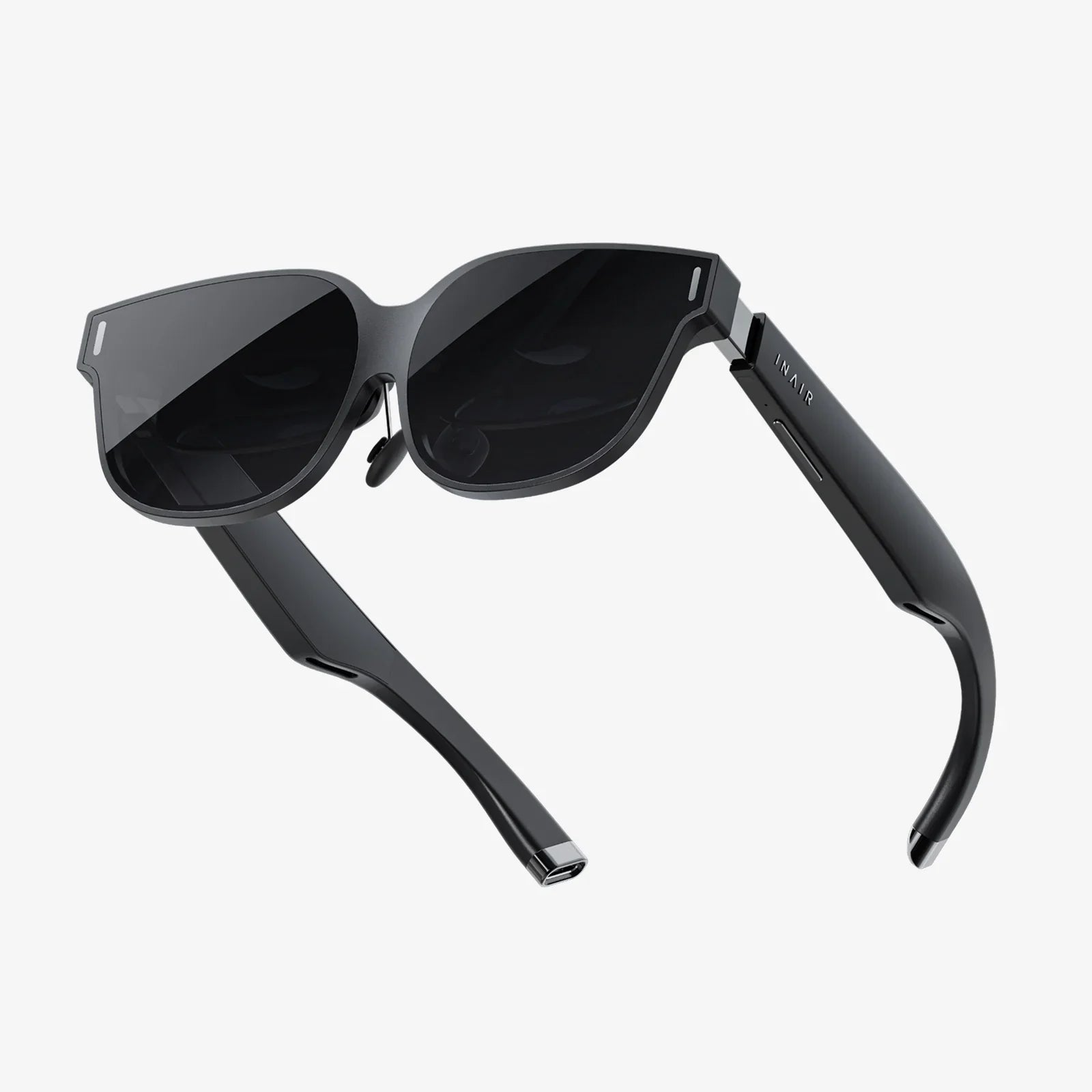
Smart Glasses and Headsets: These use optical projection systems, like waveguides or micro-projectors, to beam images directly onto the user's retina or onto a clear lens in front of their eye, allowing for a hands-free, always-available experience.
-
Heads-Up Displays (HUDs): Long used in fighter jet cockpits and now in some automotive windshields, these project critical information like speed and navigation directions into the driver's line of sight.
A Journey Through Time: The Evolution of Augmented Reality
While it feels like a modern innovation, the conceptual roots of AR are surprisingly deep. The term itself was coined in 1990 by Boeing researcher Tom Caudell, but the idea dates back further.
In 1968, computer scientist Ivan Sutherland, with the help of his student Bob Sproull, created The Sword of Damocles, widely considered the first head-mounted display system. It was a primitive and monstrously heavy apparatus that hung from the ceiling, projecting simple wireframe graphics into the user's vision. It was the proof of concept that started it all.
The 1990s and early 2000s saw AR confined primarily to research labs and high-budget industrial and military applications due to the prohibitive cost and size of the technology. A significant cultural milestone came in 1998 with the 1st & Ten system, which used AR to draw the famous yellow first-down line on American football broadcasts, seamlessly integrating graphics with the live field for millions of viewers.
The catalyst for the modern AR era was the proliferation of powerful smartphones. In 2009, the release of ARToolKit for mobile phones opened the door for developers. The true watershed moment arrived in 2016 with the global phenomenon of Pokémon GO. This mobile game demonstrated the mass-market appeal and social potential of AR, enticing millions to explore their real-world neighborhoods to catch virtual creatures.
Today, the technology is advancing at a breakneck pace. The development of powerful, standalone AR glasses, improvements in SLAM and depth sensing, and the rollout of high-speed 5G networks are converging to move AR beyond the smartphone screen and into a ubiquitous, contextual computing platform.
Transforming Industries: The Practical Applications of AR
The meaning of augmented reality technology is truly revealed in its application. It is moving far beyond gaming and filters to become a critical tool in enterprise, education, and healthcare.
Revolutionizing Retail and E-Commerce
AR is solving one of online shopping's biggest drawbacks: the inability to try before you buy. Apps now allow customers to project virtual furniture into their living room to check for size and style fit, or to "try on" glasses, makeup, and even clothes using their smartphone camera. This reduces purchase anxiety and significantly lowers return rates.
Enhancing Manufacturing and Field Service
In industrial settings, AR is a powerhouse for efficiency and accuracy. Technicians wearing smart glasses can see digital schematics overlaid directly onto the machinery they are repairing, with remote experts able to annotate their view in real-time to guide them. Warehouse workers can use AR to visualize the most efficient picking paths and receive visual indicators that lead them directly to items, streamlining logistics.
Advancing Medical Training and Surgery
Medical students can use AR to practice complex procedures on detailed, interactive 3D holograms of the human body, reducing risk and improving learning outcomes. Surgeons can use AR overlays during operations to visualize critical information like the location of tumors or blood vessels without looking away from the patient, enhancing precision and safety.
Reimagining Education and Training
Textbooks become interactive portals; students can point their device at a diagram of the solar system to see it orbit around them or at a historical monument to see it reconstructed. This experiential learning fosters deeper engagement and understanding, making abstract concepts tangible.
Powering Navigation and Tourism
Imagine walking through a foreign city and having directional arrows painted onto the sidewalk in your field of view, or pointing your phone at a historic building to see its history and significance pop up. AR is turning our entire world into an interactive, information-rich map.
The Flip Side of the Lens: Ethical and Societal Considerations
With great technological power comes great responsibility. The widespread adoption of AR raises critical questions that society must address.
-
Privacy and Data Security: AR devices, by their very nature, are constantly capturing and analyzing the world around you. The data collected—video feeds, location, biometric data—is incredibly sensitive. Who owns this data? How is it stored and used? The potential for surveillance, both corporate and governmental, is unprecedented.
-
Digital Addiction and Reality Blurring: If we can constantly enhance our reality with a more appealing digital layer, will we become less engaged with the un-augmented world? There is a risk of exacerbating digital addiction and creating a societal divide between those who can afford to augment their reality and those who cannot.
-
Physical Safety and Public Nuisance: Users engrossed in an AR experience on a headset or phone may be oblivious to physical hazards, leading to accidents. Furthermore, the concept of digital vandalism—placing offensive virtual content in public spaces—is a new form of nuisance that lawmakers are only beginning to grapple with.
-
The Permanence of the Digital Layer: As AR becomes persistent, the digital world will become a permanent fixture over our physical one. This raises questions about control. If a corporation can place a virtual billboard over your house, who has the right to control the AR "view" of private and public property?
The Future is Augmented: What Lies Ahead?
The trajectory of AR points towards a future where the technology becomes as ubiquitous and invisible as the smartphone is today. We are moving towards lightweight, socially acceptable glasses that will offer all-day battery life and high-fidelity displays. The concept of the spatial web or WebXR is emerging—an internet where information is not tied to web pages but to specific locations and objects in the real world.
Advancements in AI will make AR assistants more contextually aware and proactive, offering information exactly when and where it's needed. Furthermore, the convergence of AR with other technologies like the Internet of Things (IoT) will be transformative; your AR glasses could show you the status and controls for every smart device in your home simply by looking at it.
The ultimate goal is to create technology that feels less like a tool and more like a natural extension of human cognition, seamlessly blending the computational power of the digital realm with the rich complexity of the physical world to expand human potential.
The line between what is real and what is digital is not just blurring; it's being intentionally and creatively woven together to create a new, hybrid existence. The true meaning of augmented reality technology is this fundamental shift in human-computer interaction, a move away from isolated screens towards a future where our environment itself becomes the interface. This isn't just a new way of seeing information; it's a new way of seeing the world, and it promises to unlock possibilities we are only just beginning to imagine. The next time you look around, consider what you might be missing—and what you might soon be able to see.


Share:
Do You Need Your Glasses for VR? The Ultimate Guide to Vision in Virtual Reality
Make VR Glasses: Your Ultimate Guide to Crafting Immersive Reality at Home