


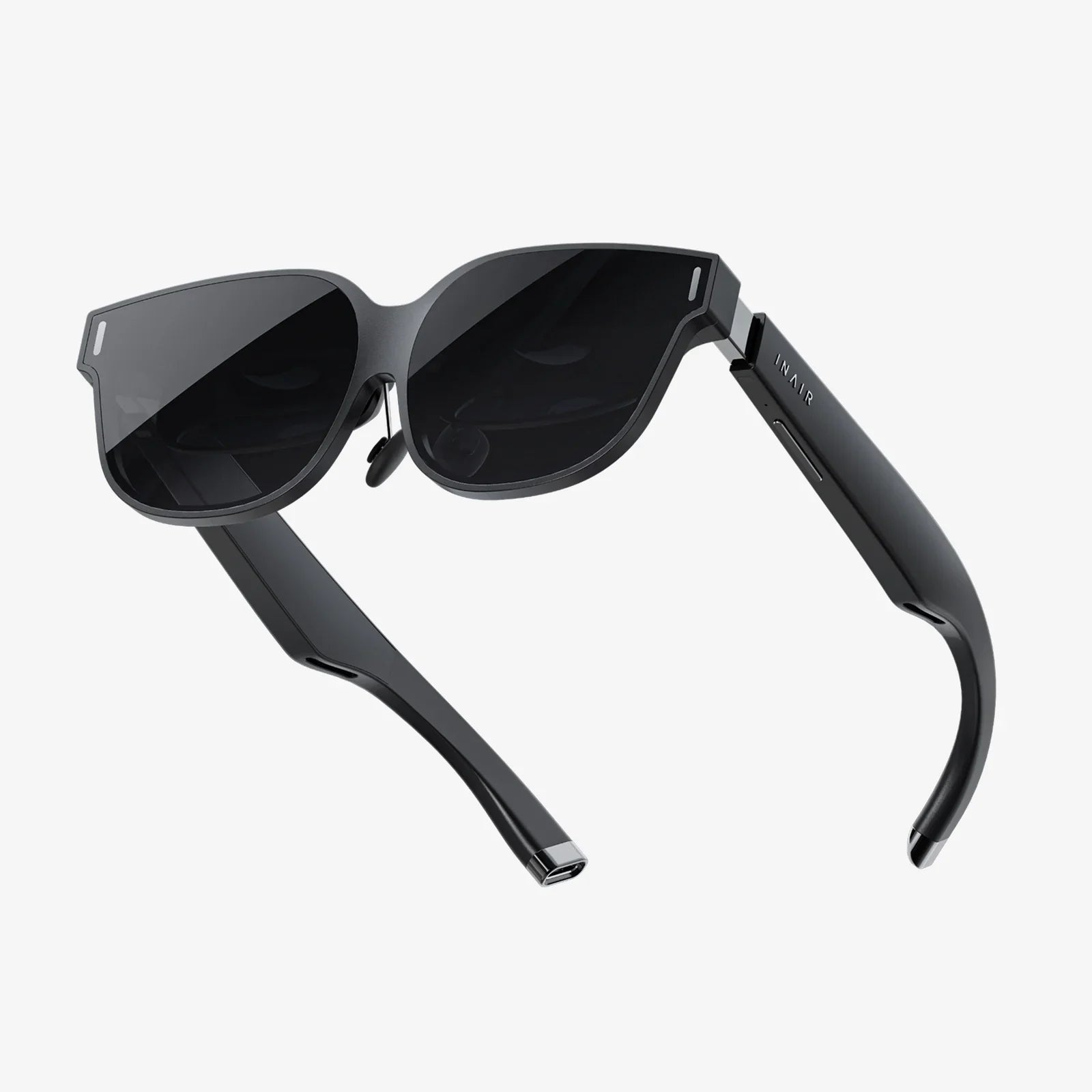
- by wangfred
Do You Need Your Glasses for VR? The Ultimate Guide to Vision in Virtual Reality
- by wangfred
Stepping into a sprawling virtual landscape, your heart races as you prepare to scale a digital mountain or engage in an intergalactic dogfight. But as you lower the headset onto your face, a moment of panic sets in—the world is a blur. The immersive promise of virtual reality is instantly shattered by the very real limitations of your own eyesight. This is the moment millions of users face, a frustrating barrier between them and a fully realized digital experience. The question isn't just about convenience; it's about accessibility, comfort, and ultimately, whether you can even use the technology you've invested in. For anyone who relies on corrective lenses, the journey into VR begins not with a controller in hand, but with a simple, yet critical, query: do you need to wear your glasses inside this thing?
To understand why vision correction is non-negotiable for many in VR, we must first grasp how these headsets function. Unlike a television or monitor that sits at a fixed distance, a VR headset uses sophisticated lenses to bend light from small screens positioned just inches from your eyes. These lenses create the illusion of depth and distance, making objects that are physically close appear far away, often simulating a focal distance of two meters or more.
This simulated focal plane is the key to the entire dilemma. If your vision is 20/20, your eyes can easily focus on this virtual distance. However, if you are nearsighted (myopic), your eyes struggle to focus on objects far away, whether they are real or digitally rendered. The headset's lenses cannot correct for your personal prescription; they can only create the virtual space. Therefore, if you need glasses to see a movie screen clearly in the real world, you will absolutely need vision correction to see that same virtual movie screen with any clarity inside a headset. The blur isn't a glitch; it's a direct reflection of your uncorrected eyesight projected onto a massive digital canvas.
Some users, perhaps eager to dive in or worried about scratching their expensive frames, might be tempted to simply power through the blur. This is a profoundly bad idea. Straining to focus in VR doesn't just produce a subpar experience; it can actively cause harm.
Clearly, the answer to "should you" is a resounding yes. But the practicalities of "how you should" require careful consideration.
For the vast majority of users, the simplest solution is to wear their everyday glasses inside the headset. Most modern headsets are designed with this in mind, featuring flexible face interfaces and extra depth in the eye relief to accommodate frames. However, this approach comes with its own set of challenges and best practices.
First and foremost is the risk of scratches. The hard, plastic lenses of the VR headset and the glass or plastic of your prescription lenses are in close, precarious proximity. A wrong move or an over-tightened headstrap can press them together, leaving permanent scratches on both sets of lenses—a costly mistake. To mitigate this, many manufacturers include or offer for purchase:
Beyond scratches, comfort is a major factor. The pressure of the headset can press the arms of your glasses into your temples, leading to painful pressure points, especially during longer sessions. Ensuring your headset is adjusted for a snug but not vice-like fit is crucial. The goal is for the headset to be supported by your cheekbones and forehead, not by clamping down on your glasses.
For those who are serious about their VR comfort and visual clarity, prescription lens inserts represent the gold standard solution. These are custom-made magnetic or clip-in lenses that are precisely calibrated to your prescription and physically placed inside the headset, directly over the device's built-in lenses.
The advantages of this approach are numerous:
While this requires an additional investment, for frequent users it transforms the experience from a compromised hassle into a perfectly tailored visual portal.
The conversation around vision correction in VR extends beyond simple nearsightedness.
Astigmatism: This common condition, caused by an irregularly shaped cornea, also requires correction in VR. Uncorrected astigmatism will manifest as a general blurriness and distortion of straight lines, making text difficult to read and environments seem warped. Both glasses and prescription inserts can be made to correct for astigmatism.
Bifocals and Progressive Lenses: These can present a unique challenge. VR's fixed focal plane means you are always looking straight ahead into the distance. There is no need to look down to read a book, as you might in real life. Therefore, you are only using the distance-vision portion of your progressive lenses. Some users find this works perfectly, while others may experience a slight visual discomfort at the edges of the lenses. Experimentation is key.
Contact Lenses: For many, contact lenses are the ideal middle ground. They provide crystal-clear, frame-free vision with a natural field of view and no risk of scratching the headset lenses. The only considerations are ensuring your eyes don't dry out during long sessions and remembering that you are still wearing them, as the immersive nature of VR can make you forget.
Hardware is only half the story. Modern VR systems include several software-based tools to help fine-tune the visual experience for individual users, regardless of their prescription.
The most critical adjustment is the Interpupillary Distance (IPD) slider. This physically moves the headset's lenses closer together or further apart to match the distance between your pupils. An incorrect IPD setting can cause eye strain, headaches, and a blurry image even for people with 20/20 vision. Always take the time to adjust this setting when you first set up a headset and whenever a new user takes a turn.
Additionally, many headsets now offer software adjustments for brightness and, in some cases, color saturation and contrast, which can help reduce eye strain and improve readability for all users.
As the technology marches forward, the industry is actively working on solutions that could make this entire discussion obsolete. Research into varifocal and light field displays aims to create headsets that can dynamically adjust their focal plane, simulating depth of field and potentially accommodating a range of vision prescriptions without the need for external correction. Some experimental technologies even use eye-tracking to determine your prescription and adjust the image accordingly. While these are still on the horizon, they promise a future where VR is instantly accessible and perfectly clear for everyone, right out of the box.
Don't let blurry vision be the anchor that keeps you tethered to the real world. Embracing the right vision correction method is the final, essential step in unlocking the true, breathtaking potential of virtual reality. Your passport to these incredible digital realms is waiting; you just need to see clearly enough to use it.
Share:
When Was Augmented Reality Made? The Surprising History of a Modern Marvel
Augmented Reality Technology Meaning: A Comprehensive Guide to Our Digitally-Enhanced World