


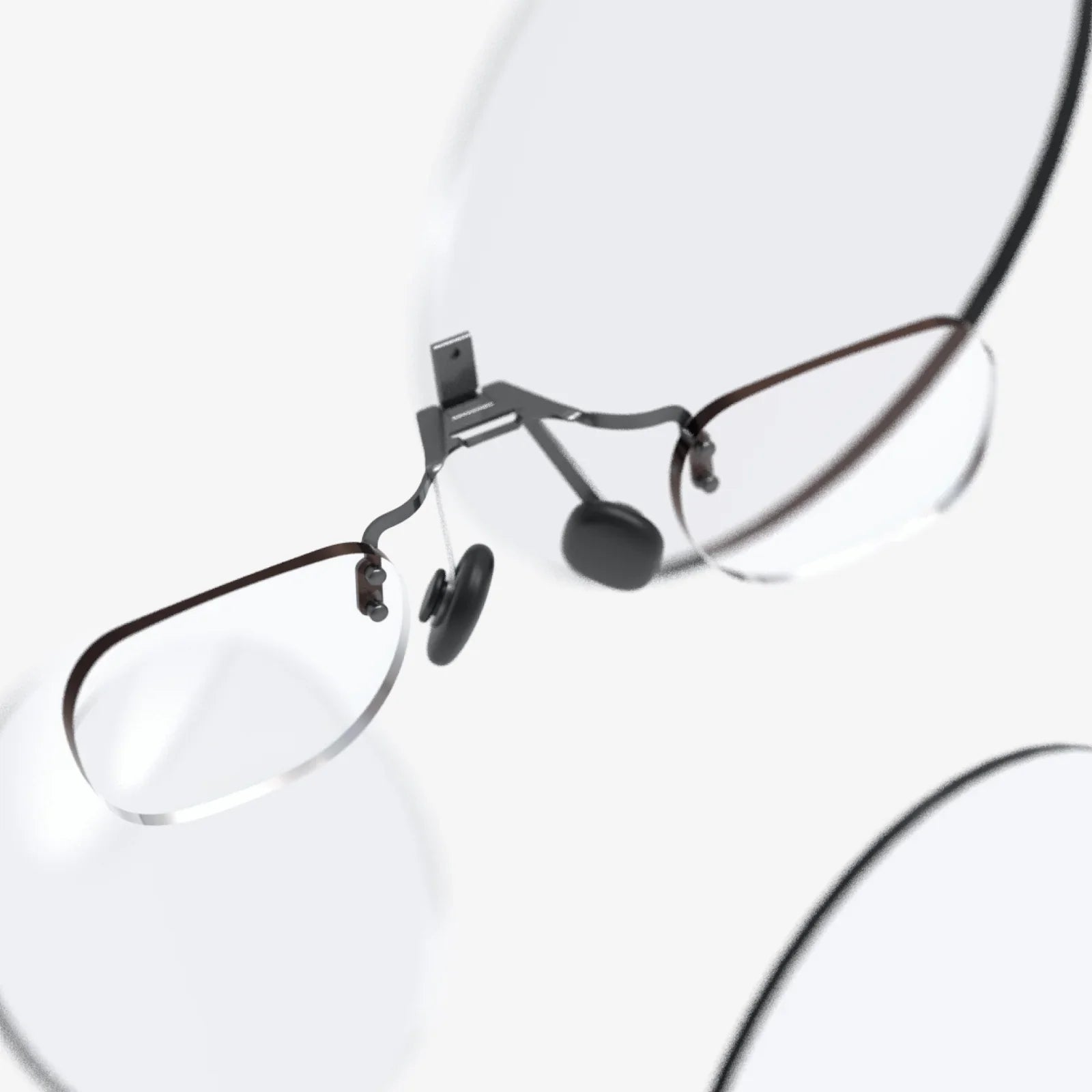
Imagine a world where your morning run is guided by a virtual coach floating beside you, where historical figures narrate the stories of the ruins you're exploring, and where complex engine repairs are visualized through your smart glasses, guiding your every move. This is no longer the stuff of science fiction; it is the imminent future being built today through the rapid and profound evolution of Augmented Reality (AR). The technology that once lived primarily in social media filters and mobile games is maturing at a breakneck pace, poised to fundamentally reshape how we work, learn, shop, and connect. The line between the digital and the physical is not just blurring—it's being deliberately and intelligently woven together, creating a new layer of interactive existence. The trends emerging now are not merely incremental improvements; they are the foundational pillars of a paradigm shift, signaling that the future is not something we wait for, but something we actively overlay onto our present reality.
The Metaverse Meld: AR as the Gateway to a Persistent Digital Layer
The concept of the Metaverse has captured the global imagination, often depicted as a fully virtual world accessed through cumbersome headsets. However, the most practical and powerful iteration of the Metaverse will likely be an augmented one. AR acts as the crucial bridge, the lens through which we will view and interact with a persistent digital layer superimposed on our physical environment. This trend moves beyond one-off, app-based experiences towards a continuous, contextual digital twin of our world.
This persistent layer will be populated with data, avatars, and digital objects that remain fixed in space. Imagine walking through a city and seeing Yelp reviews hover over restaurants, public transport schedules update in real-time at bus stops, and art from local galleries displayed on blank walls. This isn't about replacing reality but enriching it with a constant, customizable stream of relevant information. Social interactions will be transformed, as friends' digital avatars can join you on your couch for a movie night or leave virtual messages and artwork pinned to specific locations for you to discover later. This trend signifies a move from using AR to living within an augmented ecosystem, making the digital world an integral, always-available component of our daily lives.
The Democratization of Access: The Unstoppable Rise of WebAR
For years, a significant barrier to widespread AR adoption was the need to download a dedicated, often large, mobile application. This friction stifled experimentation and limited reach. The trend towards WebAR—delivering augmented experiences directly through a web browser—is shattering this barrier and democratizing access to the technology. By eliminating the download step, WebAR opens the floodgates for instant engagement.
Users can simply click a link or scan a QR code and be immediately immersed in an experience. This has monumental implications for marketing, e-commerce, education, and entertainment. A furniture company can let you visualize a new sofa in your living room by just visiting a URL. A museum can bring an exhibit to life on your phone without requiring you to install an app. A news organization can overlay data visualizations onto a live broadcast viewed on their website. This frictionless access is crucial for scaling AR from a niche technology to a mainstream utility. It empowers creators and businesses of all sizes to deploy AR solutions quickly and efficiently, meeting the audience where they already are: on the web.
The Intelligence Infusion: AI and Machine Learning as AR's Brain
While AR provides the eyes, Artificial Intelligence (AI) and Machine Learning (ML) provide the brain. The most significant advancements in AR are now being driven by the integration of sophisticated AI, which enables devices to not just see the world, but to understand and interpret it. This synergy is creating a new class of contextually aware and intelligent AR applications.
AI-powered computer vision allows AR devices to perform complex tasks like object recognition, spatial mapping, and scene segmentation with astonishing accuracy. Your phone can now identify a plant species, translate foreign text in real-time, or recognize the make and model of a car and display its specifications. Machine learning algorithms can predict user intent, personalize content on the fly, and generate dynamic AR elements based on real-world data. For instance, an AR navigation system powered by AI won't just overlay a direction arrow; it will understand obstacles, predict pedestrian flow, and adapt the path in real-time. This trend is moving AR from being a passive display tool to an active, intelligent assistant that can process its environment and offer genuinely useful, situation-specific insights and interactions.
Beyond the Phone: The Steady March Towards Advanced Wearables
The smartphone has been the undisputed vessel for the AR revolution thus far, leveraging its powerful processors, high-resolution cameras, and ubiquity. However, holding up a phone is an intermediary step, a compromise between capability and convenience. The clear and inevitable trend is the development of more sophisticated, hands-free AR wearables, primarily in the form of smart glasses.
The next generation of these devices is focusing on solving the critical challenges that have hindered earlier versions: style, battery life, processing power, and field of view. We are moving towards glasses that look indistinguishable from regular eyewear, with all-day battery life and displays that seamlessly blend digital content with the real world without awkward obtrusion. These devices will be always-on, always-ready, offering contextual information, notifications, and controls directly in your line of sight. This will unlock truly immersive and continuous AR, freeing users from the tyranny of the screen-in-a-screen experience. While mainstream consumer adoption of advanced glasses is still on the horizon, relentless innovation in micro-optics, battery technology, and miniaturized computing is accelerating its arrival, promising a future where AR is effortlessly integrated into our field of vision.
The Enterprise Engine: AR's ROI in Industry and Workforce Development
While consumer applications often grab headlines, some of the most impactful and financially justified uses of AR are happening in enterprise and industrial settings. Here, AR is not a novelty but a critical tool driving efficiency, safety, and cost savings with a clear and demonstrable Return on Investment (ROI). This trend sees AR as a fundamental component of the Fourth Industrial Revolution or Industry 4.0.
Technicians wearing AR glasses can see schematics overlaid on complex machinery, receive remote expert guidance from a specialist thousands of miles away (who can literally draw annotations into their field of view), and follow step-by-step instructions hands-free. This reduces errors, slashes training time, and minimizes downtime. In logistics and warehousing, AR can visually guide workers to items for picking, display inventory information, and optimize packing routes, dramatically increasing accuracy and speed. In architecture and construction, teams can visualize building designs on empty plots of land, clash detection between systems before physical work begins. This enterprise-driven trend is proving the concrete value of AR, funding its development, and refining the technology for broader applications, establishing it as a cornerstone of modern operational strategy.
Spatial Storytelling and Immersive Experiences: Redefining Narrative
The arts and entertainment industries are embracing AR to create entirely new forms of narrative and experiential engagement. This trend moves beyond gimmicks to craft deep, immersive stories that unfold in the user's personal space. Known as spatial storytelling, this approach uses the environment as a stage, blending the physical and digital to create powerful, memorable moments.
Imagine a theatrical production that uses your home as its set, with characters appearing from your closet or action sequences unfolding across your furniture. Educational content can transform a classroom into a ancient Roman forum or the surface of Mars. Artists can create dynamic sculptures that exist only in AR, allowing them to defy physics and create impossible interactive art. Museums are leading this charge, using AR to resurrect extinct animals, animate historical artifacts, and provide deeper layers of context to their collections. This trend is about emotional connection and presence, leveraging the unique ability of AR to anchor digital content firmly in the user's world, making the experience personal, scalable, and profoundly engaging in a way that flat screens or fully virtual worlds cannot replicate.
Ethical Considerations and the Privacy Paradox
As with any transformative technology, the rapid ascent of AR brings a host of ethical questions and societal challenges that must be addressed proactively. The very nature of AR—a technology that captures, analyzes, and overlays data onto the real world—creates a significant tension between utility and privacy. The trend towards more pervasive and always-on AR devices amplifies these concerns exponentially.
These devices, by their function, are constant data collection platforms. They have cameras, microphones, and sensors continuously scanning the environment. This raises critical questions: Who owns the spatial data of your home? How is facial recognition data being used and stored? Can you be recorded without your knowledge in a public space by someone wearing AR glasses? The potential for pervasive advertising, unauthorized surveillance, and data exploitation is immense. Furthermore, the concept of attention and reality itself comes into question. Will we become overwhelmed with digital clutter? Could AR be used to manipulate perception or spread misinformation by altering what people see in the real world? Navigating this privacy paradox and establishing robust ethical frameworks, transparent data policies, and perhaps even new digital rights will be one of the most critical trends shaping the responsible development and adoption of AR technology.
The shimmering promise of a world enhanced by digital information is no longer a distant dream—it's loading on our screens and soon, directly before our eyes. These trends are not happening in isolation; they are converging, each one amplifying the power of the others, creating a feedback loop of innovation that is accelerating us towards an augmented age. The question is no longer if AR will redefine our reality, but how we will choose to build it. The call to action is clear for developers, designers, policymakers, and users alike: to engage with this technology thoughtfully, to champion experiences that add genuine value and wonder, and to fiercely advocate for an ethical foundation. The next layer of our reality is being coded now, and we all have a stake in ensuring it is a future we actually want to see.
Share:
Why Augmented Reality is the Next Fundamental Shift in Human-Computer Interaction
Diff Between AR and VR: A Comprehensive Guide to Understanding Immersive Technologies