


Have you ever wondered what truly separates the digital world you can touch from the one you can get lost in? The terms Augmented Reality (AR) and Virtual Reality (VR) are constantly buzzing in the tech world, often used interchangeably by those on the outside. But for anyone looking to understand the future of human-computer interaction, grasping the fundamental diff between AR and VR is not just a matter of semantics—it's the key to unlocking their immense potential. One enhances your reality, while the other replaces it entirely. This journey will demystify these powerful technologies, revealing how they are reshaping everything from how we play and learn to how we work and connect.
The Core Philosophical Divide: Enhancement vs. Immersion
At its heart, the most significant diff between AR and VR lies in their foundational philosophy and relationship with the real world.
Augmented Reality (AR) is best understood as a digital overlay on top of our physical environment. Its primary objective is to enhance, annotate, or supplement the world you already see. AR technology uses your device's camera to perceive the real world and then projects digital information—images, data, 3D models, text—onto your view. The real world remains the constant foundation; the digital elements are additive. Think of it as a heads-up display for life, providing contextually relevant information exactly when and where you need it.
Virtual Reality (VR), in stark contrast, is about complete immersion. Its goal is to shut out the physical world entirely and transport the user to a fully simulated, computer-generated environment. By wearing a headset that covers your entire field of vision and often incorporates headphones, VR replaces your reality with a new one. The user is cut off from their immediate physical surroundings and placed into a digital realm where they can look around, move, and interact as if they were truly there. The real world is not enhanced; it is replaced.
Technological Foundations: How They Achieve Their Magic
The philosophical diff between AR and VR necessitates vastly different technological approaches, particularly in their hardware and sensory engagement.
Virtual Reality Hardware: The Immersion Pod
VR technology is built around the concept of sensory blockade and substitution.
- Headsets: VR headsets are fully opaque, using high-resolution displays placed very close to the eyes. Lenses focus and reshape the picture for each eye, creating a stereoscopic 3D effect that gives depth to the virtual world.
- Tracking Systems: To sell the illusion of being in another place, VR employs sophisticated tracking. This includes rotational tracking (using gyroscopes, accelerometers, and magnetometers to know where you're looking) and positional tracking (using external sensors or internal cameras to understand your physical movement in space).
- Controllers: VR almost always involves handheld controllers equipped with the same tracking technology. These become your virtual hands, allowing you to manipulate objects, push buttons, and interact with the digital environment.
- Audio: High-quality, spatial 3D audio is crucial. Sounds come from specific points in the virtual space, changing as you turn your head, further cementing the feeling of "presence."
Augmented Reality Hardware: The World as a Canvas
AR technology is built around perception, understanding, and projection.
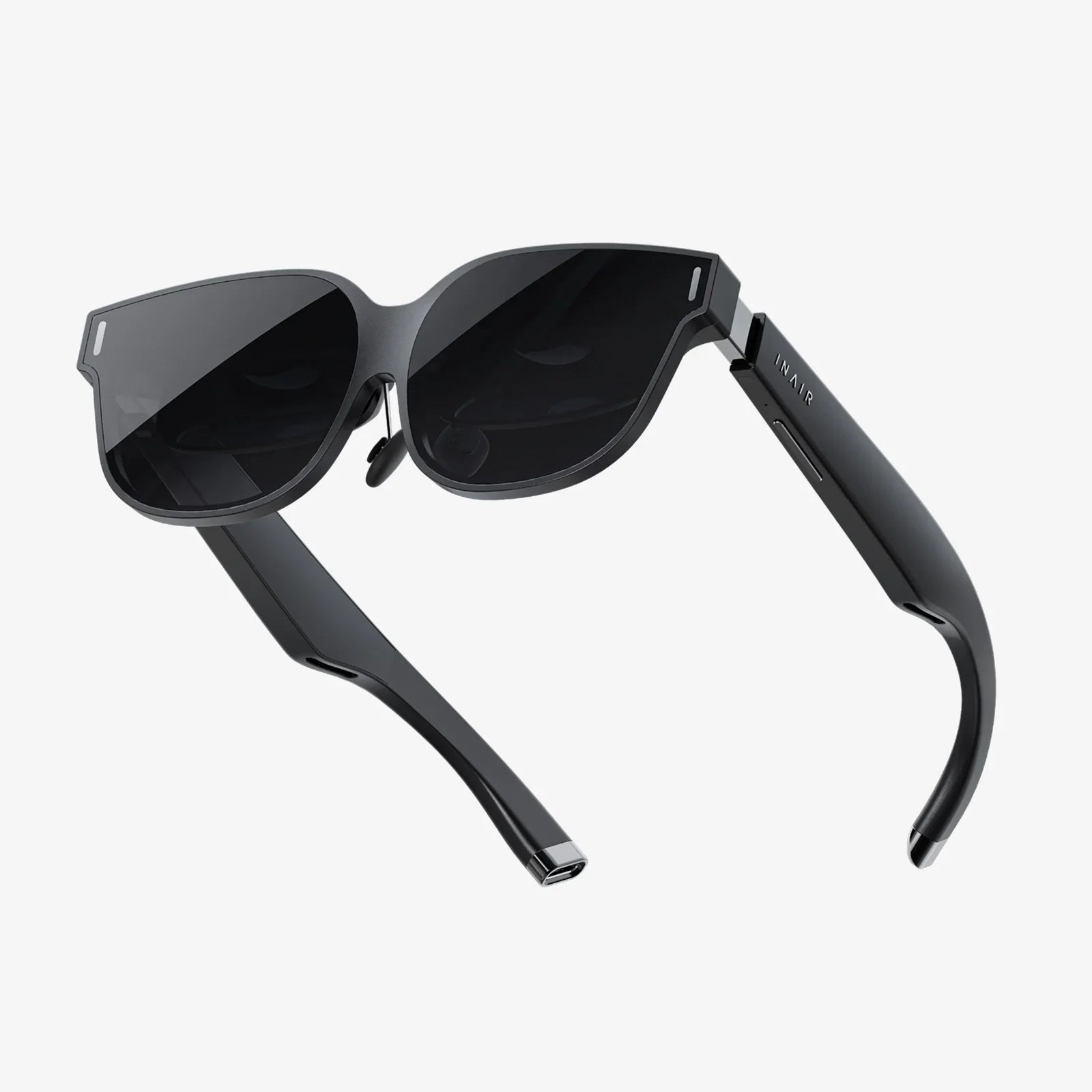
- Displays: AR uses transparent displays or camera passthrough. Smart glasses allow you to see the world directly through lenses that also project light to form images. Smartphone and tablet AR uses the device's camera to show you the real world on the screen, overlaying graphics on top of the video feed.
- Sensors and Cameras: The core of AR is its ability to understand the environment. This requires cameras for visual input, depth sensors (like LiDAR) to map the geometry of a space, and inertial measurement units (IMUs) to understand the device's movement and orientation.
- Computer Vision: This is the software magic that makes AR work. Algorithms process the camera feed to perform simultaneous localization and mapping (SLAM), recognizing flat surfaces like tables and floors, and tracking objects. This allows digital content to be placed and anchored persistently in the real world.
- Interaction: While controllers exist, AR interaction is often more naturalistic—using touchscreens, hand gestures, or voice commands, as the user is still aware of and present in their physical body.
The User Experience: A Study in Contrasts
The diff between AR and VR becomes most apparent in the actual user experience, which dictates their respective applications and limitations.
VR User Experience: The primary goal of a VR experience is to achieve a state of "presence"—the undeniable, subconscious feeling of being in the virtual place. This is its greatest strength and its most demanding requirement. VR is typically a stationary or room-scale experience. For safety, users are often asked to define a play area boundary. The experience is all-consuming, making it unsuitable for multitasking. You cannot check your phone or talk to someone in the room without breaking immersion. This intense focus makes VR powerful for gaming, training simulations, and virtual tourism, but it also creates a barrier to all-day, everyday use.
AR User Experience: The AR experience is defined by "context." The value of the digital information is entirely dependent on your physical location and what you are looking at. AR is inherently mobile and integrated into your daily life. You can use it while walking (with caution), working, or socializing. It does not require you to disconnect from your surroundings; instead, it aims to make your interaction with those surroundings more efficient and informed. This makes AR ideal for navigation, information retrieval, remote assistance, and interactive retail. However, its reliance on environmental understanding means it can struggle in poorly lit or featureless spaces.
Real-World Applications: Where They Shine
The practical diff between AR and VR is crystal clear when we examine their most impactful use cases across various industries.
Virtual Reality's Domain: The Total Simulator
- Gaming and Entertainment: This is VR's flagship application. It provides unparalleled immersion, placing you inside the game world. From exploring fantastical landscapes to experiencing heart-pounding horror, VR gaming is a category of its own. It's also revolutionizing media consumption through virtual cinemas and immersive 360-degree films.
- Training and Simulation: VR is a perfect, zero-risk training ground. Pilots train on flight simulators, surgeons practice complex procedures, and soldiers prepare for combat scenarios—all in a safe, controlled, and repeatable virtual environment. Companies use VR to train employees in everything from public speaking to dangerous machinery operation.
- Architecture and Design: Architects and clients can don a headset to walk through a building long before the foundation is poured. This allows for unparalleled design validation and spatial understanding, catching potential issues and making changes when they are still inexpensive digital edits.
- Therapy and Rehabilitation: VR is being used for exposure therapy to treat phobias (like fear of heights or flying), for physical rehab by making exercises more engaging, and for cognitive therapy for conditions like PTSD.
Augmented Reality's Domain: The Invisible Assistant
- Industrial and Field Service: AR is transforming maintenance and repair. A technician can look at a complex machine and see animated repair instructions overlaid on the specific components, or a remote expert can draw arrows and circles directly into their field of view to guide them.
- Healthcare: Medical students can use AR to study anatomy with 3D models overlaying a mannequin. Surgeons can have vital patient statistics and imaging data (like a live ultrasound) projected into their eyeline during an operation, keeping their focus on the patient.
- Retail and E-commerce: A powerful application is "try before you buy." AR apps allow you to see how a piece of furniture would look in your living room at scale, how a new shade of paint would transform your walls, or how a pair of glasses would look on your face.
- Navigation and Information: Imagine walking through a city and seeing directional arrows painted on the sidewalk or looking at a restaurant and instantly seeing its reviews and menu highlights. AR has the potential to become the ultimate contextual interface for the world.
- Education: AR brings textbooks to life. Students can point their device at a page to see a 3D model of the solar system, a beating heart, or a historical event play out on their desk, creating a powerful and memorable learning experience.
The Blurring Lines: Mixed Reality and the Future
While the diff between AR and VR is distinct, the frontier between them is beginning to blur with the advent of Mixed Reality (MR). MR is not just a simple overlay; it represents a spectrum where digital and physical objects can coexist and interact in real-time. Advanced MR headsets use passthrough cameras to show you a high-fidelity video feed of your real environment and then seamlessly blend photorealistic digital objects into that space. These objects can be occluded by real-world furniture, respond to real-world lighting, and appear truly anchored. This represents a convergence of AR's contextual awareness with VR's high-fidelity immersion, potentially creating the ultimate future computing platform that leverages the best of both worlds.
Choosing the Right Tool for the Job
Understanding the diff between AR and VR ultimately comes down to asking a simple question: Do I need to bring the user into a digital world, or do I need to bring digital information into the user's world?
- Choose VR when the goal is complete immersion, total focus, and the creation of an experience that is untethered from the constraints of physical reality. It's for escapism, simulation, and deep engagement.
- Choose AR when the goal is to enhance a real-world task, provide contextual information, or improve efficiency and understanding without removing the user from their natural environment. It's for assistance, annotation, and augmentation.
Both technologies are on rapid evolutionary tracks. VR is moving towards higher resolution, wider fields of view, and more comfortable, wireless form factors. AR is racing towards socially acceptable eyeglass-style wearables with all-day battery life and powerful, intuitive interaction models. They are not competing technologies but rather complementary pillars of the next great computing revolution, each poised to redefine our relationship with digital information in its own unique and profound way.
Imagine a world where your every interaction is enriched with a layer of intelligent digital insight, where learning is a dynamic 3D dance of information, and where the boundaries between the physical and digital realms are not walls but permeable membranes. This is the promise held within understanding the critical diff between AR and VR. It’s more than a technical distinction; it’s the blueprint for the next era of human experience, waiting for you to step inside and explore its limitless possibilities.
Share:
Augmented Reality Trends: The Future is Now and It's Overlaying Our World
Augmented Reality Systems Are Reshaping Our World, One Layer at a Time