


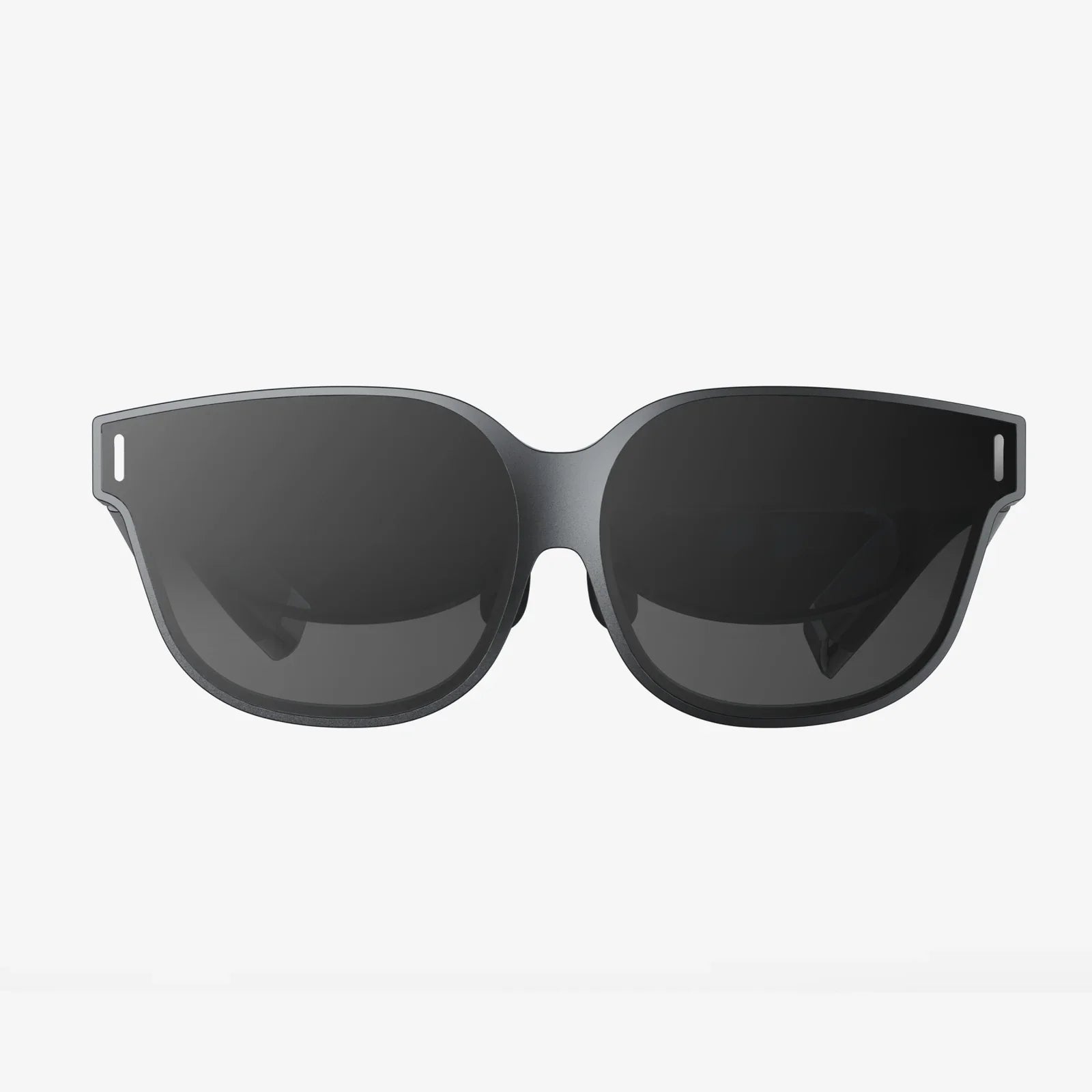
- by wangfred
Augmented Reality Uses in Future: Transforming Everyday Life and Industries
- by wangfred
Imagine a world where the digital and the physical are no longer separate realms but a seamless, interactive tapestry of information, entertainment, and utility, all accessible through a simple glance. This is not a distant science fiction fantasy; it is the imminent future being built today through the explosive evolution of Augmented Reality (AR). While many still perceive AR as a novel gimmick for playful filters or gaming, its potential uses are poised to infiltrate and fundamentally transform every facet of human existence, from the way we work and learn to how we connect and care for ourselves. The next decade will see AR shed its novelty skin and emerge as the next foundational computing platform, a ubiquitous layer of intelligence overlaid onto our reality, and its implications are nothing short of revolutionary.
The future of AR moves far beyond holding up a device to view an overlay. It will be characterized by contextual, ambient, and intuitive integration. Key technological advancements will drive this:
Perhaps the most immediate and impactful adoption of AR will occur within industrial and enterprise settings, where it solves critical problems of efficiency, accuracy, and training.
Technicians repairing complex machinery will no longer rely on massive paper manuals or tablet tutorials. Instead, they will wear AR glasses that overlay precise, animated repair instructions directly onto the equipment in their field of view. They will see digital arrows pointing to specific components, torque values floating next to bolts, and warnings highlighted if a step is performed incorrectly. Remote experts, thousands of miles away, can see exactly what the on-site technician sees and annotate their reality with digital markers to guide them, drastically reducing downtime and the need for travel.
Architects and interior designers will walk through full-scale, holographic models of their creations before a single brick is laid. They can change the materials of a wall with a gesture, see how sunlight moves through a building at different times of day, and identify potential structural or design flaws in an immersive 1:1 simulation. This use of AR for prototyping will save immense resources and lead to better-designed, more efficient spaces.
In massive distribution centers, AR smart glasses will guide warehouse workers along the most efficient picking routes. Digital indicators will highlight the exact shelf and bin number, and display the quantity of items to be picked, dramatically accelerating order fulfillment and reducing errors. This "vision picking" transforms logistics into a seamless, hands-free operation.
The application of AR in healthcare promises to enhance both the capabilities of medical professionals and the well-being of patients.
Surgeons will operate with X-ray vision. AR headsets can project critical information—like a patient's vital signs, 3D reconstructions of tumors, or the precise location of blood vessels—directly onto their surgical field. This allows for minimally invasive procedures with superhuman precision, minimizing risk and improving patient outcomes. Medical students will practice complex procedures on holographic patients, gaining invaluable experience in a zero-risk environment.
Nurses using AR glasses could instantly see a patient's medical history, allergy alerts, and current IV drip rates simply by looking at them. For patients, AR can turn arduous rehabilitation exercises into engaging games. A person recovering from a stroke might play a game where they reach for and grab virtual objects, guided by AR visuals, making physical therapy more motivating and data-driven.
AR will dissolve the boundaries of the classroom and redefine how we connect with one another.
Education will shift from passive learning to active exploration. History students won't just read about ancient Rome; they will walk through a digitally reconstructed Forum on their school playground. Biology students will dissect a life-sized, interactive hologram of a frog. Complex abstract concepts in physics and mathematics will become tangible, interactive 3D models that students can manipulate with their hands, fostering deep, intuitive understanding.
Social media will evolve from a feed on a screen to a shared layer over the world. Friends living in different cities could appear as realistic holograms in your living room to watch a movie together on a virtual screen. Remote teams will collaborate around 3D models of their projects as if they were in the same physical room, brainstorming and iterating in real-time with digital whiteboards and prototypes floating in the space between them.
The way we shop will become a personalized, interactive experience.
Furniture shopping will be revolutionized. You will be able to see how a new sofa looks in your actual living room, checking its size, color, and style fit in real-time before purchasing. Fashion retail will allow you to "try on" countless outfits from your home, with AR accurately simulating the drape and fit of clothing on your body. This drastically reduces purchase uncertainty and product returns.
Walking down a street, your AR device could highlight restaurant reviews as you pass them, show you today's specials on the menu displayed in the window, or even guide you through a large airport or mall with arrows painted directly onto the floor, leading you seamlessly to your gate or store.
This transformative future is not without significant hurdles. Widespread adoption depends on overcoming challenges related to user privacy—as devices with always-on cameras and microphones collect unprecedented amounts of personal and environmental data. Digital addiction and the potential to further blur the lines between reality and the digital world present societal risks. There are also concerns about a new digital divide, between those who can afford advanced AR technology and those who cannot, and the creation of visual pollution if everyone is constantly surrounded by a barrage of unsolicited digital advertisements and information. Establishing strong ethical frameworks, thoughtful design principles, and robust regulations will be crucial to ensuring that augmented reality enhances humanity rather than diminishes it.
The promise of AR is a world where information is no longer trapped behind glass screens but is freed into our environment, acting as a intuitive guide, a powerful tool, and a creative canvas. It’s a future where a surgeon has superhuman sight, a student can walk through history, and a mechanic feels like an expert on every machine. The digital and physical worlds are on a collision course, and from their fusion will emerge a new way of being human—one augmented, empowered, and seamlessly connected to a layer of intelligence that will make our reality richer, smarter, and infinitely more fascinating. The device in your pocket is just the preview; the main feature is about to begin.
Share:
Augmented Reality App Meaning: Unlocking a Digital Layer on the Physical World
New XR Glasses 2025: The Dawn of a Seamless Digital Reality