


- by wangfred
New XR Glasses 2025: The Dawn of a Seamless Digital Reality
- by wangfred
Imagine a world where the digital and the physical are no longer separate realms, but a single, cohesive experience woven into the very fabric of your daily life. This is the promise held by the new XR glasses of 2025, a generation of wearable technology poised to transcend the niche and enter the mainstream, forever altering how we work, connect, learn, and play. The whispers from R&D labs and the buzz from tech insiders suggest we are on the cusp of a revolution, not merely an iteration. This isn't just about a better screen on your face; it's about redefining human-computer interaction and our perception of reality itself.
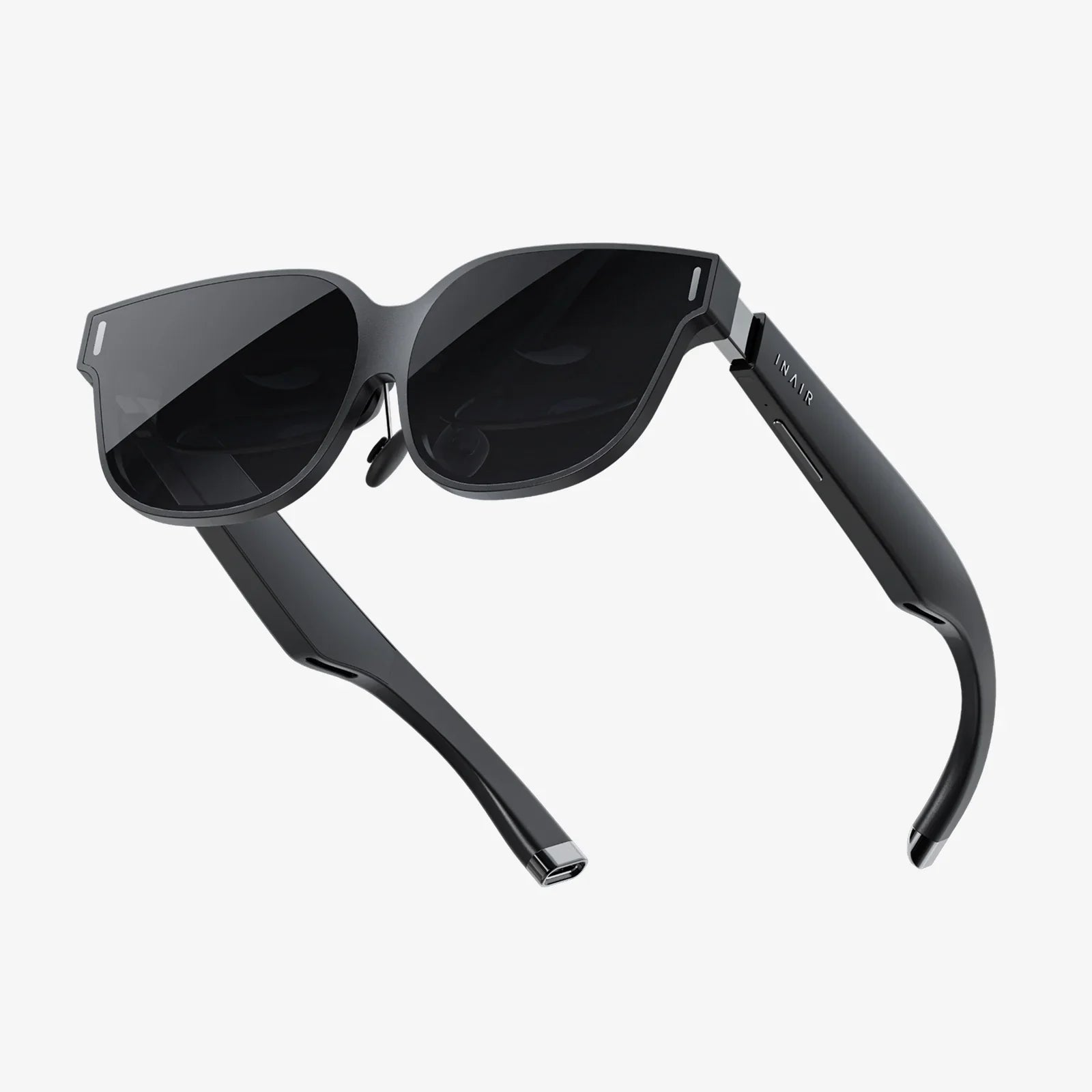
The most immediate and striking evolution in the 2025 lineup of XR glasses is the dramatic refinement of their physical form factor. The clunky, heavy, and often isolating headsets of the past are giving way to designs that prioritize social acceptance and all-day comfort. We are finally approaching a form factor that resembles sleek, modern eyewear, albeit with a slightly more robust profile. The goal is no longer to be a conspicuous piece of tech, but a seamless part of your personal style.
This miniaturization is powered by staggering advancements in several key areas. First, micro-OLED and pioneering Laser Beam Scanning (LBS) displays have reached new heights of density and brightness, enabling high-resolution, full-color visuals that can be clearly seen even in direct sunlight. This solves one of the most persistent challenges of outdoor AR use. Second, the adoption of pancake optics allows for a drastically reduced physical depth between the display and the eye, slimming down the overall silhouette. These optical stacks are also becoming more sophisticated, with dynamic focus planes that mimic the natural accommodation of the human eye, significantly reducing the vergence-accommodation conflict that causes visual fatigue and discomfort in earlier models.
Under the hood, the silicon has become incredibly powerful. Dedicated XR chipsets, fabricated on advanced nanometer processes, are the unsung heroes. These System-on-a-Chip (SoC) designs integrate not just a powerful CPU and GPU but, crucially, a dedicated NPU (Neural Processing Unit). This NPU is essential for the real-time AI processing required for robust SLAM (Simultaneous Localization and Mapping), hand and eye tracking, and object recognition, all while maintaining a low power envelope. Speaking of power, distributed computing architectures are becoming standard. While the glasses themselves handle the immediate sensor data and low-latency rendering, they can maintain a persistent, low-energy connection to a companion device—be it a smartphone, a dedicated compute puck, or eventually, a cloud server—to offload more intensive tasks. This balance is key to achieving all-day battery life, with some models exploring innovative solutions like swappable battery cells or energy-dense solid-state batteries.
The 2025 generation of glasses understands that immersion is a multi-sensory experience. The visual fidelity is now matched by equally impressive auditory and haptic feedback systems. Spatial audio has evolved from a neat trick to a fundamental feature. With an array of built-in microphones and beamforming speakers, these glasses can create a convincing 3D soundscape that perfectly aligns with digital objects, making a virtual butterfly fluttering to your left sound as if it's actually there. This audio transparency can be blended seamlessly, allowing you to hear both the digital world and your physical environment without interruption.
Interaction paradigms have also matured. The clumsy controllers of the VR era are largely gone. The primary input methods are now your eyes, your hands, and your voice. Eye-tracking technology, powered by miniature high-speed cameras and infrared projectors, is not just for menu selection; it's used for foveated rendering (dynamically rendering the center of your gaze in high detail while saving power on the periphery) and for creating deeply intuitive and expressive social interactions with digital avatars. Hand tracking has become sub-millimeter precise, allowing for delicate pinch-and-pull gestures and even recognizing sign language. Voice assistants, powered by large language models running locally on the device for privacy and speed, offer a hands-free alternative for complex commands. Haptic feedback is provided through subtle bone conduction transducers or tiny actuators in the temple tips, giving a tactile sense of pressing a virtual button or feeling a digital notification.
Hardware is nothing without software, and 2025 marks the true arrival of a spatial operating system. This OS doesn't live on a rectangular screen; it is mapped onto the world around you. Persistent digital objects can be pinned to physical locations—a virtual monitor on your office wall, a family photo on your real refrigerator, a navigation arrow painted onto the street corner. These digital artifacts remain in place, visible to you (and with permissions, to others) the next time you enter that space.
Application development has shifted towards universal frameworks that allow developers to build experiences once and deploy them across different hardware platforms. This is the key to avoiding the walled-garden pitfalls of earlier tech eras. The killer apps emerging are not just games; they are profound utilities. In enterprise, remote assistance allows a expert engineer thousands of miles away to see what a field technician sees and annotate their reality with precise instructions. In healthcare, medical students can practice procedures on hyper-realistic holographic patients, and surgeons can visualize patient scans overlaid directly on the operating table.
For the consumer, the implications are vast. Live translation subtitles appear in real-time beneath a person speaking a foreign language. Historical sites come alive with recreations of ancient events happening around you. Your workout app projects a personal trainer into your living room, correcting your form in real-time. The concept of a "web browser" transforms into a "reality browser," where information is contextual and environmental, not searched for on a page.
As this technology weaves itself into the social fabric, it brings a host of complex questions. The potential for deeper human connection is immense. Spatial telepresence will allow families and friends scattered across the globe to feel as if they are sharing the same physical space, interacting as lifelike avatars that convey true eye contact and body language, a stark improvement over the grid of faces on a video call.
However, this power carries a shadow. The always-on, always-sensing nature of these devices raises monumental privacy concerns. They are, by design, the most intimate surveillance devices ever conceived for the mass market, capable of continuously capturing video, audio, and location data. The industry's approach to data sovereignty—where data is processed, how it is stored, and who has access to it—will be a critical determinant of public trust. Robust on-device processing and clear, user-controlled permissions are non-negotiable.
Furthermore, the ability to alter perception creates risks of new forms of misinformation and manipulation. How does one distinguish a widely shared AR filter from a malicious deepfake designed to make it appear a public figure said something they did not? The blurring of realities also poses psychological challenges. Will constant access to a perfect, customizable digital layer make our physical world seem dull by comparison? Will we see a new digital divide, not just in access to technology, but in the ability to function in a society where digital layers are integral to navigation, commerce, and communication?
The new XR glasses of 2025 are not the endpoint; they are the first truly viable stepping stone. They will demonstrate the value proposition beyond doubt, but challenges remain. Network infrastructure, particularly the widespread rollout of low-latency 5G and future 6G networks, is essential for the cloud-offload model to flourish. Content creation needs to scale exponentially, requiring new tools and new creative languages. And finally, society itself needs to adapt, developing new norms, etiquette, and regulations for a world where we are all, to some degree, digitally augmented.
The journey ahead is as much about crafting thoughtful policy and ethical guidelines as it is about technological breakthroughs. It demands collaboration between engineers, artists, policymakers, and philosophers to ensure that this powerful technology is shaped to augment humanity positively, not to replace or erode it. The choices made in these formative years will echo for decades to come.
We stand at the threshold of a new era, one where the boundary between our minds and our machines is becoming beautifully, terrifyingly, and irrevocably porous. The new XR glasses of 2025 are the key to crossing it, offering a glimpse of a future where our reality is not given, but chosen, enhanced, and endlessly reimagined. The question is no longer if this future will arrive, but how we will choose to build it, and more importantly, who we will become when we finally step through the looking glass.
Share:
Augmented Reality Uses in Future: Transforming Everyday Life and Industries
Augmented Reality Categories: A Deep Dive into the Digital Overlay Reshaping Our World