


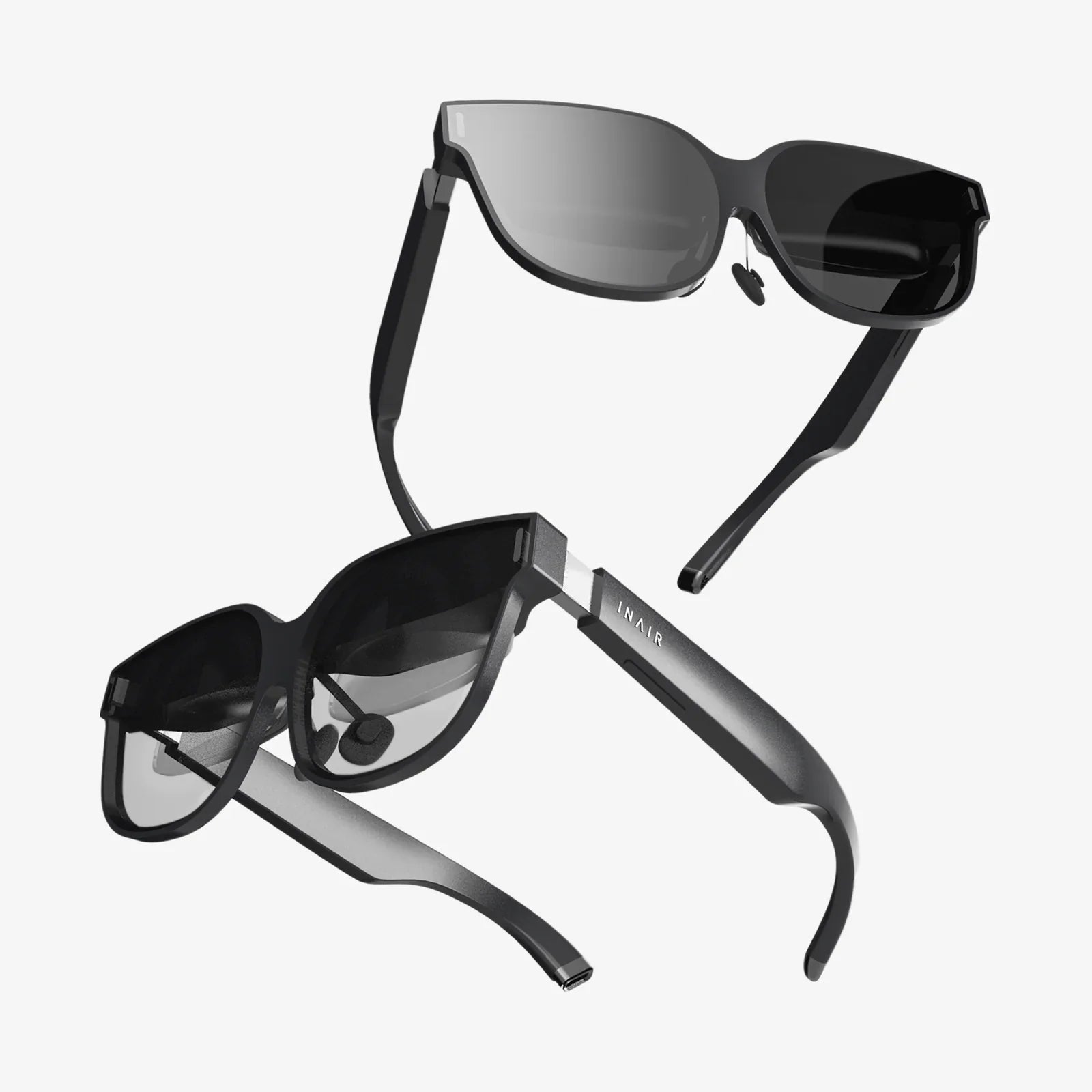
- by wangfred
Augmented Reality Categories: A Deep Dive into the Digital Overlay Reshaping Our World
- by wangfred
Imagine a world where the digital and the physical are not separate realms but a single, intertwined experience, where information is not something you seek out but something that seamlessly overlays your reality, enhancing every action, purchase, and decision. This is no longer the stuff of science fiction; it is the burgeoning reality being built today through the sophisticated and rapidly evolving technology of augmented reality (AR). But to truly grasp its potential, one must look beyond the singular concept of AR and delve into its distinct categories—each with unique applications, challenges, and transformative power. The journey into understanding augmented reality is a journey through its specialized domains, a taxonomy of digital enhancement that is quietly revolutionizing every facet of our lives.
Before categorizing, it is crucial to establish what augmented reality is. At its core, AR is a technology that superimposes a computer-generated image, interface, or piece of information onto a user's view of the real world, thus providing a composite, augmented view. Unlike Virtual Reality (VR), which creates a fully immersive digital environment, AR enhances the real world by adding digital elements to it. This fundamental difference is key to understanding its categorization. The spectrum of AR experiences is often defined by its level of immersion and the complexity of its tracking and rendering systems, ranging from simple marker-based applications to persistent world-scale environments that understand and interact with the physical space around them.
Often considered the foundational category of AR, marker-based (or image recognition) AR relies on a visual object, typically a specific image or a quick response (QR) code, to trigger the digital overlay. The device's camera identifies this predefined marker, and the software uses it as an anchor point to position and orient the digital content. This method is highly reliable and precise because the software has a clear, predictable reference point.
This category is ubiquitous in marketing and packaging. A consumer can point their smartphone at a product's box to see a 3D model of the product, access a tutorial video, or unlock a special offer. It is also extensively used in education, where textbooks come alive with interactive 3D models when viewed through a tablet's camera, allowing students to explore a human heart or a historical artifact from every angle. The primary advantage is its simplicity and accuracy, though it is limited by its dependence on the physical marker. If the marker is obscured, damaged, or absent, the experience cannot be initiated.
As technology advanced, the need for a physical trigger became a limitation. Markerless AR emerged to solve this, using a device's sensors—GPS, accelerometer, and digital compass—to place digital content in the environment without a predefined physical point. This is often called location-based or position-based AR. The most common example is the plethora of applications that overlay navigation directions onto a live view of the street or place virtual creatures in a park for a gaming experience.
The true sophistication of markerless AR is realized through Simultaneous Localization and Mapping (SLAM) technology. SLAM algorithms allow a device to simultaneously map an unknown environment and track its own location within that space in real-time. This enables the digital content to not just appear in a general location but to interact with the geometry of the real world—a virtual character can sit convincingly on a real-world couch, or a digital information panel can appear fixed to the side of a building. This category is the backbone of most modern AR applications on smartphones and dedicated AR glasses, powering everything from furniture placement apps that let you see how a new sofa fits in your living room to complex maintenance guides for field engineers.
This category takes a different physical approach. Instead of using a screen to overlay digital content, projection-based AR projects synthetic light onto physical surfaces, creating interactive displays. These projections can be static, like turning any wall into a touchscreen, or dynamic, responding to human interaction. Some advanced systems can even alter the perceived shape of an object through a technique called projected augmentation, using light to mask physical imperfections or create controlled illusions.
Its applications are found more in specialized industrial and artistic settings than in consumer pockets. On a factory floor, a sequence of assembly instructions can be projected directly onto a workbench, guiding a worker through each step. In museums, projectors can bring historical scenes to life on blank dioramas. The key advantage is that it doesn't require users to hold or wear a device, creating a truly natural and shared augmented experience. The challenge lies in the need for calibrated projectors and controlled lighting environments for the projections to be clear and effective.
This powerful category involves the complete or partial replacement of the original view of an object with a newly augmented view. It relies heavily on robust object recognition to identify a specific object and then replace it with a digital version. This is far more complex than simple overlay, as it requires a deep understanding of the object's form, location, and context.
The most profound application is in healthcare, where a surgeon can look at a patient and see a real-time augmented view that superimposes a CT scan onto the patient's body, revealing the exact location of a tumor beneath the skin. In retail, this technology allows a user to point their camera at their own body and see themselves wearing different outfits or accessories, with the app accurately recognizing the contours of their body and fitting the virtual clothing accordingly. The accuracy of the object recognition is paramount; any error in alignment can render the experience useless or, in medical contexts, dangerous.
A subset of superimposition, outlining AR uses recognition algorithms to detect boundaries and edges. It then highlights those specific features, making them stand out. This is exceptionally useful for navigation and safety applications. A car's heads-up display (HUD) that outlines the edges of the road in foggy conditions or highlights pedestrians at night is using outlining AR. Similarly, a utility worker using AR glasses could have underground pipes and cables outlined on the street surface before they start digging, significantly enhancing safety and efficiency.
Beyond these experience-based categories lies a foundational infrastructure category often called the AR Cloud. Think of it as a persistent, digital twin of the real world, accessible to anyone with an AR device. It is a 3D map of the world that stores digital information tied to specific locations and objects. This allows for persistent AR experiences that are shared and collaborative. A digital signpost left at a location by one user could be seen days later by another. This category is the holy grail that will enable the next giant leap in AR, moving from isolated experiences on individual devices to a shared, persistent layer of information over the entire world.
Despite the excitement, each category faces significant hurdles. Technical challenges include achieving rock-solid tracking, managing battery life and computational demands, and creating content that is genuinely useful rather than just novel. Social and ethical challenges are even more profound. Issues of privacy, as devices with always-on cameras become commonplace, data security, and the potential for digital vandalism on the AR Cloud are critical concerns that must be addressed alongside technological development. Furthermore, creating intuitive and accessible user interfaces that do not overwhelm or distract users is a constant design challenge.
The landscape of augmented reality is not a monolith but a rich ecosystem of overlapping and interdependent categories. From the simple trigger of a marker to the world-encompassing vision of the AR Cloud, each category serves a purpose and unlocks a different dimension of our reality. This digital overlay is no longer a parlor trick; it is becoming an integral layer of human-computer interaction, a new lens through which we will work, learn, play, and connect. The boundaries between what is real and what is digital are blurring, and the resulting fusion promises to be the most significant technological shift of our time, redefining reality itself one category at a time.
Share:
New XR Glasses 2025: The Dawn of a Seamless Digital Reality
How Will AR and VR Change the World: A Glimpse into a Blended Future