


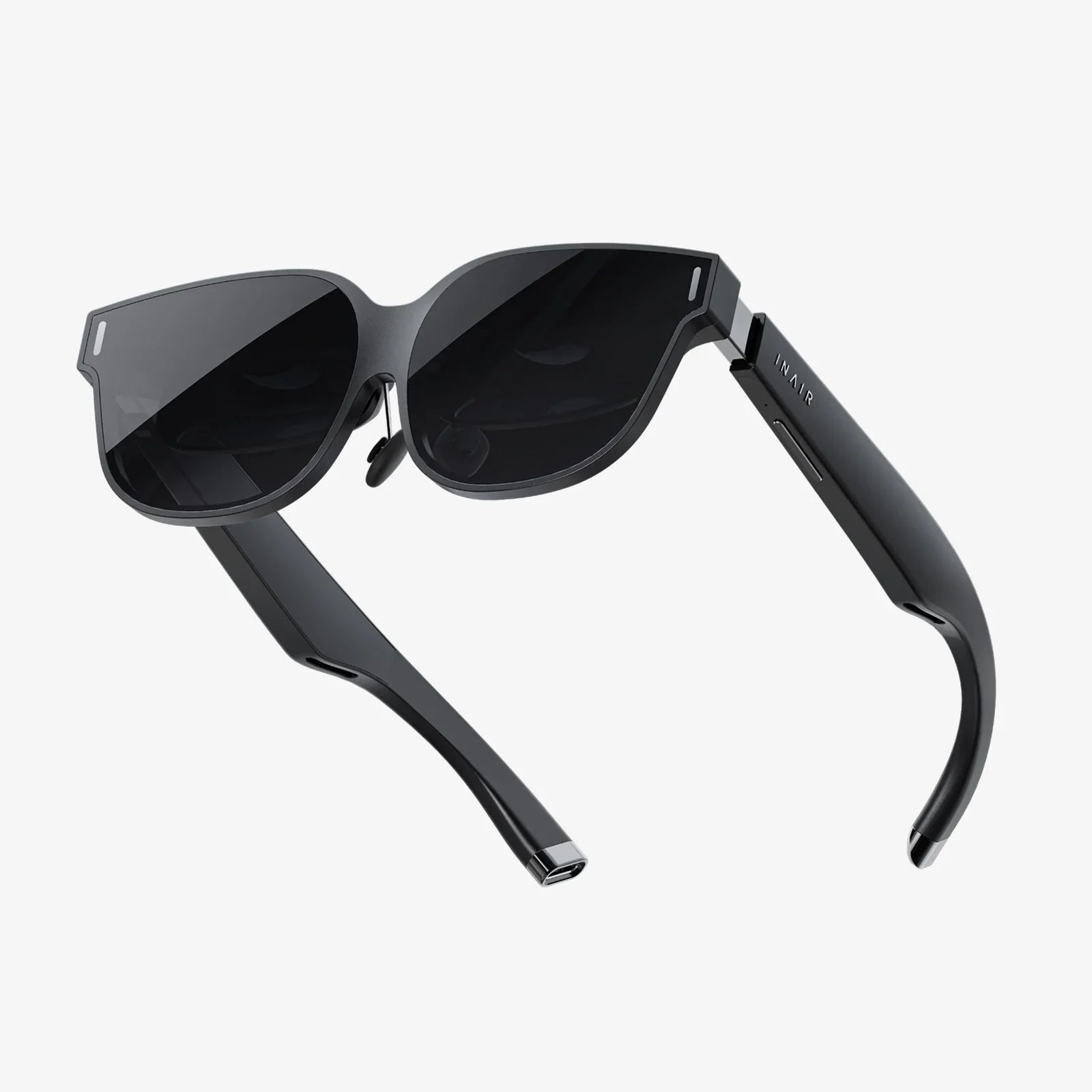
- by wangfred
How Will AR and VR Change the World: A Glimpse into a Blended Future
- by wangfred
Imagine a world where the line between the digital and the physical isn't just blurred—it's artistically erased. A world where you can learn complex surgery by practicing on a holographic heart, collaborate with colleagues as if they were in the same room from across the globe, and walk through ancient ruins that spring to life before your eyes. This is not a distant science fiction fantasy; it is the imminent future being built today through the rapid advancement of Augmented Reality (AR) and Virtual Reality (VR). These are not merely new screens or gadgets; they are portals to new experiences, new ways of working, and fundamentally, a new way of being human in a technologically mediated world. The question is no longer if they will change our world, but how deeply and profoundly they will reshape every facet of our lives.
To understand the monumental shift AR and VR represent, we must first step back from the concept of a 'device' and consider the concept of an 'environment'. For decades, our primary interface with the digital world has been the screen—a flat, rectangular portal we look at. Whether it's a smartphone, monitor, or television, we are observers of a separate digital realm. AR and VR shatter this paradigm. They don't ask us to look at a world; they ask us to step into it, or to bring that world into ours.
Virtual Reality (VR) is an immersive, fully digital experience. By wearing a headset, users are transported to computer-generated environments, completely replacing their visual and auditory reality. This is the technology of total escape and creation, enabling experiences from the fantastical to the hyper-realistic.
Augmented Reality (AR), by contrast, layers digital information onto our physical world. Using devices like glasses or even smartphone cameras, AR superimposes graphics, data, and animations into our immediate surroundings. It doesn't replace reality but enhances it, annotating the world with a digital intelligence.
This shift from observation to immersion is as significant as the move from command-line interfaces to the graphical user interface. It represents a more intuitive, spatial, and human-centric way of interacting with data and with each other.
The enterprise and industrial sectors are poised to be among the earliest and most profoundly transformed by these technologies. The gains in efficiency, safety, and cost are simply too significant to ignore.
In design and manufacturing, VR is already revolutionizing prototyping. Instead of spending millions and months creating physical prototypes of a new car engine or building architecture, engineers and designers can create and inhabit photorealistic digital twins. They can walk around a full-scale model of a new skyscraper before the foundation is even poured, identifying structural or design flaws in a risk-free environment. They can test the ergonomics of a new vehicle's cockpit, making adjustments with a few gestures. This not only slashes development costs and time-to-market but also democratizes the design process, allowing for collaborative reviews from anywhere in the world.
AR, on the factory floor, is becoming an indispensable tool for workers. Complex assembly or repair procedures can be guided by digital instructions overlaid directly onto the machinery. A technician fixing a jet engine can see animated arrows pointing to specific components, torque specifications floating next to bolts, and warnings highlighting potential hazards. This reduces errors, drastically cuts training time for new employees, and enhances safety by providing contextual information exactly when and where it is needed.
The concept of the 'virtual office' will evolve far beyond video conferencing. VR meetings will allow colleagues from different continents to gather in a persistent, custom-designed virtual boardroom. They can interact with 3D models of products, brainstorm on virtual whiteboards that feel tangible, and read body language and social cues in a way that flat screens cannot convey. This sense of 'presence'—the genuine feeling of being with someone else—is the holy grail of remote work and will dissolve geographical barriers to talent and collaboration.
For field service, AR enables remote expert assistance. A less-experienced field technician encountering a complex problem can don AR glasses, allowing an expert thousands of miles away to see their field of view. The expert can then draw annotations into the technician's reality, circling components and guiding them through the repair step-by-step. This eliminates costly expert travel and ensures problems are resolved quickly and correctly the first time.
The impact of AR and VR on healthcare is nothing short of revolutionary, offering new avenues for treatment, training, and empathy.
Medical students can use VR to practice intricate surgical procedures on virtual patients, gaining invaluable muscle memory and experience without any risk. They can make mistakes and learn from them in a consequence-free environment. Surgeons are now using AR during actual operations, overlaying critical patient data—like MRI scans or 3D models of tumors—directly onto their field of view during surgery. This provides X-ray vision, allowing for unparalleled precision and minimizing invasiveness.
VR is proving to be a powerful tool in mental health treatment. It is used for exposure therapy, allowing patients with phobias (like fear of heights or flying) to confront their fears in a controlled, gradual, and safe virtual environment. For patients with PTSD, therapists can recreate traumatic scenarios to help them process and manage their responses. Furthermore, VR can provide calming, immersive experiences for patients suffering from anxiety, chronic pain, or even the stress of hospitalization, offering a form of digital escape and relaxation.
Education will shift from passive learning to active experience. Instead of reading about ancient Rome, students can take a VR field trip to walk its streets, hear the sounds of the forum, and witness history unfold around them. Biology students can step inside a human cell, and astronomy students can navigate the solar system. This experiential learning dramatically improves engagement and retention.
Similarly, storytelling and entertainment will be utterly transformed. Films will become experiences you inhabit. Concerts will allow fans to have front-row seats from their living rooms. The very nature of narrative will evolve from a linear path to an explorable world, giving the audience agency and presence within the story.
The much-discussed 'metaverse' represents the convergence of AR and VR into a persistent, shared, and embodied internet. This is not about a single virtual world but a network of interconnected digital spaces where we will work, play, socialize, and learn. Our digital avatars will be extensions of ourselves, and social interaction will be based on shared activities in a spatial context—watching a virtual movie together, playing a game of chess on a virtual park bench, or simply hanging out in a digital living room. This has the potential to forge deeper human connections across vast distances, combating loneliness and creating new communities.
Such a powerful technological shift does not come without significant challenges and risks that we must proactively address.
The path forward requires a collaborative effort between technologists, ethicists, policymakers, and the public to build these technologies responsibly, centering human values and well-being rather than purely commercial or technological imperatives.
The true change ushered in by AR and VR won't be found in the specs of a headset, but in the silent, fundamental rewiring of human potential. It’s the surgeon whose hands are guided by data they can literally see, the engineer who solves a planetary problem from their living room, and the child who touches a star for the first time. This is the promise of a world not replaced, but remade—a world waiting for us to log in and build it, together.
Share:
Augmented Reality Categories: A Deep Dive into the Digital Overlay Reshaping Our World
Top 10 VR Glasses: The Ultimate Guide to Immersive Technology in 2024