


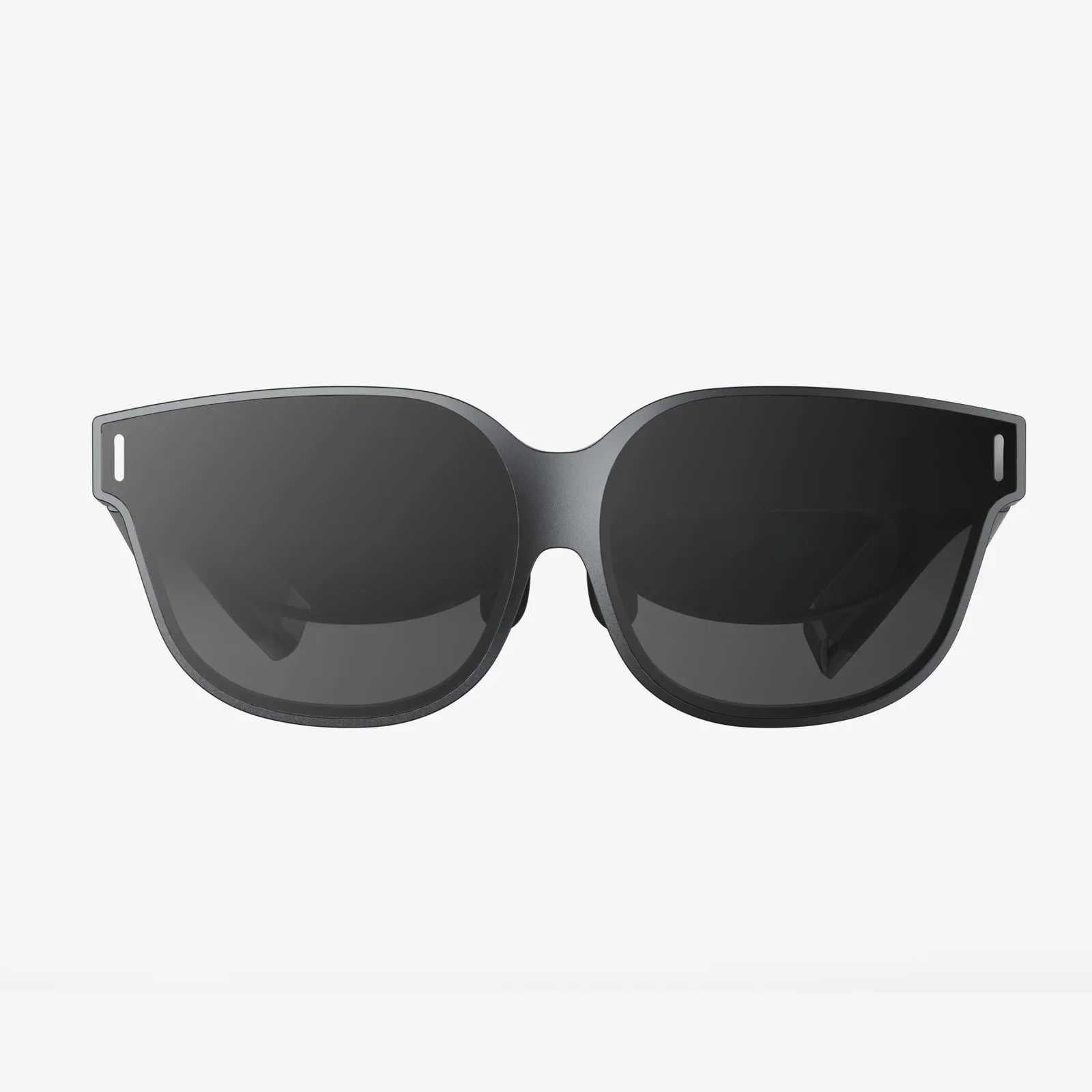
Imagine a world where your screen doesn't feel like a barrier, but a portal. Where a conversation with a loved one, a colleague, or a client transcends the flat, two-dimensional confines of a traditional video call and blossoms into a shared, interactive experience that feels startlingly real. This is no longer the stuff of science fiction; it is the imminent future promised by augmented reality video chat, a technological leap that is set to redefine the very fabric of human connection.
Beyond the Grid: Moving Past the Limitations of Current Video
For decades, video calling has been trapped in a paradigm of little boxes on a screen. While a monumental improvement over audio-only calls, it remains a fundamentally limited medium. We are presented with a compressed, two-dimensional representation of a person, severed from their environment and ours. The shared context is minimal. We cannot point to a specific part of a physical object we're both looking at, collaborate on a 3D model as if it were sitting on the table between us, or share a virtual experience that feels tangibly present. This lack of spatial awareness and shared physicality creates a psychological distance that even the highest definition camera cannot overcome. We are communicating at each other through a window, not with each other in a shared space.
This limitation became painfully evident during the global shift to remote work and social distancing. "Zoom fatigue" emerged as a legitimate phenomenon, a state of mental exhaustion caused by the intense cognitive load of parsing non-verbal cues from a grid of static faces and the strange dissonance of feeling perpetually "on stage" yet utterly disconnected. The traditional video call demands our focus but offers little immersion. It shows us a face but hides the full spectrum of human presence. Augmented reality video chat is the direct response to this inadequacy, offering a path from passive observation to active, shared participation.
The Architecture of Presence: How AR Video Chat Works
The magic of augmented reality video chat lies in its sophisticated fusion of several cutting-edge technologies. At its core, it is a symphony of data capture, processing, and display, all happening in near real-time.
First, advanced sensors, including depth-sensing cameras and LiDAR scanners, map the user's physical environment with incredible precision. They don't just capture a image; they understand it in three dimensions, creating a digital point cloud that represents the geometry of the room, the furniture, and other objects. Simultaneously, the system tracks the user's position and perspective within that space using a combination of computer vision and inertial measurement units (IMUs).
This environmental and positional data is then processed locally on the device or streamed to powerful cloud servers. Here, the real computational heavy lifting occurs. Algorithms segment the user from their background, a process far more advanced than the simple green-screen effect used today. This allows for the user's live video feed to be cleanly separated and then composited, in three dimensions, into another user's environment.
The final step is the display. Through a smartphone, tablet, or, more immersively, a pair of AR glasses, the remote participant is rendered into the local space. They appear not as a flat picture-in-picture, but as a volumetric presence. They can walk around, sit on your couch (or appear to), and interact with digital objects that are anchored to your physical world. This creates the powerful and convincing illusion that they are actually there with you, sharing not just a conversation, but a place.
Transforming the Social Fabric: Reimagining Personal Connection
The most profound impact of this technology will be felt in our personal lives, offering new ways to bridge physical distance and strengthen emotional bonds.
- Shared Experiences, Not Just Shared Talk: A grandparent could read a bedtime story to their grandchild, not just from a screen, but appearing to sit at the foot of the bed, perhaps with a virtual storybook that both can see and interact with. Friends separated by continents could watch a movie together, with a shared virtual screen mounted on the wall, and see each other's reactions in real-time as if in the same living room.
- Spatial Storytelling and Memory Making: Imagine touring a new apartment and having a friend appear as a ghostly guide, walking through the space with you and leaving virtual notes pinned to specific walls ("Your desk would look great here!"). Or celebrating a birthday where distant family members can "be there" to see the child blow out the candles on a real cake, their virtual presence gathered around the real table.
- Non-Verbal Communication, Amplified: The subtle, spatial cues of human interaction—a glance towards an object, a hand gesture indicating size, the nuance of personal space—are completely lost in traditional video. AR video chat restores this layer of communication, making interactions feel more natural, intuitive, and emotionally resonant.
The Virtual Water Cooler: Revolutionizing Remote Collaboration
The corporate world stands to be utterly transformed. Remote work will shed its connotations of isolation and become a platform for hyper-efficient, creative collaboration.
- Prototyping and Design: Engineering and design teams can collaborate on 3D models as if they were physical prototypes sitting on the conference table. A designer in one city could manipulate a virtual model of a new product, while colleagues elsewhere see it from their own perspective, able to walk around it, point out features, and make annotations that exist persistently in space.
- Immersive Training and Guidance: A expert technician could guide a field worker through a complex repair. Instead of saying "see that bolt?" they could digitally highlight the exact bolt in the worker's field of view, and even draw arrows illustrating the precise turning motion required. This "see-what-I-see" guidance drastically reduces errors and training time.
- The Future of Presentations: Forget sharing your screen. With AR video chat, you could share a virtual, interactive data visualization that floats in the middle of the room. Colleagues could examine it from all angles, manipulating data points with gestures, transforming a monologue into a truly collaborative analysis session.
Navigating the New Frontier: Ethical and Social Considerations
With such transformative power comes significant responsibility. The integration of AR into our most personal communications raises critical questions that society must address proactively.
Privacy and Data Security: The data collected by AR systems is exponentially more sensitive than a standard video feed. It is a detailed, three-dimensional map of your home, your office, your most private spaces. Where is this data stored? Who has access to it? How is it protected from misuse? Robust, transparent data governance frameworks will be non-negotiable for widespread adoption.
The Reality Spectrum and Deepfakes: As these technologies advance, the line between what is real and what is digitally augmented will blur. This opens the door to new forms of misinformation and manipulation. Could a malicious actor insert a convincing, volumetric deepfake of a person into a conversation? Establishing verifiable digital identities and authenticity protocols will be crucial to maintaining trust.
The Digital Divide 2.0: This technology will initially be resource-intensive, requiring powerful devices and high-bandwidth, low-latency internet connections. There is a real risk of creating a new societal schism between those who can afford immersive, presence-based communication and those who are left with the legacy 2D experience. Ensuring equitable access will be a persistent challenge.
Social Etiquette and Norms: New social rules will need to evolve. Is it rude to have a virtual person "sitting" on your couch? How do we manage attention when digital notifications and virtual objects can be overlaid onto real people in front of us? The blending of realities will require a renegotiation of our social contracts.
A Glimpse into the Near Future: The Path to Mainstream Adoption
The journey to ubiquitous AR video chat is already underway. Early iterations are appearing on modern smartphones and tablets, allowing for fun filters and simple effects. However, the true tipping point will arrive with the maturation of wearable AR glasses. These devices, offering a comfortable, all-day form factor with a wide field of view and high-resolution displays, will move the technology from our hands into our field of vision, making the augmented layer a seamless part of our reality.
Advancements in 5G and edge computing will provide the necessary infrastructure, minimizing latency to imperceptible levels and ensuring that the complex processing required doesn't drain local device batteries. Furthermore, the development of more powerful and efficient machine learning models will enable real-time understanding of complex scenes and more natural avatars for times when full video isn't practical or desired.
We are moving towards a future where putting on your glasses to join a meeting or call a friend will be as natural as picking up your phone is today. The call will not be something you look at, but an experience you are in.
The screen, that once revolutionary portal, is finally beginning to fade. In its place, a new layer of reality is emerging, one where distance is no longer a barrier to shared presence. Augmented reality video chat is not merely an upgrade to a familiar tool; it is the foundation for a new paradigm of human interaction. It promises to re-enchant our digital communications with the depth, context, and magic of the physical world, allowing us to share not just words, but spaces, experiences, and a true sense of being together. The next time your phone rings, the person on the other end might just be waiting in your living room.
Share:
VR Glasses for Laptop: Your Ultimate Portal to Immersive Computing
Mixed Reality Research News: The Next Frontier in Human-Computer Interaction