


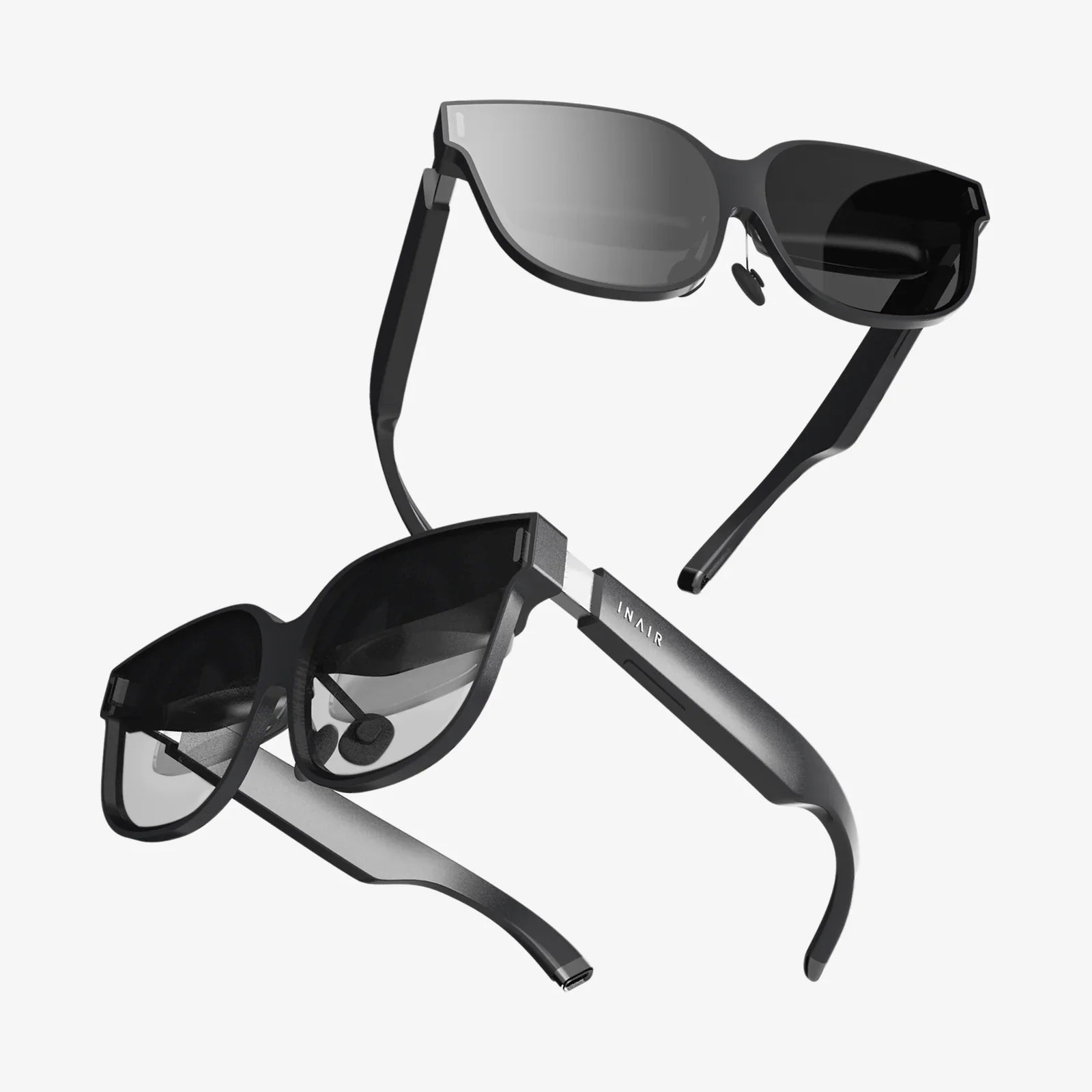
The digital and physical worlds are converging at a breathtaking pace, and at the heart of this revolution lies a torrent of mixed reality research news that promises to fundamentally alter our perception of reality itself. This isn't science fiction; it's the cutting edge of computer science, neuroscience, and human-computer interaction, where the lines between what's real and what's simulated are becoming beautifully, and productively, blurred. The latest findings aren't just about sharper displays or more comfortable headsets; they are about rearchitecting the very way we work, learn, heal, and connect.
Beyond the Hype: Defining the Mixed Reality Spectrum
Before diving into the research, it's crucial to understand the landscape. Mixed Reality (MR) exists on a spectrum, often referred to as the reality–virtuality continuum. On one end, we have the physical reality we all inhabit. On the other end lies a completely digital, virtual reality (VR). Sitting between them is augmented reality (AR), which overlays digital information onto the real world, and true mixed reality, where digital and physical objects not only coexist but can interact with each other in real-time. The latest mixed reality research news focuses on expanding this middle ground, creating more seamless, intuitive, and powerful interactions.
The Hardware Revolution: Building the Windows to New Worlds
A significant portion of current mixed reality research news centers on the hardware enabling these experiences. The goal is to move beyond clunky, isolating equipment towards devices that are socially acceptable, comfortable for extended use, and capable of delivering high-fidelity experiences.
Advanced Display and Optics
Researchers are making staggering progress with technologies like holographic displays and varifocal lenses. Unlike traditional screens fixed at a single focal plane, these new systems can simulate depth of field, allowing digital objects to appear at different distances, which drastically reduces the vergence-accommodation conflict—a major source of eye strain and visual discomfort in earlier devices. This makes prolonged use in professional settings not just possible, but practical.
Inside-Out Tracking and Spatial Mapping
The magic of MR is its understanding of the environment. Gone are the days of external sensors. Modern research is refining inside-out tracking, using onboard cameras, LiDAR, and sensors to map a room instantly with millimeter accuracy. This allows digital content to be occluded by real-world objects—a virtual character can walk behind your sofa and disappear from view—creating a truly convincing illusion. Recent breakthroughs in simultaneous localization and mapping (SLAM) algorithms are making this process faster and more energy-efficient, even in dynamic, changing environments.
Haptic Feedback and Wearables
Perhaps the most exciting area of hardware development is haptics. Seeing a virtual object is one thing; feeling it is another. New mixed reality research news highlights advancements in wearable haptic gloves and controllers that use ultrasonic arrays, microfluidic systems, or electro-tactile stimulation to simulate the sensation of texture, weight, and resistance. Researchers are even exploring mid-air haptics using focused ultrasound to create tactile sensations on a user's hands without any wearable device at all, pushing the boundaries of untethered interaction.
The Software and AI Backbone: The Intelligence Behind the Illusion
Powerful hardware is useless without intelligent software. Artificial intelligence is the silent engine driving the most impressive mixed reality research news.
Scene Understanding and Semantic Labeling
It's not enough for a device to know where a surface is; it needs to understand what that surface is. AI models are now capable of performing real-time semantic segmentation of a environment. This means the system can identify a wall, a floor, a table, a window, and even more complex objects like a computer monitor or a cup. This allows for context-aware applications—a virtual instruction manual could automatically snap to the side of the machinery it references.
Avatars and Social Presence
For MR to become a platform for collaboration, we need to feel like we are truly with others. Research is creating hyper-realistic and expressive avatars driven by real-time facial and eye tracking. These avatars can convey subtle emotional cues, making remote meetings feel significantly more natural and engaging than a grid of video feeds. Studies in social presence are quantifying how these improved avatars increase trust and collaboration in professional settings.
Neural Interfaces and Brain-Computer Interaction
On the farthest frontier, mixed reality research news is beginning to include work on neural interfaces. While still in early stages, projects are demonstrating the potential for using non-invasive brain-computer interfaces (BCIs) to control MR environments. Imagine thinking about selecting a virtual tool and having it respond, or having the system adapt its content based on your measured cognitive load or focus. This represents a ultimate leap towards truly intuitive human-computer symbiosis.
Transformative Applications: From Labs to Lives
The true value of this research is realized in its application. The latest mixed reality research news is dominated by real-world use cases that are delivering tangible benefits today.
Revolutionizing Healthcare and Medicine
The medical field is being transformed by MR. Surgeons are using MR headsets to overlay 3D surgical plans, MRI data, and critical vitals directly onto their field of view during procedures, improving precision and reducing time. Medical students are practicing complex anatomy and procedures on holographic patients, gaining valuable experience in a zero-risk environment. Furthermore, MR is being used for revolutionary physical and cognitive therapy, helping patients with neurological conditions by creating engaging, adaptive rehabilitation exercises in their own homes.
Supercharging Industrial Design and Manufacturing
In industrial settings, MR is accelerating design and complex assembly. Engineers from around the world can collaborate on a life-size, full-scale 3D model of a new vehicle or aircraft prototype, examining it from every angle as if it were physically present. On the factory floor, frontline workers receive hands-free, contextual instructions overlaid on the machinery they are assembling or repairing, drastically reducing errors and training time. Remote experts can see what a local technician sees and annotate the real world to guide them through a fix, saving on travel costs and downtime.
Redefining Remote Collaboration and Workspaces
The concept of the office is being reimagined. MR research is creating persistent virtual workspaces where teams can meet with whiteboards, 3D models, and documents that feel tangibly present. This goes far beyond video conferencing, creating a sense of shared presence that can foster creativity and teamwork for distributed teams. Architects and clients can walk through a holographic building model long before ground is broken, making changes in real-time.
Enhancing Education and Training
Education is poised for a massive shift. Imagine history students walking through a reconstructed ancient Rome, biology students exploring a beating human heart from the inside, or mechanics trainees practicing on a holographic engine that responds to their actions. Mixed reality research is proving that this immersive, experiential learning leads to significantly higher knowledge retention and engagement compared to traditional methods.
Ethical Considerations and the Path Forward
With great power comes great responsibility. The mixed reality research news cycle is increasingly accompanied by serious discussions about ethics, privacy, and societal impact.
How do we protect the vast amounts of spatial and biometric data these devices collect? Who owns the digital layers we add to the world? How do we prevent reality augmentation from creating informational divides or being used for manipulative advertising? Furthermore, the potential for addiction and the long-term psychological effects of blurring reality are critical areas of ongoing study. The research community is actively engaging with ethicists and policymakers to establish frameworks for the responsible development of this powerful technology.
The flow of mixed reality research news reveals a field moving from potential to practice. The foundational technologies are maturing at an exponential rate, moving out of specialized labs and into commercial and industrial applications that are delivering real value. The focus is shifting from pure technological capability to human-centered design, usability, and solving genuine problems. The next decade will be less about proving that MR is possible and more about defining how it will be integrated into the fabric of our daily lives, reshaping everything from enterprise workflows to personal social interactions in ways we are only beginning to imagine.
As these digital and physical layers continue to fuse, the most compelling stories will emerge not from the technology itself, but from the profound new ways it empowers us to solve old problems, connect across distances, and unlock human potential. The next headline you read might just announce a breakthrough that makes the device on your face disappear, leaving behind only the magic it enables.
Share:
Augmented Reality Video Chat: The Next Evolution of Human Connection
Augmented Reality Explanation: A Comprehensive Guide to the Digital Overlay on Our World