


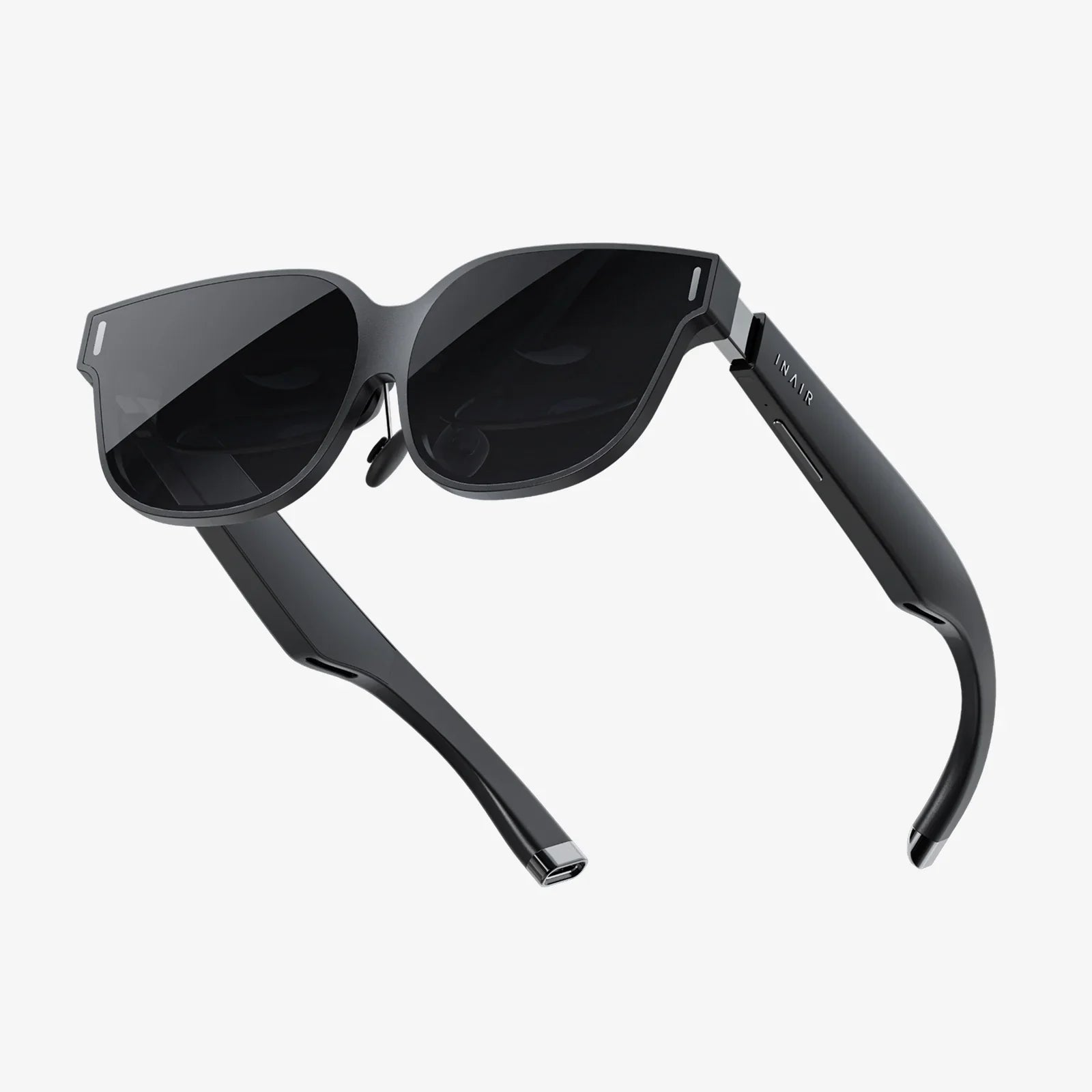
Imagine a world where the digital and physical are no longer separate realms but a single, intertwined existence. This isn't a distant sci-fi fantasy; it's the palpable future being built today through a whirlwind of augmented reality and virtual reality updates. The pace of innovation is staggering, pushing the boundaries of what we thought possible and bringing the dream of a true metaverse within reach. The lines are blurring, and the implications for how we work, play, learn, and connect are nothing short of revolutionary.
The Great Convergence: AR and VR Are Merging
For years, augmented reality (AR) and virtual reality (VR) were discussed as distinct, parallel paths. AR was seen as an overlay on our world, accessible through smartphone screens or specialized glasses, while VR was a fully immersive, all-encompassing digital escape. The most significant trend emerging from today's updates is the erosion of this boundary. The technologies are converging into a spectrum of experiences often referred to as spatial computing or XR (Extended Reality).
This convergence is powered by shared technological advancements. Improvements in passthrough camera technology are a prime example. Modern VR headsets now feature high-resolution, color cameras that allow users to see their physical surroundings in real-time. This enables developers to build mixed reality (MR) experiences where digital objects can convincingly interact with your coffee table, your walls, and your hands. Suddenly, a VR device isn't just for escaping reality; it's for augmenting it. You can pin a virtual browser window to your physical wall, practice a guitar lesson with holographic instructions overlaid on your real instrument, or design a piece of furniture and see it life-size in your living room before you buy it.
Under the Hood: The Tech Powering Today's Leap Forward
The dramatic improvements we're seeing aren't magic; they're the result of relentless innovation across several critical hardware and software domains.
Visual Fidelity and Display Technology
The race for resolution and clarity is ongoing. New micro-OLED displays are offering vastly higher pixel densities, drastically reducing the "screen door effect" that once plagued VR. This means text is sharper, distant objects are clearer, and the virtual world feels more tangible. Furthermore, advancements in pancake lenses are making headsets significantly thinner and lighter, addressing a major hurdle to long-term comfort.
The Intelligence of Inside-Out Tracking
Gone are the days of cumbersome external sensors. Today's updates universally rely on inside-out tracking. Using a combination of advanced cameras, LiDAR scanners, and inertial measurement units (IMUs), headsets can now map their environment and track their own position within it with astonishing accuracy and speed. This eliminates setup friction and allows for true room-scale experiences anywhere. These sensors are also the eyes for the headset's understanding of the world, enabling features like automatic room mapping, obstacle avoidance, and hand-tracking.
The Silent Revolution: Hand and Eye Tracking
Perhaps one of the most intuitive updates is the move away from controllers as the primary input method. Advanced computer vision algorithms now allow headsets to track your hands and fingers with high precision. This means you can interact with digital objects using natural gestures—poking, pinching, grabbing, and waving. This not only feels more natural but significantly lowers the barrier to entry.
Similarly, eye-tracking technology is moving from a premium feature to a more standard one. It enables foveated rendering, a technique where the headset renders only the area you're directly looking at in full detail, while subtly reducing the detail in your peripheral vision. This massively reduces the computational load, allowing for better graphics and performance without requiring more powerful—and power-hungry—processors. It also unlocks powerful new UI paradigms and social features, as avatars can now make meaningful eye contact.
Beyond Gaming: Enterprise and Productivity Take Center Stage
While gaming remains a powerful driver of consumer adoption, the most impactful augmented reality and virtual reality updates today are increasingly focused on enterprise and productivity. Companies are investing heavily in these technologies to solve real-world problems and gain a competitive edge.
- Remote Assistance and Collaboration: A field technician wearing AR glasses can receive live visual guidance from an expert thousands of miles away, who can draw arrows and diagrams directly into their field of view. Teams distributed across the globe can meet in a virtual boardroom around a 3D model of a new product prototype, examining it from every angle as if they were in the same room.
- Design and Prototyping: Architects and engineers are using VR to walk clients through unbuilt structures, while automotive designers can full-scale models long before a physical prototype is ever made, saving millions of dollars and accelerating development cycles.
- Training and Simulation: From surgeons practicing complex procedures to warehouse employees learning safety protocols, VR provides a risk-free, highly realistic training environment. These simulations can be repeated endlessly and measured with precision, ensuring mastery before performing a task in the real world.
The Social Fabric: Building the Connected Metaverse
The concept of the metaverse has been both hyped and mocked, but steady progress is being made. Today's updates are laying the groundwork for a more connected and persistent social layer. Platforms are increasingly focused on cross-platform functionality, allowing users on different devices to share a common experience. Avatar systems are becoming more expressive and realistic, driven by full-face and eye-tracking, making digital interactions feel more human and less robotic.
User-generated content (UGC) is also a massive focus. Tools are becoming more powerful and accessible, empowering users to create their own worlds, games, and assets. This shift from a curated experience to a creator-driven economy is vital for building a vibrant and enduring digital ecosystem, moving us from a series of walled gardens to a more open and interconnected web of experiences.
Challenges on the Horizon: The Hurdles That Remain
Despite the breathtaking pace of change, significant challenges must be overcome for AR and VR to achieve mass adoption.
Form Factor and Comfort: While headsets are getting smaller, the ideal form factor—a pair of stylish, lightweight glasses that can deliver high-end AR/VR experiences—is still a few years away. Battery life and thermal management remain persistent engineering challenges.
The Killer App: For VR, the killer app is still arguably gaming. For AR, it has yet to be definitively found. While enterprise use cases are compelling, for consumers to invest, they need an application that is undeniably useful or entertaining in their daily lives.
Accessibility and Cost: High-end equipment remains expensive, putting cutting-edge experiences out of reach for many. The industry continues to work on bringing costs down while expanding the market.
Privacy and Ethics: Always-on cameras and microphones mapping our homes and tracking our movements raise profound privacy questions. The industry must establish clear, transparent, and user-centric data policies to build the trust required for these devices to become as ubiquitous as smartphones.
Glimpsing the Future: What's Next After Today's Updates?
The trajectory is clear: more immersion, better integration, and greater accessibility. We are moving towards neural interfaces that could one day translate thoughts into actions, eliminating controllers entirely. Haptic feedback suits will evolve to let us feel the virtual world. The digital twins of real-world locations and objects will become hyper-realistic and constantly updated.
The ultimate goal is a contextually aware, intelligent system that provides the right information at the right time, seamlessly. It won't be about putting on a headset to "use VR"; it will be about wearing a comfortable device that continuously enhances your perception of the world, from highlighting the path to your gate at the airport to translating a street sign in real-time or reminding you of a colleague's name at a networking event.
The stream of augmented reality virtual reality updates today is not just about incremental improvements; it's about laying the foundation for the next major computing platform. It's a quiet revolution happening in research labs and software updates, one that is steadily weaving the digital and physical into a new, unified fabric of reality. The devices are getting smarter, the experiences more compelling, and the applications more critical. The future is not on its way; it's being downloaded and installed right now.
Share:
Coolest Wearable Tech: Beyond the Wrist and Into the Future
Coolest Wearable Tech: Beyond the Wrist and Into the Future