


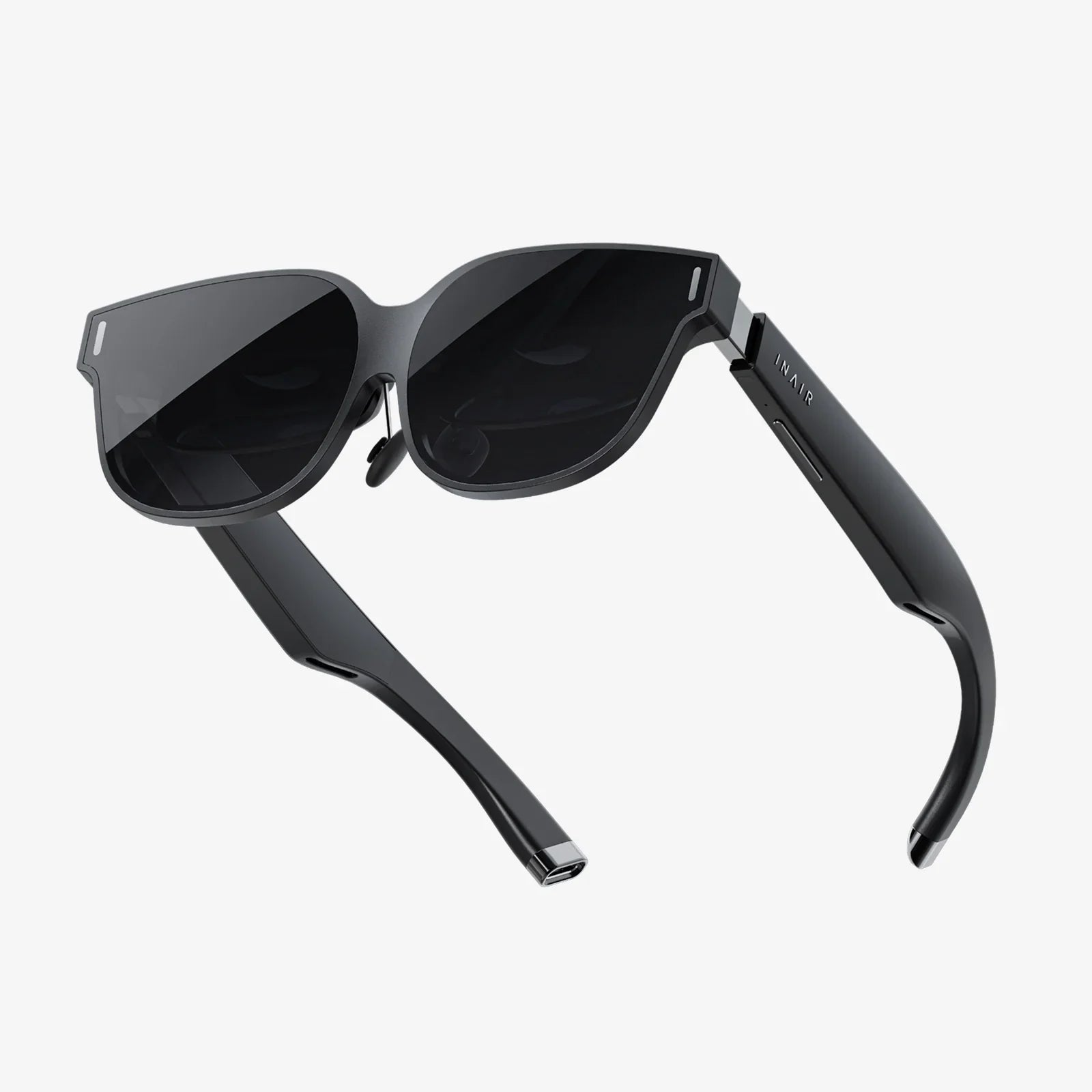
Imagine a world where your reality is constantly annotated with digital information, where virtual objects sit seamlessly on your physical desk, or where whispered directions are fed directly into your consciousness without a screen in sight. This isn't distant science fiction; it's the burgeoning present, defined by two competing technological paradigms: the visually dazzling world of augmented reality and the subtly powerful realm of advanced auditory interfaces. This silent war for our sensory attention will fundamentally reshape how we work, socialize, and perceive the world itself.
The Dueling Philosophies: Overlaying Eyes vs. Enriching Ears
At its core, the contrast between augmented reality and auditory technology represents a fundamental divergence in human-computer interaction philosophy. One seeks to augment our primary sense—vision—by layering digital strata onto our visual field. The other aims to leverage the often-underutilized bandwidth of our auditory cortex, creating a seamless, screenless stream of information and experience.
Augmented reality, in its purest form, is about visual enrichment. It uses cameras, sensors, and displays—whether handheld, head-mounted, or projected—to superimpose computer-generated imagery onto the user’s view of their physical environment. This can range from simple data tags floating next to a product on a shelf to complex, interactive holograms manipulated with hand gestures. Its power lies in its literal illustration of data; it makes the invisible visible. You can see how a new sofa would look in your living room before you buy it, follow glowing path markers on the street to your destination, or have a colleague’s avatar appear in your office for a meeting, their notes scribbled in mid-air.
Auditory technology, conversely, pursues a path of informational and environmental enrichment through sound. This goes far beyond simple headphones or stereo sound. We're talking about sophisticated spatial audio, 3D soundscapes, and bone conduction that can create a rich, immersive, and informative experience without ever requiring the user to look at a screen. It’s the concept of a ‘sonic augmented reality’. Imagine walking through a city and hearing historical anecdotes triggered by your location, whispered directly into your ear as if by a ghost. Or navigating a complex data set by hearing different data points represented as distinct sounds positioned in a 3D space around your head, allowing you to perceive correlations and outliers through your ears alone.
The Cognitive Load: A Battle for Mental Bandwidth
A critical battleground in this sensory competition is cognitive load—the total amount of mental effort being used in the working memory. How do these technologies burden or relieve our most precious resource: our attention?
Visual AR, for all its wonders, is inherently attention-hungry. It commands your gaze. To interact with it, you must look at it. This creates a constant negotiation between the digital overlay and the physical world. This attentional tunnel vision is a well-documented phenomenon; when our eyes are focused on a specific task or display, we become blind to events in our peripheral vision, a effect known as inattentional blindness. A user engrossed in reading AR navigation prompts on their smart glasses might completely miss the step in front of them or the expression on a friend’s face. The cognitive cost is high: processing rich visual data, interpreting it, and then deciding what to ignore and what to focus on.
Auditory interfaces, by design, can be far less intrusive on our primary visual attention. Our ears are always on; they are a passive, 360-degree input device. High-fidelity spatial audio allows information to be placed in the soundscape around us, meaning we can perceive it without turning our heads. This enables a state of ambient awareness. Directional cues can be delivered without obscuring our view. Notifications can be subtle sonic textures that don’t require immediate action. This leaves our eyes—and by extension, a significant portion of our conscious focus—free to engage with the real world: making eye contact, navigating a crowded sidewalk, or simply enjoying a sunset. The cognitive load is distributed more efficiently, often feeling more like an enhancement of intuition than a demand for focus.
Social and Practical Implications: The Intrusive and the Unobtrusive
The choice between these paradigms has profound implications for social etiquette and practical daily use. Will our future be one of shared, common reality, or one of personalized, isolated experiences?
Visual AR faces a significant social hurdle. Current implementations often involve wearing conspicuous head-mounted displays or constantly holding up a smartphone, creating a physical barrier between the user and their surroundings. Even with more elegant smart glasses, the user’s attention is clearly diverted, their eyes flickering to read invisible text—a modern-day version of staring at your phone during a conversation. It can be isolating and, to observers, rude. Furthermore, the recording and analyzing capabilities of AR devices raise serious privacy concerns. Are you being recorded? Is data about what you’re looking at being harvested? This creates a societal tension that the technology must overcome.
Auditory interfaces are inherently more discreet. A tiny, almost invisible hearable device can deliver a vast amount of information without anyone else knowing. You can receive a translation of a foreign language in real-time, get a reminder about a colleague’s name before a meeting, or listen to context-sensitive information about a museum exhibit, all while maintaining a natural, engaged posture with the people around you. It supports social interaction rather than detracting from it. The privacy model is also different; while still collecting data, it’s less about capturing the visual world and more about processing audio cues, which can feel less invasive to bystanders.
The Future of the Interface: Convergence and Context
The most compelling future is not one where one technology wins and the other disappears, but one where they converge, each used in contexts where it excels. The winning formula will be contextual intelligence—systems that understand the environment and the user’s task to seamlessly blend the best of both worlds.
Imagine architectural design. An architect might use immersive visual AR to walk clients through a full-scale, holographic model of a building, visualizing light and space in a powerful way. Later, while reviewing complex structural simulations alone, they might switch to an auditory interface, hearing the stress loads on different beams represented as a symphony of tension and compression, allowing their visual cortex to focus on the blueprint while their auditory cortex processes the data sonically.
Or consider everyday navigation. Walking through a dense, unfamiliar train station, your device could use visual AR to highlight your platform number with a giant floating arrow. But once you’re on the move in a crowd, it could seamlessly switch to auditory cues—a sound in your left ear telling you to turn left, a different tone indicating stairs ahead—freeing your vision to avoid collisions and read physical signs.
The ultimate interface will be multimodal. It will know when to dazzle your eyes with rich graphical information and when to whisper guidance into your ear. It will understand that during a face-to-face conversation, auditory notifications are preferable, but when repairing a complex engine, visual schematics overlaid on the machinery are indispensable.
The silent war between augmented reality and auditory technology is ultimately a quest for a more intuitive and powerful human experience. It forces us to ask not just what technology can do, but how it should feel. Should our future be visually spectacular, a world painted with data and alive with digital objects? Or should it be sonically serene, an environment of subtle cues and ambient intelligence that leaves our vision—and our connection to the physical world—untouched? The answer, it seems, is to listen closely and look carefully, for the most profound future will speak to us through both our eyes and our ears.
Share:
Best Smartphone VR Headset - Your Ultimate Guide to Mobile Virtual Reality
VR Headset Pieces: The Intricate Anatomy of a Digital Reality