


Imagine a world where the digital and the physical are no longer separate realms but a seamless, interactive tapestry. A world where information overlays your vision, virtual objects rest on your coffee table, and you can collaborate with colleagues as lifelike holograms from across the globe. This is no longer the stuff of science fiction; it's the imminent future being built today through the powerful and often conflated technologies of Augmented Reality and Extended Reality. Understanding the distinction between these two pillars of immersion is the first step to grasping how they will fundamentally reshape everything from how we work and learn to how we connect and play.
Demystifying the Acronyms: From AR to XR
Before diving into the nuances, it's crucial to establish a clear vocabulary. The landscape of immersive tech is often described by a trio of terms that exist on a spectrum of digital immersion.
What is Augmented Reality (AR)?
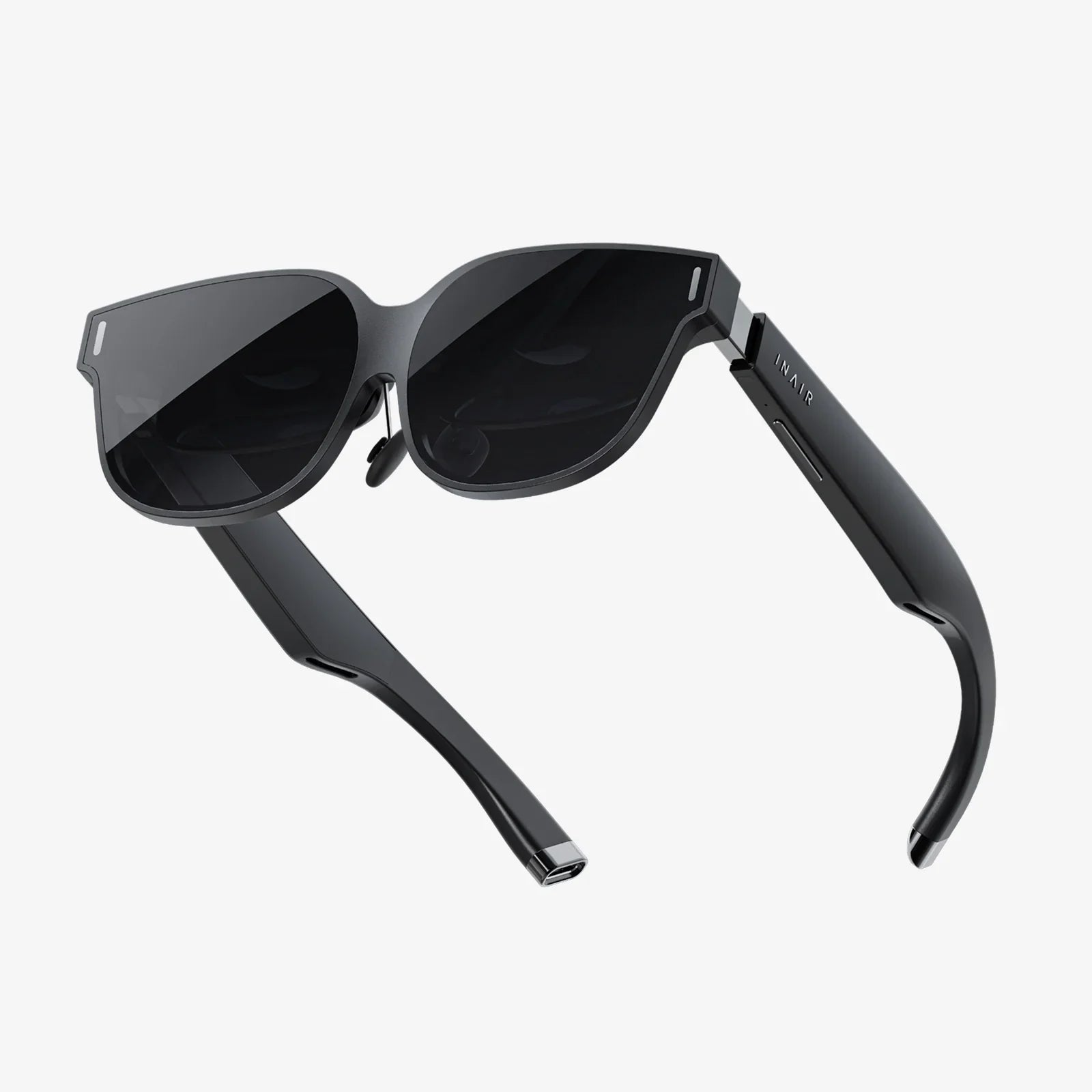
Augmented Reality is a technology that superimposes computer-generated digital elements—such as images, text, 3D models, or animations—onto a user's real-world view. The core principle of AR is additive enhancement. It does not replace the physical environment but enriches it with contextual data and virtual objects that appear to coexist in the same space. This is most commonly experienced through the camera on a smartphone or tablet, where apps can place furniture in your room or display navigation arrows on the street in front of you. More advanced AR is delivered through specialized glasses or headsets that project imagery directly onto transparent lenses, allowing for hands-free interaction.
What is Virtual Reality (VR)?
While not the primary keyword, VR is an essential component of this discussion. Virtual Reality is the polar opposite of AR in its approach. Instead of enhancing reality, VR aims to replace it entirely. By wearing an opaque, head-mounted display, the user is fully immersed in a completely computer-generated, digital environment. The physical world is blocked out, and the user's vision and hearing are transported into a simulated reality. This technology is primarily used for gaming, immersive training simulations, and virtual tourism, offering a powerful sense of presence in a place that doesn't physically exist.
What is Extended Reality (XR)?
This is the umbrella term that settles the "augmented reality vs extended reality" debate. Extended Reality (XR) is not a specific technology but a catch-all category that encompasses all combined real-and-virtual environments, including AR, VR, and everything in between. Think of XR as the entire spectrum of immersion, from a fully real environment on one end to a fully virtual one on the other. AR and VR are subsets of XR. A crucial concept within XR is the Virtuality Continuum, a theoretical framework first proposed in the 1990s that illustrates this seamless spectrum.
The Virtuality Continuum: The Spectrum of Immersion
The Virtuality Continuum is the best way to visualize the relationship between these technologies. It's a sliding scale that places the completely real environment at one extreme and the completely virtual environment at the other.
- Real Environment: The physical world as we naturally perceive it.
- Augmented Reality (AR): Closer to the real world. A primarily real environment enhanced with a layer of digital information.
- Augmented Virtuality (AV): A term for environments that are mostly virtual but incorporate some real-world elements, such as a real person represented as an avatar inside a virtual meeting room.
- Virtual Reality (VR): Closer to the virtual world. A completely computer-simulated environment.
XR, therefore, is the entire continuum. It acknowledges that the lines between these states are blurring, and future experiences will fluidly move along this spectrum.
Core Technological Differences: How AR and VR Achieve Immersion
The fundamental difference in purpose between AR and VR drives a significant divergence in their underlying technology.
Display Technology: See-Through vs. Block-Out
AR devices use optical see-through or video see-through displays. Optical see-through, common in smart glasses, uses waveguides or semi-transparent mirrors to project digital images directly onto the lens, allowing the user to see the real world clearly behind the graphics. Video see-through uses outward-facing cameras to capture the real world and then blends the digital content with the video feed on a screen inside the device. VR headsets, in contrast, use opaque displays placed mere centimeters from the user's eyes, filling their entire field of view with the virtual world and eliminating any visual connection to their physical surroundings.
Tracking and Sensing: Mapping the World vs. Creating It
Both technologies rely heavily on tracking, but for different reasons. AR systems require sophisticated environment mapping. They use cameras, depth sensors, LiDAR, and IMUs (Inertial Measurement Units) to understand the geometry of the surrounding space, detect surfaces like floors and tables, and precisely anchor digital objects so they appear stable and realistic. This is called simultaneous localization and mapping (SLAM). VR tracking is focused on user localization within a virtual space. It tracks the headset and controllers to translate the user's movements into the digital world, ensuring that if they walk forward in their physical play area, they move forward in the virtual environment.
Processing Power and Latency: Two Different Demands
VR experiences, being fully rendered from scratch, are incredibly demanding on processors and graphics units, requiring high-end, dedicated hardware to maintain a high frame rate and avoid motion sickness. AR processing is arguably more complex in a different way. It must perform intense computer vision tasks to understand the real world in real-time while rendering digital objects that convincingly interact with it. For both, low latency is non-negotiable; any delay between a user's movement and the update of the display can break immersion and cause discomfort.
Applications: Transforming Industries with AR and XR
The practical applications of these technologies are vast and growing, demonstrating their unique value propositions across numerous sectors.
Augmented Reality in Action
- Retail & E-Commerce: Trying on clothes virtually, visualizing how new furniture will look and fit in a room before purchasing.
- Industrial Maintenance & Repair: Providing technicians with hands-free, interactive manuals, highlighting parts on a machine, and offering remote expert guidance through AR annotations.
- Healthcare: Assisting surgeons with vital data and 3D visualizations during procedures, helping medical students learn anatomy through interactive overlays, and aiding in vein detection for nurses.
- Navigation: Overlaying directional arrows and points of interest onto the real world through a smartphone or car windshield.
Virtual and Extended Reality in Action
- Training & Simulation: VR is unparalleled for high-risk training. Pilots train in flight simulators, surgeons practice complex operations, and soldiers prepare for combat scenarios—all in a safe, controlled, and repeatable virtual environment.
- Remote Collaboration (The "Metaverse"): XR enables a new form of remote presence. Colleagues from around the world can meet as avatars in a shared virtual office, interact with 3D models of a new product design, or train together on a virtual piece of equipment, feeling as if they are truly together.
- Design & Prototyping: Automotive and aerospace engineers use VR to design and walk through full-scale 3D models of vehicles and cockpits long before a physical prototype is built, saving immense time and resources.
The Future is Blended: The Convergence of AR and VR
The most exciting development is not the competition between AR and VR, but their convergence. The future of hardware lies in MR headsets that can dynamically switch along the Virtuality Continuum. These devices will use advanced sensors and passthrough camera technology to offer high-quality VR experiences while also being capable of overlaying rich AR content onto a high-fidelity video feed of the real world. This will erase the hard line between the two, creating truly fluid XR experiences. A user could be working on a virtual monitor in a VR space, tap their headset to see their real physical desk through passthrough AR to take a drink of coffee, and then return seamlessly to their virtual workspace.
Challenges on the Horizon
Despite the promise, the path to widespread XR adoption is fraught with challenges that must be addressed.
- Hardware Limitations: For AR, the goal is socially acceptable glasses with all-day battery life, a wide field of view, and stunning display clarity—a monumental technical challenge. For VR, making headsets smaller, lighter, wireless, and more comfortable remains a key focus.
- Social and Ethical Concerns: The always-on sensors of AR glasses raise profound questions about privacy, data collection, and surveillance. The potential for deep immersion also brings risks of addiction, reality blurring, and new forms of social isolation.
- Content and Interoperability: Building a robust ecosystem of compelling applications and ensuring that digital assets and experiences can work across different platforms and devices (interoperability) is critical for the growth of XR.
The journey into this blended world is already underway, and it promises to be the next great computing platform, reshaping human interaction with technology and with each other in ways we are only beginning to imagine. The question isn't whether you will engage with Extended Reality, but when and how deeply you will choose to step into the continuum.
Share:
Why Is Augmented Reality Important: A New Layer of Human Experience
Remote Augmented Reality: Redefining Collaboration and Experience Across Distances