


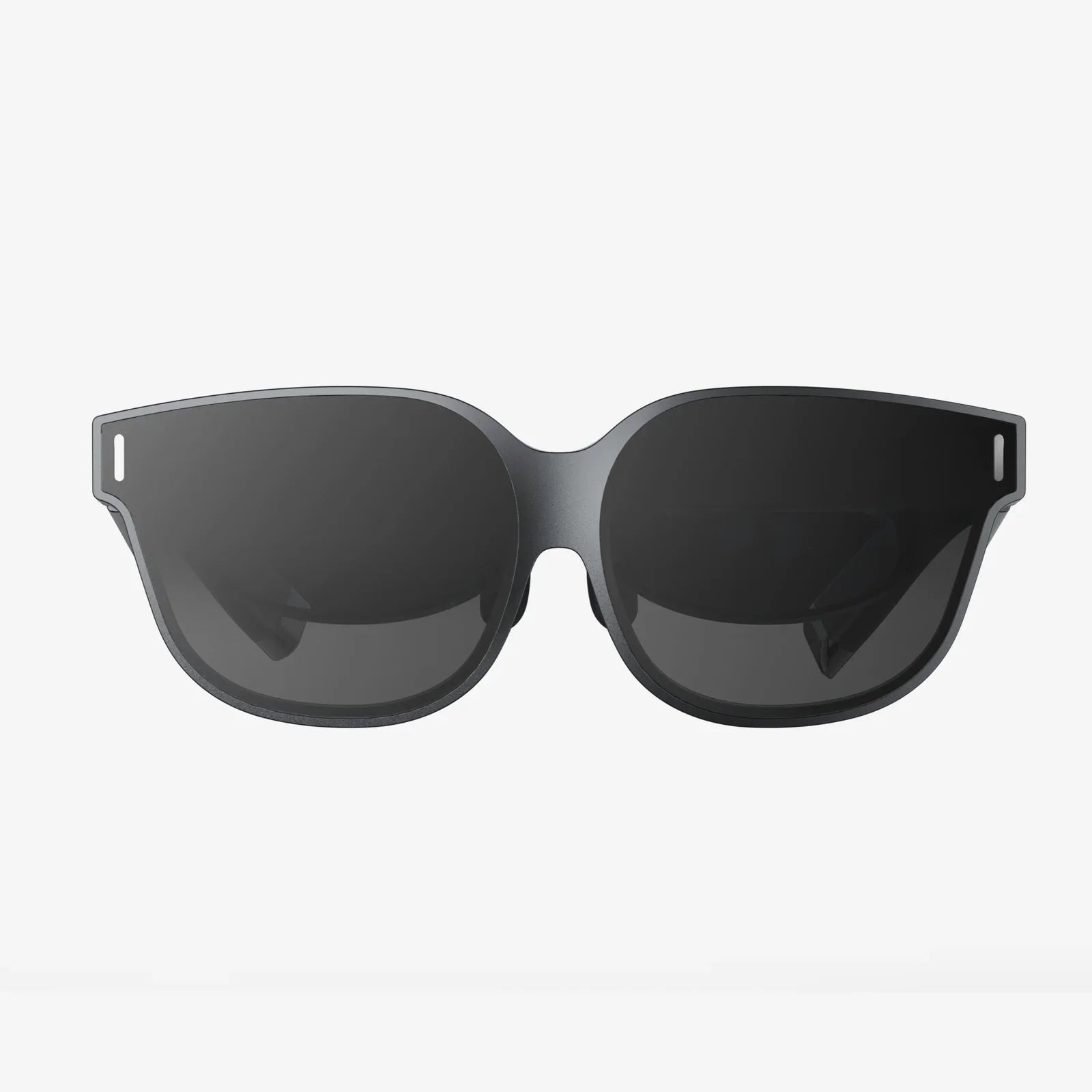
Imagine a world where the finest surgeon in one country can guide a complex procedure in another, not through a flat screen, but with holographic instructions and 3D anatomical models overlaid directly onto the patient in the operating room. Envision an engineer in a headquarters being able to ‘step inside’ a malfunctioning piece of equipment located on an offshore oil rig, seeing real-time diagnostic data and annotations floating beside each component. This is not a distant science fiction fantasy; it is the imminent reality being forged by the rapid advancement of Remote Augmented Reality (Remote AR), a technology poised to fundamentally reshape the boundaries of human collaboration, expertise, and experience.
The Core Concept: Blending Realities Across the Miles
At its essence, Remote Augmented Reality is a sophisticated technological framework that allows a user in one physical location to see, interact with, and manipulate a shared augmented reality environment that is anchored in a different, remote physical location. It is the powerful convergence of several cutting-edge technologies:
- Advanced AR Rendering: The ability to seamlessly blend high-fidelity digital content—3D models, annotations, videos, and data streams—with a live view of the real world.
- Real-Time Spatial Mapping: Using sensors like LiDAR and depth-sensing cameras to create a precise digital twin or point cloud of the remote environment. This spatial understanding is crucial for anchoring digital objects so they appear stable and interact correctly with physical objects.
- Ultra-Low Latency Communication (5G/6G): The lifeblood of Remote AR. For a collaborative experience to feel natural and responsive, the data transmission between the remote expert and the local user must be near-instantaneous. High-bandwidth, low-latency networks are non-negotiable to prevent disorienting lag.
- Cloud Computing and Edge Processing: The heavy computational lifting of rendering complex AR scenes and processing spatial data is often handled by powerful cloud servers or edge nodes, streaming the results to more lightweight devices like AR glasses or smartphones.
This synergy creates a persistent, shared ‘space’ that multiple users, regardless of their geographic separation, can inhabit and interact with simultaneously. It is the difference between a video call and being physically present together in a room with a interactive, digital whiteboard.
A Spectrum of Transformative Applications
The potential applications for Remote AR are as vast as human industry itself, offering solutions to long-standing challenges of distance, expertise scarcity, and training accessibility.
Revolutionizing Field Service and Maintenance
This is perhaps the most immediate and high-value application. Complex machinery breaks down in inconvenient places. Flying a specialist out is costly, time-consuming, and often leads to extended downtime.
With Remote AR, a field technician wearing AR glasses can connect directly to a central expert. The expert sees exactly what the technician sees through a live video feed. The expert can then annotate the technician's real-world view, drawing arrows, highlighting components, and pulling up schematics or manuals that appear pinned to the machine itself. The expert can even guide the technician's hands by placing virtual markers showing which bolt to turn or which wire to check. This ‘see-what-I-see’ guidance dramatically reduces errors, slashes resolution times, and empowers less-experienced technicians to perform complex repairs, all while capturing the session for future training.
Democratizing Expertise in Healthcare
The medical field stands to gain immensely. Remote AR enables new forms of telemedicine that go far beyond a simple video consultation. A specialist can guide a general practitioner through a specialized examination, overlaying instructions on how to position an ultrasound probe or perform a specific maneuver. Medical students can observe surgeries from a surgeon’s point of view, with anatomical labels and critical information displayed in their field of vision. For first responders, a remote trauma surgeon could see the situation through the responder’s glasses and provide immediate, visual guidance for stabilizing a patient before reaching the hospital, effectively bringing the emergency room to the patient.
Reimagining Education and Training
Remote AR shatters the constraints of the traditional classroom and training manual. Instead of looking at a static diagram of a historical monument, history students can don headsets and have a historian ‘teleport’ a 3D reconstruction of the building onto their desk, walking around it and explaining its features as if they were there together. Trainee mechanics can practice complex procedures on a virtual engine overlay before ever touching real, expensive equipment. This experiential, hands-on learning, guided by a remote instructor, accelerates comprehension and skill acquisition in ways previously unimaginable.
Supercharging Design and Prototyping
Architects, engineers, and interior designers are using Remote AR for collaborative design reviews. A team spread across the globe can all congregate around a life-size, holographic prototype of a new car or building. They can walk around it, inspect details from every angle, make real-time modifications, and discuss changes as if the physical prototype were right in front of them. This eliminates the need for costly physical mock-ups and enables a more intuitive and collaborative design process, compressing development cycles and improving outcomes.
Navigating the Challenges on the Horizon
For all its promise, the widespread adoption of Remote AR faces significant hurdles that must be addressed.
- Network Infrastructure: The experience is entirely dependent on robust, high-speed, low-latency connectivity. While 5G is a major step forward, universal and reliable coverage is still a work in progress, especially in rural or industrial settings where Remote AR could be most beneficial.
- Hardware Limitations: Truly immersive AR glasses need to become lighter, more comfortable, have all-day battery life, and offer a wider field of view. They must also be affordable for enterprise and eventual consumer adoption. Current devices often represent a trade-off between capability and practicality.
- User Interface and Interaction: How do users intuitively interact with this blended reality? Gesture controls, voice commands, and haptic feedback need to be refined to feel natural and not become a barrier to adoption. The UI must provide critical information without causing cognitive overload.
- Data Security and Privacy: Transmitting live video feeds and spatial data of sensitive environments—be it a hospital, a factory floor, or a private home—raises profound security and privacy concerns. Robust encryption, secure authentication, and clear data governance policies are paramount.
The Future: A World Without Distance
The trajectory of Remote AR points toward a future where physical location becomes increasingly irrelevant for accessing expertise and shared experiences. We are moving towards persistent AR worlds—digital layers of information and interaction that are permanently anchored to specific places, accessible to anyone with the right device. A museum’s exhibits could forever have expert curator commentary available. A public square could hold a historical reenactment accessible only through AR. The line between telepresence and physical presence will continue to blur.
Ultimately, this technology is about more than just convenience; it is about human amplification. It extends our reach, enhances our vision, and allows our knowledge and skills to transcend the limitations of our physical bodies. It promises to create a more connected, efficient, and knowledgeable world, one where expertise is a shared resource, not a geographically locked one. The barrier of distance, one of humanity’s oldest constraints, is finally beginning to crumble.
The next time you face a problem that requires a second pair of eyes, imagine not just showing someone a video, but having them stand beside you, pointing at the issue with a digital arrow and handing you a virtual tool. That is the powerful, collaborative, and utterly transformative promise of Remote Augmented Reality, and it is arriving faster than we think.
Share:
Augmented Reality vs Extended Reality: The Ultimate Guide to Our Blended Future
AR VR Development: Building the Immersive Future of Digital Interaction