


Imagine a world where your morning run is guided by digital arrows floating on the pavement, or where you can attend a concert from the comfort of your living room, feeling the roar of the crowd as if you were truly there. This isn't science fiction; it's the burgeoning reality being shaped by two of the most transformative technologies of our time: Augmented Reality and Virtual Reality. The battle for our digital senses is heating up, promising to redefine every facet of human interaction, from how we work and learn to how we connect and play. But to understand where we're headed, we must first unravel the intricate tapestry of these two distinct, yet increasingly intertwined, technological realms.
Defining the Digital Divide: Core Concepts
At its heart, the difference between Augmented Reality (AR) and Virtual Reality (VR) is a matter of immersion versus augmentation. It's the distinction between replacing your world and enhancing it.
Virtual Reality (VR) is the technology of total immersion. It constructs a completely digital, computer-generated environment that replaces the user's real-world surroundings. By wearing a headset that encompasses the entire field of vision and often incorporates headphones for spatial audio, the user is visually and audibly transported to a new reality. This reality can be a photorealistic simulation of a physical place, a fantastical alien landscape, or a abstract digital workspace. The key principle is isolation; a successful VR experience blocks out the physical world and convinces the user's brain that the digital world is, for all intents and purposes, real. This often requires powerful processing hardware to render complex worlds in high fidelity and at high frame rates to prevent discomfort, alongside motion tracking systems to ensure the user's movements are accurately reflected within the virtual space.
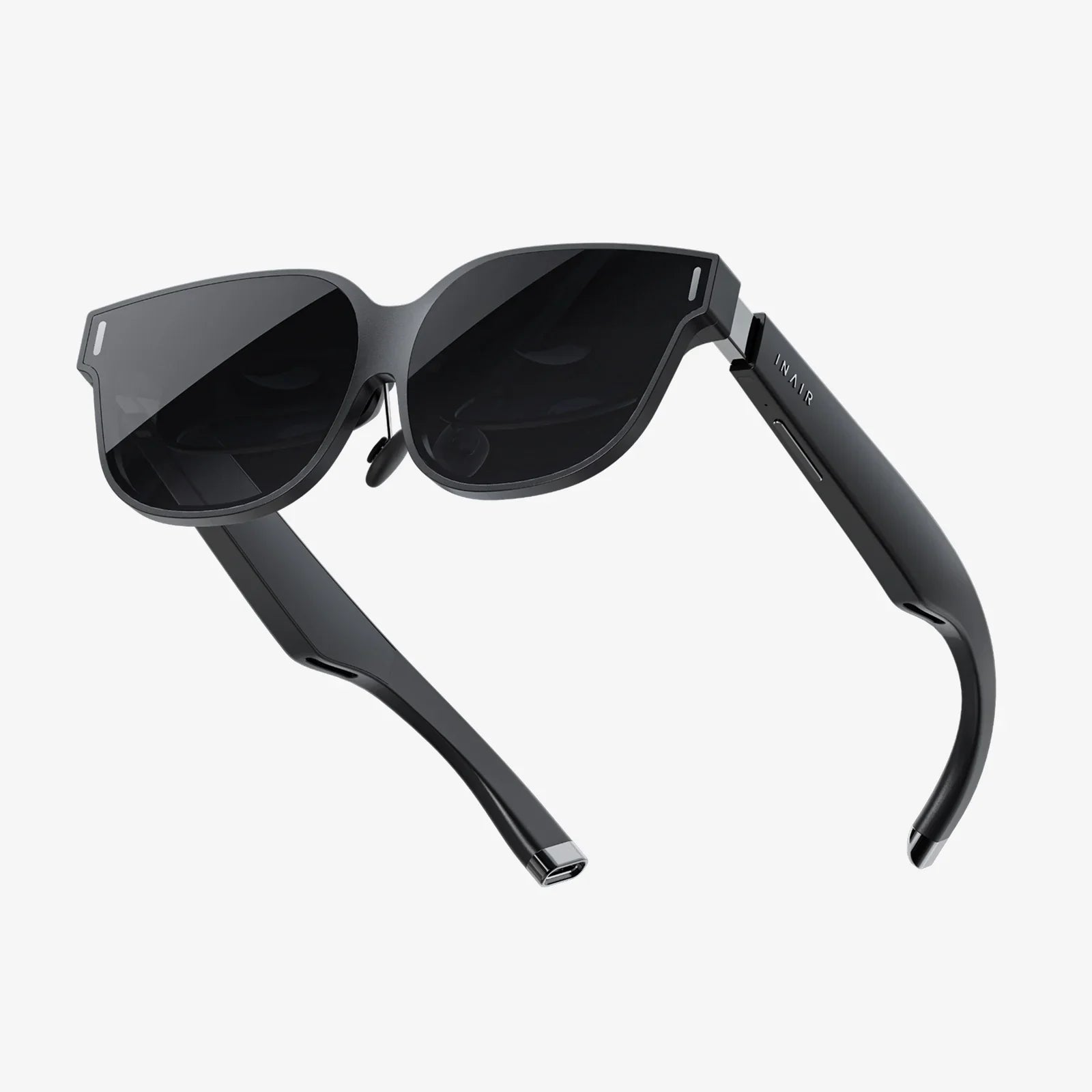
Augmented Reality (AR), in contrast, is the technology of superposition. It overlays digital information—images, text, 3D models, animations—onto the user's view of the real world. Rather than replacing reality, it enhances it. This can be achieved through various devices: smartphones and tablets that use their cameras to display digital content on the screen, or more advanced smart glasses and headsets that project transparent digital images directly into the user's line of sight. The core challenge of AR is registration and alignment; the digital objects must be convincingly anchored to the physical world. They need to appear as if they truly exist in the user's space, respecting occlusions (e.g., a virtual character walking behind a real table) and reacting to changes in lighting and perspective. This requires sophisticated computer vision, depth sensing, and a precise understanding of the environment.
Under the Hood: A Technical Breakdown
The fundamental divergence in the user experience between AR and VR is driven by profound differences in their underlying technology stacks.
Virtual Reality's Foundation
VR technology is built primarily on the principle of sensory deprivation and replacement.
- Visual Immersion: VR headsets use high-resolution displays placed mere centimeters from the user's eyes, with lenses that warp the image to fill the entire field of view. A critical technology here is low-persistence display, which reduces motion blur by only illuminating the pixels for a fraction of the frame time, crucial for maintaining comfort during movement.
- Precise Tracking: To sell the illusion, the virtual world must react instantly and accurately to the user's head and body movements. This is achieved through inside-out tracking (using cameras on the headset to observe the environment) or outside-in tracking (using external sensors placed in the room). Advanced systems also incorporate eye-tracking for more nuanced interaction and foveated rendering, a technique that maximizes processing efficiency by rendering the area of the user's direct gaze in high detail while slightly reducing the detail in their peripheral vision.
- Haptic Feedback: Beyond sight and sound, VR seeks to engage the sense of touch through controllers that provide vibration and force feedback. The frontier of VR haptics includes full-body suits and gloves that can simulate the pressure of a virtual handshake or the texture of a virtual object.
Augmented Reality's Challenges
AR's technological hurdles are different, centered on perception and integration.
- Environmental Understanding: The most critical component of AR is its ability to understand the world it is augmenting. This is done through Simultaneous Localization and Mapping (SLAM) algorithms. SLAM allows the device to simultaneously map an unknown environment and track its own position within that map in real-time. This creates a digital mesh of the room, identifying floors, walls, tables, and other surfaces.
- Depth Sensing: To place a virtual object on a real table, the device must know how far away the table is. Technologies like structured light (projecting a pattern of infrared dots and measuring their deformation), time-of-flight sensors (measuring the time it takes for light to bounce back), and stereoscopic cameras are used to create a depth map of the surroundings.
- Display Technology: AR displays are a marvel of optical engineering. Many use waveguides or holographic optical elements to project light into the eye, seamlessly blending digital light with natural light from the environment. The goal is to create bright, high-contrast images that are visible even in direct sunlight, a significant challenge that remains an active area of development.
The Spectrum of Experience: From AR to VR and the Metaverse
It is a common misconception that AR and VR exist in separate, distinct silos. In reality, they form a continuum of experiences often referred to as the Reality-Virtuality Continuum. At one end is the completely real environment, and at the other is a fully virtual one. In between lies Mixed Reality (MR).
Mixed Reality is where AR and VR converge. It describes experiences where real and virtual objects co-exist and interact in real-time. This is more advanced than simple AR overlay; it implies that the digital content is aware of and can respond to the real world. A virtual character that jumps off your real table and hides behind your real sofa is an MR experience. A digital windmill whose virtual blades spin faster when a real fan is turned on is MR. This requires an even more sophisticated level of environmental understanding than basic AR.
This blending of realities is the foundational concept behind the much-discussed "metaverse." The metaverse is envisioned not as a single VR world, but as a network of persistent, interconnected digital spaces that are accessible through a range of technologies. You might use VR to enter a fully immersive virtual conference room, but use AR glasses to have a persistent digital display pinned to your physical office wall, or use your smartphone to interact with a AR filter tied to a physical location. The metaverse, in its ideal form, will be a fluid combination of AR, VR, and MR, erasing the hard lines between them and creating a seamless tapestry of physical and digital existence.
Transforming Industries: Practical Applications
The theoretical potential of AR and VR is vast, but their real power is already being demonstrated in practical, impactful applications across the global economy.
Augmented Reality in Action
AR excels in situations where users need contextual information without losing connection to their physical task.
- Manufacturing and Repair: Technicians can use AR glasses to see wiring diagrams or assembly instructions overlaid directly on the machinery they are working on. They can receive remote guidance from an expert who can draw annotations into their field of view, drastically reducing errors and training time.
- Healthcare: Surgeons can visualize CT scans and MRI data projected directly onto a patient's body during procedures, improving accuracy. Medical students can practice complex procedures on interactive, virtual anatomy models superimposed on a mannequin.
- Retail and Design: Customers can use their phones to see how a new sofa would look in their living room at true scale before buying. Architects and interior designers can walk clients through a full-scale, interactive model of a building before the foundation is even poured.
- Navigation: AR can revolutionize wayfinding, with arrows and directions painted onto the real world through a phone or glasses, making it intuitive to navigate complex airports, museums, or city streets.
Virtual Reality's Domain
VR's strength lies in creating experiences that are too dangerous, expensive, or impossible to achieve in the real world.
- Training and Simulation: From training pilots in flight simulators to preparing soldiers for combat scenarios, VR provides a safe, controlled, and repeatable environment for high-stakes training. It's also used to train soft skills, like public speaking, by placing a person in front of a virtual audience.
- Therapeutic Healthcare: VR is proving highly effective in exposure therapy for treating phobias (fear of heights, flying, spiders) and PTSD, allowing patients to confront triggers in a safe, gradual manner. It's also used for pain distraction in burn units and during physical rehabilitation to make exercises more engaging.
- Remote Collaboration: While video calls are two-dimensional, VR meetings allow distributed teams to feel like they are in the same room. They can share and manipulate 3D models, use virtual whiteboards, and benefit from the non-verbal cues that are lost in traditional teleconferencing.
- Entertainment and Storytelling: VR gaming is the most well-known application, offering unparalleled immersion. But it's also creating new forms of narrative, placing the viewer inside the story as an active participant rather than a passive observer.
The Road Ahead: Challenges and the Convergent Future
Despite rapid progress, both technologies face significant hurdles before achieving ubiquitous adoption. For VR, the challenges are largely related to hardware: creating smaller, lighter, wireless headsets with higher-resolution displays and more realistic haptics, all at a consumer-friendly price point. The social isolation of being completely shut off from one's surroundings also remains a barrier for prolonged use.
For AR, the challenges are even more profound. The holy grail is a pair of stylish, all-day wearable glasses that can deliver high-quality visuals. This requires breakthroughs in battery life, display brightness, and thermal management. Furthermore, the societal and privacy implications are immense. Always-on AR glasses with cameras and sensors raise critical questions about data collection, surveillance, and digital spam in our physical spaces.
The most exciting development, however, is not the progression of AR or VR in isolation, but their inevitable convergence. Future devices are likely to be hybrid, capable of switching between a transparent AR mode and an immersive VR mode with the flick of a switch or even automatically based on context. Imagine starting your workday in AR, with your emails and calendar floating in your periphery. For a design meeting, you switch to VR to collaborate on a 3D model with a remote team. After work, you switch back to AR to get navigation cues to a restaurant, where a virtual menu appears over the table. This fluid movement along the reality-virtuality continuum will fundamentally redefine our relationship with technology, moving it from a tool we use to a layer integrated into our very perception of reality.
The line between the world we are born into and the worlds we can create is blurring faster than ever before. This isn't just about choosing between a headset that shuts out the world or glasses that add to it; it's about a fundamental shift in human-computer interaction that will weave digital information into the very fabric of our daily lives, forever changing how we see, learn, work, and connect with everything around us.
Share:
What Is The Value of Virtual Reality: Beyond the Hype and Into Our Reality
Immersion Virtual Reality Goggles: Stepping Through the Portal to New Realities