


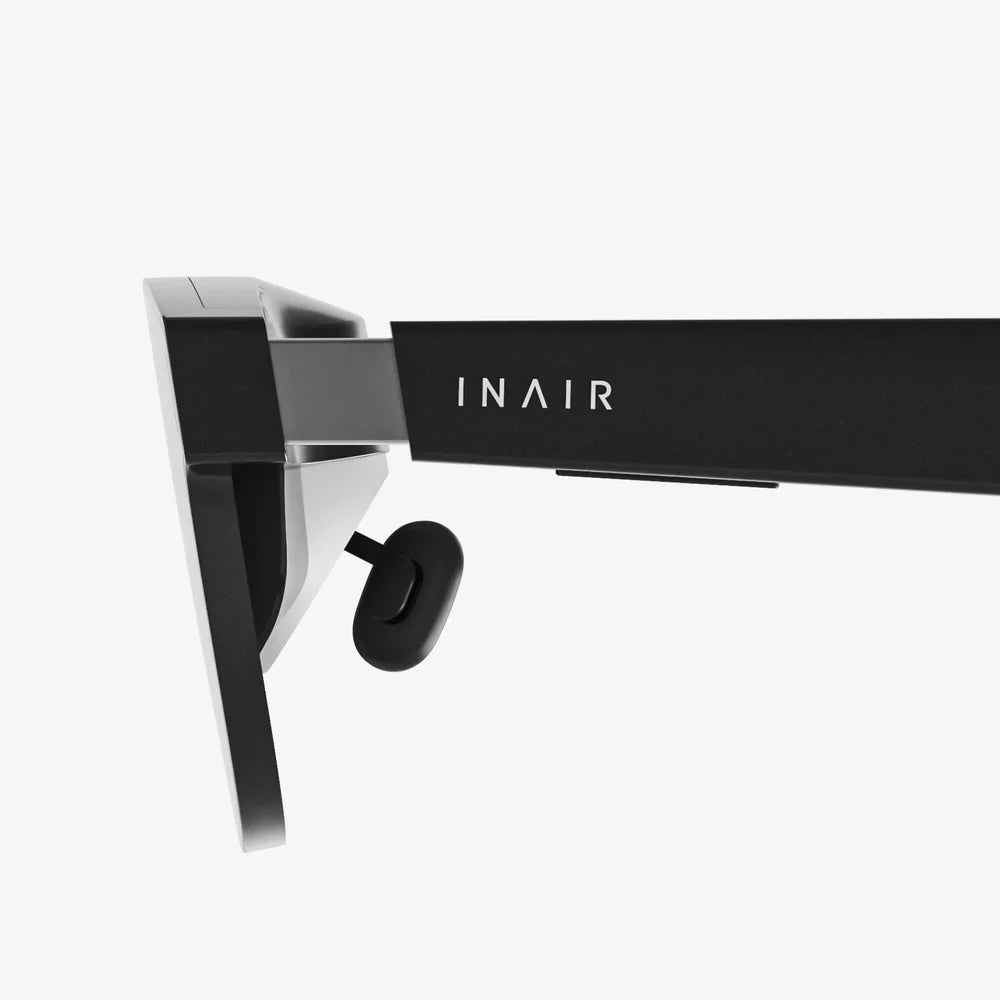
Imagine delivering a keynote address to a global audience from your living room, watching their virtual avatars nod in understanding, or practicing a crucial presentation with a holographic coach who analyzes your every word and gesture. The very fabric of human communication is being rewoven by two transformative technologies: Augmented Reality (AR) and Virtual Reality (VR). While often mentioned in the same breath, their approaches to speech and interaction represent two distinct paradigms, each with profound implications for how we connect, persuade, and share information. The choice between an augmented reality vs virtual reality speech isn't just about hardware; it's about selecting an entirely new dimension of human experience.
Defining the Realms: AR and VR in the Lexicon of Technology
To understand their impact on speech, we must first delineate the core identities of these technologies. Virtual Reality is an immersive, all-encompassing technology. It functions by constructing a completely digital, computer-generated environment that replaces the user's physical surroundings. Through a head-mounted display that blocks out the real world, users are transported into a simulated reality. This world can be a fantastical landscape, a meticulously recreated historical site, or a abstract data visualization. The user's physicality is often represented by a digital avatar, and interaction is mediated entirely through digital means.
Augmented Reality, in stark contrast, operates on a philosophy of enhancement rather than replacement. AR technology superimposes digital information—images, text, 3D models, and data—onto the user's view of their actual, physical environment. Using devices like smart glasses, heads-up displays, or even smartphone cameras, AR adds a layer of digital content to the real world. This allows the user to remain grounded in their physical space while interacting with digital elements seamlessly integrated within it. The real world remains the foundation, and the digital world is the decoration.
The Architecture of Speech in Virtual Reality
Speech within a VR environment is an exercise in building a new world of sound and presence from the ground up. The primary goal is total immersion, and every aspect of communication is engineered to support this illusion.
Spatial Audio and the Illusion of Presence
The cornerstone of effective VR speech is spatial audio. This advanced sound technology mimics how we hear in the real world. When another user speaks in a VR meeting, their voice doesn't just emanate from a flat, mono source. Instead, it is processed to seem as if it's coming from their avatar's specific location in the 3D space. If they are to your left, you hear them more in your left ear. If they turn away, their voice becomes slightly muffled and quieter. This creates an astonishingly powerful sense of "co-presence," making it feel as if you are truly standing in the same room as the other participants, even if they are continents away. For a speaker, this means their words carry the same spatial weight and directionality as in a physical auditorium, allowing them to command attention and engage with individuals in a virtual crowd by simply "facing" them.
Avatar-Mediated Communication
In VR, the human body is translated into a digital representation. This introduces a unique layer to speech communication. The avatar's design, its level of realism (from cartoonish to photorealistic), and most importantly, its animations, become critical to conveying meaning. Sophisticated systems use eye-tracking and motion controllers to animate an avatar's lips, facial expressions, and gestures in real-time as the user speaks. A well-timed virtual gesture can emphasize a point; a smile can build rapport; a nod can show understanding. This non-verbal communication, or kinetic speech, is essential for transferring the full emotional and rhetorical weight of a presentation, making the discourse feel more natural and less like a traditional conference call.
Applications: The Ultimate Virtual Podium
The applications for VR speech are vast and powerful. Imagine a corporate CEO addressing every single employee simultaneously in a vast virtual amphitheater, fostering a unparalleled sense of unity and shared purpose. Medical students can practice delivering difficult diagnoses to hyper-realistic virtual patients, honing their bedside manner in a consequence-free environment. Trainees can learn complex procedures by watching a instructor's avatar demonstrate while explaining the process verbally. Public speaking anxiety can be treated by gradually exposing individuals to virtual crowds of increasing size and responsiveness. VR speech creates a controlled, repeatable, and deeply immersive sandbox for any scenario that relies on oratory skill and presence.
The Architecture of Speech in Augmented Reality
If VR speech is about building a new world, AR speech is about supercharging the one we already inhabit. Its architecture is one of annotation, guidance, and enhancement, making the speaker more effective within their existing context.
The Heads-Up Display: Your Personal Teleprompter
The most direct application of AR for speech is the concept of a personal, invisible teleprompter. Through smart glasses or a transparent display, a speaker can see their talking points, key statistics, or even a full script overlaid onto their field of view. To the audience, the speaker appears to be making effortless eye contact, speaking confidently without glancing down at notes or a screen. This eliminates the disruptive pause to check a podium or slide, creating a seamless and professional flow of information. The speaker can remain engaged with the audience, reading their reactions and adjusting their delivery in real-time, all while having their crucial data visible only to them.
Real-Time Data Visualization and Interaction
AR transforms static presentations into dynamic, interactive experiences. A lecturer explaining a complex engine could have a 3D model of its components appear holographically on the desk in front of them. As they speak, they can rotate it, explode it into its parts, and highlight specific areas, all with hand gestures. An architect presenting a new building design could project a scale model onto a empty table, allowing clients to walk around it and see the proposal integrated into the actual meeting room. This allows speech to move beyond describing something to actually showing it, making abstract concepts tangible and dramatically improving comprehension and retention for the audience.
Applications: The Empowered Physical Speaker
AR speech technology excels in real-world, practical settings. A technician repairing a complex machine can have a remote expert see what they see through their AR glasses. The expert can then draw arrows, highlight components, and display instructions directly onto the technician's view, guiding them through the repair with verbal and visual cues. In education, a teacher walking through a historical site could use AR to superimpose historical figures who "narrate" events that happened on that very spot. In business meetings, real-time language translation can be displayed as subtitles below a speaking colleague, breaking down language barriers without the delay of an interpreter. AR speech augments the speaker's ability to inform and demonstrate within their immediate environment.
The Critical Divergence: Immersion vs. Context
The fundamental tension in the augmented reality vs virtual reality speech debate boils down to a single question: Is the goal to escape reality or to enhance it? VR is the ultimate tool for immersion. It is the correct choice when you need to eliminate all physical distractions and transport your audience to a completely different reality for training, simulation, or a unified experience. Its strength is its ability to create a controlled narrative environment where the only context is the one you provide.
AR, however, is the champion of context. Its power lies in its ability to connect digital information directly to the physical world. It is the superior tool for situations where the physical environment is relevant—a factory floor, a patient's bedside, a live sales demonstration. AR speech doesn't ask the user to leave their world behind; it makes them more capable and informed within it. The choice is not about which technology is better, but about which reality—virtual or physical—provides the most valuable context for the message being delivered.
The Horizon: Blended Realities and the Future of Oratory
The future of these technologies may not be a choice between AR and VR, but a convergence into Mixed Reality (MR) or the broader concept of the Metaverse. We are already seeing devices capable of switching between a fully immersive VR mode and a transparent AR mode. This points toward a future where the lines are permanently blurred. A speaker might begin a presentation in a physical boardroom enhanced with AR data visualizations, and then, with a voice command, transition the entire audience into a fully immersive VR simulation to demonstrate a concept that would be impossible to show in the physical world.
Advancements in AI will further revolutionize this space. Imagine an AI speech coach that exists as an AR hologram, providing real-time feedback on your pacing, filler word usage, and body language during a practice session. Or a VR audience composed of AI-driven avatars programmed to react in different ways, allowing a speaker to prepare for every possible scenario. Speech itself may become unshackled from language, with real-time, accurate translation making a presenter's words instantly accessible to a global audience in their native tongue, all within a shared virtual or augmented space.
The journey of human communication has evolved from spoken stories around a fire, to the printed word, to radio and television, and now to the internet. Augmented and Virtual Reality represent the next monumental leap. They are not merely new screens but new spaces for human connection. The art of oratory, once confined to the physical podium, is expanding into infinite digital dimensions. The most powerful speakers of tomorrow will be those who can harness these immersive realities not just to tell a story, but to invite their audience to step directly into it, forever changing the landscape of persuasion, education, and shared human experience.
Mastering the nuances of augmented and virtual reality could soon become the single greatest differentiator between a forgettable talk and a transformative experience that resonates across the digital and physical divide.
Share:
Augmented Reality vs Virtual Reality: A Comprehensive Guide to Our Digital Future
How to Get Spatial Audio to Work: The Ultimate Setup and Troubleshooting Guide